Four Dual Enrollment Models and the Credit Risk Families Should Check

Dual enrollment lets a high-school student take real college courses and earn both high-school and college credit at once — following a university entrance exam revision plan that works helps many students prepare efficiently for college-level expectations. The college course creates a genuine, permanent college transcript, even though the student is still finishing secondary school. Most participants are juniors or seniors, and the biggest draw is time and money saved on a future degree, though not every credit transfers to every college later on.
TL;DR:
- Every course grade becomes part of a permanent college transcript; confirm each target college’s acceptance, grade threshold, degree use, and transfer cap before enrolling.
- Courses taught online or by college faculty are linked in some analyses to lower grades and pass rates, so ask what support is available.
- Eligibility varies by state and partnership, but programs commonly require at least 10th grade standing, a minimum GPA, and sometimes a placement test or prerequisite.
- State or college subsidies can reduce tuition, but families may still pay for books, transportation, and fees; ask the district and college separately about coverage.
- Texas data found dual enrollment students earned 27% to 40% more by age 24 than peers who skipped accelerated coursework.
Table of Contents
- How dual enrollment actually works
- The main dual enrollment program models
- Who is eligible and how do you enrol?
- How college credit is recorded and whether it transfers
- What does the research say about the benefits?
- What are the drawbacks and risks to weigh?
- What does dual enrollment actually cost?
- How should a family decide on dual enrollment?
- How do learning platforms support dual enrollment programmes?
- A final word on making the decision
- FAQ
- Sources
How dual enrollment actually works
Dual enrollment courses happen in one of three places: on a local college campus, inside the high school itself (often called concurrent enrollment), or fully online. Who teaches the class depends on the model. High-school teachers with a master’s degree or specific credentialing in the subject often lead concurrent sections, while on-campus or online courses are usually taught by college faculty or adjuncts.
Once a student finishes the course, the grade posts to an official college transcript, not just the high-school record. That grade is permanent and becomes part of the student’s postsecondary academic history before they have even applied to university.
Programmes typically focus on:
- Introductory, general-education level courses rather than upper-level specialisations.
- Participation concentrated among juniors and seniors, though some schools allow sophomores.
- A mix of in-person, concurrent and online delivery, depending on what the partner college offers.
The main dual enrollment program models
“Dual enrollment” is really an umbrella term, and the model a student is offered shapes the experience considerably.
- Dual credit: a course that counts simultaneously toward a high-school diploma and a college degree, often delivered by a high-school teacher under a college’s curriculum.
- Concurrent enrollment: college-level coursework taught inside the high-school building, frequently by the student’s own teachers.
- On-campus or online college courses: students take classes directly through a partner college, sometimes alongside traditional college students.
- Early college high school (ECHS): an intensive pathway where students can leave high school with an associate degree or a substantial block of transferable credit already completed.
Delivery model matters beyond convenience. Research comparing formats found that taking a dual enrollment course online or under a college instructor, rather than a familiar high-school teacher, is associated with lower grades and pass rates in some analyses, which makes the choice of model worth a direct conversation with the school counsellor.
Who is eligible and how do you enrol?
Eligibility rules vary by state and by the specific agreement between the high school and its college partner, but a few patterns show up almost everywhere: a minimum grade level (commonly 10th grade and up), a minimum GPA, and sometimes a placement test or prerequisite course. These agreements, often called memorandums of understanding, set the instructor qualifications, how credit gets awarded and how results are verified between the two institutions, according to state dual-credit guidance.
A practical path to enrolling looks like this:
- Talk to a school counsellor about which courses qualify and which colleges partner with the school.
- Confirm any placement test, prerequisite or GPA threshold required for the specific course.
- Register directly with the partner college and arrange textbooks, logins and a class schedule that fits around high-school commitments.
Pro Tip: Ask the counsellor for the actual MOU or partnership agreement rather than relying on a course catalogue description, since it spells out exactly how credit gets awarded.
How college credit is recorded and whether it transfers
Every dual enrollment course generates an entry on an official college transcript, and that transcript follows the student into any future application, not just to the partner college. A practitioner guide on dual enrollment notes that because this transcript is permanent, a weak grade earned at sixteen can still affect a student’s GPA and academic standing years later.
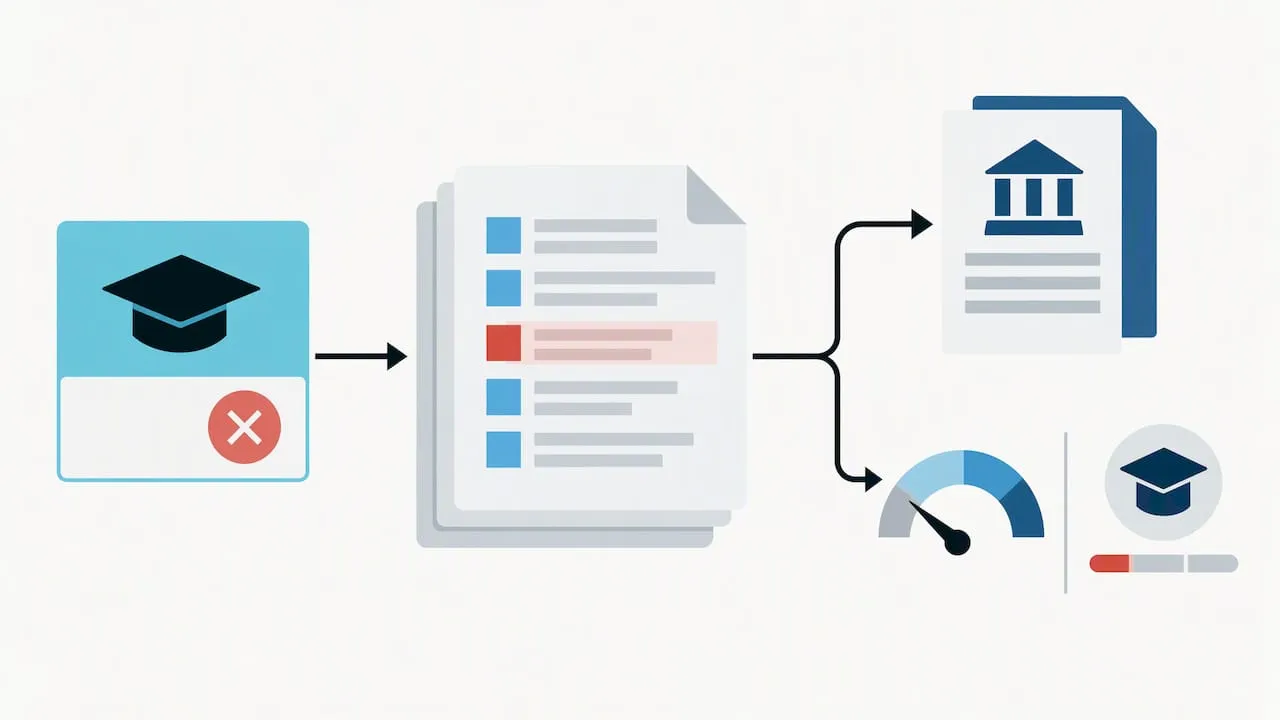
Community colleges and many public state universities generally accept these credits without much friction. Selective and private institutions are a different story: many prefer Advanced Placement or International Baccalaureate credit and decline to transfer dual enrollment credit altogether, so verifying policy at each target college before relying on the credit is worth the extra phone call.
A few things worth checking directly with any target college:
- Whether the specific course is accepted at all, and at what grade threshold.
- Whether it counts toward general education requirements or only as a free elective.
- Whether a credit limit applies to transferred coursework overall.
Nearly 2.5 million high-school students take dual enrollment courses each year, and participation at community colleges has more than tripled over the past two decades, a sign of how mainstream this path has become even as transfer rules stay inconsistent.
What does the research say about the benefits?
The evidence on dual enrollment is genuinely encouraging for most participants. Students who take these courses tend to need less remedial coursework once they reach college, and they show stronger rates of postsecondary enrolment and completion than peers who did not participate, according to a dual-enrollment fact sheet.
- Fewer remedial courses needed, which shortens time to degree.
- Stronger postsecondary enrolment and completion rates among participants.
- Lower tuition bills overall, since credits already earned do not need to be repurchased in college.
State-level data adds a longer-term angle: in Texas, dual enrollment students earned roughly 27%–40% higher wages by age 24 compared with peers who skipped accelerated coursework, a gap that suggests the benefit extends well past the college years themselves.
What are the drawbacks and risks to weigh?
The research is positive overall, but a few real risks deserve attention before signing up. Credit does not transfer everywhere: selective and private colleges often favour AP or IB credit and may decline dual enrollment credit outright. The grade itself is permanent on a college transcript, so a difficult course taken too early can leave a lasting mark on GPA.
- Credit may not transfer to selective or private institutions, unlike more widely accepted AP or IB credit.
- A poor grade becomes part of a permanent college record, not just a high-school one.
- Courses taught online or by college faculty rather than high-school teachers are linked to lower pass rates in some studies, so support structures matter.
- Juggling college-level workload alongside a full high-school schedule takes real time-management skill.
What does dual enrollment actually cost?
Costs vary enormously by state and by programme, which makes this the part families most often get wrong. Many states fund dual enrollment partly or fully through programmes similar to postsecondary enrolment options, and community colleges frequently offer reduced per-credit rates for high-school students taking their courses.
- State-funded or subsidised programmes that cover some or all tuition.
- Reduced community-college rates compared with standard tuition.
- Out-of-pocket costs that can still appear for textbooks, transport to campus, or administrative fees.
Pro Tip: Ask the high-school counsellor directly whether the district covers tuition, and separately ask the college’s financial aid office about fee waivers, since the two offices rarely volunteer this information unprompted.
How should a family decide on dual enrollment?
A good decision rests on three questions: does the credit actually transfer where the student is likely to apply, does the programme offer enough academic support, and does the net cost make sense once savings are weighed against fees.
- Ask both the high school and the target colleges how the specific credit is treated, and get it in writing where possible.
- Confirm who teaches the course, what support is available, and how grades post to the transcript.
- Start these conversations early in the school year, since registration windows for college courses often close well before the high-school semester begins.
| Decision factor | What to check |
|---|---|
| Credit transferability | Confirm acceptance at each target college before enrolling |
| Instructional support | Ask whether the teacher is high-school or college faculty |
| Net cost | Compare tuition saved against fees, books and transport |
How do learning platforms support dual enrollment programmes?
From where we sit building software for membership and education organisations, the administrative side of dual enrollment is where programmes often struggle most: tracking which student is enrolled in which course, coordinating MOUs across institutions, and keeping rosters current. A single platform that centralises registration, reporting and communication removes much of that friction, similar to how we describe tracking learner outcomes for education-focused organisations elsewhere. The same logic applies to community education programmes coordinating across multiple delivery sites.

A final word on making the decision
Dual enrollment is a genuinely strong option for many students, but the value depends entirely on verifying transfer policy before committing, not after. Call the colleges a student actually wants to attend, confirm how the credit applies, and ask about the support structure behind the specific course on offer.
— Rob
FAQ
What does dual enrollment count as?
Dual enrollment courses count as both a high-school credit and a college credit simultaneously, recorded on an official college transcript. Whether that college credit later transfers toward a degree depends on the policy of the receiving institution.
What is another term for dual enrollment?
Dual enrollment is also called dual credit or concurrent enrollment, depending on the state and the delivery model. Early college high school describes a more intensive version of the same idea, where students can finish high school with substantial college credit already completed.
Do dual enrollment classes affect high school GPA?
Dual enrollment grades typically post to the college transcript rather than directly altering the high-school GPA calculation, though policies vary by school district. The college grade itself is permanent and separate from the high-school record.
Should you do dual enrollment?
Dual enrollment tends to suit students aiming for time and tuition savings who can verify in advance that their target colleges accept the specific credits. Families should weigh workload, instructor type and transfer policy, since research shows strong outcomes for many participants but notes that results vary by delivery model.
Sources
For readers who want the original data and guidance behind this explainer, these are the primary sources referenced throughout.
- NCES: Dual enrollment, concurrent enrollment and early college defined
- CCRC: Understanding dual enrollment (fact sheet)
- ERIC: Indiana dual credit guidance and MOUs