Community Education Programs: From Local Halls to Online Learning
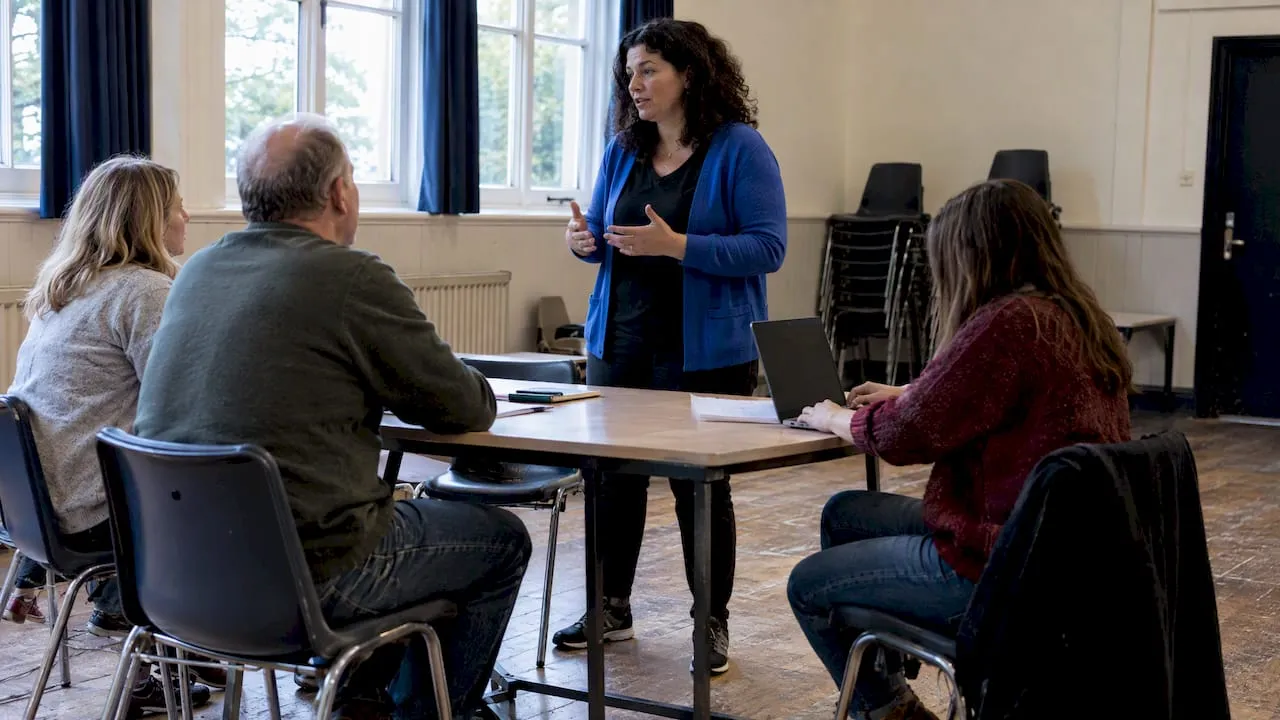
A community education programme is a learning activity, or a connected set of them, run by and for a local community to build skills, confidence and social connection rather than to issue formal qualifications. It serves adults, young people, families and often groups who have found formal education hard to access. We cover where these programmes run, the forms they take and how organisers set one up.
TL;DR:
- Classes can run in libraries, schools after hours, workplaces, or online, but timing, cost, childcare, and transport can determine whether learners attend.
- Council and commissioned adult education services in England reach more than 600,000 adults yearly, combining informal tasters with accredited routes back to qualifications.
- Before choosing classes, organizers should assess residents’ needs, form a community steering group, and launch one pilot course that draws strong attendance before expanding.
- Digital registration, learner portals, attendance tracking, and participation analytics can reduce administration, but programmes need configurable tools because delivery models differ.
Table of Contents
- Defining community education and what sets it apart
- Where community learning happens and how it is delivered
- Common programme types and what they typically offer
- How programmes are planned and run
- Benefits and measurable impact of community education
- How digital tools support community education delivery
- A practitioner’s view on what keeps community education relevant
- FAQ
- Sources
Defining community education and what sets it apart
Community education differs from formal schooling in one key way: it is built around the people taking part, not a fixed national curriculum. Learners often help shape what gets taught, and sessions respond to local needs rather than exam timetables. National frameworks such as SOLAS’s community education model describe it as learner-centred and partnership-based, with flexible scheduling and group learning that leads, when wanted, into further qualifications.
A few features recur across most programmes:
- They run in partnership with local groups, councils or voluntary organisations rather than as a single institution’s product.
- Timetables flex around work, caring duties and other adult commitments.
- Provision is often non-accredited by design, lowering the barrier for people returning to learning after a long gap.
- Goals include empowerment and social justice alongside skills, not just qualifications.
This mix of flexibility and community ownership is what UNESCO’s work with Community Learning Centres also recognises: locally managed, non-formal spaces built to meet needs that formal schools do not always reach.
Where community learning happens and how it is delivered
Community education rarely needs a purpose-built campus. Programmes typically run wherever a community already gathers, which keeps costs down and makes attending feel less intimidating for people returning to learning.
Common venues include:
- School buildings used out of normal hours, in evenings or at weekends.
- Community centres, libraries and village halls.
- Workplaces, for job-specific or basic skills training.
- Faith venues and other trusted local meeting spaces.
- Online or hybrid sessions, increasingly used alongside in-person classes.
Delivery formats vary just as widely: short evening classes, one-off workshops, longer community projects, formal Community Learning Centres and service-learning placements that combine study with local volunteering. Access matters as much as location. Programme organisers routinely think through timing, cost, childcare and transport, since any one of these can stop an otherwise interested learner from turning up.
Common programme types and what they typically offer
A handful of recognisable models cover most of what you will find locally, each with its own structure and audience.
- UNESCO Community Learning Centres (CLCs): flexible, locally managed spaces offering literacy, vocational training and community services, adopted widely since 1998 and shaped to local needs in each area.
- Adult and community education (ACE): council or education and training board provision combining informal and accredited courses; in England, these services educate, train and retrain more than 600,000 adults a year.
- Full-Service Community Schools (FSCS): schools that coordinate education with health, family and development support through local partnerships, often extending services into evenings, weekends and summer.
- Vocational, arts and intergenerational programmes: trade skills courses, community arts projects and sessions that bring older and younger generations together to share learning.
- Civic and service-learning initiatives: projects pairing study with local volunteering, building both skills and community ties.
How programmes are planned and run
Most programmes start with a needs assessment: organisers talk to residents, local services and potential learners before deciding what to offer. This keeps the curriculum relevant rather than guessed at from head office.
From there, a typical structure includes:
- A coordinator or director who manages logistics, partnerships and quality.
- A steering or advisory group that gives the community a say in direction.
- Tutors who may be paid professionals, volunteers or peer facilitators drawn from the community itself.
- Funding that blends local government grants, NGO support and sometimes modest course fees.
Co-production, where learners influence what and how they are taught, tends to separate strong programmes from ones that simply replicate classroom teaching in a new venue. Balancing outside resources like funding and venues with genuine learner input is what keeps a programme both viable and trusted.
Pro Tip: Start small with a single well-attended pilot course before building a full timetable; it builds trust faster than launching several classes at once.
Benefits and measurable impact of community education
The outcomes reported across programmes cluster around three areas: social, educational and economic, and health.
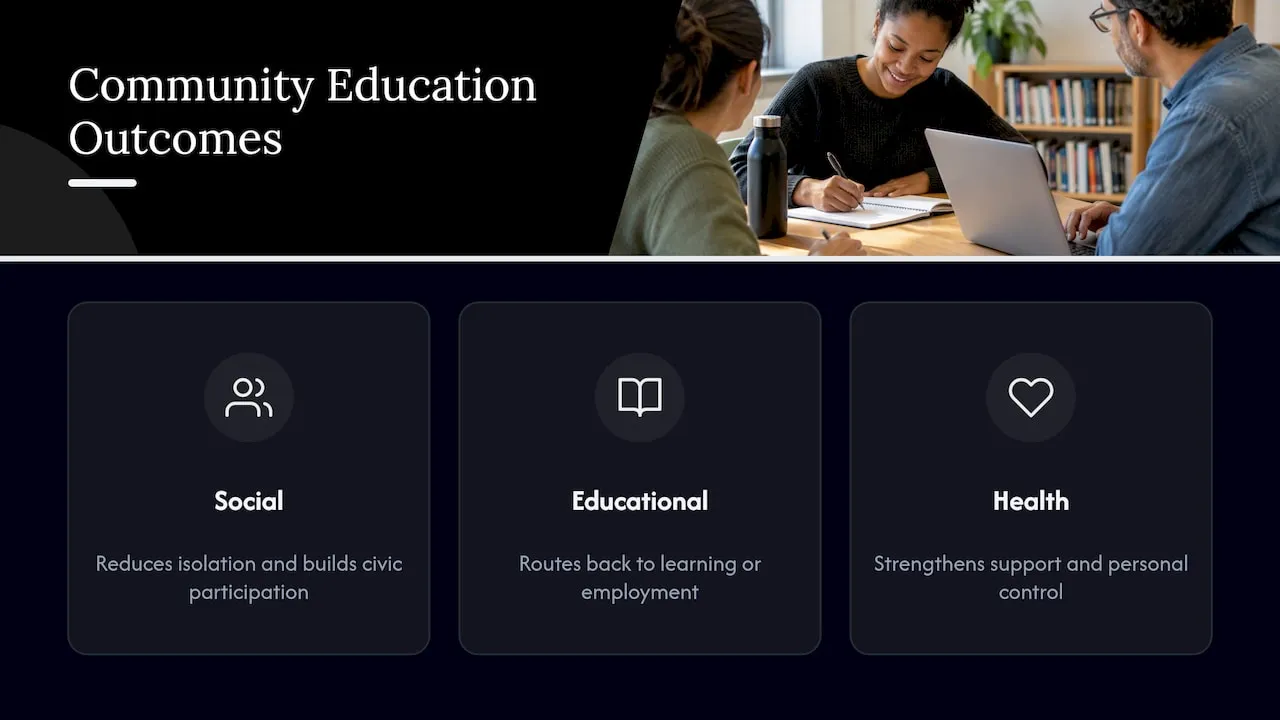
Socially, programmes reduce isolation and build civic participation by giving people a reason to meet regularly with neighbours. Educationally, they often work as a route back into formal learning or employment, particularly for adults who left school early or lack confidence in classroom settings. Council-run and commissioned ACE services show this gateway effect clearly, mixing unaccredited taster courses with pathways to qualifications. Health and wellbeing also feature consistently, since community-centred approaches that mobilise local volunteers and peer networks tend to strengthen both the support on offer and people’s sense of control over their own lives.
More than 600,000 adults a year take part in council-run adult and community education in England alone, according to the Local Government Association. That scale shows how embedded this kind of learning already is in everyday community life.
How digital tools support community education delivery
Running a community programme well still comes down to people and trust, but the administrative side benefits from the right digital support. Event and learner management tools can handle class scheduling and attendance tracking without extra paperwork for tutors. Learner portals give participants one place to find resources, message organisers and continue blended learning between sessions, a model we describe in more detail in our piece on understanding and promoting lifelong learning.
Useful capabilities for programme organisers include:
- Online registration and payment handling for course fees, where fees apply.
- Member or learner portals for resources and ongoing communication.
- Event tools to coordinate sessions, as outlined in our guide to event and learning management systems.
- Analytics to track participation and progression over time.
Configurability matters here more than any single feature, since no two community programmes run the same way.
A practitioner’s view on what keeps community education relevant
Community education works because it starts from what people already know and need, not from a syllabus written elsewhere. Pairing that community ownership with simple digital tools for registration and tracking does not change the spirit of the work, it just makes the outcomes easier to see and sustain.
— Rob
FAQ
What is classed as a community school?
A community school is typically a publicly funded school that coordinates education with additional supports such as health, family and after-school services through local partnerships. The Full-Service Community School model extends this further, often running services into evenings, weekends and summer months.
What are five examples of community education programmes?
Common examples include UNESCO Community Learning Centres, council-run adult and community education courses, Full-Service Community Schools, workplace-based skills training, and service-learning projects that combine study with local volunteering. Each targets a different mix of age groups and goals, from literacy to civic participation.
What is the impact of community education?
Reported impacts include stronger social cohesion, reduced isolation and improved routes back into formal learning or employment, particularly for adults who missed out on these earlier in life. Adult and community education services in England alone reach more than 600,000 adults a year, showing the scale of this kind of provision.
What is a simple definition of community education?
Community education is learning organised by and for a local community, usually flexible, often non-accredited, and focused on building skills, confidence and social ties rather than formal qualifications. National frameworks such as SOLAS’s community education model describe it as learner-centred and partnership-based.
How do I find or start a local community education programme?
Start by checking with your local council, library or education and training board, since most areas already run some form of adult or community education. To start a new programme, begin with a needs assessment among local residents, find a familiar venue such as a school or community centre, and build a small steering group to guide what gets taught.
Sources
- UNESCO and partners advance community learning and governance through urban community
- Full-Service Community Schools (US Department of Education brochure)
- Learning for Life: the role of adult community education in developing thriving local communities (Local Government Association)
- Community education framework (SOLAS)