Boost remote member engagement: a practical how-to guide

TL;DR:
- Remote engagement requires intentional design beyond traditional offline activities to foster community.
- Effective tools include integrated CRM, event management, and communication platforms supporting personalized interaction.
- Building trust through empathy, transparency, and consistent contact is key to increasing member participation.
Remote members going quiet is one of the most frustrating challenges facing professional associations and nonprofits today. You plan events, send updates, and build resources, yet participation dwindles and the community energy you worked hard to create starts to fade. This guide addresses that problem directly. We cover specific strategies, practical tools, and an actionable playbook designed for membership organisation leaders who need more than vague advice. Whether your members are spread across time zones or simply struggling to connect digitally, you will find step-by-step guidance here that you can implement straight away.
Table of Contents
- Identifying the unique challenges of remote member engagement
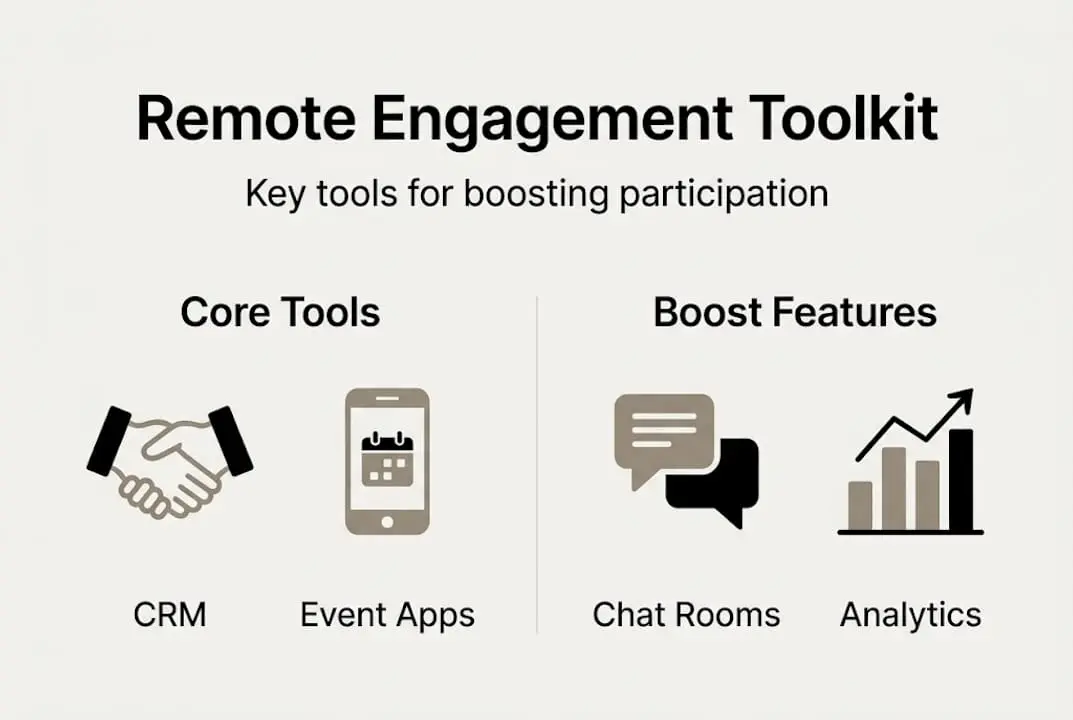
- Essential tools and technology for remote member engagement
- Step-by-step playbook for boosting remote member engagement
- Measuring engagement and making improvements
- What most organisations miss about remote member engagement
- How Colossus Systems streamlines remote member engagement
- Frequently asked questions
Key Takeaways
| Point | Details |
|---|---|
| Understand common barriers | Recognising remote-specific challenges is the first step toward meaningful engagement. |
| Use the right digital tools | Integrated technology simplifies processes and boosts two-way member interaction. |
| Follow proven engagement steps | A structured approach with virtual events and networking improves participation. |
| Monitor and adapt continuously | Tracking metrics allows you to refine and strengthen your remote engagement strategy. |
| Empathy is essential | Beyond tools, a sense of community comes from authentic leadership and human connection. |
Identifying the unique challenges of remote member engagement
Traditional engagement strategies were built around physical presence. Networking over coffee, hands-on workshops, and informal hallway conversations created the social glue that kept members coming back. When those touchpoints disappear, many organisations find that their usual approaches simply do not translate into the digital space. Sending the same newsletter or hosting the occasional webinar rarely produces the same energy.
The unforeseen consequences of remote work confirm that distance introduces barriers that go well beyond logistics. Here are the core challenges your organisation is likely facing:
- Time zone conflicts: Scheduling a single event that suits members across multiple regions means someone always misses out, which gradually erodes their sense of belonging.
- Digital fatigue: Members are already managing full inboxes, video calls, and notifications in their day jobs. Adding more screen time for association activities can feel like a burden rather than a benefit.
- Lack of informal networking: Spontaneous conversation rarely happens online. Structured agendas replace the organic interactions that often produce the most valuable connections.
- One-size-fits-all communication: Generic emails and mass announcements make members feel like numbers rather than valued participants.
“Building a genuine digital community requires intentional design, not just digital versions of offline activities. Leaders who treat remote engagement as an afterthought will consistently see declining participation.”
These remote productivity challenges compound over time. When members feel overlooked, they skip events, ignore communications, and eventually let their membership lapse. The community-building barriers you face are real, and disengagement leads to missed opportunities and loss of community cohesion across fundraising, volunteerism, and attendance. Naming these problems clearly is the first step toward solving them.
Essential tools and technology for remote member engagement
Understanding the obstacles sets the stage for addressing them, starting with the right digital infrastructure. Without the proper tools in place, even the most thoughtful engagement strategy will struggle to gain traction.
Here is a comparison of the core platform categories your organisation should consider:
| Platform type | Key features | Best use case |
|---|---|---|
| CRM software | Contact management, activity tracking, segmentation | Personalising outreach and tracking member history |
| Member management platform | Renewals, directories, access control | Automating admin and organising member data |
| Event management tools | Registration, reminders, attendance tracking | Running virtual events and webinars at scale |
| Communication platforms | Discussion threads, messaging, email automation | Keeping members informed and connected daily |
At a minimum, your technology stack should support video conferencing, persistent discussion threads, and personalised notifications. These three features alone significantly raise the likelihood of regular participation.
To audit your current setup and move toward a stronger infrastructure, follow these steps:
- List every tool your organisation currently uses for communication, events, and member data.
- Identify where member information is siloed or where manual processes slow your team down.
- Research integrated platforms that combine CRM, event management, and communication in one place.
- Run a pilot programme with a small member segment before rolling out organisation-wide.
- Gather feedback from both staff and members after the pilot to refine the setup.
Adopting an integrated platform increases member participation and simplifies communication across your organisation. For practical guidance on maximising your digital tools, our digital communication tips and improving internal comms resources offer detailed next steps.

Pro Tip: Choose platforms that integrate natively rather than relying on third-party connectors. Every additional tool that requires manual data transfer adds administrative burden and creates gaps in your member data.
Step-by-step playbook for boosting remote member engagement
Once technology is in place, here is exactly how to use it to foster engagement and a genuine sense of community among your remote members.
- Segment your membership base. Not all members have the same needs or availability. Group them by region, interest, membership tier, or engagement level so you can tailor outreach accordingly.
- Create a consistent event calendar. Predictability matters. Members are more likely to attend when they know what to expect and can plan in advance.
- Mix event formats. Alternate between formal presentations, informal networking sessions, and interactive workshops to cater to different preferences.
- Personalise every touchpoint. Use your CRM to send messages that reference a member’s specific interests, recent activity, or upcoming renewal.
- Build in recognition. Publicly acknowledge active members during events and in newsletters. Recognition is one of the most cost-effective engagement tools available.
- Gather feedback continuously. Short post-event surveys and quick polls keep members feeling heard and provide data you can act on.
Virtual events and interactive sessions can significantly enhance participation and member satisfaction when structured thoughtfully. Here is how different approaches compare:
| Approach | Strengths | Best for |
|---|---|---|
| Monthly webinars | High reach, easy to record and share | Knowledge-sharing and thought leadership |
| Themed chat sessions | Informal, encourages peer connection | Community building and networking |
| Hybrid workshops | Combines learning with interaction | Skills development and member retention |
For detailed guidance on running events effectively, our resources on setting up webinars and virtual networking tips will help you design sessions that members genuinely want to attend.
Pro Tip: Send a personalised follow-up message within 24 hours of any event. Reference something specific from the session and invite the member to a relevant next step. This small action dramatically improves the likelihood of repeat attendance.
Measuring engagement and making improvements
After taking action, it is essential to measure what works and adapt as you go. Gut instincts are useful, but data tells you the real story about how your members are responding.
The primary KPIs (key performance indicators) to monitor are:
- Session attendance rates: Are the right members showing up, and is attendance growing or declining over time?
- Feedback response rates: A low response rate on post-event surveys often signals disengagement before it becomes visible in attendance figures.
- Message board and forum activity: Active discussion threads indicate a healthy community. Silence is a warning sign.
- Email open and click-through rates: These tell you whether your communication is relevant and timely to your audience.
- Renewal and retention rates: Ultimately, engaged members renew. Tracking renewals by segment reveals which groups are thriving and which need attention.
Participation metrics, when captured and analysed consistently, ensure the ongoing effectiveness of your engagement strategies. Research into sponsor guidance for remote engagement also highlights the value of regular review cycles for distributed communities.
Watch for these common pitfalls and act quickly when you spot them:
- Declining attendance over three consecutive events: Review the format, timing, and topic relevance before assuming the problem is member apathy.
- No response to surveys: Try shorter surveys with one or two questions and offer a small incentive for completing them.
- Low email engagement: Segment your audience and test different subject lines and sending times to find what resonates.
For more context on building a monitoring routine, our productivity monitoring tips outline a practical approach for membership leaders.
What most organisations miss about remote member engagement
Most advice focuses heavily on technology and structure, and understandably so. The right tools and a consistent schedule do matter. But in our experience working with membership organisations, the leaders who see the strongest engagement results share something that no platform can replicate: they make members feel genuinely seen.
Technology enables connection. It does not create it. When organisations prioritise attendance numbers and event frequency above authentic interaction, they often end up with members who show up but do not participate. That is a subtle but important distinction.
The most effective engagement we have observed comes from leaders who are willing to experiment, admit when something is not working, and invest time in understanding why individual members joined in the first place. Building offline connections in digital spaces requires empathy, not just a better event platform.
Real growth comes from trust. And trust is built through consistency, transparency, and a genuine interest in member success. These qualities cannot be automated, but they can be systematically supported by the right organisational habits and tools.
How Colossus Systems streamlines remote member engagement
If the strategies above have highlighted gaps in your current setup, Colossus Systems is designed to close them. Our platform brings together the tools your organisation needs to engage remote members effectively, all in one place.
From event management software that handles registration, reminders, and follow-ups automatically, to CRM for remote teams that tracks member history and personalises outreach, we give your team the infrastructure to scale engagement without scaling your admin workload. Our member management features also provide the analytics you need to measure what is working and make confident improvements. Explore how Colossus Systems can support your organisation’s remote engagement goals today.
Frequently asked questions
What are the biggest mistakes in remote member engagement?
Failing to personalise communication and not regularly measuring engagement are the two most common mistakes, as both prevent organisations from understanding and responding to member needs.
How can I tell if my remote engagement strategies are working?
Track attendance, feedback response rates, and online interaction levels regularly. Monitoring KPIs like participation and feedback is essential to knowing when to adjust your approach.
Which digital tools are essential for remote member engagement?
Reliable event platforms, a CRM system, and effective messaging tools form the core of any remote engagement setup. Integrated platforms are particularly effective because they reduce data silos and simplify team workflows.
How often should I run virtual events for remote members?
Hosting virtual events monthly or quarterly maintains consistent participation and community energy. Regular events improve participation rates and help members build a habit of showing up.
What are some effective ways to make remote members feel more connected?
Personalised outreach, online networking sessions, and regular opportunities for feedback create a meaningful sense of belonging. Personalisation and feedback are consistently among the highest-impact strategies for remote member connection.