Improving Internal Communication for Member Engagement

Most british membership organisations discover that nearly 60 percent of internal messages are overlooked or ignored by members. For managers determined to enhance engagement and simplify operations, missing these touchpoints means missed opportunities. Understanding how your existing communication channels really perform is the first step toward bridging these gaps and building a more connected, responsive community.
Table of Contents
- Stage 1: Assess Existing Communication Channels
- Stage 2: Define Clear Communication Protocols
- Stage 3: Integrate Unified Digital Platforms
- Stage 4: Implement Regular Feedback Mechanisms
- Stage 5: Monitor Communication Effectiveness
Quick Summary
| Key Insight | Explanation |
|---|---|
| 1. Assess Existing Channels | Evaluate current communication methods to identify gaps and strengths. |
| 2. Define Communication Protocols | Develop clear guidelines for using communication channels effectively. |
| 3. Integrate Digital Platforms | Implement unified platforms to enhance seamless member communication. |
| 4. Implement Regular Feedback | Establish channels for member feedback to improve communication strategies. |
| 5. Monitor Communication Effectiveness | Regularly track metrics to refine communication based on performance data. |
Stage 1: Assess existing communication channels
Effective internal communication begins with understanding your current methods and identifying potential gaps in member engagement. By systematically evaluating how information flows within your organisation, you can pinpoint areas for improvement and develop more strategic communication approaches.
Start by conducting a comprehensive audit of all existing communication channels. This involves mapping out current platforms such as email newsletters, internal messaging systems, social media groups, virtual meeting tools, and physical notice boards. Understanding the digital communication landscape helps organisations identify both strengths and potential communication barriers. Document each channel’s frequency of use, average engagement rates, and member feedback. Consider creating a detailed spreadsheet tracking metrics like open rates, response times, and overall member interaction.
Next, gather qualitative insights by soliciting direct feedback from members through surveys, focus groups, or informal interviews. Ask specific questions about their preferred communication methods, information accessibility, and any challenges they experience in staying informed. This approach provides nuanced understanding beyond quantitative data and helps uncover subtle communication preferences that might not be immediately apparent.
Pro tip: Create a communication channel matrix that categorises each platform’s purpose, target audience, and current performance to help streamline your assessment process and identify strategic improvements.
Below is a summary matrix to help assess common internal communication channels and their impact in membership organisations:
| Channel Type | Primary Purpose | Strengths | Common Challenges |
|---|---|---|---|
| Email Newsletters | Announcements, Updates | Broad reach, easy archiving | Low open rates, information overload |
| Internal Messaging | Quick conversations | Real-time responses, informal | Message fragmentation, distractions |
| Social Media Groups | Community engagement | Builds rapport, interactive | Privacy issues, mixed audiences |
| Virtual Meeting Tools | Remote collaboration | Face-to-face interaction | Scheduling, technology barriers |
| Notice Boards | On-site information | Visible to all at location | Lack of engagement, outdated info |
Stage 2: Define clear communication protocols
Establishing robust communication protocols transforms how your organisation manages information sharing and member interactions. By creating systematic guidelines, you ensure consistent messaging and reduce potential misunderstandings that can hinder member engagement.

Effective communication strategies require developing comprehensive guidelines that specify how different communication channels should be utilised. Begin by documenting specific protocols for each communication method email, instant messaging, video conferencing, and formal documentation. Outline expectations such as response times expected communication frequency and appropriate communication tones for various contexts. Specify which platforms are suitable for urgent communications time sensitive updates and routine information sharing.
Implement a training programme to ensure all team members understand and can apply these communication protocols consistently. This involves creating clear documentation explaining the protocols conducting workshops to demonstrate practical application and providing opportunities for team members to ask questions and seek clarification. Consider developing a communication handbook that serves as a reference guide for your organisation which team members can easily access and review.
Pro tip: Develop a communication decision matrix that helps team members quickly determine the most appropriate communication channel based on message urgency content type and recipient preferences.
Stage 3: Integrate unified digital platforms
Successfully integrating unified digital platforms is crucial for creating seamless communication channels that connect your entire membership organisation. This process transforms how members interact collaborate and engage with your organisation.
Organisational communication strategies require a comprehensive approach to digital platform integration. Begin by conducting a thorough audit of your existing digital tools and identifying potential integration points. Look for platforms that offer robust API connections allowing different systems to communicate smoothly. Select tools that provide centralised dashboards enabling members to access multiple services from a single interface. Prioritise platforms with cross-channel functionality such as single sign-on capabilities shared user profiles and integrated messaging systems.
Implement a phased rollout strategy to minimise disruption and ensure smooth adoption. Start by migrating critical communication functions to the unified platform gradually introducing new features and training members on their use. Create comprehensive user guides and provide ongoing support to help members navigate the new integrated system. Establish clear communication about the benefits of the new platform highlighting improved accessibility streamlined interactions and enhanced member experience.
Pro tip: Conduct a pilot programme with a small group of members to test the integrated platform and gather feedback before full organisational implementation.
The following table compares key features of digital platform integration versus traditional segmented systems:
| Feature | Unified Digital Platform | Segmented Communication Tools |
|---|---|---|
| Member Accessibility | Centralised, single sign-on | Multiple logins needed |
| Information Consistency | Unified data and updates | Risk of miscommunication |
| User Experience | Streamlined, cohesive | Fragmented, inconsistent |
| Integration of Services | High, across all functions | Low, siloed between systems |
Stage 4: Implement regular feedback mechanisms
Establishing robust feedback mechanisms is fundamental to understanding member needs and continuously improving your organisation’s communication strategies. This critical process transforms passive communication into an active dialogue that empowers your members and drives organisational growth.
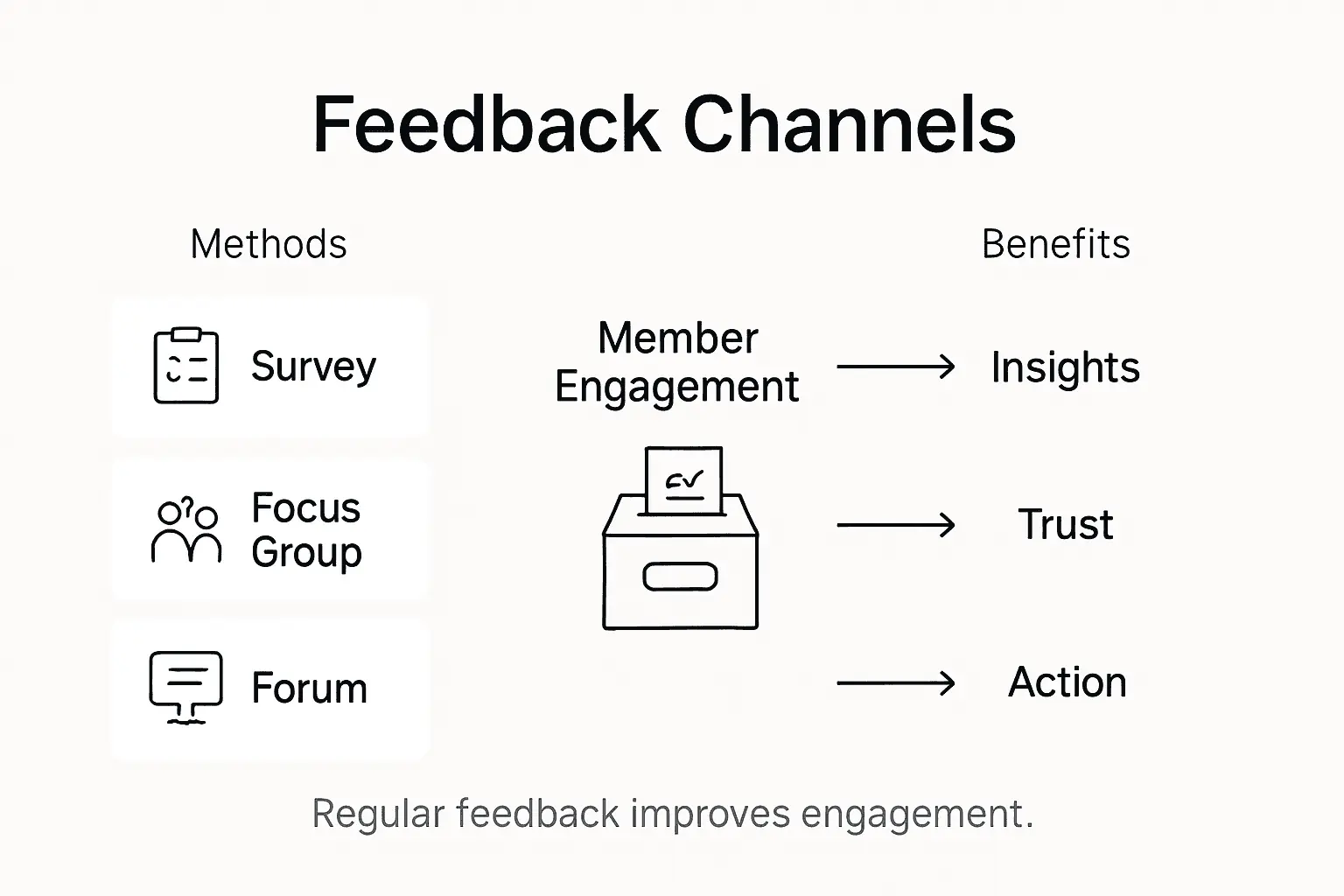
Effective communication strategies require creating multiple channels for members to share their insights and experiences. Design a comprehensive feedback ecosystem that includes anonymous online surveys quarterly member forums digital suggestion boxes and periodic one-on-one feedback sessions. Ensure these mechanisms are accessible easy to use and cover various aspects of member experience including communication quality event satisfaction membership value and overall organisational engagement. Develop standardised feedback templates that capture quantitative ratings and qualitative commentary allowing for nuanced insights into member perspectives.
Create a systematic approach to feedback analysis and implementation. Establish a dedicated team responsible for collecting reviewing and acting on member feedback. Develop a transparent reporting mechanism where members can see how their input directly influences organisational decisions. Communicate clear timelines for feedback review and highlight specific changes implemented as a result of member suggestions. This approach demonstrates that your organisation values member input and is committed to continuous improvement and responsive communication.
Pro tip: Implement a quarterly feedback review cycle that includes presenting key insights to leadership and developing actionable improvement strategies based on member recommendations.
Stage 5: Monitor communication effectiveness
Monitoring communication effectiveness is crucial for ensuring your membership organisation maintains robust and responsive communication channels. This strategic approach allows you to continuously refine and improve your communication strategies based on tangible performance metrics.
Performance management techniques require implementing comprehensive tracking and analysis systems that measure multiple dimensions of communication success. Develop a robust analytics framework that captures key performance indicators such as message open rates response times member engagement levels and feedback sentiment. Utilise digital tools that provide real time dashboards tracking communication metrics across different platforms. Create comparative benchmarks that allow you to understand how communication performance evolves over time and identify specific areas requiring improvement.
Establish a systematic review process where communication metrics are regularly evaluated and discussed with key stakeholders. Schedule monthly or quarterly communication performance reviews that involve leadership team members responsible for membership engagement. During these reviews analyse detailed reports highlighting communication trends member interaction patterns and potential communication barriers. Use these insights to make data driven decisions about communication strategy adjustments training requirements and platform optimisations.
Pro tip: Implement an automated reporting system that generates comprehensive communication performance reports enabling quick identification of trends and potential improvement opportunities.
Elevate Your Member Engagement Through Seamless Communication
Improving internal communication is essential for any membership organisation striving to deepen member engagement and streamline information flow. If you find challenges in assessing communication channels or integrating unified digital platforms to keep members informed and involved, Colossus Systems offers powerful solutions tailored to your needs. Our platform helps you implement clear communication protocols, centralise your member interactions, and capture valuable feedback, turning scattered approaches into a cohesive experience.
Discover how you can enhance member satisfaction and operational efficiency by embracing an all-in-one platform designed specifically for membership organisations, associations, and nonprofits. Take the next step towards transforming your communication strategy by connecting with our team today at Colossus Systems Contact. Explore the benefits of streamlined member management, integrated messaging, and targeted engagement tools that empower your organisation to grow sustainably.
Frequently Asked Questions
How can I assess my organisation’s communication channels for better member engagement?
To assess your organisation’s communication channels, conduct a comprehensive audit of all platforms currently in use. Document their frequency, engagement rates, and member feedback to identify areas for improvement within the next 30 days.
What steps should I take to define clear communication protocols for my team?
To define clear communication protocols, outline specific guidelines for each communication method, including expected response times and tone. Develop a communication handbook and provide training sessions to ensure all team members understand and adhere to these protocols within the next two months.
How can I integrate digital platforms to improve communication effectiveness?
Begin integrating digital platforms by auditing your existing tools and identifying potential integration points. Prioritise selecting platforms that offer centralised dashboards and smooth API connections, aiming for initial integration within three months.
What are effective ways to gather feedback from members about communication strategies?
To gather effective feedback, implement channels like anonymous online surveys and quarterly member forums. Create a systematic process for analysing this feedback and actively communicate changes made based on member input within 60 days.
How can I monitor the effectiveness of my internal communication strategies?
Monitor the effectiveness of your internal communication by establishing key performance indicators such as message open rates and member engagement levels. Conduct regular performance reviews to analyse these metrics and make data-driven adjustments every quarter.
What tools can help streamline internal communication for better member engagement?
Utilise tools that centralise communication and provide cross-functional capabilities, such as integrated messaging systems and centralised dashboards. Start by assessing your current tools and identifying features that can reduce communication barriers within the next month.
Recommended
- Digital Communication Strategies for Member Organisations|CS
- Effective Communication Tips for Membership Organizations|CS
- What Is Membership Engagement? Complete Overview | Colossus Systems
- Improving Member Engagement: Proven Strategies for 2025|CS
- Understanding the Importance of Customer Communication – My WordPress