Virtual Event Companies: Boosting Member Engagement

Every event coordinator knows the struggle of keeping members engaged when meeting face to face is not an option. For membership organisations across the world, finding reliable ways to connect, manage participants, and deliver value online has become essential. Virtual event companies now offer comprehensive platforms and software solutions that support everything from seamless registration to robust networking spaces, helping organisations build stronger member connections and foster long-term retention.
Table of Contents
- What Virtual Event Companies Offer
- Types Of Virtual Events For Associations
- Key Features Membership Groups Should Prioritise
- Legal, Privacy, And Accessibility Considerations
- Risks, Costs, And Common Pitfalls
Key Takeaways
| Point | Details |
|---|---|
| Comprehensive Digital Platforms | Virtual event companies offer tools for seamless event coordination, enhancing online engagement and interactivity. |
| Variety of Event Types | Membership organisations can choose from various virtual events to meet unique goals, ensuring effective knowledge sharing and networking. |
| Prioritise Key Features | Essential platform features like personalised profiles and advanced analytics are crucial for delivering meaningful member experiences. |
| Legal and Accessibility Compliance | Organisations must address legal, privacy, and accessibility considerations to create inclusive and compliant virtual environments. |
What Virtual Event Companies Offer
Virtual event companies provide comprehensive digital platforms that transform how membership organisations host and engage audiences online. Virtual event platforms enable seamless coordination of complex online gatherings, from academic conferences to professional summits.
These digital solutions offer membership organisations powerful tools to maintain connection and interactivity, even when physical meetings are impossible. Key features typically include:
- Live streaming capabilities for real-time presentations
- Interactive networking spaces for participant engagement
- Abstract and paper submission management systems
- Payment processing and registration workflows
- On-demand content access for post-event learning
- Analytics dashboards to track participant interactions
The technological infrastructure enables organisations to create immersive digital experiences that rival traditional in-person events. Participants can join from anywhere globally, accessing high-quality content without geographical limitations.
Most virtual event platforms now incorporate sophisticated engagement mechanisms like breakout rooms, Q&A sessions, polling, and personalised recommendation engines. These features transform passive viewing into active participant experiences, ensuring members remain connected and motivated.
Pro tip: Before selecting a virtual event platform, request detailed demonstrations and participant experience walkthroughs to ensure the technology matches your organisation’s specific engagement requirements.
Types Of Virtual Events For Associations
Membership organisations today have numerous options for creating engaging virtual events that maintain strong community connections. Virtual conference strategies enable associations to deliver compelling experiences across diverse digital platforms.
The most common types of virtual events for associations include:
- Webinars featuring expert speakers and industry insights
- Professional development workshops with interactive learning sessions
- Annual conferences transformed into multi-day digital experiences
- Networking symposiums facilitating member-to-member interactions
- Training seminars delivering skill-building content
- Panel discussions exploring critical industry trends
Each virtual event type serves unique organisational objectives, from knowledge sharing to professional networking. Associations can leverage technology to create tailored experiences that transcend geographical boundaries, allowing members to connect, learn, and grow regardless of physical location.

The digital landscape has dramatically expanded event possibilities, enabling more flexible, accessible, and cost-effective engagement strategies. Organisations can now mix synchronous live events with asynchronous on-demand content, providing members with unprecedented learning and connection opportunities.
Here is a comparison of how different virtual event types contribute to organisational goals:
| Event Type | Main Organisational Benefit | Typical Audience Size |
|---|---|---|
| Webinar | Expert knowledge sharing | 50–500 participants |
| Annual conference | Broad industry networking | 100–2,000 participants |
| Professional workshop | Hands-on skills development | 20–150 participants |
| Panel discussion | Insight on trends | 50–300 participants |
| Networking symposium | Member relationship building | 30–300 participants |
Pro tip: Design your virtual events with multiple engagement touchpoints to ensure participants feel actively involved and not just passive viewers.
Key Features Membership Groups Should Prioritise
Successful virtual event platforms require robust features that transform digital interactions into meaningful member experiences. Membership management systems must provide comprehensive tools that go beyond simple event registration.
Key features membership groups should prioritise include:
- Personalised member profiles that capture individual preferences and engagement history
- Advanced registration workflows with flexible payment options
- Real-time analytics tracking participant interactions and satisfaction
- Multi-channel communication tools for pre and post-event engagement
- Interactive engagement mechanisms like live polling, Q&A sessions, and breakout rooms
- Content management systems enabling seamless resource sharing
Technology has revolutionised how associations connect with their members. Modern virtual platforms offer unprecedented opportunities to create tailored, dynamic experiences that adapt to individual member needs and organisational objectives.
The most effective membership platforms integrate multiple functionalities, transforming digital events from simple information delivery to immersive, interactive experiences. By leveraging sophisticated technological capabilities, organisations can build deeper, more meaningful connections with their member communities.
Pro tip: Select virtual event platforms that offer granular customisation options, allowing you to design experiences that precisely match your organisation’s unique engagement strategy.
Legal, Privacy, And Accessibility Considerations
Navigating the complex landscape of legal and accessibility requirements is crucial for membership organisations hosting virtual events. Website accessibility guidelines provide essential frameworks for creating inclusive digital experiences.
Key legal and privacy considerations include:
- Explicit participant consent for recording and data collection
- Transparent privacy policies that clearly outline data usage
- Secure data handling compliant with regulations like GDPR and CCPA
- Accessibility features supporting diverse participant needs
- Opt-out mechanisms for data sharing and event participation
- Regular policy updates to reflect changing legal standards
Accessibility goes beyond legal compliance, representing a fundamental commitment to inclusive engagement. Virtual event platforms must provide comprehensive support for participants with different abilities, including screen reader compatibility, captioning, and alternative navigation options.
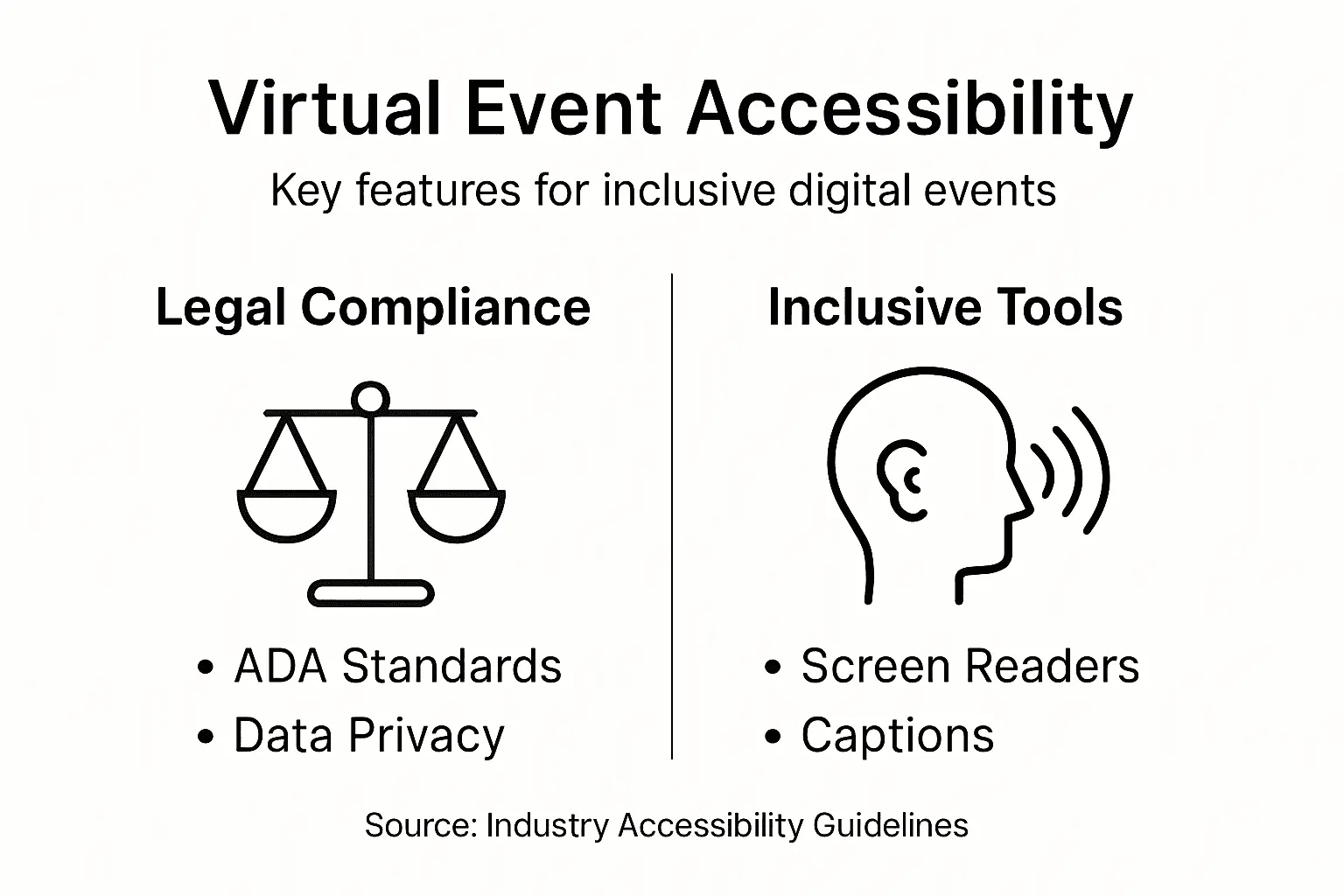
Organisations must proactively address potential barriers by implementing robust technological solutions that meet international accessibility standards. This approach not only mitigates legal risks but also demonstrates a genuine commitment to creating welcoming, equitable digital environments for all members.
Below is a summary of legal, privacy, and accessibility issues for virtual events and why they matter:
| Consideration | Why It Matters | Common Solution |
|---|---|---|
| Data privacy | Protects participant information | Clear compliance policies |
| Accessibility | Ensures inclusivity for all | Captioning, screen reader support |
| Participant consent | Required by major regulations | Explicit opt-in forms |
| Regular updates | Adapts to changing laws | Scheduled policy reviews |
Pro tip: Conduct regular accessibility audits of your virtual event platforms to ensure ongoing compliance and inclusivity for all potential participants.
Risks, Costs, And Common Pitfalls
Managing virtual events requires strategic planning to mitigate potential challenges and unexpected expenses. Event risk management strategies help organisations anticipate and navigate potential obstacles effectively.
Common risks and pitfalls for virtual events include:
- Technology infrastructure failures causing disrupted participant experiences
- Inadequate platform selection leading to poor engagement
- Security vulnerabilities compromising participant data
- Insufficient technical support creating participant frustration
- Limited audience engagement mechanisms
- Unclear event objectives reducing overall value
- Budget overruns from unexpected technical requirements
Cost management demands careful assessment of technological needs and potential hidden expenses. Organisations must invest strategically in robust platforms that offer comprehensive features while maintaining flexibility and scalability.
Successful virtual events require proactive risk mitigation, thorough planning, and continuous evaluation. By understanding potential challenges and implementing comprehensive strategies, membership organisations can create meaningful digital experiences that deliver consistent value to their members.
Pro tip: Allocate approximately 15-20% of your event budget as a contingency fund to address unexpected technical or logistical challenges during virtual events.
Elevate Your Member Engagement with Tailored Virtual Event Solutions
Many membership organisations face challenges managing seamless virtual events that truly engage members while handling registrations, payments, and interactive features effectively. This article highlights critical pain points such as ensuring personalised member experiences, enhancing interactivity, and complying with evolving legal and accessibility standards. If you are striving to transform passive viewers into active participants and want a platform that integrates event planning with member management and communication, Colossus Systems offers the comprehensive solution you need.
Our SaaS platform is crafted specifically for professional membership organisations aiming to grow their impact by streamlining workflows across virtual event hosting, member CRM, email marketing, and secure payment processing. With advanced customisation options and real-time analytics, you can create immersive digital experiences that keep your community connected and motivated. Discover how our unified platform can address your unique engagement strategy and reduce the risks commonly associated with virtual events.
Ready to boost your membership organisation’s growth through smarter virtual events and member management Get started today by reaching out to Colossus Systems and explore our tailored solutions Our team is here to guide you through a personalised walkthrough ensuring you select the best features to meet your goals. Don’t let technological barriers stall your progress Connect with us now and transform how your organisation hosts engaging experiences.
Frequently Asked Questions
What features should I look for in a virtual event platform?
Successful virtual event platforms should include personalised member profiles, advanced registration workflows, real-time analytics, multi-channel communication tools, interactive engagement mechanisms, and content management systems. These features enhance member experience and facilitate effective engagement.
What types of virtual events can membership organisations host?
Membership organisations can host various types of virtual events, including webinars, professional development workshops, annual conferences, networking symposiums, training seminars, and panel discussions. Each type serves unique organisational objectives and enhances member engagement.
How can I ensure my virtual event is accessible to all participants?
To ensure accessibility, virtual event platforms should incorporate features such as screen reader compatibility, captioning, and alternative navigation options. Regular accessibility audits can help maintain compliance with international standards and create inclusive digital environments.
What are the common risks associated with hosting virtual events?
Common risks include technology infrastructure failures, inadequate platform selection, security vulnerabilities, insufficient technical support, limited audience engagement, unclear event objectives, and potential budget overruns. Proactive risk management and thorough planning are essential to mitigate these challenges.
Recommended
- Event Marketing Ideas for Membership Groups | Colossus Systems
- Online Event Platforms: Boosting Membership Engagement|CS
- 7 Powerful Community Building Ideas for Member Organisations|CS
- How to Host Virtual Conferences: A Step-by-Step Guide|CS
- INUSUAL | Aprendizaje activo: Clave para equipos innovadores