Virtual Networking Tips to Boost Member Engagement Online

Remote events often leave even the most passionate members feeling disconnected from their professional community. For American and Canadian membership association managers, finding ways to build meaningful connections online has become a major concern as traditional engagement methods fall short. By turning attention to personalising virtual networking experiences, managers can bridge gaps in satisfaction and keep members invested in the long term.
Table of Contents
- Step 1: Assess Member Goals And Preferences
- Step 2: Set Up Bespoke Virtual Networking Environments
- Step 3: Design Interactive Online Engagement Activities
- Step 4: Implement Targeted Communication Strategies
- Step 5: Evaluate Networking Success With Member Feedback
Quick Summary
| Key Takeaway | Explanation |
|---|---|
| 1. Understand member goals | Assessing individual motivations allows tailored networking experiences that resonate with participants. |
| 2. Create bespoke environments | Design virtual spaces with varied interaction styles, supporting meaningful connections among members. |
| 3. Engage actively with activities | Develop creative activities that encourage participation and foster community engagement in a digital setting. |
| 4. Implement targeted communication | Personalised communication enhances member connection and ensures messages are relevant and impactful. |
| 5. Use feedback for improvement | Regularly collect and analyse member feedback to refine strategies and improve networking effectiveness. |
Step 1: Assess Member Goals and Preferences
Successfully engaging online members begins with understanding their unique motivations and preferences. This critical first step helps you design targeted virtual networking experiences that truly resonate with your audience.
To effectively assess member goals, start by creating a comprehensive survey design exploring interaction preferences. Your approach should include qualitative and quantitative methods to capture nuanced insights about member expectations. Consider developing a multi-dimensional assessment that explores:
- Professional development objectives
- Desired networking frequency
- Preferred communication channels
- Learning and interaction styles
- Time availability for virtual events
Key assessment techniques include structured online questionnaires, one-on-one virtual interviews, and interactive polling during existing events. These methods help you uncover deeper insights into members’ underlying motivations and engagement preferences.
Here’s a summary of key member assessment methods and their unique advantages:
| Assessment Method | Strengths | Ideal Application |
|---|---|---|
| Online Questionnaire | Quantifiable data, scalable | Broad member opinion gathering |
| Virtual Interviews | In-depth personal insights | Exploring individual motivations |
| Event Polling | Real-time feedback, high engagement | Gauging immediate responses |
| Multi-dimensional Profile | Holistic view of members | Tailoring personalised solutions |
The goal is creating a detailed member profile that allows you to personalise virtual networking experiences. By understanding individual goals, you can design targeted interactions that feel meaningful and relevant to each participant.
Effective member engagement requires understanding individual goals, not just demographic categories.
Professional recommendation: Conduct member assessments at least twice annually to capture evolving professional needs and technological preferences.
Step 2: Set Up Bespoke Virtual Networking Environments
Creating tailored virtual networking spaces requires strategic planning and technical understanding. Your goal is to design an interactive online environment that facilitates meaningful member connections and professional interactions.
Begin by mapping out your specific networking requirements, focusing on configuring network interfaces and topology that support your membership’s unique communication needs. These bespoke environments should accommodate different interaction styles, including:
- Breakout discussion rooms
- One-to-one networking zones
- Topical interest group channels
- Professional skill exchange spaces
- Mentorship connection areas
Select a robust virtual platform that offers flexible networking configurations and allows granular control over participant interactions. Consider platforms with features like dynamic room assignment, participant matching algorithms, and customisable networking protocols.
Successful virtual networking environments mirror the organic spontaneity of in-person professional interactions.
Understand that each membership group has distinct communication dynamics. Your virtual networking environment should be adaptable, allowing continuous refinement based on member feedback and evolving professional networking trends.

Professional recommendation: Test your virtual networking environment with a small pilot group to identify and resolve potential interaction barriers before full implementation.
Step 3: Design Interactive Online Engagement Activities
Crafting compelling online engagement activities requires creativity, strategic thinking, and a deep understanding of virtual interaction dynamics. Your objective is to develop activities that transform passive participants into active, enthusiastic community members.
Start by implementing interactive engagement strategies that stimulate meaningful connections and professional development. Design activities that encourage multifaceted participation through various interaction formats:
- Digital breakout rooms for focused discussions
- Collaborative problem-solving challenges
- Skill-sharing mini-workshops
- Peer-to-peer mentoring sessions
- Interactive polling and real-time feedback mechanisms
Ensure your activities promote active member involvement by incorporating elements of gamification, spontaneous networking opportunities, and personalised learning experiences. This approach transforms standard virtual interactions into dynamic, memorable professional exchanges.
Effective online engagement transcends technology - it’s about creating genuine human connections in a digital space.
Consider the psychological aspects of virtual interaction, designing activities that address potential barriers like digital fatigue and lack of personal connection. Vary activity formats, durations, and interaction styles to maintain participant interest and accommodate different learning preferences.
Professional recommendation: Rotate activity formats regularly and collect continuous feedback to ensure your engagement strategies remain fresh and relevant to members’ evolving needs.
Step 4: Implement Targeted Communication Strategies
Effective communication is the lifeline of successful virtual networking, transforming passive connections into vibrant, engaged communities. Your mission is to develop nuanced communication approaches that resonate deeply with your membership’s diverse needs and preferences.
Begin by implementing strategic communication techniques that prioritise personalisation and relevance. Develop a comprehensive communication strategy that encompasses multiple channels and interaction styles:
- Segmented email communications
- Personalised member journey mapping
- Contextual messaging across platforms
- Targeted content recommendations
- Adaptive communication frequency
Focus on creating meaningful communication pathways that acknowledge individual member profiles, professional interests, and engagement history. This approach transforms generic interactions into tailored, valuable exchanges that members genuinely appreciate.
Targeted communication is not about volume, but about delivering the right message to the right member at the right moment.
Understand that communication strategies must remain fluid, continuously evolving based on member feedback, interaction metrics, and changing professional landscapes. Regular analysis and refinement ensure your communication remains relevant and impactful.
Professional recommendation: Implement a robust tracking system to monitor communication effectiveness, allowing real-time adjustments to your engagement approach.
Step 5: Evaluate Networking Success with Member Feedback
Measuring the effectiveness of virtual networking requires a systematic approach to gathering and analysing member perspectives. Your goal is to transform participant insights into actionable strategies that continually enhance member engagement and satisfaction.
Begin by implementing structured member-checking approaches that capture comprehensive feedback across multiple dimensions. Design your evaluation strategy to include diverse assessment methods:
- Qualitative survey instruments
- Interactive feedback sessions
- Periodic engagement metric tracking
- Longitudinal performance analysis
- Comparative benchmark assessments
Ensure your feedback collection process remains transparent and demonstrates genuine commitment to member experience improvement. This approach signals to participants that their perspectives are valued and instrumental in shaping future networking opportunities.
Below is a comparison of main feedback evaluation approaches for virtual networking success:
| Approach | Data Type | Best Used For |
|---|---|---|
| Qualitative Surveys | Narrative responses | Identifying nuanced issues |
| Engagement Metric Tracking | Quantitative stats | Monitoring participation |
| Benchmark Assessments | Comparative figures | Measuring progress |
| Interactive Feedback | Mixed input | Uncovering improvement areas |
Meaningful feedback is not about collecting data, but understanding the human experiences behind the numbers.
Recognise that successful evaluation requires both quantitative metrics and qualitative narratives. Develop a holistic framework that captures nuanced insights into member satisfaction, professional growth, and networking effectiveness.
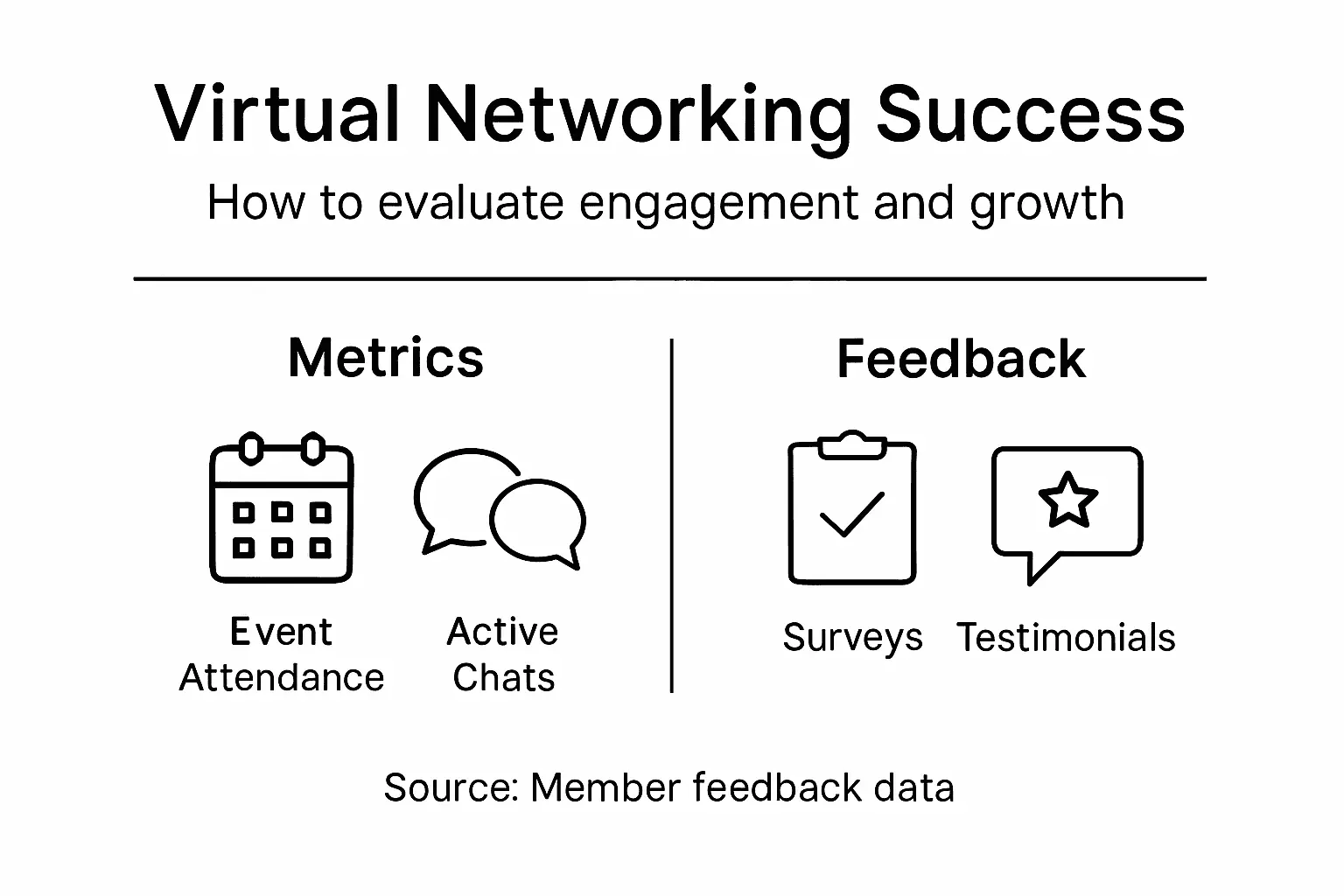
Professional recommendation: Create a dedicated feedback dashboard that aggregates insights and enables real-time monitoring of member engagement trends and satisfaction levels.
Elevate Your Virtual Networking and Member Engagement Today
Many membership organisations struggle with designing personalised virtual environments that truly engage members and foster meaningful professional connections. This often leads to frustrated participants and missed opportunities for growth. The article highlights how understanding member goals, creating bespoke online spaces, and implementing targeted communication can transform virtual networking success.
Colossus Systems offers precisely the tools to overcome these challenges. Our highly customisable SaaS platform streamlines every aspect of member engagement from tailored event management to personalised email marketing. With features like dynamic networking configurations, integrated CRM, and advanced analytics, your organisation can create vibrant virtual experiences that resonate deeply with members’ preferences and professional needs.
Take control of your online member engagement strategy with solutions designed specifically for associations and nonprofits in professional services. Discover how to personalise every interaction and cultivate lasting connections while boosting organisational growth.
Ready to boost your member engagement with smart, scalable virtual networking solutions from Colossus Systems? Connect with us now at Contact Us to explore how our platform can help you implement the exact strategies outlined in the article. Do not wait to create meaningful member experiences that drive loyalty and growth.
Frequently Asked Questions
How can I assess members’ goals and preferences for online networking?
To effectively assess members’ goals and preferences, create a comprehensive survey that includes both qualitative and quantitative questions. This can involve online questionnaires, virtual interviews, and live polling during existing events. Aim to capture insights about their professional development objectives, preferred communication channels, and interaction styles.
What features should I look for in a virtual networking platform?
When selecting a virtual networking platform, prioritise those that offer flexible configurations that accommodate various interaction styles. Features such as dynamic room assignments, participant matching algorithms, and customisable networking protocols are essential for facilitating meaningful member connections. Test the platform with a small group first to ensure it meets your needs.
How can I design interactive online engagement activities?
To create engaging online activities, consider implementing interactive formats like digital breakout rooms, collaborative challenges, and peer mentoring sessions. Encourage active participation by incorporating elements of gamification and varying activity formats to cater to different learning preferences. Rotate the activities regularly to maintain member interest and enthusiasm.
What communication strategies can enhance member engagement in virtual networking?
Effective communication strategies should emphasise personalisation and relevance. Opt for segmented email communications and contextual messaging that acknowledges individual member profiles and preferences. Regularly analyse communication effectiveness and adjust your strategies based on member feedback and engagement metrics.
How can I evaluate the success of virtual networking events?
To measure the success of virtual networking, implement structured feedback methods such as qualitative surveys and periodic engagement metric tracking. Create a feedback dashboard to aggregate insights, allowing you to monitor trends and satisfaction levels continuously. Collect feedback after each event to identify improvement areas and enhance future engagements.