How to transition to virtual events for more engagement

TL;DR:
- Virtual events often surpass in-person events in attendance, accessibility, and engagement when planned intentionally.
- Effective virtual events require focused planning, engaging content, reliable technology, and strategic promotion.
- Treat virtual events as unique opportunities to leverage digital tools for community building and data collection.
Many event planners assume that moving online means sacrificing the energy, connection, and participation that make in-person events worth attending. That assumption is costing membership organisations and nonprofits real growth. When planned with intention, virtual events consistently outperform their physical counterparts on attendance figures, accessibility, and measurable engagement. This guide walks you through every practical stage of the transition, from understanding why the shift matters right through to promoting your event and acting on the data it generates, so your organisation can move forward with confidence.
Table of Contents
- Why transition to virtual events?
- Steps for a successful transition to virtual events
- Engagement strategies for virtual audiences
- Promoting and measuring your virtual event’s impact
- What most organisations miss about virtual event success
- How digital tools make virtual event management effortless
- Frequently asked questions
Key Takeaways
| Point | Details |
|---|---|
| Virtual events boost reach | Going digital lets membership organisations engage wider and more diverse audiences. |
| Plan and rehearse | Thorough planning and rehearsal are essential for smooth virtual event delivery. |
| Engagement tools matter | Interactive features like polls and breakout rooms are proven to raise participation. |
| Measure for improvement | Track key metrics to improve future virtual events and prove their value. |
Why transition to virtual events?
The case for virtual events is stronger than ever in 2026. Member expectations have shifted significantly, with growing numbers of professionals, volunteers, and supporters expecting the flexibility to attend events on their own terms. Travel costs, geographical barriers, and scheduling conflicts all erode attendance at in-person gatherings. Virtual events remove those obstacles entirely.
Virtual events allow nonprofits to lower costs, reach more members, and offer greater accessibility. That is not a minor operational tweak. It is a structural advantage that can transform how your organisation connects with its audience year-round. When you are not constrained by venue capacity or location, your potential audience expands dramatically.
Consider the core benefits at a glance:
- Reduced overheads: No venue hire, catering, or printed materials. Budgets stretch further.
- Broader participation: Members from different cities, regions, or countries can attend without the burden of travel.
- Flexible scheduling: Sessions can be recorded and made available on demand, increasing total viewership well beyond the live event.
- Richer data: Digital platforms capture registration data, attendance duration, poll responses, and click behaviour that physical events simply cannot match.
- Improved accessibility: Virtual event accessibility features such as live captions, screen reader compatibility, and adjustable text sizes make events more inclusive for members with disabilities.
| Benefit | In-person event | Virtual event |
|---|---|---|
| Geographical reach | Local or regional | National or global |
| Cost per attendee | High | Significantly lower |
| Accessibility options | Limited | Broad and customisable |
| Data and analytics | Minimal | Detailed and real-time |
| On-demand content | Rarely available | Standard offering |
The data opportunity alone justifies the transition for most organisations. Every interaction during a virtual event leaves a measurable trace. You can see exactly which sessions held attention, which topics prompted questions, and which members disengaged. That intelligence feeds directly into better event planning for the future.
Steps for a successful transition to virtual events
Now that we know the benefits, it is time to lay out the steps for a smooth digital transformation. Moving from in-person to virtual is not simply a matter of pointing a camera at a room. It requires deliberate planning across multiple workstreams.
Here is a structured approach that organisations consistently find reliable:
-
Assess your needs and objectives. Before selecting any platform or drafting an agenda, clarify what success looks like. Are you aiming to increase member attendance, raise funds, deliver training, or launch a campaign? Your goals will determine every subsequent decision, from platform features to session format.
-
Select the right platform. Not all virtual event platforms are built the same. Prioritise platforms that offer secure online event hosting, robust registration tools, and integrated communication features. Security matters enormously when handling member data, payment information, or confidential content.
-
Plan engaging content. A well-structured agenda is essential. Break content into digestible segments of no more than 20 to 30 minutes, punctuated by interactive elements. Panels, live demonstrations, and collaborative discussions all transfer well to virtual formats. Use event planning insights to inform your programme design from the outset.
-
Run full rehearsals. Technical failures during live events damage credibility and frustrate members. Schedule at least one full run-through with all speakers, moderators, and technical staff. Test audio, video, screen sharing, and any interactive tools you plan to use. Identify backup procedures for common issues.
-
Conduct accessibility checks. Confirm that your platform and content meet accessibility standards. This includes providing captions, ensuring compatibility with assistive technologies, and offering content in formats that work for members with varying needs. Taking steps to boost event accessibility broadens participation and signals genuine inclusivity.
-
Brief all parties thoroughly. Speakers, panellists, sponsors, and volunteers all need clear guidance on their roles, the technology involved, and the event timeline. A detailed briefing document prevents confusion and ensures a professional experience for attendees.
-
Set up your post-event workflow. Plan how you will distribute recordings, share resources, and follow up with attendees before the event begins. Having these elements ready in advance means you can act quickly while engagement is still high.
The key actions to boost member engagement include choosing the right platform, planning engaging content, and ensuring security and accessibility from the start. When these three pillars are in place, everything else becomes considerably easier to manage.
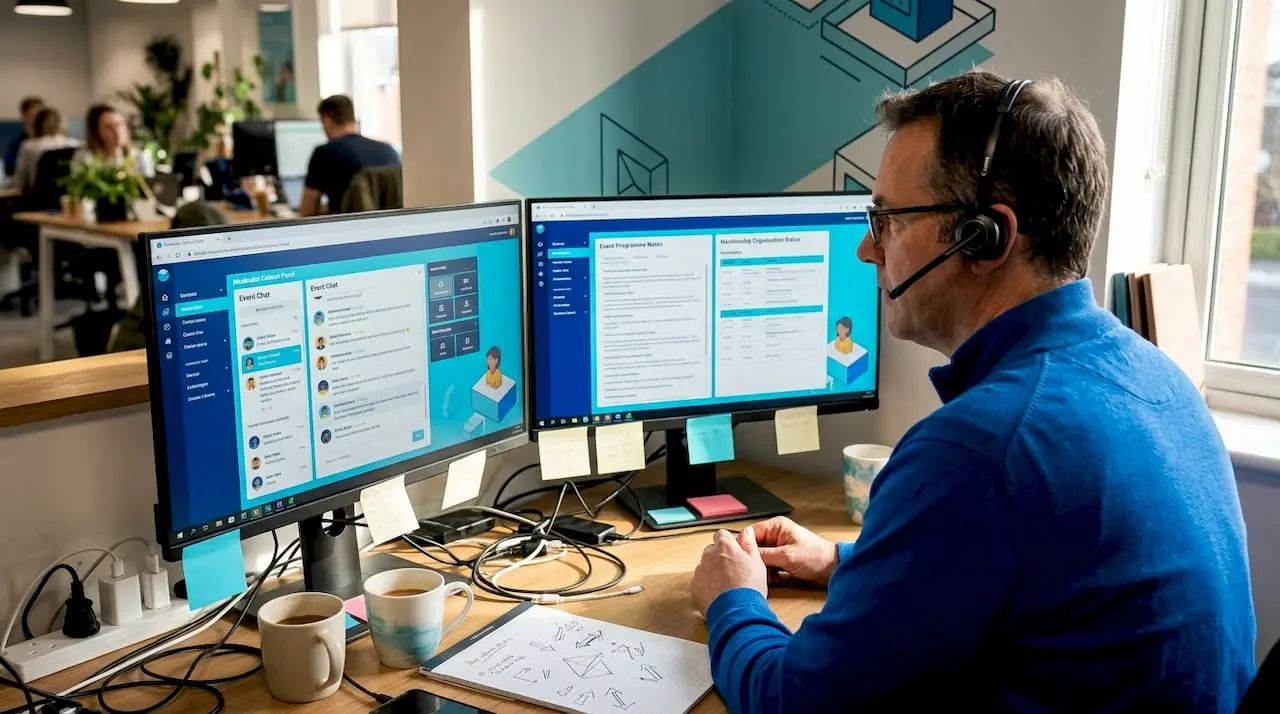
Pro Tip: Appoint a dedicated digital event moderator whose sole responsibility is managing live questions, monitoring the chat, and troubleshooting technical issues in real time. This single role dramatically improves the attendee experience and keeps sessions running smoothly.
Engagement strategies for virtual audiences
Once logistics are in place, the next challenge is keeping your members genuinely involved. Attendance figures alone do not tell the full story. An event where members are passively watching a presentation for an hour generates far less value than one where they are actively contributing, asking questions, and connecting with peers.
Polls, breakout sessions, and gamification are proven to boost engagement in virtual events. These tools shift the dynamic from broadcast to conversation, and that shift is where real community-building happens.
The contrast between traditional and digital engagement methods is worth understanding clearly:
| Engagement method | Traditional event | Virtual event |
|---|---|---|
| Audience Q&A | Queuing at a microphone | Instant live chat or Q&A tool |
| Networking | Informal breaks in a room | Structured breakout rooms or chat channels |
| Feedback collection | Paper forms at the end | Real-time polls throughout |
| Session participation | Raising hands | Emoji reactions, polls, collaborative whiteboards |
| Post-event follow-up | Email after several days | Automated follow-up within minutes |
The digital tools available to event planners in 2026 offer genuinely superior engagement mechanics. Here are the most effective ones to incorporate:
- Live Q&A sessions: Allow members to submit questions in real time, either publicly or anonymously. This encourages participation from members who would not ordinarily speak up in a physical room.
- Audience polls: Deploy quick polls between speakers or at the start of sessions. They provide immediate data and keep attention focused.
- Breakout rooms: Small-group conversations replicate the intimacy of in-person networking far better than a large plenary session. Use themed breakouts to connect members with shared interests.
- Live chat: An active chat thread creates a sense of collective energy. Assign a moderator to highlight key comments and questions.
- Gamification: Points systems, quizzes, and challenge-based activities incentivise participation and add an element of fun. You can also explore virtual fundraising ideas that incorporate gamified giving campaigns alongside your main programme.
- Collaborative whiteboards and shared documents: These work particularly well for workshop-style sessions where members contribute ideas collectively.
The most effective event formats for virtual audiences tend to be panels with a strong facilitator, collaborative workshops with clear outcomes, and themed breakout sessions that connect members around specific interests or challenges.
Pro Tip: Introduce a quiz or points-based challenge that rewards members for attending multiple sessions, participating in polls, or asking questions. Announce the results live near the end of the event to sustain energy and encourage members to stay through to the final segment.
Promoting and measuring your virtual event’s impact
With interactive engagement in mind, the next step is ensuring people attend and that the event drives real outcomes. Even the most thoughtfully designed virtual event will underperform if promotion and measurement are treated as afterthoughts.
Effective online tactics can raise awareness and boost attendance even for niche nonprofits with modest marketing budgets. The key is reaching potential attendees through channels they already use, with messaging that speaks to their specific interests.
The most reliable digital promotion channels for membership organisations and nonprofits include:
- Email marketing: Segment your member database and send tailored invitations based on previous event attendance, interests, or membership tier. A series of three to four emails, from initial announcement through to last-chance reminder, consistently outperforms a single blast.
- Social media: Use your organisation’s channels to build anticipation with speaker announcements, behind-the-scenes content, and countdowns. Encourage speakers and sponsors to share event details with their own networks.
- Partner organisations: Reach audiences beyond your existing membership by partnering with aligned organisations to cross-promote the event. This is particularly effective for nonprofits working within a defined sector or cause area.
- Influencer outreach: Identify respected voices within your community, whether they are industry experts, prominent members, or sector advocates, and invite them to participate as speakers or ambassadors.
- Event advertising: Targeted digital advertising on platforms relevant to your audience can extend reach significantly. Explore event advertising ideas to find approaches suited to your budget and goals.
Once the event is complete, measurement is where many organisations fall short. Tracking the right key performance indicators (KPIs) enables you to demonstrate impact, justify investment, and continually improve.
| KPI | What it measures | Why it matters |
|---|---|---|
| Registration rate | Number of sign-ups relative to outreach | Indicates effectiveness of promotion |
| Live attendance rate | Proportion of registrants who attended live | Reflects demand and scheduling relevance |
| Replay views | On-demand content consumption post-event | Extends overall reach measurement |
| Engagement rate | Poll responses, chat messages, Q&A submissions | Shows depth of participation |
| Post-event survey completion | Proportion of attendees who gave feedback | Indicates commitment and satisfaction |
| Donation or revenue generated | Funds raised during or after the event | Direct measure of financial impact |
“Post-event feedback is not just a courtesy; it is one of the most powerful tools available for improving future events. Organisations that act on member suggestions demonstrate responsiveness and build the kind of trust that sustains long-term loyalty.”
When you combine strong promotion with disciplined measurement, virtual events become a strategic asset rather than a one-off activity. Each event generates data that makes the next one smarter, better-targeted, and more impactful.
What most organisations miss about virtual event success
Here is a perspective that most planning guides will not tell you directly. The majority of organisations that struggle with virtual events are not failing because of technical problems or poor content choices. They are failing because they are treating virtual events as digital replicas of in-person experiences rather than as a distinct format with its own logic and strengths.
This mindset shift is the single most important factor separating functional virtual events from genuinely great ones. When you approach a virtual event by asking “how do we recreate what we do in person?”, you constrain your thinking in ways that limit the outcome. When you ask “what can we do in this format that we could never do in a room?”, the possibilities expand enormously. Global guest speakers, real-time polling across hundreds of simultaneous responses, on-demand content libraries, and integrated fundraising tools are all things that physical events handle poorly or not at all.
There is also a tendency to over-invest in platform selection and under-invest in community follow-up. The weeks after an event are often more valuable for member engagement than the event itself. Members who attended are warm, receptive, and ready to connect further. Organisations that send personalised follow-up emails, share session recordings promptly, and act visibly on feedback suggestions are the ones that see membership retention rise as a direct result of their virtual events.
The best virtual event teams also build redundancy into their planning. Every technical element should have a backup. Every speaker should know the contingency plan if their connection drops. Every moderator should have a script for managing unexpected pauses. Reviewing event planning lessons from experienced practitioners reveals that preparation for failure is what enables confident, seamless delivery.
Pro Tip: Always send a short post-event survey within 24 hours and, critically, follow up publicly within two weeks to show members what changes you are making based on their input. Closing that feedback loop builds extraordinary trust.
How digital tools make virtual event management effortless
With the right strategies in place, the finishing touch is choosing digital tools that make execution painless. Managing a virtual event across separate platforms for registration, communication, promotion, and data collection creates unnecessary complexity and increases the risk of errors.
At Colossus Systems, our membership management software brings event planning, member communication, CRM, and analytics into a single, unified platform. Your team no longer needs to reconcile data across disconnected tools or worry about whether registration information is reaching the right people at the right time. Our event management tools are built specifically for membership organisations and nonprofits, with security, accessibility, and scalability built in from the ground up. Whether you are hosting a small member briefing or a large annual conference, we offer the infrastructure to make it work smoothly. Reach out to our team to explore how we can support your next virtual event with a solution tailored to your organisation’s needs.
Frequently asked questions
What are the top platforms for hosting virtual events?
Leading options for nonprofits include platforms offering robust security and accessibility features alongside flexible registration and engagement tools, with customisation for member communication and data collection.
How can we keep members engaged during online events?
Prioritise interactive tools like polls, Q&A, breakout sessions, and live chat; polls and gamification are proven to boost participation and create a memorable experience that members actively look forward to attending again.
What KPIs should I track for my virtual events?
Key KPIs include registration rate, live attendance, engagement levels, and post-event feedback; data-driven measurement ensures you can demonstrate impact to stakeholders and refine your approach for future events.
How do I ensure accessibility for all members?
Choose event tools with built-in accessibility features and offer support such as live captioning or multiple access formats; accessible online events allow more members to participate fully and signal that your organisation values every member equally.
Recommended
- Virtual event hosting: boost member engagement in 2026|CS
- Master Hosting Hybrid Events: Engage Your Audience Effectively|CS
- Virtual training strategies to boost member engagement|CS
- Virtual Event Planning Platforms for Membership Growth|CS
- Interactive event experiences for San Antonio events in 2026