Virtual Event Planning Platforms for Membership Growth

Juggling multiple online tools can quickly turn virtual event planning into a headache for nonprofit teams. When your membership spans continents, fragmented systems lead to missed connections and lost data. Integrated membership management platforms create a unified hub for everything from registration and secure payments to engagement tracking and analytics. This modern approach not only simplifies operations but also helps you build stronger member relationships, transforming each virtual gathering into a meaningful step for your organisation.
Table of Contents
- Defining Virtual Event Planning Platforms
- Types of Virtual Event Experiences
- Core Features for Membership Organisations
- Registration, Payments, and Secure Access
- Maximising Member Engagement and Analytics
- Common Pitfalls and Best Practices
Key Takeaways
| Point | Details |
|---|---|
| Unified Platform Advantages | Virtual event planning platforms integrate registration, communication, and analytics, streamlining event management for membership organisations. |
| Focus on Member Engagement | Diverse event formats and engagement tools are essential for enhancing participation and converting attendees into paying members. |
| Data-Driven Decisions | Analytics from events should inform retention strategies, allowing organisations to tailor future initiatives to member preferences. |
| Preparation and Technical Readiness | Robust technical infrastructure and thorough pre-event rehearsals are crucial for ensuring seamless execution and attendee satisfaction. |
Defining Virtual Event Planning Platforms
Virtual event planning platforms are digital solutions designed to manage every aspect of online events, from initial concept through post-event analysis. These platforms function as centralised hubs where nonprofit event planners can handle registration, participant communication, live streaming, engagement tools, and detailed reporting all within one integrated system. Rather than juggling multiple disconnected tools, you gain a unified environment that connects your event operations with your broader membership management goals.
What sets these platforms apart from general conferencing software is their focus on membership organisations’ specific needs. A comprehensive virtual event platform includes built-in registration systems that integrate with your member database, customisable ticketing options, automated email workflows for attendee engagement, and analytics that track both attendance patterns and member retention. The platform becomes part of your organisational infrastructure, not merely a one-off meeting tool. This integration proves particularly valuable when you’re trying to convert event attendees into paying members or deepen engagement among existing members through targeted virtual experiences.
The planning process itself has become more structured around virtual delivery models. Accessible, engaging digital environments enable effective participation across diverse international audiences, which matters immensely when your membership spans multiple time zones. The platform should support clear objective setting using SMART criteria, feasibility analysis tools like SWOT assessments, resource management features, and comprehensive risk management capabilities specifically tailored to technological considerations. When planning virtual conferences or member forums, you’ll find that platforms addressing technological and accessibility considerations yield stronger attendance and engagement outcomes.
The distinction between generic video conferencing and purpose built event platforms becomes clear when you examine membership growth metrics. A proper platform captures attendee data, tracks engagement throughout the event, sends automated follow up communications, and feeds results back into your CRM. This creates a continuous cycle where each virtual event strengthens your member relationships and provides data to refine future events. You’re not simply hosting a meeting; you’re executing a strategic membership growth initiative.
Pro tip: When evaluating platforms, prioritise those that offer native integration with your existing membership database rather than platforms requiring manual data export and import, as this significantly reduces administrative work and ensures member records stay current.
Types of Virtual Event Experiences
Virtual events come in many shapes and sizes, each designed to serve different membership goals and audience expectations. The format you choose depends largely on what you’re trying to achieve—whether that’s building community, sharing knowledge, generating leads, or deepening member relationships. Rather than treating all virtual gatherings as identical experiences, successful nonprofits recognise that each event type requires different planning approaches, engagement strategies, and technical capabilities.
Virtual conferences represent the most comprehensive event format, typically spanning multiple days with keynote sessions, breakout panels, and networking opportunities. Webinars operate on a simpler model, usually featuring one or two speakers delivering focused content to a larger passive audience, making them ideal for member education or thought leadership positioning. Online trade shows bring together virtual booths and exhibitor spaces, perfect for nonprofits showcasing member services or highlighting sponsor offerings. Networking events emphasise peer-to-peer connections using breakout rooms and chat functions to facilitate conversations. Each format serves distinct purposes within your membership growth strategy, and many organisations run combinations of these throughout their annual calendar.
Beyond traditional formats, immersive virtual experiences using avatars and spatial audio are beginning to reshape how organisations think about member engagement. These emerging technologies enable richer social interactions and greater inclusivity, particularly for geographically dispersed members who crave genuine connection. Virtual reality elements, interactive content formats, and spatial audio create distinctly different engagement patterns compared to standard video conferencing. The key insight here is that technology like this supports increased engagement through more authentic experiences. Your choice of event type should reflect both your audience’s comfort level and your membership growth objectives.
When selecting which format fits your needs, consider how each type engages participants differently. A webinar might attract passive learners seeking quick knowledge updates, whilst live networking events with interactive panels create opportunities for active relationship building among members. Some organisations successfully layer multiple formats within a single virtual conference, allowing attendees to participate at varying engagement levels. The platform you select should offer flexibility across these different experience types rather than forcing all events into a single rigid template.
The following table summarises how different virtual event formats align with organisational goals and audience engagement needs:
| Event Format | Primary Objective | Typical Engagement Level | Example Use Case |
|---|---|---|---|
| Virtual Conference | Community Building | High (networking & sessions) | Annual member summit |
| Webinar | Knowledge Sharing | Moderate (Q&A, polls) | Educational speaker series |
| Online Trade Show | Showcasing Services | Variable (interactive booths) | Sponsor-driven fair |
| Networking Event | Relationship Building | High (breakout discussions) | Peer support group session |
| Immersive Experience | Deep Engagement | Very High (avatars, VR tools) | Global member onboarding |
Pro tip: Select event formats based on your specific membership conversion goals first, then choose the platform features that support those formats, rather than limiting your event types to what a platform conveniently offers.
Core Features for Membership Organisations
The right virtual event platform does far more than simply broadcast video. It becomes an extension of your membership infrastructure, connecting event registration to your member database, automating follow-up communications, and providing data that informs your retention strategy. When evaluating platforms, you need to assess whether they offer the specific capabilities that transform events from one-off experiences into membership growth mechanisms.

Integrated registration systems sit at the centre of effective event planning. Your platform should automatically capture attendee information and sync it with your membership database, eliminating manual data entry and ensuring records stay current. Built-in ticketing functionality allows you to control access, offer tiered pricing for members versus non-members, and segment audiences based on membership status. Email automation capabilities should trigger pre-event reminders, post-event thank-you messages, and targeted follow-up sequences designed to convert attendees into paying members. When these systems work together seamlessly, each event becomes a data collection and engagement opportunity rather than an isolated activity.
Engagement tracking features reveal how members actually interact with your events. Analytics should capture attendance duration, which breakout sessions people joined, chat participation, poll responses, and resource downloads. This granular data helps you understand which content resonates with your audience and which members are most actively engaged. Understanding core membership management features like these engagement metrics allows you to tailor future events more effectively and identify members at risk of lapsing. CRM integration ensures these insights feed directly into your member relationship strategy, allowing you to personalise communications based on event behaviour.
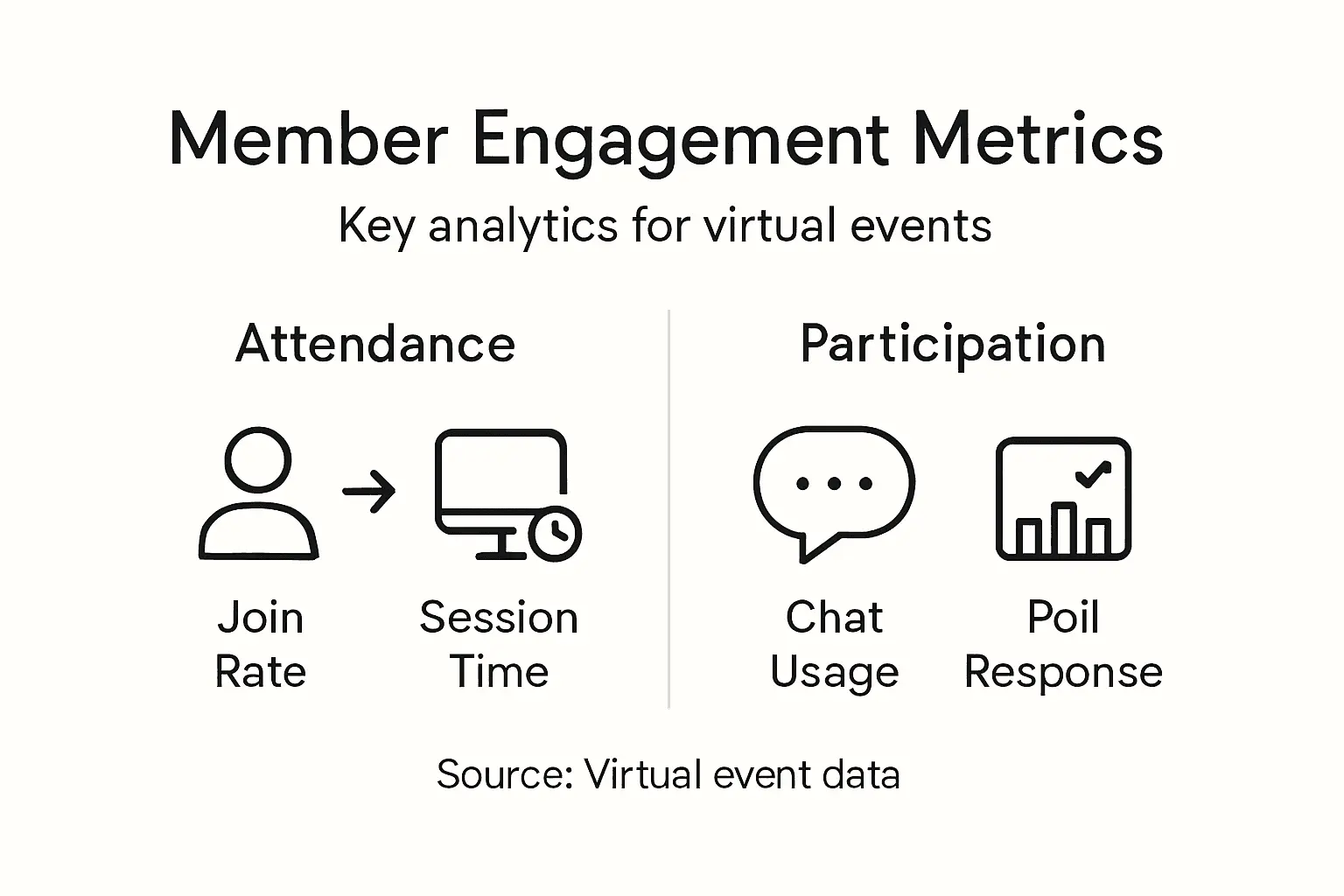
Customisation capabilities prove essential for nonprofit organisations with diverse membership segments. Your platform should allow you to design branded registration pages, customise email templates, configure custom fields during registration, and create tiered access to different event content. The ability to run multiple concurrent events with different formats, pricing models, and audience restrictions gives you flexibility as your membership programme grows. Payment processing integration must support multiple currencies and payment methods, essential for organisations serving international membership bases.
Pro tip: Before selecting a platform, create a detailed map of your event workflow from first registration email through post-event member retention steps, then verify that your chosen platform automates every step without requiring manual intervention.
Registration, Payments, and Secure Access
Registration forms represent your first real interaction with potential members attending your virtual events. A well-designed registration system captures not just names and email addresses, but also membership status, interests, dietary requirements for networking events, and custom fields relevant to your organisation’s goals. The platform should offer flexible form builders allowing you to add, remove, or reorder fields without needing technical expertise. More importantly, your registration process should feel lightweight to attendees—too many mandatory fields create friction that discourages sign-ups, whilst too few leave you without critical segmentation data. The sweet spot involves balancing thoroughness with user experience.
Payment processing sits at the heart of membership growth through virtual events. Your platform must support secure online payment processing that meets industry standards, protecting both your organisation and attendees from fraud and data breaches. Multi-tier ticketing allows you to offer free attendance for existing members, discounted rates for students or nonprofit staff, and premium pricing for non-members, creating clear incentives for membership conversion. The system should handle recurring payments for members purchasing event passes throughout the year, reducing manual invoicing work. Currency support becomes essential if you’re serving international audiences—attendees expect to pay in their local currency rather than navigating currency conversion themselves.
Secure access controls determine who can actually join your events. Single sign-on capabilities simplify the attendee experience whilst strengthening security by centralising credential management. Your platform should enforce password requirements meeting current security standards, offer two-factor authentication for sensitive events, and prevent credential sharing through seat activation codes or device fingerprinting. Customisable registration pages and automated communications create consistent brand experience whilst automating critical security notifications—confirmation emails with unique access links, reminders before the event, and post-event follow-ups. These automated touchpoints serve double duty as both security measures and engagement opportunities.
Data privacy compliance cannot be overlooked. Your platform must comply with regulations like GDPR and CASL, providing clear consent options during registration and respecting attendee preferences for future communications. The system should maintain detailed audit trails showing who accessed what data and when, essential for compliance demonstrations. Attendee data should be encrypted both in transit and at rest, with regular security audits and penetration testing. When selecting a platform, verify its security certifications and ask specifically about data residency, backup procedures, and breach notification protocols.
Pro tip: Test your complete registration, payment, and access workflow from an attendee’s perspective before your first major event, catching usability issues and payment processing errors before they frustrate dozens of members.
Maximising Member Engagement and Analytics
Virtual events generate rich behavioural data that most nonprofit organisations barely scratch the surface of. A comprehensive platform captures attendance duration, which sessions members attended, poll participation rates, chat activity, resource downloads, and networking interactions. This data transforms from interesting statistics into actionable insights when you know how to interpret and act upon it. The real value emerges when you connect event engagement data to member retention outcomes, revealing which event types, content formats, and speaker styles drive stronger membership loyalty and renewal rates.
Live engagement tools drive participation in ways passive attendance never could. Polls, Q&A sessions, and live chat create moments of genuine interaction rather than one-way broadcasting. Gamification elements like leaderboards and achievement badges encourage deeper participation by making engagement visible and rewarding consistent involvement. Breakout rooms facilitate smaller group conversations where members form genuine connections, often more valuable than large plenary sessions. The platform should track granular participation in each of these activities, revealing which members are active contributors versus passive observers. This distinction matters enormously when personalising follow-up communications and identifying members ready for volunteer leadership roles.
Membership engagement metrics extend far beyond simple attendance numbers. A member who attends for ninety minutes, participates in two polls, asks a question in the Q&A, and downloads three resources has generated a very different engagement profile than someone attending silently for thirty minutes. Your platform should calculate engagement scores combining these various activities into meaningful indicators of member interest and investment. When you feed these scores back into your CRM, you gain the ability to segment members by engagement level and tailor communications accordingly. Highly engaged members become candidates for membership upgrades, volunteer recruitment, or early notification about exclusive events. Low-engagement members might receive re-engagement campaigns or satisfaction surveys identifying barriers to participation.
Analytics dashboards should answer specific business questions, not just display raw data. Rather than seeing “2,487 attendees,” you need visibility into conversion metrics like “427 non-members attended, of which 89 became members within 30 days.” Cohort analysis reveals patterns like “members attending Q3 events show 18 percentage points higher renewal rates.” Attendance trends over time expose seasonal patterns, topic preferences, and the impact of speaker changes. Post-event surveys collecting satisfaction data alongside participation metrics help explain why certain events drive stronger outcomes. Platforms offering customisable dashboards allow you to focus on the metrics most relevant to your membership growth strategy.
Below is a comparison of key data and analytics features that help maximise value from virtual events:
| Analytics Feature | Member Insight Provided | Impact on Retention Strategy |
|---|---|---|
| Engagement Tracking | Activity level during sessions | Identifies members at risk of lapsing |
| Attendance Pattern Analysis | Preferred content and timings | Informs future event scheduling |
| Conversion Metrics | Attendee-to-member conversion rate | Measures event ROI |
| Cohort Analysis | Renewal likelihood by event cohort | Enables targeted follow-up campaigns |
Pro tip: Create a standardised dashboard showing five key metrics for each event: attendee conversion rate, engagement score distribution, average attendance duration, repeat attendee percentage, and member acquisition cost, reviewing these after every event to guide content and format decisions.
Common Pitfalls and Best Practices
Many nonprofit event planners launch their first virtual event with optimism and minimal preparation, only to discover critical gaps mid-event. The most common mistake involves underestimating technical infrastructure requirements. Your internet connection needs redundancy, your backup streaming setup should be tested before the event, and your platform’s capacity must accommodate peak attendance without degradation. Audio and video quality issues frustrate attendees more than any content problem ever could. Similarly, assuming your team can manage everything on the fly without rehearsal creates unnecessary stress and visible mistakes. A full technical rehearsal one week before launch, including testing all interactive features, capturing audio for recording, and running through contingency scenarios, catches problems when you still have time to fix them.
Audience engagement challenges stem from treating virtual events like passive broadcasts. Insufficient marketing and audience engagement planning causes low attendance and weak participation. Your promotional strategy should begin eight weeks before launch, using email segmentation to target past event attendees, members most likely to convert, and complementary organisations whose audiences align with your membership goals. During the event itself, silence kills engagement. Designated facilitators should monitor chat activity, polls should launch regularly, and speakers should pause explicitly for questions rather than hoping questions materialise. Post-event follow-up within 24 hours dramatically improves conversion rates, yet many organisations wait weeks to reconnect with attendees.
Content quality and speaker preparation deserve far more attention than they typically receive. Poor presentation slides, unprepared speakers rambling without focus, and irrelevant topics drive attendees away mid-session. Best practices for planning and delivering virtual events emphasise clear communication with speakers about technical requirements, content expectations, and time constraints. Accessibility considerations—captions for deaf and hard of hearing attendees, alt text for slides, clear audio without background noise—expand your reach whilst showing inclusivity matters to your organisation. Many organisations neglect data security and privacy protocols until a breach occurs. Your platform should enforce password policies, encrypt recordings, obtain explicit consent before collecting attendee data, and maintain transparent privacy documentation.
Best practice organisations develop standardised event playbooks capturing lessons from each event. This includes speaker preparation templates, technical setup checklists, contingency protocols for common failures, and post-event evaluation frameworks. They build time buffers into schedules, assign clear roles to team members with documented backup responsibilities, and communicate transparently with attendees about what to expect. Most importantly, they treat each event as a learning opportunity, reviewing analytics and feedback to iteratively improve future experiences.
Pro tip: Create a post-event review template completed within 48 hours of each event, documenting technical issues encountered, engagement metrics achieved, attendee feedback themes, and specific action items for improving your next event.
Unlock Seamless Membership Growth with Colossus Systems
Struggling to turn your virtual events into powerful engines for membership growth can leave your organisation feeling stuck and overwhelmed. The article highlights challenges such as managing multiple disconnected tools, ensuring smooth registration and payment processing, and capturing detailed engagement analytics. Organisations need more than basic conferencing software—they require integrated event planning platforms that connect attendee data directly to their member databases, automate communications, and deliver actionable insights for retention.
Colossus Systems offers a comprehensive SaaS platform designed to dissolve these pain points by uniting event registration, CRM, email marketing, and secure payment solutions into one highly customisable system. Imagine automating your entire event workflow while gaining deep visibility into member engagement and conversion patterns. Our tools empower membership organisations to plan immersive virtual experiences and webinars that truly enhance connection and boost renewal rates. Don’t let technical hurdles or fragmented data undermine your efforts to grow and engage your community.
Experience how purpose-built features for membership organisations transform your virtual events into strategic growth opportunities today.
Discover more about how our platform supports virtual event excellence at Colossus Systems Contact Page.
Ready to elevate your virtual event planning while streamlining member management and payments Get in touch now at Colossus Systems Contact Page and start turning every event into a membership growth milestone. Learn how tailored automation and analytics can simplify complexity and maximise engagement in one unified solution.
Frequently Asked Questions
What are virtual event planning platforms?
Virtual event planning platforms are digital solutions designed to manage all aspects of online events, integrating registration, communication, live streaming, and reporting into one centralised system.
How do virtual event planning platforms support membership growth?
These platforms help organisations convert attendees into paying members and deepen engagement by tracking attendance and offering targeted follow-up communications, making each virtual event part of a broader membership strategy.
What types of virtual events can I host using these platforms?
You can host a variety of events including virtual conferences, webinars, online trade shows, networking events, and immersive experiences, each tailored to your membership goals and audience expectations.
What key features should I look for in a virtual event planning platform?
Look for integrated registration systems, engagement tracking, customisation capabilities, secure payment processing, and comprehensive analytics features that provide insights on attendee behaviour and event effectiveness.