Standards first accreditation management software for associations

For membership organisations and professional associations tracking member certifications, CE credits and accredited trainings, the strongest fit is usually an all-in-one association platform with native credential tracking and Open Badges support, such as Colossus Systems. Where budgets or legacy systems make that impractical, a learning management system paired with a dedicated badging tool is the next best route. The right choice should align with ISO/IEC 17024 and support Open Badges v3.0 credentials.
TL;DR:
- Smaller associations should choose entry-level apps or LMS integrations, as they typically do not require complex governance or extensive credentialing features.
- Mid-sized organizations benefit most from all-in-one platforms that combine member management, credentialing, and event registration within a single system.
- Vendors must support stable member identifiers, configurable credit rules, and seamless data exports to ensure reliable automated CE credit posting and audit trails.
- Implementation duration depends on data migration complexity, with multi-programme associations needing longer onboarding to set up workflows and integrations properly.
- Prioritizing data portability and clear ownership policies is crucial to avoid vendor lock-in and facilitate future system switches.
Table of Contents
- Comparing the categories of accreditation management software
- What to check before you shortlist a vendor
- Pricing models and implementation timelines to expect
- How interface design affects day-to-day accreditation work
- Support and training you should expect from a vendor
- Scalability and customisation for growing associations
- How associations are using accreditation software in practice
- What I learned running accreditation procurement
- Colossus Systems: why it matches association needs and how to proceed
- Standards and policy documents worth reading next
- Sources
- FAQ
Comparing the categories of accreditation management software
Before shortlisting a vendor, it helps to understand which category of software actually solves your problem. Most membership organisations land in one of four groups, each trading flexibility for simplicity in a different way.
Entry-level course or field apps work well for small associations running one or two certificate programmes with simple renewal cycles. LMS and badge-platform combinations suit organisations that already have a learning system and only need to bolt on digital credentialing. All-in-one association platforms consolidate member records, events, CE tracking and credentialing in a single system, which suits mid-sized to larger associations that want one source of truth. Enterprise credential systems are built for very large certifying bodies with complex, multi-programme governance needs and dedicated compliance teams.
| Category | Best for | Credential tracking | Open Badges support | Typical complexity |
|---|---|---|---|---|
| Entry-level course or field apps | Small associations, single programme | Basic, manual-heavy | Rare | Low |
| LMS plus badge platform | Organisations with an existing LMS | Good, requires integration | Common | Medium |
| All-in-one association platform | Mid-sized to large associations | Native, automated | Increasingly common | Medium |
| Enterprise credential system | Large certifying bodies, multi-programme governance | Extensive, highly configurable | Standard | High |
A few practical pointers for narrowing the field:
- Small associations with one certificate programme rarely need enterprise-grade governance tools and can start with a lighter, cheaper category.
- Mid-sized associations juggling events, member renewals and CE credits together tend to get the most value from an all-in-one platform.
- Large certifying bodies with multiple accredited programmes and strict audit requirements often need the depth that enterprise systems provide.
What to check before you shortlist a vendor
Once you know which category fits, the next step is testing vendors against specific, non-negotiable criteria rather than a generic features list. Associations managing CE credits and accredited trainings have particular needs that a general CRM will not cover out of the box.
- Confirm the platform can map a stable member identifier at registration, so CE credits post automatically instead of requiring manual reconciliation after every event.
- Check that the system includes a configurable credit rules engine for different certification periods, renewal cycles and credit types.
- Ask whether renewal reminders and audit trails are built in, not bolted on through a third-party add-on.
- Verify that member records, including credential history, export cleanly in a machine-readable format.
- Test integrations with your learning management system, payment gateway, single sign-on provider and any Open Badges or verifiable-credential issuer.
- Ask directly how the vendor supports exam and test administration policies, including confidentiality and renewal deadlines similar to those outlined in CAE policies and procedures.
- Ask who owns the data, how data subject access requests are handled, and what the retention schedule looks like once a member leaves.
Pro Tip: Ask every shortlisted vendor to export a full, anonymised sample member record during the demo. How easily they do it tells you more than any sales deck.
Red flags worth walking away from include no export function, no audit logging, vague answers about data retention, and credit posting that depends entirely on manual staff entry.
Pricing models and implementation timelines to expect
Accreditation management software is almost always priced as a subscription, usually tiered by number of members, programmes or feature depth rather than a flat fee. Entry-level tools may charge low monthly rates with limited credentialing features, while all-in-one platforms and enterprise systems scale pricing to match the breadth of functionality, including event hosting, CRM and automated credit allocation.
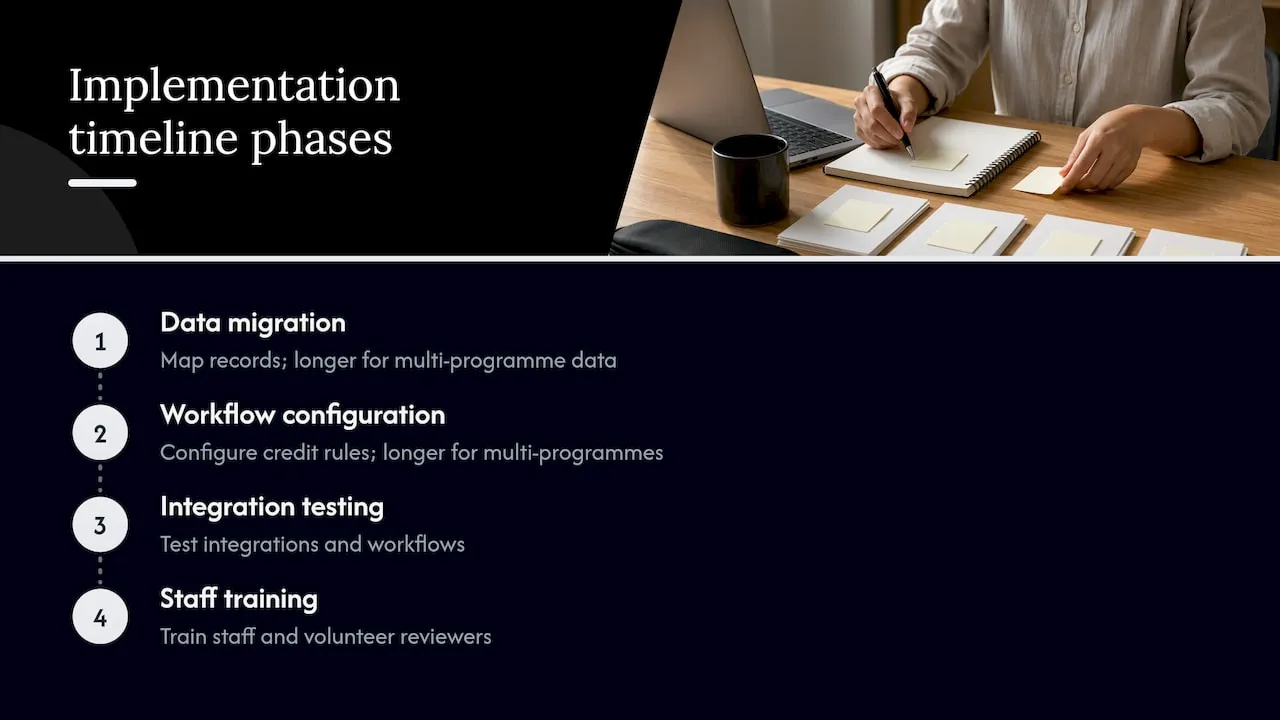
Implementation timelines vary with the amount of historical data being migrated. Associations moving from spreadsheets or a legacy database typically spend the first few weeks mapping member records and CE credit history before go-live. Programmes with multiple certification tracks or outsourced exam administration, the kind of complexity addressed in ANSI/ASTM E2659-2024, often need longer onboarding to configure credit rules and renewal workflows correctly.
Ask vendors for a realistic timeline broken into phases: data migration, workflow configuration, integration testing and staff training. A vendor who promises same-week go-live for a multi-programme association is usually underestimating the data-mapping work involved. Budget planning should also account for any per-contributor or per-seat fees layered on top of the base subscription, since these can shift the real monthly cost significantly once staff or volunteer reviewers are added to the system.
How interface design affects day-to-day accreditation work
Staff and volunteer reviewers interact with accreditation software daily, so interface design is not a cosmetic concern. A cluttered dashboard that buries CE credit status behind several clicks slows down renewal processing and increases the chance of errors during audit season.
Look for a member-facing portal that lets individuals see their own credit totals, renewal deadlines and credential history without contacting staff. This single change often cuts routine support queries significantly, since members can self-serve the information they would otherwise email to ask about. On the administrative side, staff need a clear view of which members are approaching renewal, which credits are pending verification, and which records need manual review.
Mobile responsiveness matters more than it once did, particularly for associations running in-person events where staff scan registrations and confirm credit eligibility from a tablet or phone. A platform that forces staff back to a desktop to complete basic tasks adds friction exactly when speed matters most, during a conference or training session with a queue of attendees waiting to check in.
Support and training you should expect from a vendor
Software alone does not solve accreditation tracking. The quality of onboarding, documentation and ongoing support determines whether staff can actually use the system’s credentialing features once the initial setup is finished.
During evaluation, ask vendors what onboarding looks like in practice: is there a dedicated account manager, a self-serve knowledge base, or a combination of both. Associations with small teams and limited technical staff benefit from vendors who offer structured training sessions covering credit rules configuration and renewal workflows, not just a generic product walkthrough.
Ongoing support matters just as much once the system is live. Ask about response times for support tickets, whether there is a dedicated channel for urgent issues during renewal deadlines, and whether the vendor publishes release notes when credentialing features change. A nonprofit onboarding checklist is a useful reference for associations building their own internal rollout plan alongside a vendor’s training schedule, since staff turnover often means onboarding needs repeating more than once.
Scalability and customisation for growing associations
Associations rarely stay the same size or shape for long. A platform that fits a single certificate programme today may need to support three programmes, multiple membership tiers and a growing volunteer reviewer pool within a few years.
Customisation matters most in how credit rules, renewal cycles and certification periods are configured. A system that forces every programme into the same renewal cadence will not work for an association running both an annual certification and a multi-year credential. Look for workflow flexibility that lets each programme define its own credit rules engine, renewal reminders and audit trail without requiring a developer to rebuild the configuration each time.
Scalability also means the platform should handle growth in member volume without a painful re-platforming exercise. Associations that start with a few hundred members and grow into the thousands need confidence that reporting, integrations and credential issuance will keep working at scale, not just at the size the organisation is today. Checking how a vendor’s pricing tiers map to feature access is a practical way to confirm the platform grows with you rather than forcing a disruptive switch later.
How associations are using accreditation software in practice
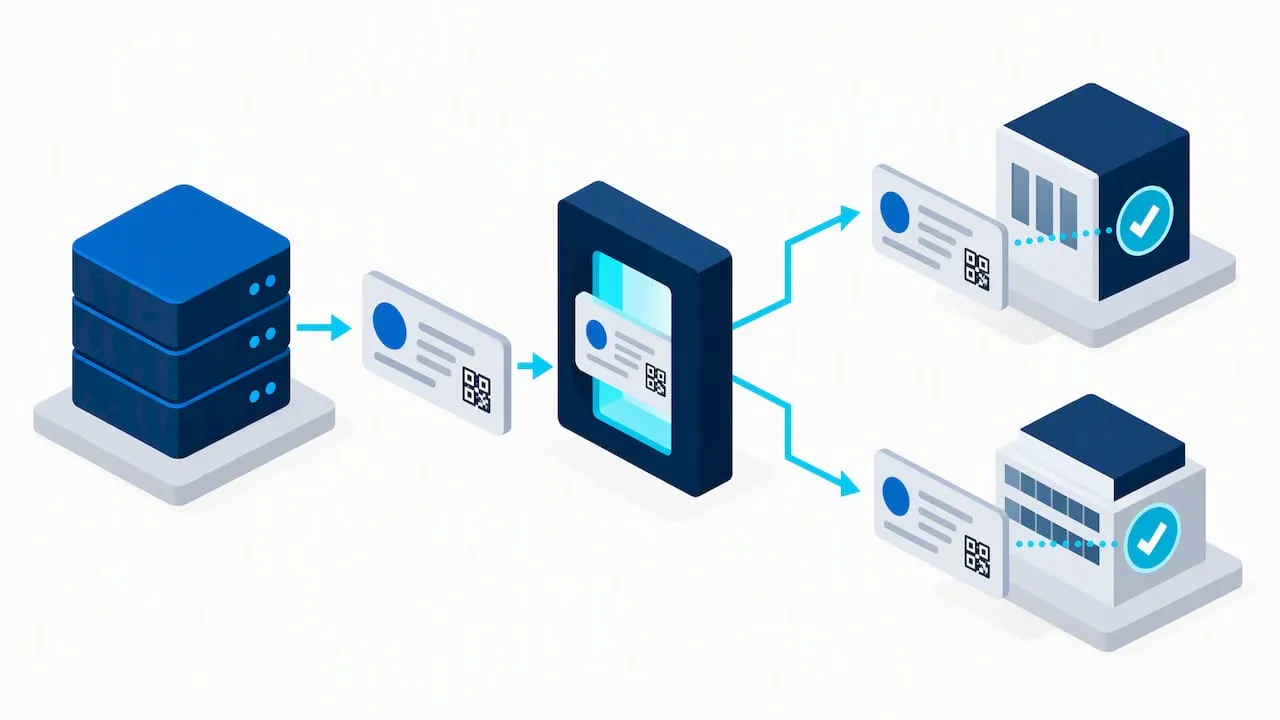
Associations managing CE credits typically start with a specific, painful bottleneck: staff manually matching event attendance records against member files to confirm who earned credit. Automating that single step, by requiring a member ID or license number at event registration, allows credits to post automatically and removes the reconciliation work that previously consumed hours each month.
A multi-programme certifying body might use an all-in-one platform to run its annual conference, issue CE credits for attended sessions, and track renewal deadlines across several certification tracks simultaneously, all from one member record. A smaller professional association, by contrast, might use the same category of platform mainly for renewal reminders and a self-service member portal, without needing the full depth of multi-programme governance.
What both examples share is the same underlying principle from Open Badges v3.0: credentials should be portable and verifiable, not locked inside a single vendor’s database. Associations that treat digital credentials as exportable, machine-readable records avoid the costly rebuild that comes from switching systems later.
What I learned running accreditation procurement
The single change that cut the most manual work was requiring a member ID at event registration. Credits posted automatically instead of staff reconciling spreadsheets every month. The mistake I would not repeat: accepting a contract with weak export and ownership terms, which made switching vendors far harder than it should have been. My rule now is simple: prioritise data portability and verifiable-credential support before anything else.
— Rob
Colossus Systems: why it matches association needs and how to proceed
Some all-in-one platforms bring member management, event and virtual training hosting, CRM, and payment processing into one platform, which removes the need to stitch together separate tools for credentialing, renewals and event check-in. Custom workflows can let organisations configure credit rules and renewal reminders around their own certification periods rather than a generic template.
This type of system fits organisations wanting a single platform covering member records, CE tracking and event-based credit allocation without managing multiple vendor contracts.
- Unified member and credential records alongside event registration and payments.
- Customisable workflows for renewal cycles and credit rules specific to your programmes.
- Built-in reporting to support audit trails and renewal tracking.
Pricing tiers typically scale with organisational size and feature needs, from entry-level plans to those supporting complex, multi-programme certifying bodies.
Review the plan details and pricing and ask for a pilot or demo to see how credit allocation and renewal workflows would run on your own member data before committing.
Standards and policy documents worth reading next
- ISO/IEC 17024: the international benchmark for certifying bodies, including new AI-related requirements.
- Open Badges v3.0: the specification for portable, verifiable digital credentials.
- ANSI/ASTM E2659-2024 updates: transition requirements for certificate programmes.
- Candidate data privacy guidance: practical advice on DSAR and retention policies.
Sources
- ISO/IEC 17024
- Open Badges Specification v3.0
- What’s new in ANSI/ASTM E2659-2024?
- Do your Candidates and certificants know what you’re doing with their data?
FAQ
What does accreditation management software do for associations?
It tracks member certifications, CE credits and accredited training records in one system, automating renewal reminders and credit allocation. For membership organisations, this replaces manual spreadsheet reconciliation with automated, auditable records.
Does accreditation software need to support Open Badges?
Supporting Open Badges v3.0 is increasingly expected because it enables portable, verifiable digital credentials that members can hold independently of any single platform. Associations issuing digital certificates should confirm a vendor can both issue and export these credentials.
How much does accreditation management software cost?
Pricing varies by category and feature depth: Colossus Systems, for example, offers plans from £349 per month on the Core tier up to Enterprise pricing from 2500 GBP per month. Costs typically scale with member volume, number of programmes and integration needs.
What should we ask vendors about data privacy?
Ask how the vendor handles data subject access requests, what the record retention schedule looks like, and whether policies align with guidance on candidate data privacy. A clear, published privacy policy and retention plan are signs of a mature vendor.
Is an all-in-one platform better than separate tools?
For most membership organisations managing CE credits alongside events and member records, an all-in-one platform reduces the manual matching work that separate systems create. Organisations with highly complex, multi-programme governance needs may still require a dedicated enterprise credential system instead.