How an Institutional Research Office Turns Data Into Decisions

An institutional research office is the administrative unit that collects, analyses and reports the data a university needs for planning, compliance and decision-making. It typically serves the provost or vice-president of academic affairs, and its work underpins everything from accreditation submissions to enrolment forecasting. The Association for Institutional Research (AIR) sets the professional standard for what this office does.
TL;DR:
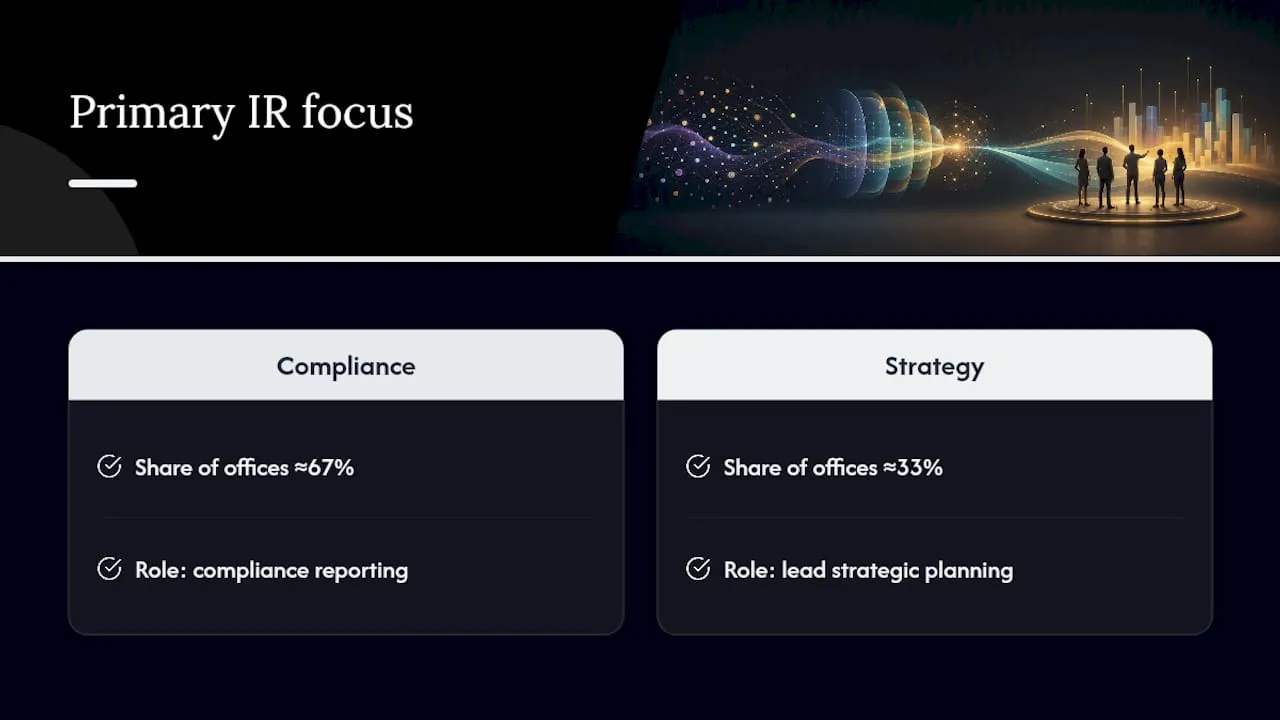
- Most IR offices spend only about one-third of their time on strategic planning and analysis, with two-thirds primarily focused on compliance reporting.
- Data stewardship is often overlooked but essential for ensuring consistency, accuracy, and trustworthiness in all institutional reports.
- Larger universities tend to position IR under the provost for academic focus, while smaller ones may place it under vice presidents of finance or administration.
- Key IR outputs include standardized official statistics, dashboards for leadership, accreditation packages, and targeted survey reports.
- The future of IR involves blending compliance with institutional effectiveness through automation, data literacy, and improved governance.
Table of Contents
- The core duties and functions of an institutional research office
- Who works in institutional research, and what tools do they use?
- What does an institutional research office produce?
- Where does IR sit in the organisational chart?
- How institutional research actually shapes decisions
- Where institutional research is heading next
- A practical example: matching software features to IR outputs
- The gap between what IR is supposed to do and what it actually gets time for
- Sources
The core duties and functions of an institutional research office
Every institutional research (IR) office anchors its work in five recurring duties, laid out in AIR’s duties and functions guidance. These aren’t abstract categories, and many IR offices use a student success dashboard to help illustrate key metrics for monitoring student outcomes. Each one determines what lands on a dean’s desk and when.
- Data collection: gathering enrolment, financial, staffing and outcomes data, and holding the line on standard definitions so a “full-time student” means the same thing in every report.
- Analysis and interpretation: turning raw numbers into findings on enrolment trends, graduation rates, and budget performance.
- Reporting and compliance: filing mandatory returns to government bodies and accreditors on tight deadlines.
- Planning support: feeding data into programme reviews, strategic plans and academic assessment cycles.
- Data stewardship: protecting data quality, privacy and consistent governance across departments that often keep their own spreadsheets.
That last duty is the one outsiders underestimate. Stewardship isn’t paperwork. It’s the reason a president can trust that the retention rate quoted in a board meeting matches the one filed with an accreditor months earlier.
Who works in institutional research, and what tools do they use?
A typical office runs on a small team: a director, one or two data analysts, sometimes a dedicated data manager, and occasionally a survey specialist. Titles vary by institution, but the skill set rarely does.
- Statistical literacy and applied research methods
- Clear written and verbal communication for non-technical audiences
- Data governance and privacy awareness
- Comfort with student information systems (SIS), SQL, business intelligence platforms and dashboard tools
Most practitioners build these skills on the job rather than through a single degree route, though graduate certificates in institutional research have become a common entry path.
Pro Tip: If you’re assessing an IR office’s capability, ask what dashboard or BI tool they use day to day. The answer tells you more about their actual analytical reach than their job titles do.
What does an institutional research office produce?
The outputs are concrete, and each one has a distinct audience.
- Official statistics and compliance returns. Government and accreditation bodies receive standardised figures on enrolment, finance and outcomes, often published on the university’s own site, as The Citadel’s IR office does routinely.
- Dashboards for leadership and academic units. Deans and department chairs use these to track live enrolment, retention and course demand without waiting on a custom pull.
- Accreditation packages. These bundle assessment data, learning outcomes evidence and narrative context for reviewers.
- Ad hoc briefs and survey reports. A president asking “why did applications drop in this programme?” typically gets a short, targeted analysis rather than a full report.
Universities such as Notre Dame maintain dedicated IR pages precisely because these outputs need one authoritative, publicly citable source.
Where does IR sit in the organisational chart?
Placement shapes priorities more than most people expect. An office reporting to the provost tends to lean toward academic planning and assessment. One placed under a VP of finance or administration often skews toward compliance and budget reporting instead.
- Centralised models keep definitions and data consistent across the institution, since one office controls the numbers everyone cites.
- Decentralised or dispersed models spread IR-type work across departments, which can speed up local requests but risks conflicting figures for the same metric.
- Reporting lines vary by size: larger universities more often route IR through the provost; smaller institutions frequently place it under the VP academic affairs.
The ERIC briefing on institutional research placement documents this trade-off in detail, and it’s still the clearest explanation of why identical offices can behave so differently from one campus to the next.
How institutional research actually shapes decisions
Three scenarios show the office at work rather than in theory.
- Enrolment forecasting. IR models applicant trends against historical yield rates so admissions and finance teams can plan staffing and housing before, not after, a shortfall hits the budget.
- Equity gap analysis. Disaggregating outcomes by demographic group flags where retention interventions are actually needed, rather than where assumption says they’re needed.
- Programme review. When a department’s enrolment slides for three consecutive years, IR data is usually what triggers the reallocation conversation, not opinion.
The scale of this work is larger than most staff realise. The 2024 AIR national survey found that 66% of IR and institutional effectiveness (IE) offices are primarily responsible for mandatory compliance reporting, while 57% also lead institution-level decision support.
Where institutional research is heading next
IR is drifting away from being a pure reporting function toward something closer to institutional effectiveness. Offices increasingly blend compliance work with continuous improvement and programme evaluation, a pattern AIR tracks as growing IR/IE integration.
- Building data literacy across campus so deans and department chairs can interpret dashboards themselves, not just request them.
- Automating routine reporting and dashboard refreshes to free analyst time for deeper questions.
- Governance catching up with automation, since a self-updating dashboard is only trustworthy if its underlying definitions stay consistent.
- Persistent capacity pressure: many offices remain too stretched by mandatory returns to do the predictive analytics they’re capable of.
AIR has been explicit that the sector’s direction should move beyond compliance toward institution-wide data literacy, and the survey figures above suggest that shift is still in progress rather than complete.
A practical example: matching software features to IR outputs
Institutional research output looks a lot like the reporting many membership and educational organisations already need: dashboards, custom reports, and portals that give stakeholders self-serve access to their own data. Colossus Systems, built for membership and educational organisations rather than for IR offices specifically, illustrates the kind of platform features that overlap with common IR tasks.
- Custom reporting tools that reduce the manual pull-and-format cycle behind routine compliance returns.
- Member and learner portals that let stakeholders check their own participation or outcomes data without emailing an analyst.
- Analytics dashboards that mirror the leadership-facing dashboards IR offices build for deans and provosts.
- Payment and event integrations that feed usable engagement data into a broader strategic planning process.
This is an illustrative parallel, not a claim that any single platform replaces the analytical judgement an IR office provides.
The gap between what IR is supposed to do and what it actually gets time for
The conventional description of institutional research, collect data, analyse it, report it, undersells what makes a good office valuable and overstates how much strategic work most offices actually get to do. The AIR survey figures make that gap visible: two thirds of offices are primarily judged on compliance reporting, while barely a third lead strategic planning. That’s not a failure of ambition. It’s a capacity problem, and it’s the single most important thing to understand before judging an IR office by what it publishes.
What gets underestimated is stewardship: the unglamorous work of keeping definitions consistent so a retention figure means the same thing in every report across every department. Dashboards and automation help, but only if governance keeps pace, because a beautifully automated report built on inconsistent definitions is worse than no report at all.
If you’re evaluating or building out an IR function, prioritise data governance before you invest in more dashboards. Automation without consistent definitions just produces faster wrong answers. Get the stewardship right first, and the analytics that follow are worth trusting.
— Rob
Sources
- Role of IR in Higher Education | Marshall University Institutional Research
- Duties and functions of institutional research | AIR
- The place of institutional research in the organisation | ERIC (historical briefing)
- What is Institutional Research? | The Citadel Office of Institutional Research