Test on 5–10% First: Membership Renewal Software for Associations

Membership renewal software automates dues collection, sends reminders on a set schedule and processes payments without staff chasing spreadsheets. The main benefit is fewer lapsed members and less manual admin, provided the system protects member choice with clear opt-in and opt-out controls. Associations, clubs and charities that handle recurring dues are the natural fit. The section below covers the features that matter most when you compare systems.
TL;DR:
- Automated renewal systems reduce members lost to missed payments by supporting auto-renew workflows with clear opt-in and opt-out options.
- Reminder scheduling, such as 30-day and 3-day prompts, significantly improves renewal success rates and helps avoid member dissatisfaction.
- Payment support for stored cards, dunning, smart retries, and self-service portals are essential features to maximize renewal retention and streamline finance reconciliation.
- Careful planning, data migration, member communication, and staff training are critical to successfully implementing auto-renewal without alienating members.
- Security compliance, transparent communication during outages, and detailed audit trails are necessary for safeguarding sensitive member data and maintaining trust.
Table of Contents
- Key features to expect from renewal software
- Benefits for membership organisations
- How to implement automated renewals without alienating members
- Pricing, contracts and the procurement checklist
- Why Colossus Systems is a practical choice for associations
- Security and compliance considerations for handling member data
- Practical perspective: common pitfalls and how to avoid them
- How Colossus Systems can help
- Sources
- FAQ
Key features to expect from renewal software
The right renewal platform does more than charge a card on a fixed date. Look for auto-renew workflows that let members choose to opt in or opt out at signup, and that handle different membership categories and anniversary dates without manual intervention. Association leaders see automatic renewal as an expected convenience when it comes with plain communication and a visible way to cancel.
Reminder timing matters as much as the payment mechanics. A society such as INFORMS builds its renewal reminders around a 30-day and 3-day schedule, giving members two clear touchpoints before charging their card.
Beyond reminders, prioritise:
- Payment gateway support for card, direct debit and card-on-file storage, so members are not re-entering details each year.
- Dunning and smart retries that automatically re-attempt failed payments and alert staff when a card has expired.
- Self-service portals where members update payment details or cancel without emailing your office.
- Reporting and audit trails that finance teams can use to reconcile renewals against bank deposits.
Subscription platforms built for recurring billing typically automate retries and provide self-service portals specifically to reduce the number of renewals lost to expired cards rather than genuine cancellations.
Benefits for membership organisations
The case for automation is straightforward: staff stop reconciling renewal spreadsheets by hand, and members stop missing renewal dates because a letter sat in a pile. Reminder sequences and recovery flows for failed payments tend to lift the share of members who renew, since a lapsed card is no longer the same as a lapsed member.
Automated dunning and account updater services recover payments that would otherwise be lost to expired or reissued cards, according to payment platform documentation on recurring billing, without requiring manual outreach from staff. That single feature often does more for retention than any reminder email.
Cashflow becomes more predictable once renewals land on a schedule rather than trickling in through cheques and phone calls, and finance teams get cleaner monthly reporting as a result. Members notice the difference too: paying through a stored card or direct debit, with a transparent notice before each charge, feels far less like an administrative chore than the old renewal form. Our guide on automating member renewals for higher retention covers how these gains compound over a membership year.
How to implement automated renewals without alienating members
Rolling out auto-renew badly can cost you more members than it saves, so treat the switch as a policy decision first and a technical one second.
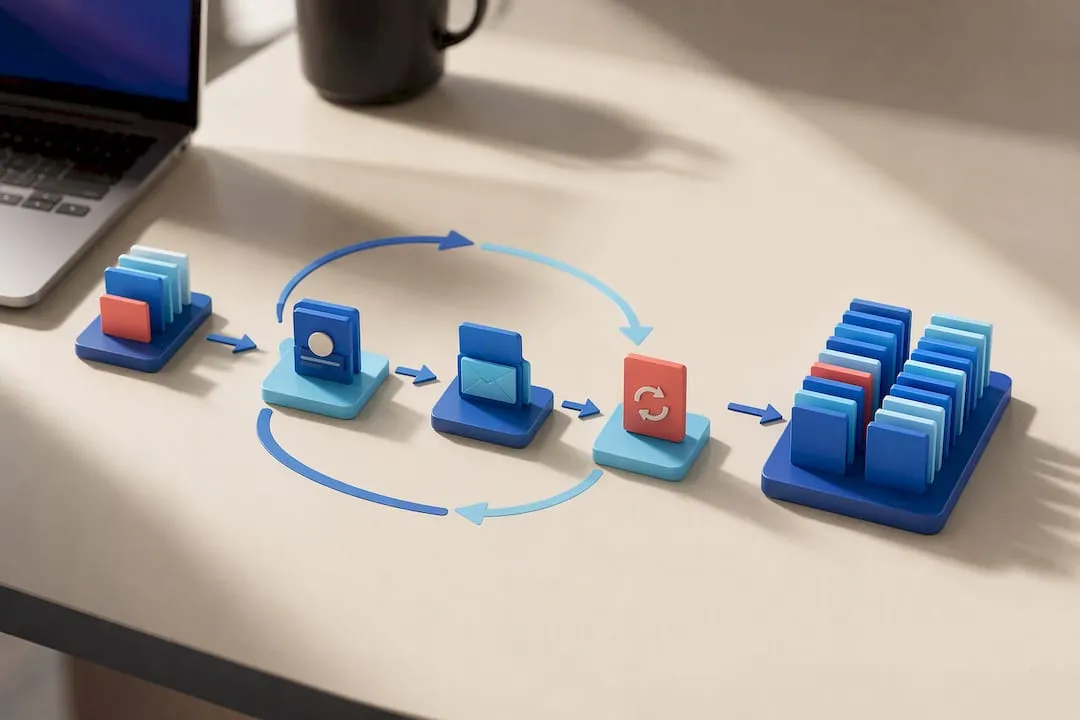
- Set your policy before you configure anything: decide opt-in versus opt-out, fix a reminder cadence such as 30 days and 3 days before charging, and set a refund window for members who are charged unexpectedly.
- Migrate member data carefully: map every field, including membership category and any fee exceptions, then run a pilot before touching the full database.
- Configure payments: choose a gateway, set dunning rules for failed charges, and turn on account updater support so expired cards get refreshed automatically.
- Write your communications plan: draft reminder emails, a cancellation confirmation, and support scripts for the questions your office will get most often.
- Train staff and staff up support: expect a spike in queries during the first renewal cycle after go-live.
A pilot matters more than most organisations expect. Testing auto-renew on 5 to 10% of members first can surface data mapping errors or communication gaps before they hit your whole membership base. When mapping records, preserve membership category history and discount exceptions: getting this wrong is a common cause of billing complaints after a system switch. Our step-by-step 2026 guide to automating membership renewals walks through the policy and consent decisions in more depth.
Pro Tip: Run your pilot group’s renewals a full cycle before switching everyone over, so any mapping errors show up in a small, manageable batch rather than your entire database.
Pricing, contracts and the procurement checklist
Renewal software is usually priced per member, in tiers by membership volume, or as a flat enterprise licence for larger associations. The quoted price rarely covers everything: gateway processing fees, account updater charges and one-off migration or implementation costs often sit outside the headline number, and procurement reviews of platforms such as MemberClicks point to long contract terms and notice penalties as recurring complaints from buyers.
Before signing, check:
- Notice periods and auto-renew clauses in the contract itself, not just the software.
- Exit penalties if you need to leave before the term ends.
- Refund policies for members charged in error during a system fault.
- Migration support included in the price, versus billed separately.
For any demo or RFP, ask vendors to show their CRM integrations, walk through a sample data migration, and state their support SLA in writing rather than verbally.
Why Colossus Systems is a practical choice for associations
Colossus Systems brings membership management, payments, member portals, CRM and analytics into one platform, which removes the need to stitch together separate renewal, billing and reporting tools. Workflows are customisable by membership type, so a professional body with tiered categories and a club with a single flat fee can both configure renewals to match their own rules.
Migration support is built into onboarding, which reduces the data mapping risk that trips up many switch-overs. Organisations evaluating fit can review the membership management software product page or the full features list for specifics on payment integrations and portal capabilities before requesting a demo.
Security and compliance considerations for handling member data
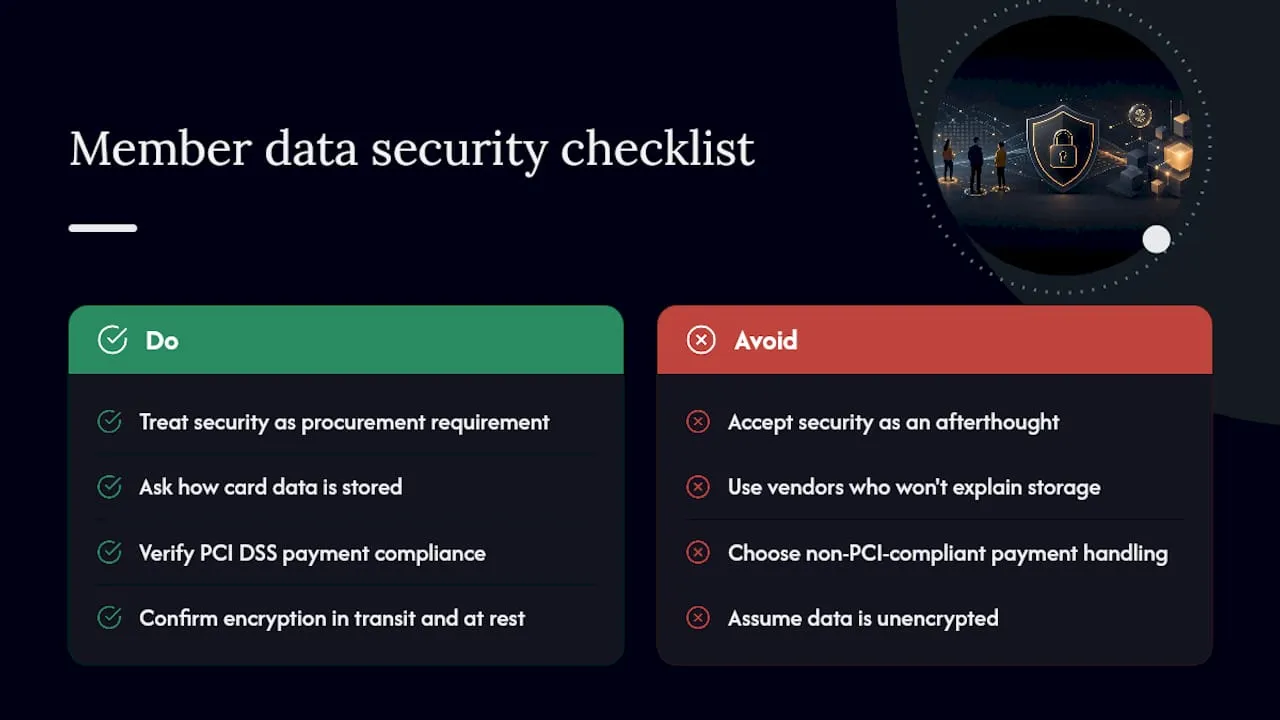
Member records include payment details, contact information and sometimes sensitive category data such as student or concessionary status, so security has to be treated as a procurement requirement, not an afterthought. Ask any vendor how card data is stored, whether they are compliant with PCI DSS standards for payment handling, and how member data is encrypted both in transit and at rest.
Outages happen even with established software. A 2026 notice from SIOP describing a membership payment issue and its resolution shows how a prompt public update helped the organisation keep member trust during the disruption. That kind of transparent communication matters as much as the technical fix itself.
Beyond payment security, check who at your organisation can access member records, whether the platform logs changes for an audit trail, and how long data is retained after a member lapses or cancels. Governance-minded boards will also want to know whether the vendor supports data export in a usable format, so your association is never locked into one system for the sake of retrieving its own records.
Practical perspective: common pitfalls and how to avoid them
The biggest mistake associations make is treating auto-renew as a technical switch rather than a communication exercise. Members who get charged without warning complain loudly, so tell them early, tell them clearly, and give them an easy way to opt out. Support teams need scripts ready for migration questions before go-live, not after the first angry email arrives. Reconciliation procedures for failed payments deserve the same attention as the payment gateway itself: a retry that fails silently costs you a member, not just a transaction.
— Rob
How Colossus Systems can help
If your renewal process still runs on spreadsheets and manual chasing, moving to a platform built specifically for membership dues removes that admin load in one step. Colossus Systems combines renewal automation, payment processing, member self-service and reporting in a single system, so your team is not reconciling three separate tools every month.
When you book a demo, ask to see:
- A sample migration plan for moving your existing member data across.
- The platform’s dunning rules for failed payments and how account updater support works.
- Integration examples with CRM and event tools your association already uses.
Plans start with the Core plan, scaling through higher tiers depending on membership volume. Full details are on the pricing page, and you can also explore the CRM software that sits alongside renewals if your association manages events and member relationships in the same system.
Sources
For deeper reading on auto-renew policy language, see ERS’s terms and conditions, and for retention tactics beyond renewal mechanics, Babylovegrowth’s guide to customer retention is a useful companion piece.
- Encourage member renewals
- Auto renew frequently asked questions (INFORMS)
- Automate the full subscriber lifecycle (Chargebee)
FAQ
What is the best membership software?
There is no single best option: the right choice depends on your membership size, payment complexity and whether you need CRM or events built in. Platforms such as Colossus Systems, which combine renewals, payments, portals and CRM in one system, suit associations wanting to consolidate tools rather than run several separately.
What is the best membership software for nonprofits in the UK?
Nonprofits and charities generally need the same core features as any association: automated renewals, flexible payment options and clear reporting for trustees. Our guide to membership software for nonprofits and charities covers sector-specific considerations such as reduced-fee categories and grant reporting.
What is a good free software for tracking memberships?
Free tools such as spreadsheets or basic CRM trials can track membership records for very small organisations, but they generally lack automated renewals, payment processing or dunning for failed charges. Once an association is chasing renewals manually or handling more than a handful of payment failures a month, a dedicated platform typically pays for itself in time saved.
How much does MembershipWorks cost per month?
Membership platform pricing varies by vendor and is usually tiered by membership volume or feature set, so a specific MembershipWorks figure is not publicly listed here. Buyers comparing options should request current pricing directly and check what is included, since procurement reviews of similar platforms often flag added implementation or migration costs on top of the headline monthly fee.