How to build partnerships to grow your membership organisation

Building strong partnerships can feel like navigating a maze, especially when initial outreach goes unanswered or collaborations fizzle without clear direction. Yet strategic partnerships remain one of the most powerful catalysts for membership growth and engagement. This guide walks you through a proven framework to identify, approach, formalise, and maximise partnerships that genuinely enhance your organisation’s capacity and member experience.
Table of Contents
- Identify And Prepare For The Right Partnerships
- Approach And Engage Potential Partners Effectively
- Formalise The Partnership To Ensure Clarity And Longevity
- Maximise The Value Of Partnerships To Grow And Enrich Your Organisation
- Discover Tools To Support Your Partnership Success
- How To Build Partnerships: Frequently Asked Questions
Key takeaways
| Point | Details |
|---|---|
| Strategic alignment is essential | Match your organisation’s programmes with partners who share your values and goals for genuine collaboration. |
| Research drives smart decisions | Investigate potential partners’ community involvement and values to uncover mutually beneficial opportunities. |
| Formal agreements prevent disputes | Written contracts defining roles and responsibilities reduce conflicts by 30%. |
| Go beyond sponsorships | Create customised engagement opportunities like workshops and mentorship programmes to deepen partner involvement. |
| Partnerships scale impact | Strategic collaborations increase programme reach by 40% and improve service delivery. |
Identify and prepare for the right partnerships
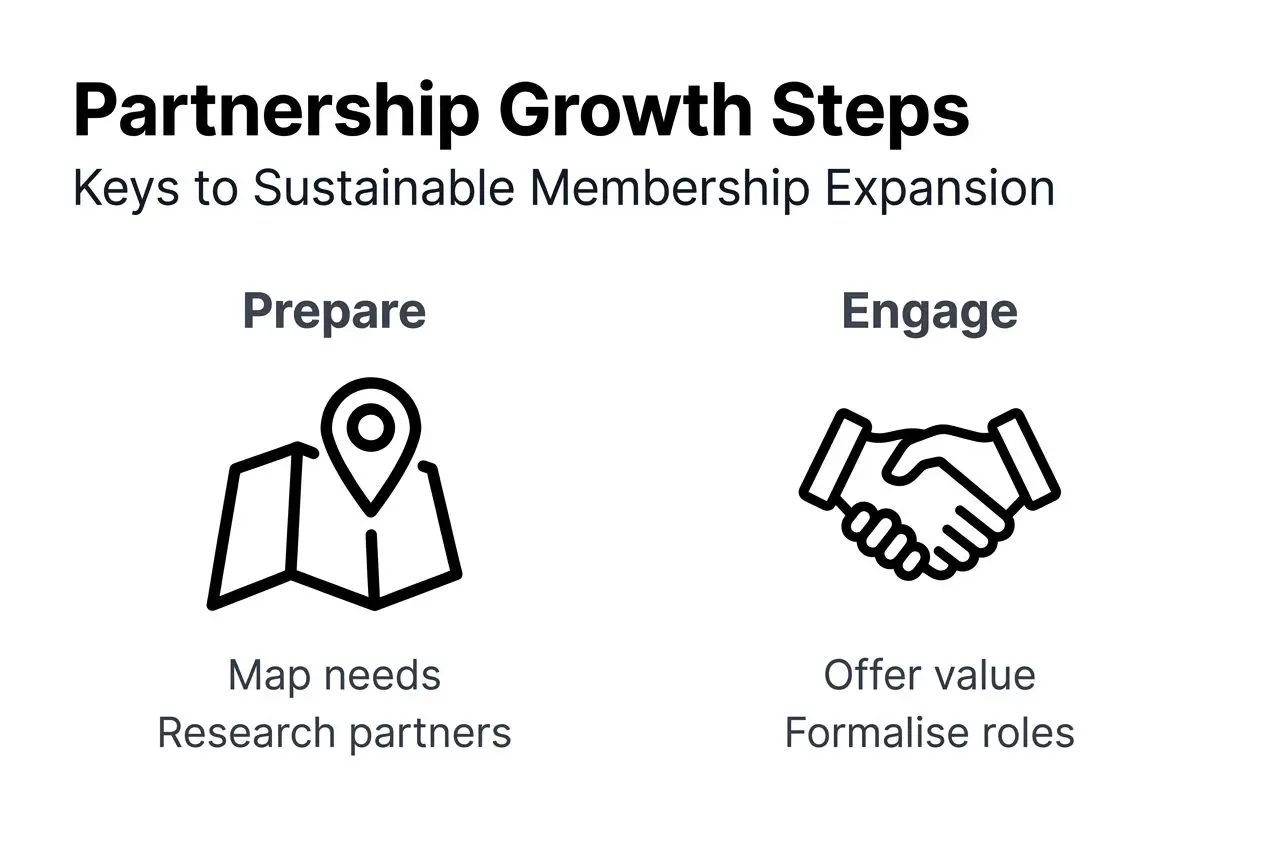
Before reaching out to anyone, you need a solid foundation. Start by examining your existing programmes and activities. Explore your programmes to find natural links to companies, particularly those with a local presence in your community. A youth development organisation, for instance, might connect with local tech firms interested in STEM education, whilst a professional association could partner with industry suppliers who serve your members.
Once you’ve mapped potential synergies, dig deeper. Conduct thorough research on prospective companies by reviewing their press releases, annual reports, and social media channels. You’re looking for alignment in values, demonstrated community involvement, and strategic priorities that complement your mission. This research reveals hidden opportunities others might miss.
Your partnership objectives must also align with the purpose of your community and organisational goals. Generic outreach fails because it lacks relevance. When you understand what drives both your members and potential partners, you can craft proposals that resonate authentically.
Consider benefits beyond funding:
- Access to volunteer networks for events and programmes
- Leadership development opportunities through mentorship
- Expertise sharing for professional training initiatives
- Resource pooling for joint research or advocacy
- Cross-promotion to expand your reach
This preparation phase determines whether your partnerships will thrive or stall. Taking time to understand building community partnerships member engagement principles now saves countless hours of misaligned conversations later. Think of it as laying the groundwork for a building: rush this step, and everything built on top becomes unstable.
Pro Tip: Create a partnership prospect matrix that scores potential partners on alignment, capacity, and strategic fit before making contact.
Approach and engage potential partners effectively
With your research complete, it’s time to initiate contact. Hold low-stakes discovery calls early on to break the ice with prospective corporate partners. These informal conversations explore shared interests without pressure, allowing both parties to assess fit naturally. You’re building a relationship, not closing a sale.
Follow this engagement sequence:
- Send a concise introduction email referencing your research insights
- Schedule a discovery call to discuss mutual goals and challenges
- Present customised collaboration concepts tailored to their industry
- Invite them to experience your organisation through a member event
- Co-develop a partnership proposal incorporating their feedback
The key is offering value from the start. Rather than asking what they can do for you, create special opportunities like customised workshops that deepen corporate support whilst addressing their strategic needs. A financial services firm might sponsor and lead a financial literacy workshop for your members, positioning them as thought leaders whilst delivering genuine member value.

Go beyond simple sponsorships. Design meaningful roles that resonate with partners’ industries and goals. This might include speaker panels where their executives share expertise, mentorship programmes connecting their staff with your members, or collaborative research projects that benefit both organisations. These deeper engagements create lasting relationships rather than transactional exchanges.
Maintain open, honest communication throughout. Set clear expectations about timelines, decision-making processes, and what success looks like for both parties. Document every meeting with brief notes and action items, then follow up promptly. This reliability builds trust and demonstrates professionalism that partners value.
Pro Tip: Create a partnership deck showcasing your organisation’s impact through stories and data, not just statistics, to make your value proposition memorable.
Looking for more engagement strategies? Explore fundraising ideas for nonprofits that complement partnership development.
Formalise the partnership to ensure clarity and longevity
Once you’ve agreed on collaboration terms, documentation becomes critical. Clear, written collaboration agreements define roles, responsibilities, and expectations, preventing misunderstandings that derail partnerships. Think of these agreements as your partnership’s operating system, keeping everything running smoothly.
Your agreement should cover these essential elements:
| Contract Element | Importance |
|---|---|
| Roles and responsibilities | Clarifies who does what, eliminating confusion and overlap |
| Financial commitments | Documents all monetary contributions, payment schedules, and budget allocations |
| Intellectual property | Protects both parties’ creative assets and research outputs |
| Confidentiality provisions | Safeguards sensitive organisational and member information |
| Duration and renewal terms | Sets clear timelines and processes for extending the partnership |
| Conflict resolution | Establishes procedures for addressing disagreements constructively |
| Exit clauses | Defines how either party can end the partnership if needed |
Research shows organisations with formal agreements experience 30% fewer disputes, making this step essential for sustainable partnerships. The clarity these documents provide prevents small misunderstandings from becoming major conflicts.
Collaboration types vary significantly in structure and commitment. Informal cooperation might involve occasional joint events with minimal documentation, whilst strategic alliances require detailed agreements covering shared programmes and resources. Some partnerships evolve into joint ventures or even mergers, each requiring increasingly sophisticated legal frameworks. Match your agreement’s complexity to your partnership’s scope.
Regularly review and update agreements as partnerships evolve. Annual check-ins ensure terms remain relevant as both organisations grow and priorities shift. These reviews also provide opportunities to celebrate successes and adjust strategies based on what’s working.
Pro Tip: Include success metrics and evaluation criteria in your agreement so both parties can objectively assess partnership effectiveness over time.
For help structuring your organisational strategy around partnerships, explore strategic planning nonprofits engagement resources.
Maximise the value of partnerships to grow and enrich your organisation
With a solid partnership in place, the real work begins: leveraging that relationship for maximum organisational impact. Strategic partnerships create pathways to build capacity, scale vision, and preserve purpose in ways single organisations simply cannot achieve alone. You’re not just sharing resources; you’re multiplying possibilities.
The numbers tell a compelling story. Successful nonprofit collaborations increase programme reach by 40% and improve service delivery by 25%, demonstrating how strategic alignment creates exponential value. These gains come from combining complementary strengths rather than duplicating efforts.
Implement these strategies to maximise partnership value:
- Develop joint programmes that leverage both organisations’ expertise and resources for greater member impact
- Create shared services for back-office functions like IT or HR, reducing costs for both partners
- Co-host signature events that draw larger audiences and enhance both organisations’ visibility
- Establish advisory councils with representatives from partner organisations to guide strategic decisions
- Launch collaborative research initiatives that produce insights neither organisation could generate alone
Engage partners as true collaborators, not passive sponsors. Invite their leadership to contribute ideas, participate in planning committees, and shape programme direction. This deeper involvement fosters innovation and ensures partnerships remain dynamic rather than stagnant.
Focus on purposeful, intentional partnerships backed by leadership commitment and dedicated resources. Half-hearted collaborations waste everyone’s time. Your board and executive team must champion partnership as a strategic priority, allocating staff time and budget accordingly.
Partnership cannot be an afterthought or a performance. It must be an act of leadership, requiring courage to share power, vision to see beyond organisational boundaries, and commitment to sustained collaborative effort.
Incorporate partner activities that directly advance strategic goals like member retention, professional development, and innovation. A technology association might partner with software companies to offer exclusive training certifications, simultaneously providing member value and showcasing partner products. Every partnership activity should serve your organisation’s core mission whilst delivering tangible partner benefits.
Discover more about boost member engagement strategies that complement partnership initiatives.
Discover tools to support your partnership success
Managing partnerships alongside member engagement demands robust systems. Specialised software transforms how you track partner involvement, coordinate joint activities, and measure collaboration outcomes. The right tools turn partnership complexity into streamlined workflows.
Membership management platforms centralise partner data, participation history, and communication records, giving you complete visibility into each relationship’s health and impact. When you can instantly see which partners engage most actively or which collaborations drive the highest member satisfaction, you make smarter strategic decisions.
Event management tools simplify organising joint programmes and customised partner activities. From registration workflows to attendee tracking and post-event surveys, these systems ensure smooth execution of collaborative events that strengthen both member and partner relationships. You’ll spend less time on logistics and more time creating meaningful experiences.
CRM software supports relationship management across multiple stakeholders, from individual partner contacts to member participants in joint programmes. Automated reminders, task assignments, and communication logs keep partnerships progressing even during busy periods.
Explore membership management features, event management software, and CRM software solutions designed specifically for membership organisations seeking to enhance partnership strategies and deliver exceptional member experiences.
How to build partnerships: frequently asked questions
What’s the best way to make initial contact with potential partners?
Start with personalised emails referencing specific aspects of their work that align with your mission, then suggest a brief discovery call to explore mutual interests without pressure. Research their recent initiatives and mention how collaboration could amplify both organisations’ impact.
What should be included in a partnership agreement?
Essential elements include clearly defined roles and responsibilities, financial commitments and payment terms, intellectual property provisions, confidentiality clauses, duration and renewal terms, conflict resolution procedures, and exit clauses. Regular review schedules ensure agreements remain relevant as partnerships evolve.
How can we involve partners beyond simple financial sponsorship?
Create customised opportunities like industry-specific workshops, mentorship programmes connecting their staff with your members, speaking engagements at your events, collaborative research projects, or advisory roles in programme development. These deeper engagements build lasting relationships and deliver greater value to all parties.
What metrics should we track to measure partnership success?
Monitor programme reach expansion, member satisfaction scores for joint initiatives, partner engagement frequency, financial contributions versus in-kind support value, new member acquisitions attributed to partnerships, and qualitative feedback from both members and partner organisations. Review these metrics quarterly with partners to ensure alignment.
How do we handle conflicts or misalignments with partners?
Address issues promptly through direct, honest conversation using the conflict resolution procedures outlined in your partnership agreement. Focus on shared goals and mutual benefits whilst exploring compromise solutions. If misalignment persists despite good-faith efforts, utilise exit clauses to end the partnership professionally whilst preserving relationships.
What resources help organisations new to building partnerships?
Explore guides on building community partnerships and join professional networks where membership leaders share partnership experiences. Start with smaller, lower-risk collaborations to build confidence and systems before pursuing complex strategic alliances.
Recommended
- Building Community Partnerships for Member Engagement Success|CS
- How to Grow Membership: Proven Strategies for Organisations|CS
- 7 Powerful Community Building Ideas for Member Organisations|CS
- Growing Your Memberships Sustainably: 6 Principles To Live By |CS
- Ethical Leadership in Recruitment: Building Long-Term Partnerships with Bolt-On Personnel - Mcglynn Personnel
- How to Network as a Creative for Business Growth