How to build effective volunteer recognition programmes

Volunteer retention and engagement remain critical challenges for membership organisations in 2026. Many leaders struggle to maintain volunteer motivation and loyalty despite investing significant resources in recruitment. Effective volunteer recognition programmes use a mix of formal and informal methods tailored to volunteer motivations such as purpose, esteem, affiliation, and achievement. This guide explains how to build recognition programmes that work, from understanding volunteer motivations through measuring success and ensuring long-term sustainability. You’ll discover practical strategies to transform your volunteer engagement and retention outcomes.
Table of Contents
- Key takeaways
- Understanding volunteer motivations and tailoring recognition programmes
- Designing and implementing a structured recognition programme
- Navigating challenges and ensuring programme sustainability
- Measuring success and leveraging recognition for volunteer retention
- Discover software solutions to support volunteer recognition and management
- Frequently asked questions
Key Takeaways
| Point | Details |
|---|---|
| Tailored recognition methods | Recognition should blend formal and informal approaches matched to each volunteer’s motivations. |
| Regular personalised recognition | Frequent and personalised acknowledgement strengthens loyalty and engagement. |
| Structured recognition design | A structured eight step process with feedback and technology drives programme effectiveness. |
| Profile and context fit | Recognition must be adapted to volunteer profiles and the organisation’s context. |
| Excess recognition backfires | Excessive or poorly tailored recognition can reduce its effectiveness. |
Understanding volunteer motivations and tailoring recognition programmes
Volunteers contribute their time for remarkably diverse reasons. Some seek meaningful purpose and connection to causes they value. Others pursue esteem and public acknowledgement of their contributions. Many volunteer to build social connections and belong to communities. Achievement-oriented volunteers want recognition for reaching specific milestones and goals.
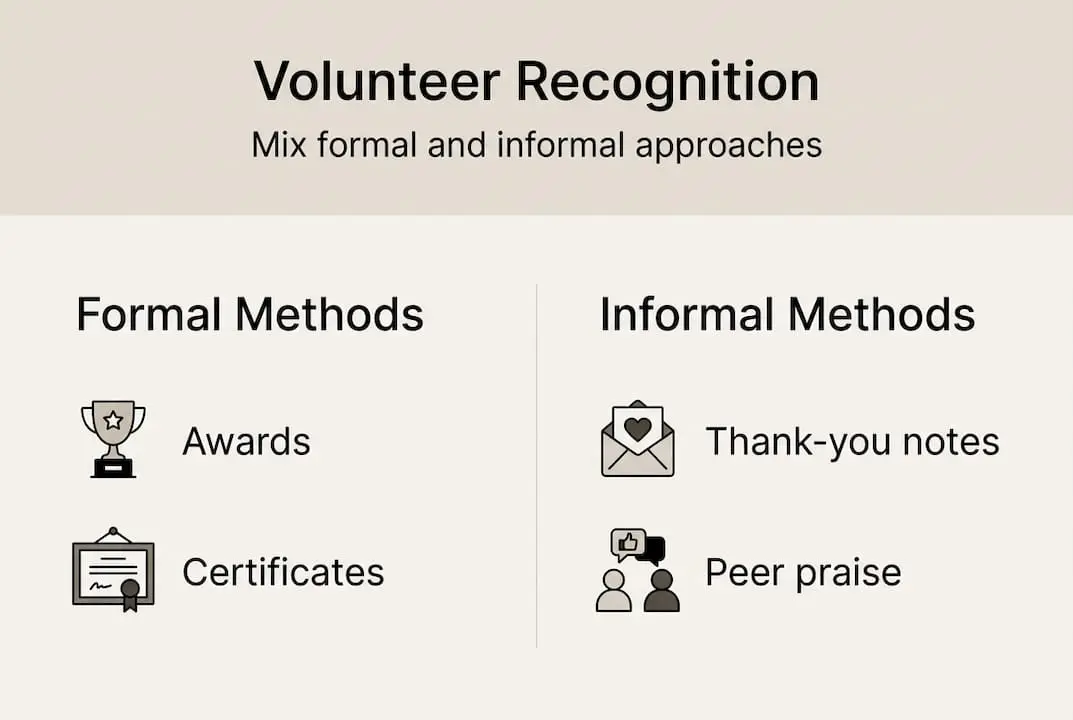
Effective volunteer recognition programmes use a mix of formal and informal methods tailored to volunteer motivations such as purpose, esteem, affiliation, and achievement. Formal recognition includes awards ceremonies, certificates, and public announcements. Informal methods encompass personal thank-you notes, spontaneous praise, and casual acknowledgements. Each approach serves different motivational needs and volunteer profiles.
The key lies in matching recognition methods to individual preferences. Purpose-driven volunteers often appreciate private acknowledgements that connect their work to organisational impact. Esteem-seeking volunteers respond well to public awards and social media recognition. Affiliation-motivated volunteers value team celebrations and community-building events. Achievement-oriented volunteers prefer milestone markers and progress tracking.
Conduct volunteer surveys or interviews before designing your programme. Ask direct questions about preferred recognition methods, comfort with public acknowledgement, and what makes volunteers feel valued. This data reveals patterns across your volunteer base and identifies outliers requiring special consideration. Use the insights to segment volunteers into recognition preference groups.
Incorporate peer recognition alongside leadership acknowledgement. Volunteers often value recognition from fellow volunteers as much as formal awards from organisational leaders. Create channels for volunteers to nominate colleagues for recognition. Balance public celebrations with private thank-yous to accommodate different comfort levels with visibility.
Pro Tip: Create volunteer profiles documenting individual motivations, preferred recognition methods, and milestone achievements. Update these profiles regularly to ensure personalising volunteer recognition remains accurate as preferences evolve.
Designing and implementing a structured recognition programme
Systematic design transforms recognition from sporadic gestures into strategic programmes that drive measurable outcomes. Mechanics include 8 steps: understanding motivations, setting goals, tailoring methods, celebrating milestones, involving the organisation, making recognition habitual, soliciting feedback, and using tech automation. Each step builds on previous foundations to create comprehensive recognition systems.
Start with volunteer surveys to understand motivations across your volunteer base. Analyse responses to identify common themes and unique preferences. Set clear goals such as improving retention rates by specific percentages or increasing volunteer satisfaction scores. Quantifiable objectives enable you to measure programme effectiveness and justify resource allocation.
Choose recognition methods appropriate to volunteer profiles and organisational culture. Public recognition works well for extroverted volunteers and organisations with celebratory cultures. Private acknowledgements suit introverted volunteers and more reserved organisational environments. Formal awards fit milestone achievements and long-term service. Informal thank-yous maintain day-to-day motivation between major recognitions.
Celebrate milestones and achievements regularly to maintain volunteer motivation. Recognise first contributions, service anniversaries, project completions, and exceptional efforts. Create a milestone calendar to ensure consistent recognition throughout the year. Vary recognition formats to prevent routine from diminishing impact.
| Implementation step | Description |
|---|---|
| Understand motivations | Survey volunteers to identify what drives their participation and preferred recognition |
| Set clear goals | Define measurable objectives such as retention rates or satisfaction scores |
| Tailor methods | Match recognition approaches to volunteer profiles and organisational culture |
| Celebrate milestones | Recognise first contributions, anniversaries, completions, and exceptional efforts |
| Involve the organisation | Engage leadership and staff to create a culture of appreciation |
| Make recognition habitual | Establish regular recognition rhythms and integrate into workflows |
| Solicit feedback | Gather volunteer input to refine and improve recognition practices |
| Use technology | Automate tracking, reminders, and recognition delivery for consistency |
Involve the entire organisation to create a supportive recognition culture. Train staff and leadership on recognition importance and methods. Encourage spontaneous appreciation alongside formal programmes. Recognition becomes more powerful when it flows from multiple sources throughout the organisation.
Use technology to automate and monitor recognition activities for consistency. Managing volunteer recognition effectively requires systems that track milestones, trigger recognition reminders, and document appreciation history. Automation prevents recognition gaps whilst reducing administrative burden.
Solicit continuous feedback to refine your programme. Conduct quarterly check-ins asking volunteers about recognition experiences. Track which methods generate the strongest responses. Adjust your approach based on volunteer input and observed outcomes.
Pro Tip: Create a recognition calendar mapping out planned appreciation activities for the entire year. Include monthly informal recognitions, quarterly milestone celebrations, and annual awards ceremonies to ensure consistent volunteer appreciation.
Navigating challenges and ensuring programme sustainability
No single recognition approach fits all volunteers. Personalisation prevents alienation and resentment among volunteers who feel overlooked or uncomfortable with certain recognition methods. Tailoring is vital as one-size-fits-all often fails. Some volunteers appreciate public praise whilst others find it embarrassing. What motivates one volunteer may demotivate another.
Avoid excessive awards that dilute the reward’s perceived value. Recognition loses impact when distributed too frequently or without meaningful criteria. Volunteers begin viewing recognition as routine rather than special acknowledgement of genuine contribution. Maintain selectivity and significance in formal awards whilst using informal appreciation more liberally.
Ensure inclusivity and fairness to prevent favouritism and morale damage. Establish clear criteria for formal recognition and apply them consistently across all volunteers. Document recognition decisions to demonstrate fairness. Rotate recognition committee members to prevent bias. Favouritism destroys volunteer morale faster than lack of recognition.
“Compliance with IRS $4/volunteer/occasion rule is important to avoid taxable comp; risks include favoritism, insincerity, and over-recognition reducing impact.”
Understand legal and tax rules to maintain nonprofit compliance. The IRS limits volunteer recognition gifts to small amounts per occasion to prevent disguised compensation. Exceeding these limits can jeopardise tax-exempt status and create taxable income for volunteers. Consult legal counsel about compliance in volunteer recognition practices in your jurisdiction.
Recognise generational differences in recognition preferences. Younger volunteers often prefer personalised, immediate recognition delivered through digital channels. Older volunteers may value traditional formal awards and printed certificates. Baby boomers appreciate public ceremonies whilst millennials and Gen Z often favour authentic, informal appreciation.
Common pitfalls include:
- Recognising the same volunteers repeatedly whilst overlooking others
- Delivering recognition so late it loses relevance to the achievement
- Using generic templates that feel impersonal and insincere
- Failing to connect recognition to specific contributions and impact
- Neglecting to train staff and leadership on effective recognition practices
Pro Tip: Establish a written recognition policy documenting criteria, methods, frequency, and compliance requirements. This standardises practices across your organisation and ensures fairness whilst maintaining the sincerity essential for effective volunteer appreciation.
Measuring success and leveraging recognition for volunteer retention
Recognition boosts engagement up to 3x; well-run programmes reduce turnover by 43%. Associations with strong recognition report near 100% volunteer renewal rates. These outcomes demonstrate recognition’s measurable impact on organisational success and volunteer satisfaction. Effective programmes transform volunteer relationships and organisational capacity.
Measure success using volunteer surveys, renewal rates, and engagement metrics. Survey volunteers quarterly about recognition experiences and satisfaction. Track volunteer retention rates before and after programme implementation. Monitor engagement indicators such as hours contributed, event attendance, and programme participation. Compare metrics across volunteer cohorts receiving different recognition approaches.

| Metric | Without recognition programme | With effective recognition programme |
|---|---|---|
| Volunteer retention rate | 45-60% annual renewal | 85-100% annual renewal |
| Average volunteer tenure | 1-2 years | 3-5+ years |
| Volunteer satisfaction score | 3.2/5 average | 4.5/5 average |
| Engagement level | Moderate participation | Active, enthusiastic participation |
| Recruitment referrals | Minimal word-of-mouth | Strong volunteer-driven recruitment |
Steps to measure and improve recognition effectiveness:
- Set key performance indicators aligned with organisational goals such as retention percentages and satisfaction scores.
- Establish baseline measurements before launching or revising recognition programmes.
- Collect data regularly through surveys, interviews, and system analytics.
- Analyse results to identify which recognition methods generate strongest outcomes.
- Compare performance across volunteer segments to understand differential impacts.
- Adjust recognition approaches based on data insights and volunteer feedback.
- Report results to leadership and stakeholders to demonstrate programme value.
- Refine continuously as volunteer preferences and organisational needs evolve.
Use recognition data to inform recruitment and training strategies for sustained impact. Volunteers who feel appreciated become your strongest recruiters, referring friends and colleagues to your organisation. Highlight your recognition programme in recruitment materials to attract quality volunteers. Share volunteer testimonials about appreciation experiences to demonstrate organisational culture.
Connect recognition to volunteer retention strategies by identifying which appreciation methods most strongly correlate with long-term commitment. Some volunteers stay primarily because of recognition whilst others prioritise different factors. Understanding these relationships enables you to allocate recognition resources where they generate maximum retention impact.
Track recognition programme costs against retention savings. Replacing departed volunteers requires recruitment, training, and onboarding investments. Calculate these costs and compare against recognition programme expenses. Most organisations discover recognition delivers exceptional return on investment through reduced turnover and increased volunteer productivity.
Discover software solutions to support volunteer recognition and management
Managing volunteers and recognising their contributions becomes significantly easier with specialised software designed for membership organisations. Tracking individual volunteer milestones, preferences, and recognition history manually consumes substantial administrative time and increases the risk of overlooking deserving volunteers.
Colossus Systems offers membership management software features, event management software, and CRM software solutions designed to streamline volunteer engagement and recognition workflows. These integrated tools help automate communication, track volunteer milestones, and personalise recognition efforts across your entire volunteer base. The platform enables you to segment volunteers by preferences, set automated recognition reminders, and maintain comprehensive appreciation histories.
Explore how Colossus Systems can enhance your volunteer management and recognition programmes, reducing administrative burden whilst ensuring consistent, meaningful appreciation that drives retention and engagement.
Frequently asked questions
What are volunteer recognition programmes?
Volunteer recognition programmes are systematic approaches organisations use to acknowledge and appreciate volunteer contributions. These programmes combine formal methods such as awards ceremonies with informal appreciation like thank-you notes. Effective programmes tailor recognition to individual volunteer motivations and preferences to maximise impact on engagement and retention.
How do I tailor recognition to different volunteer motivations?
Start by surveying volunteers about what drives their participation and how they prefer to be recognised. Segment volunteers into groups based on motivations such as purpose, esteem, affiliation, or achievement. Match recognition methods to each group, offering public awards to esteem-seekers whilst providing private acknowledgements to purpose-driven volunteers who value impact over visibility.
What legal considerations apply to volunteer recognition?
Nonprofit organisations must comply with tax regulations limiting volunteer recognition gifts to avoid creating taxable compensation. The IRS restricts recognition items to minimal value per volunteer per occasion. Exceeding these limits can jeopardise tax-exempt status and create tax obligations for volunteers. Consult legal counsel about specific limits and compliance requirements in your jurisdiction.
How often should we recognise volunteers?
Balance regular informal appreciation with periodic formal recognition. Offer spontaneous thank-yous and acknowledgements frequently to maintain day-to-day motivation. Reserve formal awards for significant milestones such as service anniversaries, major project completions, or exceptional contributions. Monthly informal recognition combined with quarterly milestone celebrations and annual awards creates effective rhythm without diluting impact.
Can recognition programmes work for small organisations?
Recognition programmes scale effectively to organisations of any size. Small organisations often implement recognition more personally and authentically than larger entities. Focus on sincere, timely appreciation rather than elaborate programmes. Simple handwritten notes, personal phone calls, and small group celebrations deliver powerful impact without requiring substantial budgets or administrative resources.