How to Manage Volunteers for Membership Success

Over 20 million british people volunteer each year, yet only a fraction stay engaged long term. For membership organisations across the United Kingdom, creating a strong volunteer programme can make all the difference in building loyal communities and achieving real impact. If you want to harness the full potential of your volunteers, it starts with defining roles, welcoming new team members well, and building an environment that inspires ongoing participation.
Table of Contents
- Stage 1: Define Volunteer Roles And Recruitment Criteria
- Stage 2: Set Up Effective Onboarding Processes
- Stage 3: Allocate Tasks And Establish Clear Communication
- Stage 4: Monitor Volunteer Engagement And Performance
- Stage 5: Review Outcomes And Optimise Strategies
Quick Summary
| Key Message | Explanation |
|---|---|
| 1. Define Volunteer Roles Clearly | Craft detailed role descriptions outlining responsibilities, skills, time commitments, and growth opportunities to attract the right volunteers. |
| 2. Implement Comprehensive Onboarding | Develop a structured onboarding process that includes training sessions, mentorship, and regular check-ins to build volunteer engagement. |
| 3. Allocate Tasks Strategically | Use skills assessments to match tasks with volunteer strengths, ensuring clear objectives and an understanding of responsibilities. |
| 4. Monitor Engagement and Performance Continuously | Establish regular performance reviews and feedback sessions to track contributions and maintain high volunteer motivation. |
| 5. Review Outcomes for Continuous Improvement | Conduct quarterly reviews to analyse volunteer impact and adapt strategies based on data and feedback for programme effectiveness. |
Stage 1: Define volunteer roles and recruitment criteria
Successful volunteer management begins with crystal-clear role definitions and strategic recruitment criteria. Identifying precise expectations transforms random recruitment into a targeted, purposeful process that attracts committed individuals aligned with your organisation’s mission.
Crafting comprehensive volunteer role descriptions requires careful consideration of organisational needs and potential volunteer capabilities. Developing meaningful volunteer roles involves mapping specific responsibilities, required skills, estimated time commitments, and expected outcomes. Consider breaking down each role into distinct components: core responsibilities, skills required, training provisions, support mechanisms, and potential growth pathways. This approach helps potential volunteers understand exactly what they are signing up for and enables your organisation to attract candidates with matching capabilities.
Recruitment criteria should extend beyond basic skill matching. Look for volunteers who demonstrate passion, reliability, and alignment with your organisation’s values. Conduct thorough interviews that assess not just technical capabilities but also cultural fit and intrinsic motivation. Implement a multi stage screening process that includes initial application forms, personal interviews, reference checks, and potentially skills assessments relevant to specific roles. By maintaining rigorous yet welcoming recruitment standards, you create a volunteer programme that attracts high quality, committed individuals who will drive your membership organisation’s success.
Warning: Avoid creating overly rigid role descriptions that might discourage potential volunteers. Flexibility and clear communication are key to building an engaging volunteer ecosystem.
Stage 2: Set up effective onboarding processes
Onboarding transforms new volunteers from curious individuals into committed team members who understand and embrace your organisation’s mission. The initial integration process is crucial for establishing expectations, building confidence, and creating a positive first impression that will determine long-term engagement.
Implementing a structured volunteer onboarding process requires a comprehensive approach that goes beyond simple orientation. Design a multi-stage welcome programme that includes detailed role briefings, comprehensive training sessions, and personalised support mechanisms. Begin with a warm welcome package that outlines organisational values, volunteer responsibilities, and potential growth opportunities. Create an initial orientation session that introduces volunteers to team dynamics, provides clear communication channels, and sets realistic performance expectations.
Successful onboarding involves more than administrative procedures. Focus on building genuine connections by pairing new volunteers with experienced mentors who can provide guidance and support. Develop interactive training modules that combine theoretical knowledge with practical skills relevant to their specific roles. Implement regular check-in processes during the first few months to gather feedback, address potential challenges, and demonstrate your organisation’s commitment to volunteer development. By investing time and resources in a thoughtful onboarding strategy, you create a supportive environment that transforms new volunteers into passionate, long-term contributors.

Warning: Avoid overwhelming new volunteers with too much information during initial onboarding. Balance comprehensive training with a welcoming, patient approach that allows individuals to gradually integrate into your organisation.
Stage 3: Allocate tasks and establish clear communication
Successful volunteer management hinges on strategic task allocation and transparent communication channels that empower volunteers to contribute effectively and feel genuinely connected to your organisation’s mission. Creating a robust framework for task distribution ensures each volunteer understands their specific responsibilities and potential impact.
Optimising task assignments within collaborative teams requires a nuanced approach that considers individual skills, motivations, and organisational needs. Begin by conducting comprehensive skills assessments that reveal each volunteer’s strengths, interests, and potential growth areas. Develop a transparent task allocation system that matches volunteer capabilities with organisational requirements, ensuring individuals feel challenged yet supported. Create detailed task descriptions that outline specific objectives, expected outcomes, time commitments, and potential learning opportunities.
Effective communication forms the backbone of successful volunteer coordination. Implement multiple communication channels including regular team meetings, digital collaboration platforms, and personalised check-in processes. Volunteer guidelines emphasise the importance of clear role responsibilities to maintain organisational efficiency. Establish a consistent reporting mechanism that allows volunteers to share progress, challenges, and insights. Encourage open dialogue by creating a supportive environment where volunteers feel comfortable seeking guidance and providing feedback. By prioritising transparent, respectful communication, you transform volunteers from mere task performers into engaged, motivated contributors who are deeply invested in your organisation’s success.
Warning: Avoid micromanaging volunteers. While clear communication is essential, provide enough autonomy to allow creativity and personal initiative to flourish.
Stage 4: Monitor volunteer engagement and performance
Effective volunteer management requires a systematic approach to tracking individual contributions, measuring organisational impact, and maintaining high levels of motivation and commitment. By implementing robust monitoring strategies, you can transform volunteer engagement from a passive observation process into a dynamic, supportive ecosystem of continuous improvement.
Advanced matching algorithms for volunteer task allocation demonstrate the importance of developing comprehensive performance tracking mechanisms. Create a multifaceted evaluation framework that goes beyond simple task completion metrics. Implement regular performance reviews that assess not just quantitative outputs but also qualitative contributions such as collaboration skills, innovative problem solving, and alignment with organisational values. Develop personalised feedback sessions that provide constructive insights, recognise individual achievements, and identify potential growth opportunities.
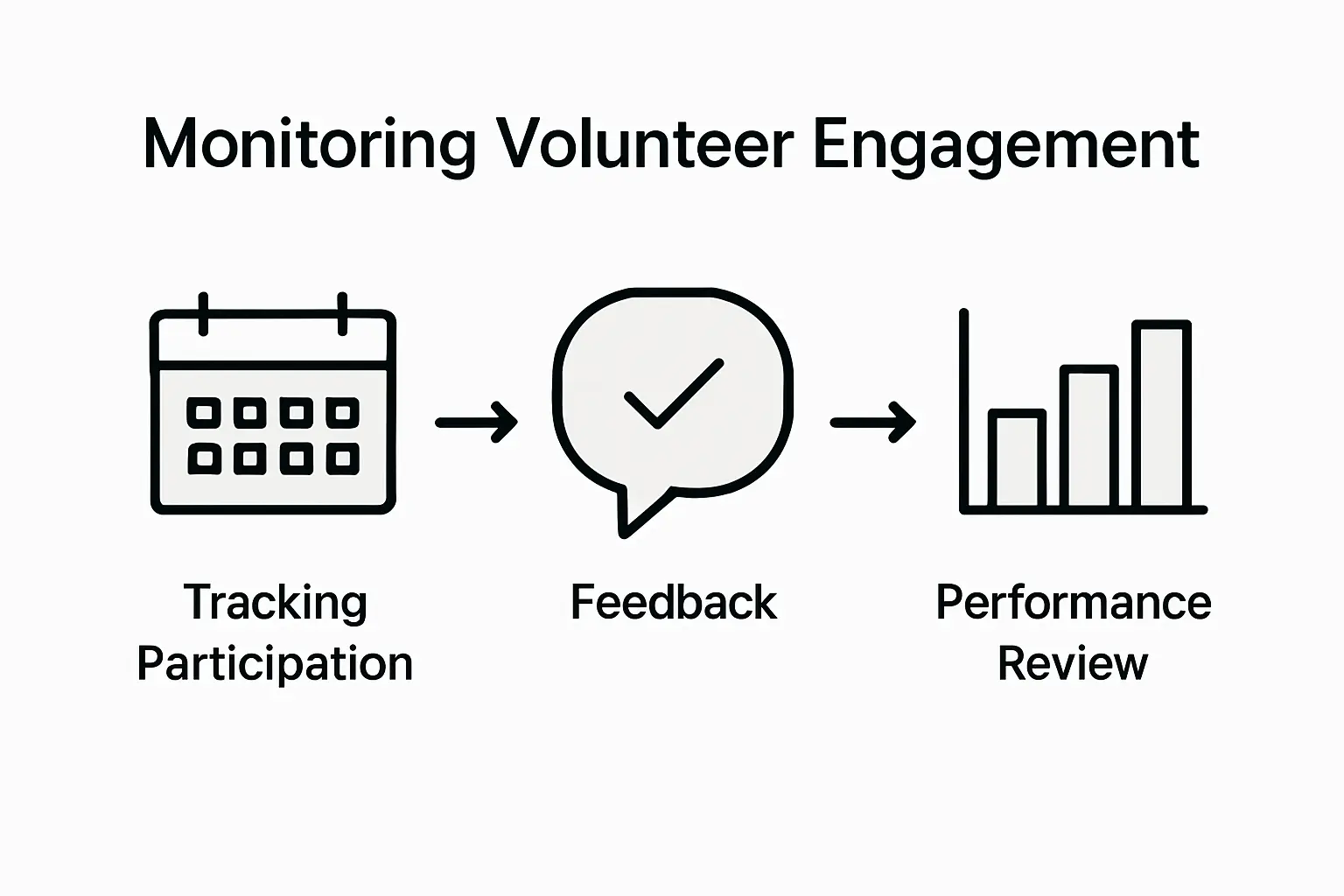
Engagement monitoring should be a collaborative and transparent process. Utilise digital tools to track volunteer participation, create self assessment opportunities, and generate meaningful performance reports. Optimising resource allocation in volunteer systems highlights the significance of understanding individual volunteer motivations and capabilities. Design flexible tracking mechanisms that allow volunteers to showcase their unique strengths and contributions. Integrate recognition programmes that celebrate both individual and team achievements, ensuring volunteers feel valued and connected to the broader organisational mission.
Warning: Avoid turning performance monitoring into a bureaucratic exercise. The goal is to support and inspire volunteers, not to create additional administrative burden.
Stage 5: Review outcomes and optimise strategies
Optimising volunteer programmes requires a systematic approach to continuous improvement, transforming raw performance data into actionable insights that drive organisational effectiveness. Successful review processes go beyond surface level metrics to uncover deeper patterns of volunteer engagement and organisational impact.
Strategic approaches for volunteer task assignment optimisation demand comprehensive analytical frameworks that blend quantitative and qualitative evaluation methods. Develop a robust review mechanism that captures both numerical performance indicators and nuanced feedback from volunteers and stakeholders. Implement quarterly review sessions that analyse volunteer contributions, identify skill gaps, assess team dynamics, and highlight individual and collective achievements. Create adaptive strategies that respond dynamically to emerging insights, ensuring your volunteer programme remains flexible and responsive to changing organisational needs.
Technical performance tracking plays a critical role in optimisation efforts. Systematic checkpointing strategies demonstrate the importance of measuring project completion efficiency and identifying potential bottlenecks. Utilise data analytics tools to generate comprehensive reports that track volunteer productivity, engagement levels, task completion rates, and overall programme effectiveness. Design feedback loops that allow volunteers to contribute insights about their experiences, challenges, and suggestions for programme improvement. By creating a culture of transparent evaluation and continuous learning, you transform your volunteer management approach from a static administrative function to a dynamic, evolving system of organisational excellence.
Warning: Avoid becoming overly data driven. Remember that behind every metric is a human volunteer whose motivation and satisfaction are paramount to long term success.
Streamline Volunteer Management and Boost Membership Success with Colossus Systems
Managing volunteers effectively is critical for membership organisations aiming to thrive. This article highlights key challenges such as defining clear roles, simplifying onboarding, allocating tasks with transparency, and continuously monitoring engagement. These are essential steps to retain passionate, motivated volunteers who truly support your mission. However, juggling these complex processes manually often leads to communication gaps, inconsistent engagement, and missed growth opportunities.
Colossus Systems offers a powerful SaaS solution that unifies volunteer and member management under one intuitive platform. With tools for customised workflows, automated onboarding, seamless event planning, and integrated communication channels, you can transform your volunteer programme into an organised, engaging experience. Our platform’s advanced CRM and targeted marketing features empower you to attract new members while keeping existing ones deeply connected. Discover how to optimise your volunteer engagement strategies and scale your organisation efficiently through our dedicated contact page.
Are you ready to overcome volunteer management challenges and unlock your membership organisation’s full potential? Get in touch with the Colossus Systems team today at Contact Us and start building a stronger, more engaged community.
Frequently Asked Questions
How do I define volunteer roles for my organisation?
Defining volunteer roles involves identifying specific responsibilities, required skills, and expected outcomes. Start by creating detailed descriptions that outline tasks, time commitments, and growth opportunities to ensure potential volunteers understand what is expected of them.
What steps should I take to recruit committed volunteers?
To recruit committed volunteers, implement a multi-stage screening process that includes application forms, interviews, and reference checks. Focus on finding individuals who align with your organisation’s values and demonstrate passion and reliability.
How can I effectively onboard new volunteers?
An effective onboarding process includes a structured welcome programme, mentoring opportunities, and interactive training. Create orientation sessions that clarify team dynamics and performance expectations, ensuring volunteers feel welcomed and supported from the start.
What are the best practices for assigning tasks to volunteers?
Best practices for task assignment include conducting skills assessments to match volunteer abilities with organisational needs. Develop clear task descriptions that outline expectations, objectives, and potential for learning to empower volunteers in their roles.
How do I monitor volunteer performance and engagement?
Monitoring volunteer performance requires implementing regular feedback sessions and performance reviews to assess contributions and motivation. Use tracking tools to create reports that highlight individual and team achievements, fostering a culture of recognition and support.
How can I review and optimise my volunteer programme?
To optimise your volunteer programme, establish a robust review mechanism that captures both quantitative and qualitative feedback. Schedule regular review sessions, analyse engagement data, and adapt your strategies based on insights to ensure your programme remains effective and responsive.
Recommended
- How to Engage Volunteers for Maximum Impact | Colossus Systems
- How to Retain Volunteers: Enhance Engagement and Commitment|CS
- 7 Essential Tools for Effective Volunteer Management|CS
- Essential Guide to Onboarding New Members Successfully|CS
- Ensuring Food Safety for Fundraisers: A Complete Guide - Probe IT
- Master the Succession Planning Workflow for Family Offices - Future Family Office