First Win in 7 Days: Membership Lifecycle for Association Leaders

The membership lifecycle is the sequence of stages a person moves through as they discover, join, engage with, renew, and sometimes leave and return to an organisation: Awareness/Acquisition, Recruitment/Onboarding, Engagement/Activation, Renewal/Retention, and Reinstatement/Reactivation. Understanding this model matters because retention rarely fails at one obvious point. It fails quietly, stage by stage, wherever ownership is unclear.
TL;DR:
- Successful onboarding must lead to a first win within the first seven days, including personalized communication, prompt account setup, and scheduled engagement activities.
- Engagement tactics tailored to members’ career stages, such as learning paths and small-group cohorts, significantly increase participation and content interaction.
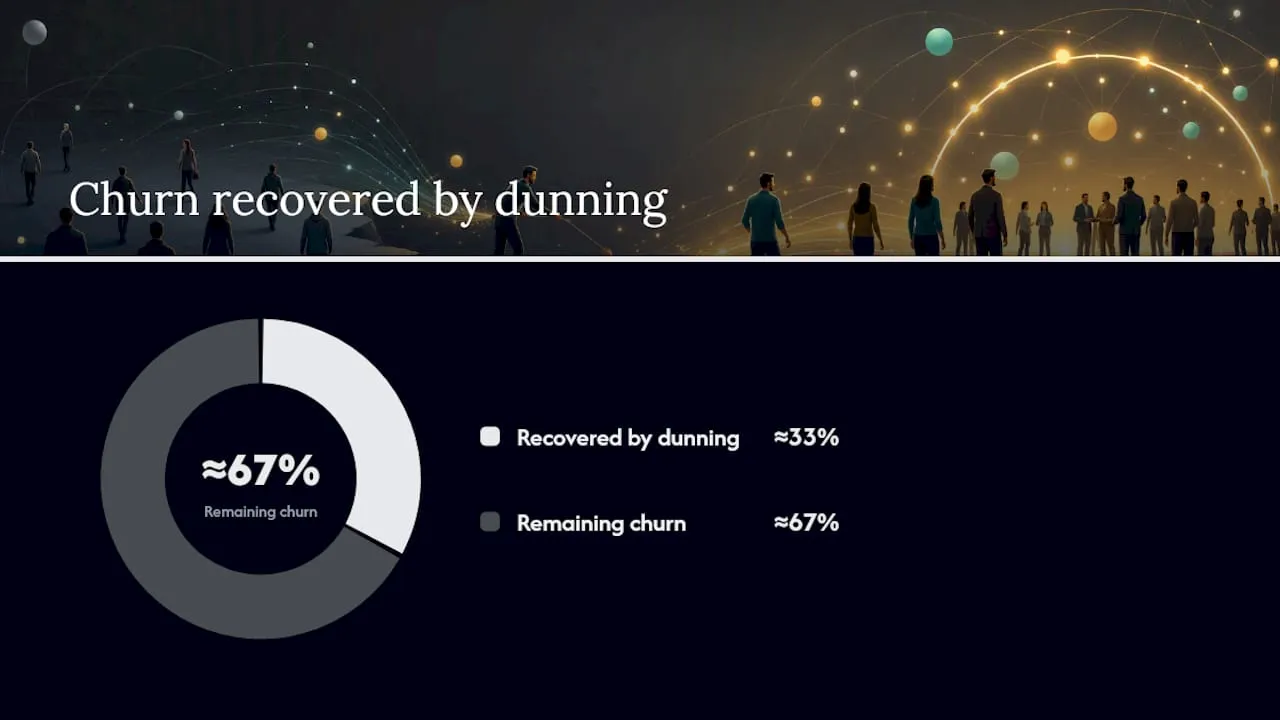
- Automated payment retries and offering pause options can prevent roughly one-third of involuntary churn, making billing reliability a top renewal factor.
- Reinstatement campaigns are most effective when segmented by reason and timing, with multiple attempts limited to three or four over 90 days to preserve trust.
- Tracking five key metrics—conversion rate, activation rate, engagement rate, renewal rate, and member lifetime—provides a clear view of the lifecycle’s health and guides targeted improvements.
Table of Contents
- What is a membership lifecycle, stage by stage?
- Why does onboarding decide retention before renewal even starts?
- What engagement tactics actually build member momentum?
- What actually moves renewal rates?
- How do you win back lapsed members without cheapening membership?
- Which KPIs actually tell you the lifecycle is working?
- Why lifecycle thinking only works when ownership is unified
- Sources
What is a membership lifecycle, stage by stage?
Each stage has its own goal, its own owner, and its own way of measuring success. Treating them as one continuous process, rather than five disconnected departments, is what separates organisations with strong renewal numbers from those constantly firefighting churn.
- Awareness/Acquisition: The goal is visibility and qualified interest, usually driven by marketing campaigns, referral programmes, and content that speaks to a prospect’s specific professional or business stage. Marketing typically owns this, and the key metric is conversion rate from lead to applicant.
- Recruitment/Onboarding: The goal is a smooth, fast transition from “joined” to “engaged.” Membership teams own this, sending welcome sequences, setting up accounts, and scheduling first touchpoints. Time to first login and onboarding completion rate are the KPIs that matter.
- Engagement/Activation: The goal is habitual, meaningful participation, not just occasional attendance. Programme and community teams own this stage, running events, learning paths, and content aligned to member goals. Watch attendance rate and interaction frequency.
- Renewal/Retention: The goal is a frictionless, well-timed renewal decision. Membership and finance jointly own this, running renewal campaigns and payment recovery. Renewal rate and involuntary churn rate are the numbers that count.
- Reinstatement/Reactivation: The goal is winning back lapsed members without devaluing active membership. Membership teams own targeted win-back campaigns, tracked by reactivation rate and time-to-reactivate.
Why does onboarding decide retention before renewal even starts?
Onboarding is not a single welcome email. It is a system that either builds a habit in the first two weeks or lets a new member drift, and drift is nearly impossible to reverse later. The ROAR framework puts onboarding and activation right after recruitment for exactly this reason: personalised early value is what determines whether a member ever reaches the renewal stage with a positive impression.
Practitioners consistently point to one intervention above the rest: engineering a genuine “first win” inside the first seven days.
- Send a personalised welcome message within 24 hours of sign-up, not a generic batch email.
- Prompt account setup immediately, with a single clear call to action rather than five.
- Get the member to a first event, webinar, or community thread within week one.
- Assign one small, completable task, such as a template download or a profile milestone.
- Schedule a brief one-to-one or small-group orientation call.
- Follow up automatically at day 14 to catch friction before it becomes disengagement.
- Track completion of the “first win” task as your primary onboarding KPI.
Building this out in more depth is worth doing properly; our guide to improving member onboarding walks through sequencing and automation in detail.
Pro Tip: Automate the day 14 follow-up regardless of team size. It is the single easiest way to catch a disengaged new member before they quietly stop opening your emails.

What engagement tactics actually build member momentum?
Engagement works best when it is mapped to where a member actually sits in their career or organisational lifecycle, not treated as one generic content stream for everyone. A newly qualified professional wants different things from a twenty-year veteran, and programming that ignores this gets ignored right back.
- Learning paths: sequenced content tied to skill or career stage, so progress feels visible.
- Cohorts: small groups moving through a programme together, which builds accountability that solo content never does.
- Recurring rituals: monthly office hours, quarterly roundtables, or an annual flagship event that members plan around.
- Member spotlights: featuring members in newsletters or events, which costs little and reliably increases participation from those featured.
Track attendance rate, content completion rate, and interaction rate (comments, replies, forum posts) rather than raw open rates. Open rates flatter you; interaction rates tell the truth. Practical formats for running this are covered in more depth in our piece on year-round member engagement.
What actually moves renewal rates?
Renewal timing matters as much as renewal content. Annual memberships need a communication cadence that starts well in advance, while monthly memberships live or die on billing reliability far more than on persuasive copy.
The highest-return fix most organisations overlook is involuntary churn: expired cards, failed payments, and lapsed billing details. Dunning sequences, which automatically retry failed payments and prompt card updates, can address roughly one third of overall subscription churn, and they cost almost nothing to run once configured.
- Turn on automated dunning for every failed or expiring payment.
- Offer a pause option instead of a cancel button, where your billing system allows it.
- Send an exit survey to every member who does not renew, and actually read the answers.
- Revisit onboarding for members who lapse within their first year. A weak first win is usually the root cause.
Reducing churn compounds faster than most teams expect. Average member lifetime is roughly the inverse of your monthly churn rate, so cutting churn from a higher to a lower percentage a month extends typical lifetime substantially. That is retention math working in your favour without a single new acquisition campaign. More renewal tactics, including messaging cadence by membership type, are in our member retention guide.
How do you win back lapsed members without cheapening membership?
Reinstatement works best when it is segmented, not blasted. A member who lapsed last month for financial reasons needs a different message than one who lapsed two years ago after a bad onboarding experience.
- Group lapsed members by reason (cost, relevance, poor onboarding) and by time since lapse.
- Offer a tailored win-back rate or a refreshed onboarding path for anyone lapsed under six months, since they are still warm.
- Invite longer-lapsed members into a specific cohort or event rather than a generic renewal pitch.
- Cap outreach at three to four attempts across 90 days, then stop. Repeated unanswered emails erode trust with members who might return later on their own terms.
Which KPIs actually tell you the lifecycle is working?
A minimal dashboard beats a complicated one that nobody checks weekly. Five numbers, tracked consistently, tell you almost everything:
- Traffic to conversion rate: qualified leads who become applicants.
- Activation rate: percentage of new members completing their “first win” task.
- Engagement rate: attendance and interaction across programming.
- Renewal rate: the percentage renewing each cycle, tracked separately from involuntary churn.
- Average member lifetime: calculated as 1 divided by your monthly churn rate.
Review acquisition and onboarding metrics monthly, and review renewal and lifetime metrics quarterly, since renewal trends need more data points to read reliably. Run one experiment per quarter, change one variable, such as onboarding timing or renewal messaging, and measure it against the previous cycle before changing anything else.
Why lifecycle thinking only works when ownership is unified
Most implementation failures come down to silos: marketing owns acquisition, membership owns onboarding, and finance owns renewal, with nobody owning the handoffs between them. That structural gap undermines a consistent member experience more reliably than any single bad campaign does.
Start small. Pick one metric, usually activation rate, and run one first-win experiment before trying to fix the whole lifecycle at once. Platforms that combine CRM, event management, and payments in one system make this genuinely easier, because renewal data, engagement history, and onboarding status live in one place instead of three disconnected tools.
— Rob
Colossus brings CRM, event management, payments, and member communications into a single platform, so onboarding status and renewal risk are visible without stitching together exports from three systems. Explore the full set of membership management features to see how lifecycle stages map onto one connected workflow.