Mental Health in the Workplace: Why It Matters

Over one in four british employees report experiencing poor mental health at work each year, a figure that highlights the urgent need for proactive support in professional environments. HR managers and team leaders face increasing pressure to address the hidden costs of stigma, absenteeism, and turnover tied to psychological strain. This guide unpacks what workplace mental health truly means, why misconceptions persist, and how targeted strategies can break down barriers while building resilient, high-performing teams.
Table of Contents
- Defining Workplace Mental Health and Stigma
- Key Drivers and Common Challenges at Work
- Legal Obligations and Employer Responsibilities
- Effective Strategies for HR and Managers
- Practical Interventions and Case Examples
Key Takeaways
| Point | Details |
|---|---|
| Workplace Mental Health | It involves creating environments where employees can thrive, not just the absence of disorders. |
| Stigma Reduction | Addressing stigma is critical; organisations should foster open discussions about mental health. |
| Legal Responsibilities | Employers must proactively manage psychosocial risks and create supportive policies for mental wellbeing. |
| Effective Strategies | Implement comprehensive interventions, including training and support programmes, tailored to organisational needs. |
Defining Workplace Mental Health and Stigma
Mental health in professional environments represents a complex landscape of psychological wellbeing, emotional resilience, and organisational support. At its core, workplace mental health encompasses an individual’s psychological state, emotional capacity, and ability to perform effectively while managing professional pressures. Understanding this concept requires recognising mental health as more than just an absence of psychological disorders—it’s about creating environments where employees can thrive.
Stigma remains a significant barrier to addressing mental health challenges. Workplace mental health stigmas manifest through negative attitudes, misconceptions, and discriminatory practices that discourage individuals from seeking help. These stigmas typically emerge through three distinct dimensions: structural stigma (organisational policies that inadvertently marginalise), public stigma (societal prejudices), and self-stigma (internalized negative perceptions that prevent individuals from acknowledging their mental health needs).
Healthy workplaces recognise that mental wellbeing is not a binary state but a dynamic continuum. Employees experience varying levels of psychological stress, and organisations must develop nuanced, compassionate approaches that destigmatise mental health discussions. This involves creating psychologically safe spaces where vulnerability is not perceived as weakness, but as a strength that promotes authentic human connection and organisational resilience.
The following table outlines the main types of workplace mental health stigma and their organisational impact:
| Stigma Type | Description | Organisational Impact |
|---|---|---|
| Structural Stigma | Policies or culture that marginalise mental health | Reduced access to support, higher turnover |
| Public Stigma | Negative societal or colleague attitudes | Lower morale, reluctance to seek assistance |
| Self-Stigma | Internalised negative beliefs by employees | Undisclosed struggles, increased absenteeism |
Pro tip: Develop anonymous mental health check-in mechanisms that allow employees to assess their psychological wellbeing without fear of professional repercussions.
Key Drivers and Common Challenges at Work
Workplace mental health challenges are increasingly complex, driven by a multifaceted array of psychological and organisational factors. Psychosocial hazards in professional environments have emerged as critical determinants of employee wellbeing, extending far beyond traditional occupational safety concerns. These hazards encompass a range of systemic pressures that significantly impact mental health, including job strain, low autonomy, persistent uncertainty, and chronic workplace stress.

Key challenges often manifest through multiple interconnected dimensions. Job insecurity creates persistent anxiety, while high-demand roles with minimal control trigger substantial psychological strain. Employees frequently experience burnout, characterised by emotional exhaustion, reduced professional efficacy, and a growing sense of detachment. The psychological toll is substantial—sleep disturbances, elevated anxiety levels, and depression become increasingly prevalent when workplace environments fail to support mental resilience.
Organisations must recognise that mental health challenges are not individual failings but systemic issues requiring comprehensive strategies. This demands creating workplace cultures that prioritise psychological safety, promote transparent communication, and develop adaptive support mechanisms. Leaders must move beyond traditional performance metrics to understand the intricate relationship between employee wellbeing, organisational productivity, and long-term sustainable performance.
Pro tip: Implement regular anonymous mental health pulse surveys to gather genuine insights about workplace psychological dynamics without creating additional stress for employees.
Legal Obligations and Employer Responsibilities
Legal frameworks surrounding workplace mental health have evolved significantly, recognising the fundamental human right to psychological wellbeing in professional environments. International labour standards now mandate comprehensive employer responsibilities that extend far beyond traditional occupational safety considerations. These obligations require organisations to proactively assess, manage, and mitigate psychosocial risks that could potentially compromise employee mental health.
Employers are increasingly required to implement structured approaches to mental health protection. This involves creating robust policies that prevent discriminatory practices, ensure reasonable workplace accommodations, and establish supportive mechanisms for workers experiencing psychological challenges. Legal frameworks for workplace mental health protection now emphasise inclusive environments that recognise mental health as an integral component of overall human rights, compelling organisations to develop nuanced, compassionate strategies that prioritise employee psychological safety.
The legal landscape demands a transformative approach to workplace mental health. Organisations must move beyond compliance-based models to develop genuine, holistic support systems. This requires comprehensive risk assessments, ongoing training programmes, confidential support mechanisms, and transparent communication channels that destigmatise mental health discussions. Leaders must understand that these responsibilities are not merely legal obligations but critical investments in human capital, organisational resilience, and sustainable workplace culture.
Pro tip: Develop a comprehensive mental health policy document that clearly outlines organisational commitments, support mechanisms, and employee rights, ensuring transparency and legal compliance.
Effective Strategies for HR and Managers
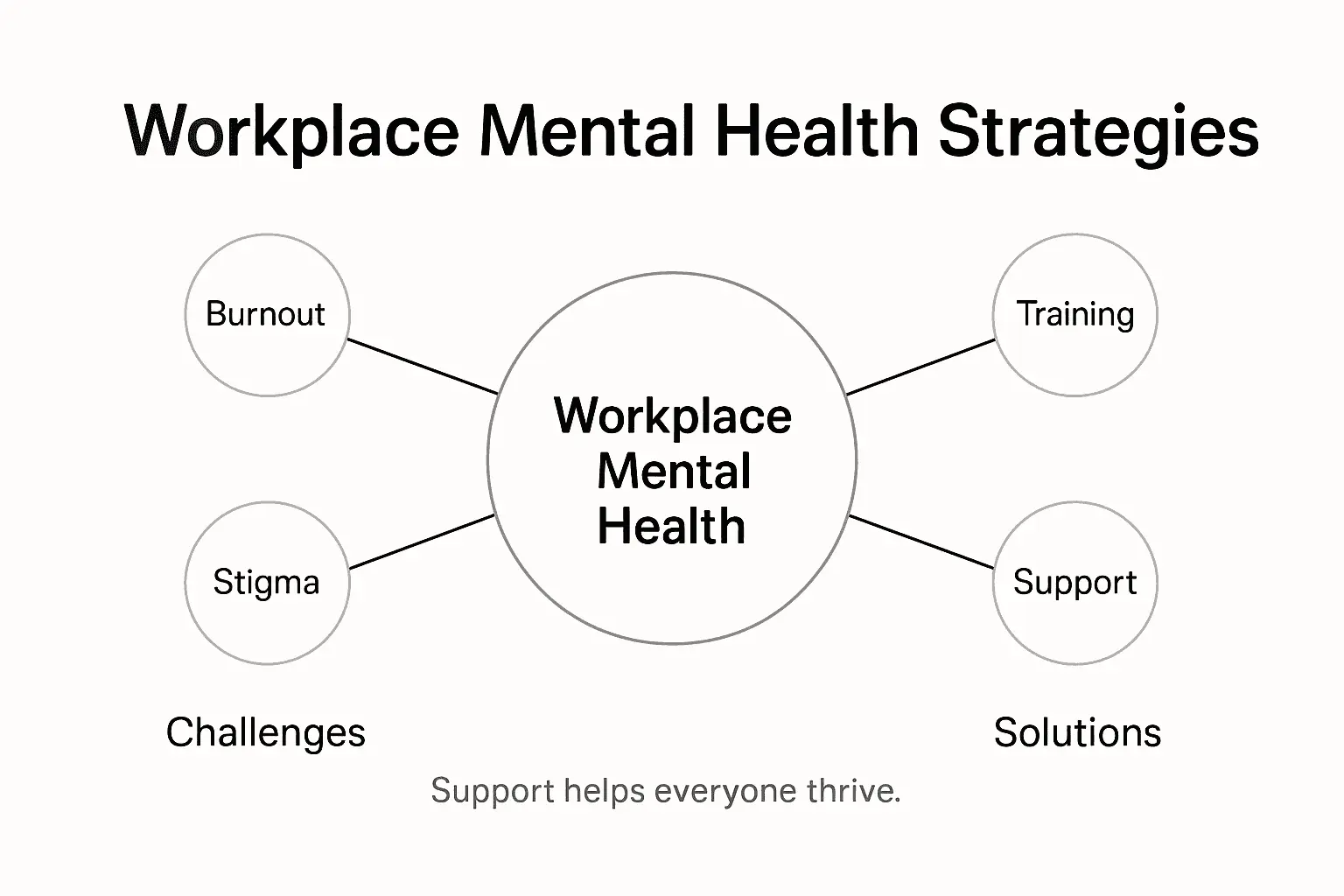
Addressing workplace mental health requires a multifaceted, proactive approach from HR professionals and organisational leaders. Comprehensive organisational interventions have emerged as critical strategies for creating psychologically supportive work environments. These interventions involve systematic work redesign, mental health literacy programmes, and targeted training initiatives that empower managers to recognise and respond to psychological challenges effectively.
Leadership plays a pivotal role in transforming workplace mental health cultures. Managers must develop nuanced skills in recognising early signs of psychological strain, facilitating supportive conversations, and implementing flexible work arrangements that prioritise employee wellbeing. Practical HR strategies such as conducting regular employee sentiment surveys, providing accessible mental health resources, and creating transparent communication channels can significantly reduce workplace stigma and enhance overall organisational resilience.
Successful mental health strategies require a holistic, integrated approach that goes beyond traditional employee assistance programmes. This means developing adaptive policies that balance organisational performance with genuine employee support, creating safe spaces for open dialogue, and implementing continuous learning mechanisms that help leaders and team members develop emotional intelligence and psychological awareness. The most effective organisations view mental health not as a compliance requirement, but as a fundamental aspect of human capital development.
Pro tip: Implement quarterly confidential mental health pulse surveys to gather genuine employee insights and track the effectiveness of your organisational wellbeing strategies.
Practical Interventions and Case Examples
Navigating workplace mental health requires strategic, evidence-based interventions tailored to organisational contexts. Global workplace mental health strategies demonstrate that successful programmes integrate systematic organisational changes with targeted individual support mechanisms. These interventions range from comprehensive policy redesigns to nuanced training approaches that address psychological wellbeing at multiple levels.
Practical implementation often involves multi-dimensional approaches. Some organisations have successfully developed peer support networks, established confidential counselling services, and implemented flexible work arrangements that accommodate diverse psychological needs. Workplace mental health toolkits provide structured frameworks for creating inclusive environments, offering managers practical resources like assessment templates, training modules, and intervention strategies that can be customised to specific organisational contexts.
Effective mental health interventions transcend traditional employee assistance programmes by creating holistic ecosystems of psychological support. This involves developing adaptive policies, creating safe communication channels, and fostering cultures that view mental wellbeing as a fundamental organisational priority. Successful programmes integrate regular psychological health assessments, provide manager training in recognising early distress signals, and develop robust support mechanisms that destigmatise mental health discussions.
This table compares practical interventions for enhancing workplace mental health:
| Intervention | Key Elements | Success Factors |
|---|---|---|
| Peer Support Networks | Trained volunteers | Trust and confidentiality |
| Confidential Counselling | Professional services | Easy access and stigma reduction |
| Flexible Work Arrangements | Adjustable schedules | Customisation for individual needs |
| Manager Training | Early distress signals | Leadership commitment |
Pro tip: Create a dedicated cross-functional mental health task force comprising representatives from HR, leadership, and frontline employees to design and continuously improve organisational mental health strategies.
Empower Your Organisation to Support Mental Health and Thrive
Understanding workplace mental health challenges like stigma, burnout and the need for psychological safety is crucial for membership organisations striving to build supportive, resilient communities. Colossus Systems offers a comprehensive platform designed to streamline member engagement, event management and communication — enabling your team to focus on fostering a culture that prioritises mental wellbeing and inclusivity.
Take control of your organisation’s mental health strategy today by leveraging tools for personalised event hosting, targeted communication and data-driven insights. Start transforming your workplace culture now and explore how our tailored SaaS solutions can help reduce stigma and elevate member support. Connect with us at Contact Colossus Systems to learn more about building an empathetic, growth-focused organisation.
Frequently Asked Questions
What is workplace mental health?
Workplace mental health refers to an employee’s psychological well-being, emotional resilience, and their ability to perform effectively while managing professional pressures. It encompasses both mental illness and overall mental wellness.
What are the main types of workplace mental health stigma?
The main types of workplace mental health stigma include structural stigma (organisational policies that marginalise mental health), public stigma (societal prejudices), and self-stigma (internalised negative beliefs by individuals). Each type can have detrimental effects on employees seeking help.
How can organisations create a mentally healthy workplace?
Organisations can create a mentally healthy workplace by implementing strategies such as developing comprehensive mental health policies, conducting regular mental health assessments, promoting open discussions about mental health, and supporting employees with adequate resources and flexible work arrangements.
What role do employers have in supporting mental health?
Employers are legally and ethically responsible for creating a supportive environment for mental health. This involves assessing psychosocial risks, providing appropriate resources, and fostering a culture of openness regarding mental health issues, ensuring all employees feel safe to seek help.