Mental Health at Work – Why It Matters for Organisations

Over half of British employees report experiencing mental health challenges during their careers. The impact of workplace mental well-being reaches far beyond individual stress. It shapes everything from team productivity to overall organisational stability. Understanding how mental health is defined and supported in professional settings helps British businesses create environments where people thrive and companies succeed.
Table of Contents
- Defining Mental Health in Professional Settings
- Types of Workplace Mental Health Challenges
- Recognising Signs and Risk Factors at Work
- Employer Responsibilities and Legal Duties
- Implementing Supportive Strategies and Programs
Key Takeaways
| Point | Details |
|---|---|
| Holistic Understanding of Mental Health | Mental health in professional settings is a complex spectrum influenced by numerous factors, including organisational culture and personal resilience. |
| Employee Well-Being as a Priority | Organisations must foster supportive environments and address mental health proactively to enhance employee productivity and morale. |
| Importance of Recognising Indicators | Awareness of the signs and risk factors for mental health challenges is crucial for early intervention and support. |
| Employer Legal and Ethical Responsibilities | Employers have significant duties to create psychologically safe workplaces, extending beyond compliance to genuine commitment to employee welfare. |
Defining Mental Health in Professional Settings
Mental health in professional settings is far more than a simple medical diagnosis. According to the CIPD, it encompasses an individual’s emotional, psychological, and social well-being, fundamentally influencing how employees think, feel, and perform within their workplace environment.
Understanding mental health requires recognising it as a dynamic, complex spectrum rather than a binary state of wellness or illness. Workplace mental health involves an intricate interaction between personal psychological resources, organisational culture, job demands, and individual coping mechanisms. NHS Employers highlight that mental health represents a state of well-being where employees can realise their potential, manage work stresses, and contribute productively.
Key components of workplace mental health include:
- Emotional resilience
- Psychological safety
- Adaptive stress management
- Interpersonal communication skills
- Self-awareness and professional boundaries
Organisations play a crucial role in supporting employee mental health by creating environments that recognise individual differences, provide appropriate resources, and destigmatise mental health challenges. This involves developing holistic strategies that address both preventative measures and responsive support systems.
Professional Mental Health Tip: Establish regular, confidential check-ins with team members to create safe spaces for discussing workplace well-being and potential psychological challenges before they escalate into more significant issues.
Types of Workplace Mental Health Challenges
According to the ASE Online research, workplace mental health challenges encompass several significant clinical conditions that can profoundly impact employee performance and organisational dynamics. Mental health disorders represent complex psychological experiences that extend beyond simple workplace stress, requiring nuanced understanding and supportive interventions.
Common mental health challenges in professional environments include:
- Anxiety Disorders: Characterised by persistent worry, panic attacks, and heightened stress responses
- Depression: Manifesting as prolonged sadness, reduced motivation, and diminished workplace engagement
- Bipolar Disorder: Involving significant mood fluctuations affecting professional consistency
- Post-Traumatic Stress Disorder (PTSD): Resulting from significant traumatic experiences
- Obsessive-Compulsive Disorder (OCD): Creating repetitive thought patterns that disrupt professional functioning
The CIPD identifies multiple psychosocial risks that can trigger or exacerbate these mental health challenges. These workplace-specific triggers include bullying, conflicting job demands, lack of role clarity, inadequate organisational support, poor communication structures, and job insecurity. Such environmental factors can significantly intensify existing mental health conditions or potentially precipitate new psychological challenges for employees.

Understanding these challenges requires recognising their multifaceted nature. Mental health disorders are not simply individual medical conditions but complex interactions between personal psychological states and organisational environments. Employers must develop holistic, compassionate strategies that address both individual support and systemic workplace improvements.
To clarify the distinction between common workplace mental health challenges, here is a comparative summary:
| Condition | Defining Features | Typical Workplace Impact |
|---|---|---|
| Anxiety Disorders | Excessive worry and stress reactions | Reduced focus, increased errors |
| Depression | Persistent low mood and apathy | Lower motivation, absenteeism |
| Bipolar Disorder | Extreme mood fluctuations | Inconsistent performance |
| PTSD | Emotional distress post-trauma | Heightened stress, avoidance |
| OCD | Repetitive thoughts and behaviours | Disrupted workflows, delays |
Professional Mental Health Intervention Tip: Implement confidential, regular psychological health screenings that allow employees to self-assess and seek support without stigma, creating a proactive approach to mental well-being.
Recognising Signs and Risk Factors at Work
According to OSHA’s workplace stress research, mental health challenges manifest through complex psychological and behavioural indicators that extend far beyond traditional workplace performance metrics. Workplace mental health risks represent a nuanced spectrum of emotional and professional experiences that require careful, compassionate observation and intervention.
Key signs of potential mental health challenges include:
- Persistent feelings of loneliness and isolation
- Unexplained changes in work performance
- Increased sensitivity to criticism
- Withdrawal from team interactions
- Frequent unexplained absences
- Visible signs of emotional exhaustion
- Difficulty concentrating or making decisions
NHS Employers highlight multiple systemic risk factors that can significantly impact employee psychological well-being, including poor communication structures, inadequate management practices, and organisational environments that create unnecessary psychological strain. These workplace conditions can transform seemingly routine professional challenges into profound mental health risks.
Risk factors are not simply individual psychological vulnerabilities but complex interactions between personal resilience and organisational culture. Workplace environments that demonstrate inflexible working arrangements, unclear job expectations, limited employee autonomy, and inconsistent communication patterns can substantially increase psychological vulnerability. Recognising these factors requires a holistic approach that balances individual support with systemic organisational transformation.
Professional Mental Health Awareness Tip: Conduct anonymous, regular workplace climate surveys that allow employees to provide candid feedback about organisational stressors, creating a transparent mechanism for identifying and addressing potential mental health risk factors.
Employer Responsibilities and Legal Duties
According to the CIPD’s comprehensive guidance on workplace mental health, employers carry significant legal and ethical responsibilities for maintaining psychological safety within their organisational environments. These responsibilities extend far beyond simple compliance, representing a fundamental commitment to employee well-being and organisational health.
Key employer responsibilities include:
- Conducting systematic psychological risk assessments
- Implementing proactive mental health control measures
- Developing clear, transparent workplace policies
- Ensuring competent management practices
- Maintaining detailed documentation of workplace psychological trends
- Creating supportive communication channels
- Providing mental health awareness training
OSHA emphasises that employers must provide a safe and healthful workplace environment, which necessitates a comprehensive approach to identifying and mitigating workplace stressors. This involves developing sophisticated strategies that address both systemic organisational challenges and individual employee needs, recognising that mental health is a dynamic and complex aspect of workplace management.
Legal duties are not merely procedural checkboxes but represent a profound organisational commitment to creating psychologically supportive work environments. Employers must balance regulatory compliance with genuine compassionate leadership, understanding that mental health support directly correlates with employee productivity, organisational resilience, and overall workplace culture.
Professional Compliance Strategy Tip: Develop a comprehensive mental health policy document that clearly outlines organisational commitments, employee support mechanisms, and specific procedures for addressing psychological workplace challenges, ensuring transparency and accountability.
Implementing Supportive Strategies and Programs
According to the CIPD’s comprehensive workplace mental health guidance, developing effective mental health strategies requires a multifaceted, holistic approach that addresses both organisational culture and individual employee experiences. Supportive mental health programs represent a sophisticated integration of proactive policies, targeted interventions, and compassionate leadership practices.
Critical components of comprehensive mental health strategies include:
- Systematic risk identification and assessment
- Developing transparent, inclusive workplace policies
- Creating supportive communication frameworks
- Implementing targeted manager training programmes
- Establishing confidential support resources
- Promoting work-life balance initiatives
- Designing flexible workplace accommodations
- Encouraging open dialogue about psychological well-being
NHS Employers recommend embedding protective factors that foster a psychologically safe workplace environment, recognising that mental health support extends beyond traditional medical interventions. Effective strategies require a nuanced understanding of organisational dynamics, individual psychological needs, and the complex interplay between workplace culture and employee well-being.
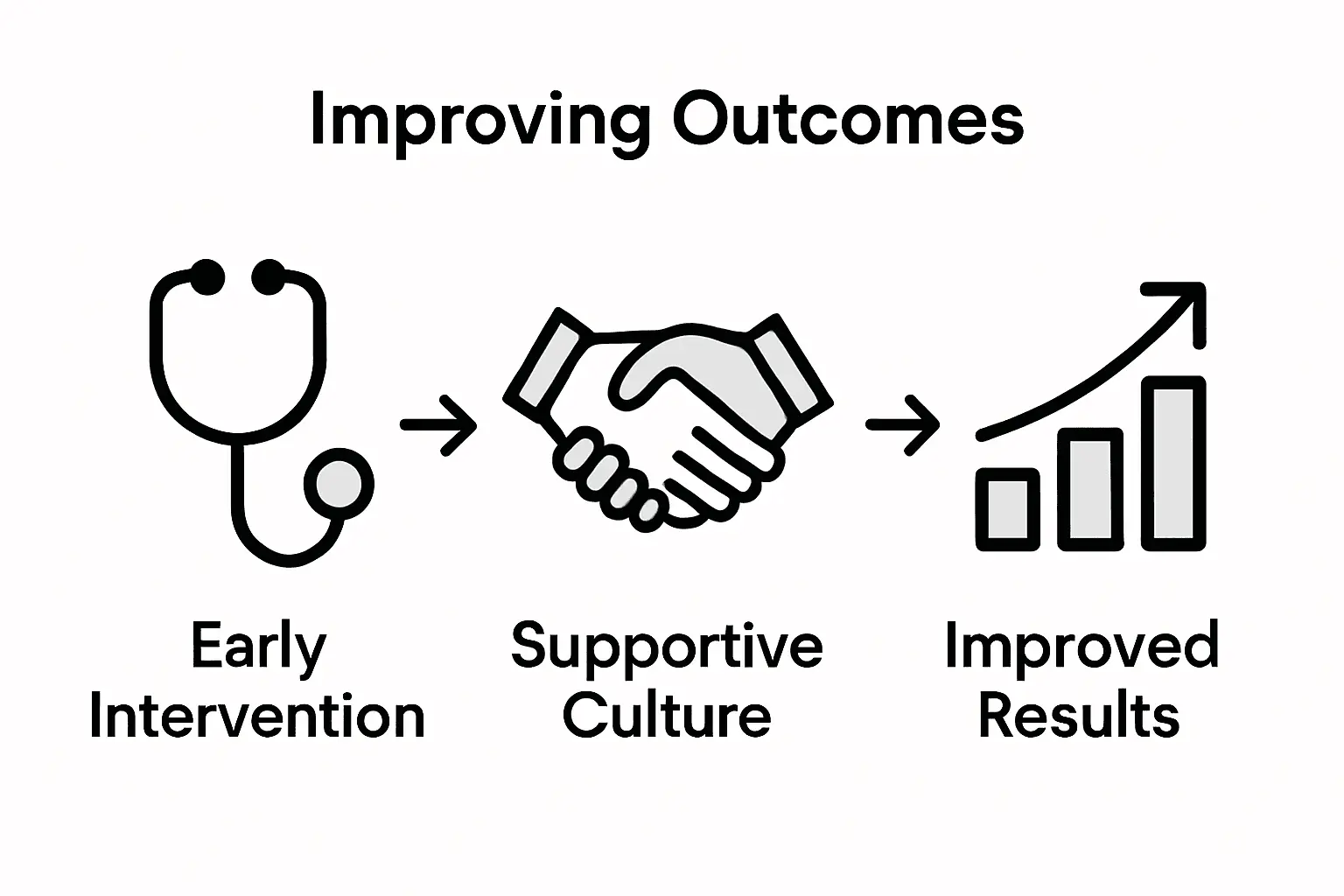
Successful implementation demands a strategic, empathetic approach that views mental health support as an integral component of organisational excellence. Leaders must move beyond compliance-driven models to create genuinely supportive ecosystems that recognise employee psychological resilience as a critical organisational asset. This involves developing adaptive strategies that can evolve with changing workplace dynamics and individual employee needs.
Here is a summary table outlining how organisational strategies specifically benefit employee mental well-being:
| Strategy Type | Intended Employee Benefit | Organisational Outcome |
|---|---|---|
| Confidential support resources | Improved help-seeking behaviours | Higher engagement and retention |
| Flexible workplace accommodations | Reduced stress and improved balance | Improved productivity and morale |
| Manager mental health training | Better managerial empathy | Enhanced team cohesion and trust |
| Open mental health dialogue | Reduced stigma, increased awareness | Healthier, more supportive culture |
Professional Strategy Development Tip: Create a comprehensive mental health framework that includes clear escalation pathways, confidential support mechanisms, and regular review processes to ensure your organisational approach remains responsive and effective.
Empower Your Organisation to Support Mental Health at Work
The article highlights the urgent need for organisations to proactively address workplace mental health challenges through comprehensive strategies and compassionate leadership. Key pain points like managing psychosocial risks, improving communication, and creating supportive environments demand practical tools that streamline engagement and foster psychological safety. Colossus Systems offers a unified SaaS platform tailored for membership organisations aiming to enhance member experience and operational efficiency while nurturing a mentally healthy workplace.
Take the next step to transform your organisational culture by leveraging solutions that simplify event planning, communication channels, and personalised member management. Discover how Colossus Systems helps you implement confidential support mechanisms and flexible engagement methods to reduce stigma and boost well-being. Contact us today to learn how to build a resilient organisation focused on mental health and growth at Contact Colossus Systems. Begin fostering a supportive environment where your team can thrive now.
Frequently Asked Questions
What is mental health in the workplace?
Mental health in the workplace refers to an individual’s emotional, psychological, and social well-being that influences how they think, feel, and perform at work. It is a dynamic spectrum that encompasses various factors including personal resilience and organisational culture.
What are common mental health challenges employees face at work?
Common mental health challenges in professional environments include anxiety disorders, depression, bipolar disorder, post-traumatic stress disorder (PTSD), and obsessive-compulsive disorder (OCD). These conditions can significantly affect employee performance and interpersonal dynamics.
How can organisations support employee mental health?
Organisations can support employee mental health by creating a positive workplace culture, implementing mental health training, developing clear policies, and providing confidential support resources. Regular check-ins and creating safe spaces for dialogue can also enhance mental well-being.
What are the legal responsibilities of employers regarding mental health?
Employers are legally and ethically responsible for maintaining a psychologically safe workplace. This includes conducting risk assessments, implementing control measures, providing mental health training, and ensuring clear communication channels to support employee mental well-being.
Recommended
- Complete Guide to Mindfulness in Education | Colossus Systems
- Effective Stress Management for Leaders: Master Your Resilience|CS
- Understanding Building Resilience in Teams for Success|CS
- 7 Essential Ways to Apply Emotional Intelligence in Leadership|CS
- Understanding Workplace Violence Prevention for Safe Environments - Probe IT
- 7 Reasons Anger and Conflict Still Exist with in the Workplace