Event Management System Website: Empowering Member Engagement

More than 60 percent of british organisations now rely on digital platforms for managing events and memberships. As the need for secure, user-friendly systems grows, these solutions have become the backbone of efficient organisational operations. Understanding how advanced event management websites integrate everything from member registration to real-time reporting will help you discover smarter ways to save time and deliver incredible member experiences.
Table of Contents
- Defining Event Management System Websites
- Core Functions For Membership Organisations
- Customisation And Integration Options Explained
- Safeguarding Data And Ensuring Compliance
- Maximising Engagement And Measuring Impact
Key Takeaways
| Point | Details |
|---|---|
| Event Management Platforms | Event management system websites streamline organisational processes, integrating registration, communication, and financial transactions into a single interface. |
| Member Engagement | These platforms enhance member interactions and provide actionable insights through advanced data management and communication tools. |
| Customisation and Integration | Membership management systems offer extensive customisation options and integration capabilities, allowing organisations to create tailored digital experiences. |
| Data Protection and Compliance | Robust data security protocols and compliance measures are essential for safeguarding member information and maintaining trust in a digital landscape. |
Defining Event Management System Websites
Event management system websites represent sophisticated digital platforms designed to streamline complex organisational processes for membership-based groups. These comprehensive systems transform traditional event planning from manual, fragmented approaches into seamless, integrated digital experiences. By consolidating multiple administrative functions, such platforms enable organisations to manage registrations, communications, financial transactions, and participant interactions through a single, centralised interface.
At their core, event management system websites function as intelligent digital ecosystems that support the entire event lifecycle. Online event management solutions provide organisations with powerful tools to create, promote, execute, and analyse events with unprecedented efficiency. These systems typically incorporate features such as automated registration workflows, customisable event pages, payment processing integrations, participant tracking, and comprehensive reporting capabilities.
The fundamental architecture of these websites revolves around three primary objectives: simplifying administrative tasks, enhancing member engagement, and generating actionable insights. Modern event management platforms leverage advanced technologies to create intuitive user experiences that reduce organisational complexity. By offering seamless registration processes, real-time communication channels, and data-driven analytics, these websites empower membership organisations to host more successful events while simultaneously improving overall member satisfaction and operational productivity.
Key components of effective event management system websites include:
- Intuitive registration interfaces
- Secure payment gateway integrations
- Automated communication tools
- Comprehensive attendee management features
- Advanced reporting and analytics dashboards
- Mobile-responsive design
- Customisable event branding options
These dynamic platforms represent more than mere technological solutions; they are strategic tools that enable organisations to transform their event management approaches from transactional processes to engaging, data-informed experiences.
Core Functions for Membership Organisations
Membership organisations require sophisticated digital platforms that support multiple critical operational functions beyond simple event management. Membership management software has evolved to become a comprehensive solution that addresses complex organisational needs through integrated technological approaches. These systems are designed to streamline administrative processes, enhance member interactions, and provide actionable insights that drive organisational growth.
Research highlights that modern event management systems play a pivotal role in facilitating member engagement. Robust communication tools enable organisations to create personalised interactions, track member preferences, and develop targeted engagement strategies. By implementing advanced data management capabilities, these platforms allow organisations to collect, analyse, and leverage member data effectively, transforming raw information into strategic opportunities for community building and targeted programming.

The core functions of membership management platforms encompass several critical domains. These include member registration and onboarding, event planning and execution, communication management, financial tracking, and comprehensive reporting mechanisms. Advanced systems integrate multiple functionalities to create a seamless operational ecosystem that reduces administrative overhead while simultaneously improving member experience. By automating routine tasks and providing intuitive interfaces, these platforms enable organisations to focus more on strategic initiatives and member value creation.
Key operational capabilities of membership management systems include:
- Automated member registration processes
- Comprehensive member profile management
- Secure payment and financial transaction tracking
- Advanced communication and messaging tools
- Event planning and registration management
- Detailed reporting and analytics dashboards
- Integration with external communication platforms
These technological solutions represent more than mere administrative tools; they are strategic enablers that transform how membership organisations engage, communicate, and grow their communities in an increasingly digital landscape.
Customisation and Integration Options Explained
Membership management platforms have evolved to offer unprecedented levels of technological flexibility, enabling organisations to create truly tailored digital experiences. Integration capabilities represent the cornerstone of modern event management systems, allowing seamless connections between disparate technological ecosystems and ensuring comprehensive operational efficiency.
Research demonstrates that contemporary event management systems prioritise extensive customisation options to meet diverse organisational requirements. These platforms provide organisations with sophisticated tools to adapt interfaces, workflows, and communication channels precisely to their unique operational contexts. By implementing advanced integration strategies, organisations can create interconnected technological environments that streamline data management, enhance member interactions, and reduce administrative complexities.
The customisation landscape encompasses multiple critical dimensions, including user interface personalisation, workflow automation, reporting configurations, and communication channel adaptations. Advanced platforms offer granular control over system functionalities, enabling organisations to design bespoke digital experiences that align perfectly with their strategic objectives. This level of technological adaptability ensures that membership management systems can evolve alongside organisational needs, providing scalable and responsive solutions.
Key customisation and integration features include:
- Configurable member registration workflows
- Personalised dashboard designs
- API connections with external software platforms
- Custom reporting and analytics frameworks
- Flexible communication template management
- Multi-platform synchronisation capabilities
- Automated data migration tools
These sophisticated technological solutions represent more than mere software platforms; they are dynamic, adaptable frameworks that empower organisations to create deeply personalised digital engagement strategies tailored to their unique operational requirements.
Safeguarding Data and Ensuring Compliance
In the digital age, membership organisations must prioritise robust data protection and regulatory compliance as foundational elements of their technological infrastructure. Meeting compliance requirements has become increasingly complex, demanding sophisticated technological approaches that safeguard sensitive member information while maintaining operational efficiency.
Research underscores the critical importance of implementing comprehensive data security protocols. Modern event management systems integrate advanced encryption technologies, multi-factor authentication mechanisms, and granular access controls to protect organisational and member data from potential breaches. Online payment security measures play a particularly crucial role in ensuring that financial transactions remain secure and confidential, addressing the most vulnerable aspects of digital membership platforms.
The compliance landscape encompasses multiple regulatory domains, including data protection regulations, financial transaction standards, and industry-specific legal requirements. Organisations must develop holistic approaches that not only protect data but also demonstrate transparent management of member information. This involves implementing comprehensive audit trails, maintaining clear consent mechanisms, and providing members with robust control over their personal data, thereby building trust and maintaining legal integrity.
Key data protection and compliance features include:
- End-to-end data encryption
- Comprehensive user access management
- Regular security vulnerability assessments
- Automated compliance reporting tools
- Transparent data consent mechanisms
- Secure payment gateway integrations
- Detailed activity logging and monitoring
These sophisticated security frameworks represent more than technical safeguards; they are essential trust-building mechanisms that enable membership organisations to operate with confidence in an increasingly complex digital ecosystem.
Maximising Engagement and Measuring Impact
Membership organisations require sophisticated strategies to transform passive participation into active, meaningful engagement. Engagement metrics provide critical insights that enable organisations to understand, predict, and enhance member interactions through data-driven approaches.
Research demonstrates that modern event management systems can significantly amplify member participation through innovative technological interventions. Comprehensive engagement frameworks leverage interactive features like live polling, networking tools, and personalised content sharing to create immersive digital experiences. By implementing strategic membership engagement techniques, organisations can develop nuanced approaches that convert casual interactions into sustained, meaningful relationships.
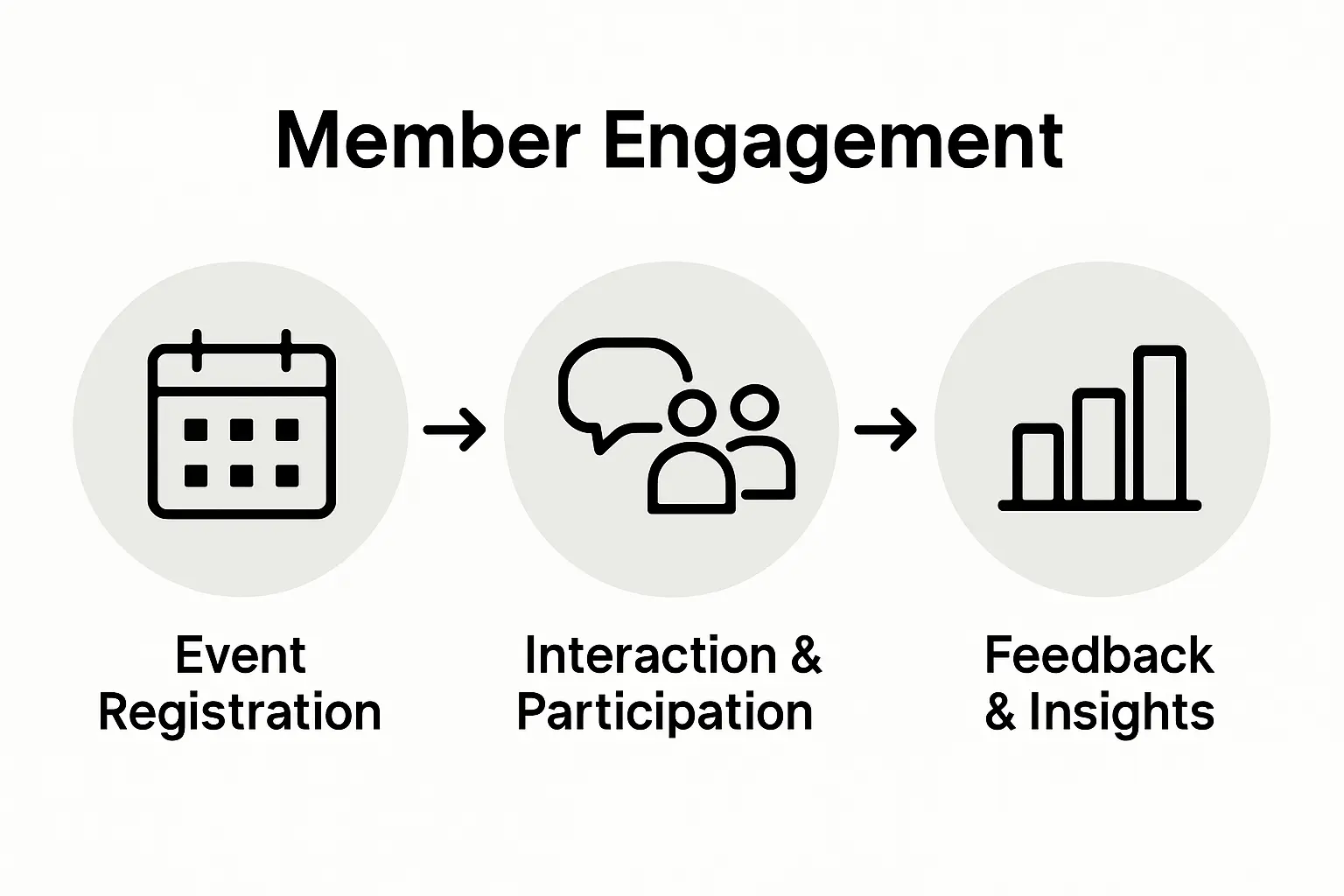
The process of measuring engagement encompasses multiple sophisticated dimensions beyond traditional quantitative metrics. Advanced platforms enable organisations to track complex interaction patterns, analysing not just attendance or participation rates, but the qualitative depth of member experiences. This multifaceted approach allows for granular understanding of member preferences, allowing organisations to continuously refine and personalise their engagement strategies.
Key engagement measurement and maximisation strategies include:
- Detailed interaction tracking
- Personalised engagement scoring
- Real-time feedback collection mechanisms
- Predictive behaviour analytics
- Contextual communication customisation
- Interactive digital networking tools
- Comprehensive member journey mapping
These advanced technological approaches represent more than measurement tools; they are strategic frameworks that transform membership engagement from transactional interactions into meaningful, dynamic relationships.
Unlock Seamless Member Engagement with Colossus Systems
Organisations striving to streamline complex event management and enhance member interaction face challenges like integrating secure payment gateways, automating workflows, and personalising communication channels. This article highlights the need for intuitive registration interfaces, automated communication tools, and advanced reporting to maximise impact. If your membership organisation is aiming to transform event planning into a strategic, data-driven experience, our comprehensive engagement and management solutions are precisely built for you
Discover how Colossus Systems simplifies member management while driving organisational growth through robust event planning, CRM functionality, and customisable communication tools. Act now to elevate your member experience and operational efficiency by connecting with us today at Colossus Systems Contact. Let us help you create secure, engaging, and measurable events that truly empower your community.
Frequently Asked Questions
What is an event management system website?
An event management system website is a digital platform designed to streamline organisational processes for membership-based groups, providing tools to manage registrations, communications, and financial transactions throughout the event lifecycle.
How can an event management system enhance member engagement?
These systems utilise robust communication tools and data management capabilities to create personalised interactions and track member preferences, ultimately driving targeted engagement strategies.
What features should I look for in an event management system?
Key features include intuitive registration interfaces, secure payment gateway integrations, automated communication tools, attendee management features, and comprehensive reporting and analytics dashboards.
How do customisation options affect the use of event management systems?
Customisation options allow organisations to tailor workflows, reporting configurations, and communication channels to meet their unique operational needs, ensuring that the system evolves alongside changing organisational requirements.