Diversity and Inclusion in Schools: Unlocking Student Engagement
Every school leader faces tough questions when students feel unseen or left out. For education administrators across North America, understanding how to move from surface-level policies to true belonging is vital. Drawing from both OECD and European research, this article unpacks how diversity and inclusion are foundational principles that require proactive strategies, not just statements, in K-12 schools. You will gain practical guidance for shaping environments where every child is valued and engaged.
Table of Contents
- Defining Diversity And Inclusion In Schools
- Key Dimensions Of Diversity In Education
- Inclusive School Practices And Protocols
- Legal Duties And Policy Frameworks
- Common Barriers And Solutions For Leaders
Key Takeaways
| Point | Details |
|---|---|
| Emphasis on Inclusion | Schools must adopt comprehensive strategies that prioritise diversity and inclusion throughout all educational practices. |
| Understanding Diversity Dimensions | Educators need to recognise the various dimensions of diversity to create responsive and supportive learning environments. |
| Legal Framework Awareness | Institutions should ensure compliance with legal mandates to foster equitable opportunities and protect student rights. |
| Addressing Leadership Challenges | Educational leaders must develop strategic approaches to overcome systemic barriers and enhance institutional inclusivity. |
Defining Diversity And Inclusion In Schools
Diversity and inclusion in schools represent foundational principles that transform educational environments into spaces of genuine belonging and equal opportunity. At their core, these concepts go beyond simply acknowledging differences; they actively create systems where every student can thrive regardless of background, identity, or individual characteristics.
According to the European research, diversity and inclusion are about promoting cultural intelligence and empathy through deliberate educational strategies. This means recognising and valuing the unique perspectives each student brings, while simultaneously ensuring no pupil experiences marginalisation or exclusion. Schools must mainstream diversity not just through curriculum content, but through teaching methodologies, interpersonal interactions, and institutional policies.
Key elements of effective diversity and inclusion approaches include:
- Recognising individual student differences
- Preventing discrimination and bullying
- Creating supportive learning environments
- Ensuring equitable access to educational opportunities
- Developing cultural competence among educators and students
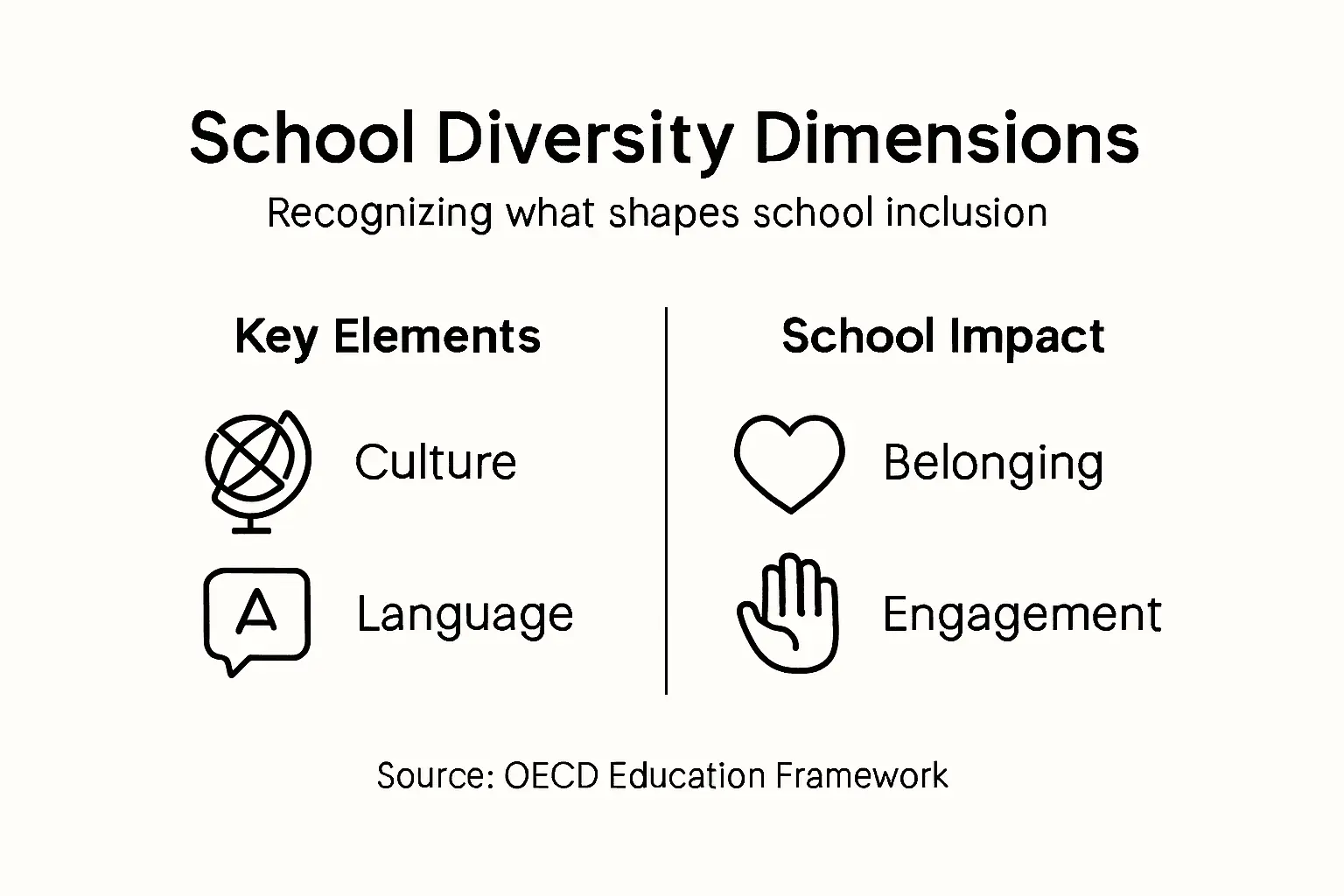
The OECD framework highlights that diversity, equity, and inclusion are interdependent. This means schools cannot treat these concepts in isolation but must develop holistic strategies that address systemic barriers and promote genuine belonging.
Pro tip: Conduct regular student and staff diversity audits to identify potential inclusion gaps and develop targeted intervention strategies.
Key Dimensions Of Diversity In Education
Diversity in educational settings encompasses a complex and multifaceted range of human characteristics that shape individual learning experiences. Multiple intersecting dimensions of diversity reflect the rich tapestry of student backgrounds, identities, and lived experiences that educators must understand and respect.
The primary dimensions of diversity in educational contexts include:
- Ethnicity and Cultural Background: Representing students’ racial, national, and cultural heritage
- Linguistic Diversity: Encompassing native languages, multilingual capabilities, and communication styles
- Socio-economic Status: Addressing variations in economic resources and opportunities
- Gender and Sexual Orientation: Recognising diverse gender identities and sexual orientations
- Disability and Special Educational Needs: Ensuring accessibility and appropriate support
- Religious Beliefs: Acknowledging different spiritual and philosophical perspectives
The OECD framework demonstrates that these dimensions are not isolated characteristics but interconnected elements that profoundly influence educational experiences. Understanding this complexity allows educators to develop nuanced, responsive strategies that genuinely support every student’s potential.
Recognising diversity requires more than passive acknowledgement. Educational institutions must actively create inclusive environments that value individual differences, challenge systemic barriers, and provide equitable opportunities for all learners.

The table below summarises how various dimensions of diversity can impact a student’s educational experience:
| Dimension of Diversity | Typical Impact in Schools | Example Challenge |
|---|---|---|
| Ethnicity & Culture | Shapes identity and peer relations | Potential cultural misunderstandings |
| Linguistic Background | Affects access to curriculum | Language barriers in class discussions |
| Socio-economic Status | Influences learning resources | Limited access to technology |
| Gender & Sexual Orientation | Impacts wellbeing and participation | Risk of stereotyping or exclusion |
| Disability & SEN | Requires specialised support | Inadequate physical or academic access |
| Religious Beliefs | Shapes values and routines | Scheduling conflicts during observances |
Pro tip: Implement comprehensive staff training programmes that develop cultural competence and help educators recognise and mitigate unconscious biases in educational settings.
Inclusive School Practices And Protocols
Inclusive school practices represent a comprehensive approach to creating educational environments that welcome, support, and empower every student. These practices go beyond mere accommodation, focusing on systemic transformation that addresses structural barriers and promotes genuine educational equity.
Key inclusive protocols and practices include:
- Differentiated Teaching Approaches: Adapting instructional strategies to meet individual learning needs
- Anti-Discrimination Training: Providing comprehensive staff development to recognise and challenge biased practices
- Collaborative Decision-Making: Involving students, families, and community stakeholders in school policy development
- Personalised Learning Support: Developing targeted interventions for students with diverse backgrounds and abilities
- Continuous Monitoring: Implementing robust assessment mechanisms to track inclusion progress
- Resource Equity: Ensuring fair distribution of educational resources across different student groups
The systematic framework for inclusive education requires a holistic approach that integrates pedagogical strategies, institutional policies, and ongoing evaluation. Comprehensive school-level collaboration becomes crucial in creating environments that genuinely support diversity and foster student potential.
Successful implementation demands a cultural shift within educational institutions. Schools must move beyond surface-level diversity initiatives to develop deep, structural approaches that recognise and celebrate individual differences while providing equitable opportunities for all learners.
Pro tip: Create a dedicated diversity and inclusion committee with representatives from various student groups to ensure meaningful and ongoing dialogue about institutional inclusivity.
Legal Duties And Policy Frameworks
Legal frameworks for inclusive education represent a critical foundation for ensuring educational equity and protecting students’ fundamental rights. These comprehensive policy structures establish mandatory requirements that guide educational institutions in creating supportive, non-discriminatory environments that address systemic barriers to learning.
Key components of legal duties and policy frameworks include:
- International Treaty Compliance: Implementing obligations from UN conventions on disability and human rights
- Non-Discrimination Mandates: Establishing clear legal protections against marginalisation
- Accessibility Requirements: Ensuring physical and educational access for all students
- Targeted Support Provisions: Developing legal mechanisms for supporting disadvantaged student groups
- Monitoring and Accountability: Creating robust systems for tracking institutional compliance
- Remediation Protocols: Establishing clear procedures for addressing discrimination and exclusion
European policy landscapes demonstrate how national legislation translates international commitments into actionable school-level strategies. These frameworks move beyond theoretical principles, creating enforceable standards that require proactive approaches to inclusion.
Successful implementation demands more than passive compliance. Educational institutions must develop dynamic, responsive policy frameworks that anticipate emerging diversity challenges and create genuinely inclusive learning environments that celebrate individual differences.
Pro tip: Conduct annual comprehensive policy audits to ensure legal frameworks remain current and effectively address evolving diversity challenges.
Common Barriers And Solutions For Leaders
Leadership challenges in diversity and inclusion represent complex systemic obstacles that require strategic, multifaceted approaches. Educational leaders must navigate intricate institutional dynamics while simultaneously transforming organisational cultures to embrace genuine inclusivity.
Primary barriers confronting educational leaders include:
- Systemic Resistance: Entrenched institutional practices that perpetuate exclusionary cultures
- Limited Awareness: Insufficient understanding of diverse student experiences
- Resource Constraints: Inadequate funding and infrastructure for inclusive initiatives
- Professional Skill Gaps: Lack of targeted training in diversity management
- Unconscious Biases: Unexamined personal and institutional prejudices
- Communication Challenges: Ineffective strategies for stakeholder engagement
European policy frameworks suggest comprehensive solutions that address these barriers through proactive leadership strategies. These include developing clear vision statements, creating structured professional development programmes, and establishing accountability mechanisms that transform institutional cultures.
Successful leaders recognise that diversity and inclusion are not standalone initiatives but fundamental redesigns of educational ecosystems. They must build adaptive, responsive systems that continuously evolve to meet the changing needs of diverse student populations.
The following table provides an overview of common leadership barriers and possible strategic solutions:
| Leadership Barrier | Recommended Solution | Benefit to School |
|---|---|---|
| Systemic Resistance | Build inclusive vision and culture | Promotes long-term change |
| Resource Constraints | Seek targeted funding, partnerships | Expands inclusive opportunities |
| Unconscious Biases | Implement continuous bias training | Reduces discrimination incidents |
Pro tip: Develop a comprehensive diversity leadership dashboard that tracks meaningful inclusion metrics and provides actionable insights for continuous improvement.
Empower Diversity and Inclusion in Your Educational Community Today
Creating truly inclusive school environments means overcoming complex challenges from systemic resistance to resource limitations. This article highlights important concepts like differentiated teaching and cultural competence that every educational leader must embrace to unlock student engagement and foster belonging. Yet, powering these initiatives requires robust organisational tools that streamline management, enhance communication, and track meaningful inclusion metrics.

Colossus Systems offers a comprehensive SaaS platform designed to support organisations invested in growth through better member engagement and management. Whether you need to customise communication channels, manage events that celebrate diversity, or implement targeted campaigns to reach underserved groups, our platform helps you do it all within a single, user-friendly system. Don’t let outdated processes hold back your commitment to equity and inclusion. Take the next step in transforming your school or educational organisation by contacting us today. Explore how to integrate these critical diversity strategies with efficient management at Contact Colossus Systems and accelerate your journey towards a truly inclusive community.
Frequently Asked Questions
What are the key principles of diversity and inclusion in schools?
Diversity and inclusion in schools focus on creating environments where all students feel a sense of belonging and have equal opportunities to thrive, regardless of their background or identity. This involves recognising individual differences, preventing discrimination, and ensuring equitable access to educational resources.
How can schools promote cultural competence among educators and students?
Schools can promote cultural competence by implementing comprehensive training programmes that help educators and students recognise and respect diverse backgrounds. This includes anti-discrimination training and developing teaching methodologies that cater to a variety of cultural perspectives.
What are some common barriers to implementing diversity and inclusion in education?
Common barriers include systemic resistance due to entrenched practices, limited awareness of diverse student experiences, resource constraints, and unconscious biases among staff. Addressing these challenges requires strategic leadership and targeted training initiatives.
How do inclusion audits help schools in improving diversity and inclusion efforts?
Inclusion audits help schools identify gaps in their diversity and inclusion strategies. By conducting regular assessments, institutions can pinpoint areas needing improvement, develop targeted interventions, and track progress towards creating a more inclusive environment.
Recommended
- Understanding Diversity and Inclusion Strategies Effectively|CS
- Workplace Diversity Benefits: Driving Nonprofit Success|CS
- Emotional Intelligence in Schools: Raising Engagement and Well-Being|CS
- Online Learning Engagement: Practical Strategies for Organisations|CS
- Back to College: Fall Edition – Le Club Original