Workplace Diversity Benefits: Driving Nonprofit Success

Most british nonprofit leaders underestimate how much diversity influences member satisfaction and organizational success. For executive directors, embracing a broader view of workplace diversity is critical when serving communities with complex, intersecting identities. Research shows nonprofits with inclusive environments report up to 20 percent higher member engagement. Understanding every layer of diversity helps british and global nonprofits move beyond simple representation and truly energize their teams, allowing every voice to contribute meaningfully.
Table of Contents
- Defining Workplace Diversity In Nonprofits
- Common Types Of Organisational Diversity
- Impact On Engagement And Performance
- Challenges And Key Implementation Pitfalls
- Legal Obligations And Best Practice Strategies
Key Takeaways
| Point | Details |
|---|---|
| Comprehensive Understanding of Diversity | Nonprofits must recognise various dimensions of diversity beyond traditional categories to enhance organisational effectiveness. |
| Inclusive Practices are Essential | Developing inclusive practices that focus on retention and professional development fosters a culture where all voices are valued. |
| Leadership Commitment is Crucial | Genuine support from leadership is necessary to prevent diversity initiatives from becoming mere box-ticking exercises. |
| Regular Assessment and Training | Conducting periodic diversity audits and providing ongoing training can identify gaps and improve inclusion strategies. |
Defining Workplace Diversity In Nonprofits
Workplace diversity represents a complex and dynamic approach to organisational composition that extends far beyond simple demographic representation. At its core, diversity involves intentionally integrating individuals from varied backgrounds, perspectives, and lived experiences into an organisation’s workforce and culture. In nonprofit settings, this concept becomes particularly critical, as these organisations often serve diverse communities and require nuanced understanding of different social contexts.
Understanding diversity requires recognising multiple dimensions beyond traditional categories. Diversity encompasses more than visible differences like race or gender, including less apparent attributes such as thought processes, professional backgrounds, cognitive styles, and individual life experiences. Nonprofits that embrace this comprehensive view create environments where multiple perspectives can flourish, driving innovation and more effective problem solving.
The strategic implementation of workplace diversity involves creating structures that not only invite different voices but actively empower them. This means developing inclusive practices that go beyond recruitment, focusing on retention, professional development, and creating organisational cultures where every team member feels genuinely valued. Effective diversity initiatives improve organisational happiness, productivity, and competitive capabilities1/13016063.pdf), transforming nonprofits from merely representative organisations to truly dynamic and adaptive institutions.
Professional Insight: Develop structured mentorship programmes that deliberately pair team members from different backgrounds to accelerate mutual understanding and organisational learning.
Common Types Of Organisational Diversity
Organisational diversity represents a multifaceted concept comprising several interconnected dimensions that shape workplace dynamics and effectiveness. Team diversity encompasses multiple layers of human variation, extending well beyond traditional demographic categories and creating rich, complex organisational ecosystems.
The primary types of organisational diversity can be categorised into distinct yet overlapping domains. Demographic diversity includes visible characteristics such as gender, age, ethnicity, and racial background. Functional diversity focuses on professional backgrounds, educational experiences, skill sets, and expertise levels within an organisation. Cognitive diversity explores differences in thinking styles, problem-solving approaches, and mental frameworks that team members bring to their roles.
International nonprofit organisations demonstrate particularly complex diversity structures, integrating cultural, socioeconomic, and power-based variations. These nuanced diversity dimensions influence organisational communication, decision-making processes, and overall strategic effectiveness. By recognising and valuing these diverse perspectives, nonprofits can create more innovative, adaptable, and responsive institutional cultures that better serve their missions.
Professional Insight: Conduct periodic diversity audits to systematically assess and map the multiple diversity dimensions within your nonprofit, enabling targeted development and inclusion strategies.
The following table highlights key types of organisational diversity and their unique contributions in nonprofit settings:
| Diversity Type | Distinct Focus | Example in Nonprofits | Organisational Benefit |
|---|---|---|---|
| Demographic | Visible characteristics | Multi-ethnic workforce | Broader community representation |
| Functional | Varied skills and expertise | Team with fundraising, IT, HR experts | Enhanced problem solving |
| Cognitive | Different thinking styles | Staff with analytical and creative roles | Greater innovation |
| Socioeconomic | Economic and social backgrounds | Involving both local and global voices | Deeper understanding of needs |
Impact On Engagement And Performance
Workplace diversity fundamentally transforms organisational dynamics, creating profound impacts on employee engagement and performance across nonprofit sectors. Diversity initiatives demonstrate significant positive influences on organisational effectiveness, driving innovation, enhancing creativity, and improving overall team morale and commitment.
The connection between diversity and performance is multifaceted. Diverse teams generate more comprehensive problem-solving approaches, bringing together varied perspectives that challenge conventional thinking. When employees feel genuinely represented and valued, their intrinsic motivation increases dramatically, leading to higher discretionary effort and deeper organisational investment. This psychological safety encourages team members to share unique insights, propose innovative solutions, and collaborate more authentically.

Work engagement in nonprofit organisations emerges from complex interactions between leadership, personal motivation, and organisational culture. Inclusive environments reduce employee turnover, enhance organisational citizenship behaviours, and create more resilient, adaptive teams. By intentionally cultivating diverse talent pools and fostering environments where different perspectives are genuinely welcomed, nonprofits can transform their operational effectiveness and mission impact.
Professional Insight: Implement structured mentorship programmes that intentionally pair team members from different backgrounds to accelerate cross-cultural understanding and organisational learning.
Challenges And Key Implementation Pitfalls
Diversity initiatives in nonprofit organisations frequently encounter complex barriers that can significantly undermine their effectiveness and strategic implementation. Nonprofit associations consistently struggle with resource-based and institutional challenges in developing meaningful diversity programmes, revealing systemic obstacles that require nuanced, strategic approaches.
The primary implementation challenges emerge from multiple interconnected dimensions. Organisational resistance manifests through cultural inertia, where existing hierarchical structures and traditional decision-making processes actively obstruct inclusive practices. Many nonprofits lack clear strategic frameworks for diversity integration, resulting in superficial efforts that fail to create substantive organisational transformation. Leadership commitment becomes crucial, as without genuine top-down support, diversity initiatives often devolve into performative box-ticking exercises rather than meaningful cultural change.
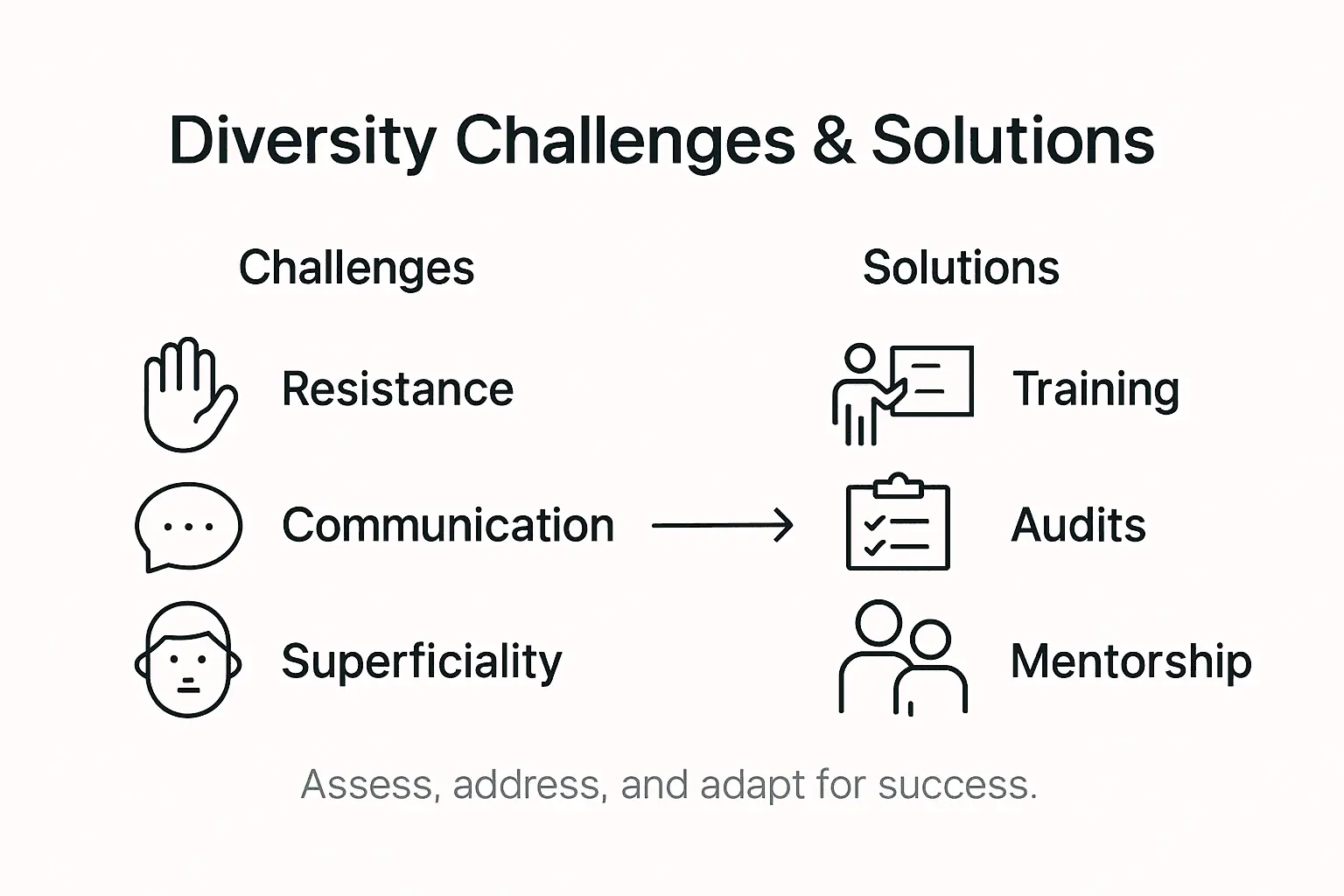
International nonprofit organisations face particularly sophisticated challenges in managing diverse stakeholder expectations, navigating complex power dynamics and institutional constraints. These challenges include limited authority structures, communication barriers, and deeply ingrained institutional biases that can sabotage well-intentioned diversity efforts. Successful implementation requires sophisticated change management strategies, ongoing education, and a willingness to fundamentally reimagine organisational culture and governance models.
Professional Insight: Develop a comprehensive diversity diagnostic tool that objectively measures your organisation’s current inclusion maturity and identifies specific intervention points for strategic improvement.
Here is a summary of common challenges faced when implementing diversity initiatives and strategies to overcome them:
| Challenge | Typical Manifestation | Strategy for Overcoming |
|---|---|---|
| Cultural Inertia | Resistance to change | Leadership-led engagement |
| Resource Constraints | Limited staff or funding | External partnerships |
| Communication Barriers | Misunderstandings or confusion | Inclusive dialogue sessions |
| Superficial Implementation | Box-ticking exercises | Measurable, ongoing training |
Legal Obligations And Best Practice Strategies
Nonprofit organisations must navigate a complex landscape of legal requirements and ethical standards surrounding diversity, equity, and inclusion. Comprehensive legal frameworks mandate strategic approaches to ensuring fair and equitable workplace environments, extending far beyond mere compliance to fundamental organisational transformation.
The legal obligations surrounding diversity encompass multiple critical dimensions. Employment laws prohibit discriminatory practices, requiring organisations to implement transparent recruitment, promotion, and retention processes that actively prevent bias. Board governance structures must demonstrate intentional representation, ensuring diverse perspectives are integrated into strategic decision making. This involves creating robust policies that protect against discrimination based on race, gender, age, disability, sexual orientation, and other protected characteristics, while simultaneously fostering genuine inclusion.
International human rights principles establish clear standards for equitable workplace practices, compelling nonprofits to develop comprehensive diversity strategies. These strategies must transcend legal minimums, embedding inclusive practices into organisational culture through ongoing training, accountability mechanisms, and systemic review processes. Successful implementation requires leadership commitment, transparent reporting, and a genuine commitment to creating environments where all individuals can thrive regardless of their background.
Professional Insight: Conduct annual diversity audits that objectively measure representation, pay equity, and advancement opportunities across all organisational levels to identify and address systemic inequities.
Empower Your Nonprofit with Inclusive Engagement Solutions
Unlock the full potential of your nonprofit by embracing true workplace diversity that drives engagement and performance. This article highlights how cultural inertia and communication barriers can stifle meaningful inclusion efforts and prevent organisations from benefiting fully from diverse perspectives. At Colossus Systems, we understand the challenges you face in fostering genuine belonging and cultivating innovative teams through structured mentorship and ongoing professional development.
Take control of your diversity strategy with a seamless platform designed to streamline member management, simplify event planning, and personalise communications. Our highly customisable tools empower you to nurture inclusive environments that boost motivation and reduce turnover. Connect with us today through Contact Us for tailored solutions that transform your nonprofit’s engagement efforts. Discover how advanced analytics and integrated CRM can help you measure progress and ensure every voice is heard. Don’t wait—build a vibrant, diverse community that propels your mission forward with Colossus Systems.
Frequently Asked Questions
What are the key benefits of workplace diversity in nonprofits?
Workplace diversity in nonprofits enhances creativity, drives innovation, and improves team morale, leading to higher engagement and better overall performance.
How does diversity affect employee engagement in nonprofit organisations?
Diverse teams foster psychological safety, making employees feel valued and represented, which boosts intrinsic motivation and commitment to the organisation.
What are the challenges nonprofits face when implementing diversity initiatives?
Common challenges include cultural inertia, limited resources, superficial implementation, and communication barriers that can hinder effective diversity strategies.
What strategies can nonprofits employ to improve their diversity initiatives?
Nonprofits can conduct diversity audits, develop clear policies against discrimination, create mentorship programmes, and ensure leadership commitment to foster an inclusive culture.
Recommended
- Understanding Diversity and Inclusion Strategies Effectively|CS
- 8 Essential Nonprofit Leadership Skills for Success|CS
- 10 Best Books for Nonprofit Leaders to Thrive | Colossus Systems
- Succession Planning: Safeguarding Leadership Continuity|CS
- Sydney Jewish Museum - Project Case Study | Marzipan Media
- Digital Branding – Why Values Matter Online – Marzipan