Navigating Digital Transformation: Growth for Membership Organisations

Nearly 80 percent of british membership organisations now identify digital transformation as a top strategic priority. Staying competitive in today’s fast-changing environment demands more than adopting new tools; it means reimagining how technology supports mission, member engagement, and operational growth. This guide reveals how decision-makers can harness digital solutions to overcome obstacles, drive performance, and build stronger, more connected communities.
Table of Contents
- Defining Digital Transformation For Nonprofits
- Categories And Approaches To Technology Adoption
- Essential SaaS Tools For Member Engagement
- Strategic Planning And Change Management Challenges
- Legal, Financial, And Data Security Implications
- Pitfalls, Risks, And Keys To Successful Implementation
Key Takeaways
| Point | Details |
|---|---|
| Digital Transformation | Nonprofits must integrate digital technologies strategically to enhance efficiency and effectiveness, rethinking their approach to technology as a key enabler. |
| Technology Adoption | Successful adoption requires a tailored approach, considering organisational capacity and aligning technology with mission and strategic objectives. |
| Data Security | Nonprofits must navigate complex legal and security challenges, ensuring compliance with regulations and protecting sensitive member information. |
| Leadership Commitment | Strong leadership and comprehensive staff training are essential for overcoming obstacles to digital transformation and achieving organisational goals. |
Defining digital transformation for nonprofits
Digital transformation represents a profound shift for nonprofit organisations, moving beyond simple technological upgrades to reimagine how these mission-driven entities operate, engage stakeholders, and deliver social impact. At its core, this process involves strategically integrating digital technologies, processes, and cultural changes to enhance organisational efficiency and effectiveness.
The transformation goes far deeper than merely adopting new software or digital tools. Nonprofits undertaking digital transformation must fundamentally rethink their approach to technology, viewing it as a strategic enabler rather than just an operational expense. This means examining every aspect of the organisation - from fundraising and member engagement to programme delivery and impact measurement - through a digital lens.
Key elements of digital transformation for nonprofits typically include:
- Reimagining member communication channels
- Implementing data-driven decision-making processes
- Developing digital skills across the organisation
- Creating more flexible and adaptive technological infrastructures
- Enhancing digital engagement strategies
Pro tip: Start your digital transformation journey by conducting a comprehensive digital readiness assessment to understand your current technological capabilities and strategic gaps.
Categories and approaches to technology adoption
Technology adoption for nonprofit organisations is not a one-size-fits-all process, but rather a nuanced journey that varies significantly based on organisational capacity, mission, and strategic objectives. Comprehensive technology integration frameworks reveal two primary categories of technological investment: direct-mission technologies that directly support programme delivery, and strategic support technologies that enhance operational efficiency and organisational effectiveness.

Nonprofit technology adoption typically follows distinct approaches, ranging from grassroots exploration to structured strategic planning. These approaches are influenced by multiple factors, including organisational size, digital maturity, leadership vision, and available resources. Technology adoption strategies across the nonprofit sector demonstrate that successful implementation requires more than merely acquiring new tools - it demands a holistic approach that considers cultural readiness, skill development, and alignment with organisational goals.
Key approaches to technology adoption include:
- Incremental Implementation: Gradually introducing technologies with low-risk, high-impact potential
- Strategic Planning: Developing comprehensive digital transformation roadmaps
- Exploratory Adoption: Experimenting with emerging technologies in controlled environments
- Collaborative Technology Integration: Engaging staff and stakeholders in technology selection and implementation
- Continuous Learning: Investing in digital skills development and ongoing training
Pro tip: Create a cross-functional technology adoption committee that includes representatives from different departments to ensure comprehensive perspective and organisational buy-in.
Here’s a comparison of digital transformation approaches and their impact:
| Approach | Typical Benefit | Common Challenge | Suitable For |
|---|---|---|---|
| Incremental Implementation | Reduces risk and disruption | Slower long-term results | Small nonprofits |
| Strategic Planning | Aligns tech with organisation | Requires detailed preparation | Large organisations |
| Exploratory Adoption | Early access to innovation | Potential resource waste | Innovative teams |
| Collaborative Integration | Boosts staff buy-in and adoption | Complex coordination required | All organisation sizes |
| Continuous Learning | Sustains digital skills growth | Needs long-term commitment | Staff-heavy charities |
Essential SaaS tools for member engagement
Membership organisations increasingly rely on sophisticated SaaS platforms to streamline engagement, communication, and operational processes. Comprehensive nonprofit membership software solutions have evolved to offer robust features that go beyond basic contact management, providing sophisticated tools for recruitment, communication, and member segmentation.
The landscape of SaaS tools for membership organisations is remarkably diverse, spanning over 100 platforms designed to support various operational needs. These platforms typically encompass critical functionalities such as:
- Member database management
- Communication and email marketing
- Event registration and management
- Payment processing
- Volunteer coordination
- Reporting and analytics
- Virtual community building
When selecting SaaS tools, organisations should prioritise platforms that offer:
- Customisable member portals
- Automated communication workflows
- Integrated payment systems
- Scalable membership tiers
- Comprehensive reporting capabilities
Pro tip: Conduct a thorough needs assessment and request free trials from multiple platforms to ensure the selected SaaS tool aligns precisely with your organisation’s unique engagement requirements.
The table below summarises key SaaS tool features and their value for member engagement:
| SaaS Feature | Practical Value | Ideal For |
|---|---|---|
| Custom member portal | Enables personalised experiences | Professional associations |
| Automated workflows | Improves engagement consistency | Busy volunteer teams |
| Integrated payments | Simplifies membership transactions | Subscription-based charities |
| Reporting dashboard | Enables data-driven decision making | Growth-focused nonprofits |
| Virtual community | Fosters networking and peer support | Advocacy groups |
Strategic planning and change management challenges
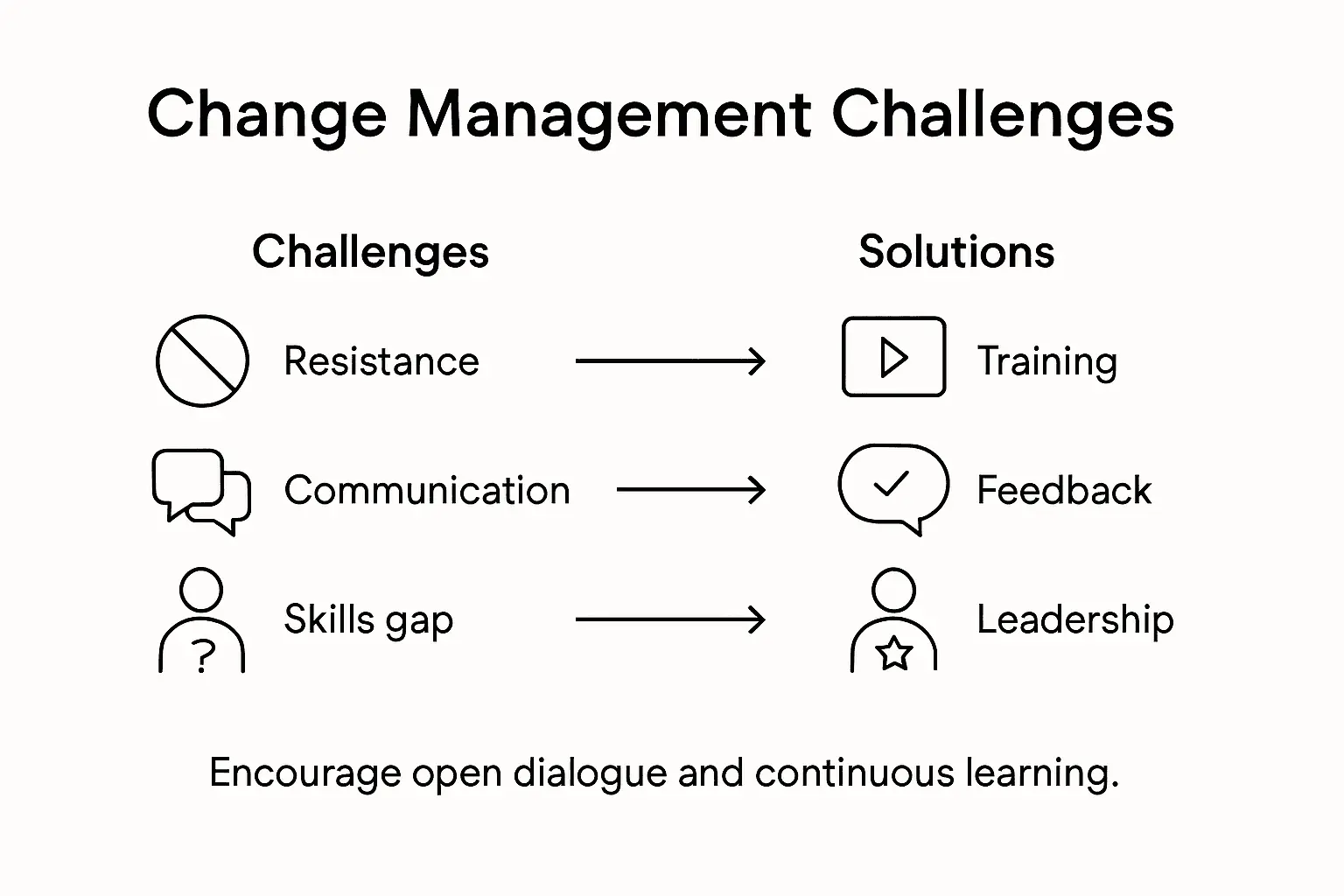
Strategic planning for membership organisations is a complex journey fraught with multifaceted challenges that extend far beyond simple goal-setting. Nonprofit strategic planning requires continuous adaptation and active stakeholder engagement, recognising that organisational strategy is not a static document but a living framework responsive to evolving circumstances.
Digital transformation processes demand sophisticated change management approaches that address both technological and human dimensions of organisational evolution. Critical challenges organisations encounter include:
- Securing leadership commitment and vision
- Breaking down institutional silos
- Developing digital literacy across the organisation
- Managing resistance to technological change
- Aligning technological investments with strategic objectives
- Balancing operational continuity with transformational goals
Successful strategic planning for membership organisations requires a nuanced approach that encompasses:
- Comprehensive stakeholder consultation
- Flexible and iterative planning mechanisms
- Regular strategic reassessment
- Transparent communication
- Continuous skills development
Pro tip: Develop a dedicated change management team with representatives from different organisational levels to ensure holistic implementation and address potential resistance proactively.
Legal, financial, and data security implications
Membership organisations navigating digital transformation must confront a complex landscape of legal and cybersecurity challenges that extend far beyond traditional operational considerations. Nonprofits face significant risks related to data protection, privacy regulations, and potential legal exposures, particularly when managing sensitive member information across digital platforms.
Cybersecurity threats pose increasingly sophisticated risks to organisations with limited technological resources, demanding comprehensive strategies that address both technological and governance dimensions. Key legal and financial implications include:
- Compliance with data protection regulations
- Managing potential financial liabilities from data breaches
- Protecting personally identifiable information
- Ensuring transparent financial reporting
- Maintaining donor and member trust
- Implementing robust risk management protocols
Effective digital security strategies for membership organisations require:
- Comprehensive risk assessment
- Regular security audits
- Staff training programmes
- Clear data governance policies
- Transparent breach notification procedures
Pro tip: Develop a dedicated cybersecurity budget and engage external experts to conduct periodic vulnerability assessments and provide targeted staff training.
Pitfalls, risks, and keys to successful implementation
Digital transformation for membership organisations represents a complex journey fraught with nuanced challenges that demand strategic foresight. Digital transformation implementation is frequently derailed by limited resources, insufficient digital skills, and misalignment between organisational goals and technological investments, creating significant risks for mission-driven entities seeking technological advancement.
Nonprofit technology implementations often encounter critical pitfalls that can potentially compromise organisational effectiveness, with key risks including:
- Mission drift from inappropriate digital investments
- Wasted financial resources
- Staff burnout and technological overwhelm
- Ineffective service delivery
- Reduced stakeholder engagement
- Compromised operational efficiency
Successful digital transformation requires a holistic approach centred on:
- Strong leadership commitment
- Comprehensive staff training
- Continuous stakeholder engagement
- Iterative impact evaluation
- Clear strategic alignment
- Adaptive technological frameworks
Pro tip: Create a dedicated digital transformation steering committee with representatives from multiple organisational levels to ensure balanced perspectives and comprehensive implementation strategies.
Empower Your Membership Organisation Through Seamless Digital Transformation
Navigating the complex challenges of digital transformation requires more than just adopting new technologies. Your organisation needs a strategic partner that understands the importance of streamlined member management, effective communication, and secure payment integration to avoid common pitfalls such as staff overwhelm and misaligned investments. Colossus Systems offers a highly customisable SaaS platform designed to empower membership organisations to rethink their engagement strategies, enhance operational efficiency, and deliver measurable growth.
Take control of your organisation’s digital journey now by leveraging tools that support automated workflows, virtual training, and advanced analytics tailored to your unique needs. Avoid risks related to mission drift and staff burnout by ensuring every technology aligns with your strategic objectives. Discover how Colossus Systems can help you transform challenges into opportunities at Contact Us. Don’t wait to foster deeper member connections and scale your impact efficiently with a trusted partner by your side.
Frequently Asked Questions
What is digital transformation for membership organisations?
Digital transformation for membership organisations involves a strategic integration of digital technologies, processes, and cultural changes to improve operational efficiency, enhance member engagement, and deliver greater social impact.
How can membership organisations begin their digital transformation journey?
Membership organisations can start their digital transformation by conducting a comprehensive digital readiness assessment to identify current technological capabilities and strategic gaps.
What are some essential SaaS tools for enhancing member engagement?
Essential SaaS tools for membership organisations typically include features such as member database management, automated communication workflows, event registration management, and comprehensive reporting capabilities to streamline engagement processes.
What challenges do membership organisations face in strategic planning for digital transformation?
Common challenges include securing leadership commitment, breaking down institutional silos, developing digital literacy among staff, managing resistance to change, and aligning technological investments with organisational goals.