Digital Transformation Challenges for Member Organisations

Over half of british membership organisations struggle with digital transformation despite investing heavily in new technology. The pressure to keep pace with evolving member expectations makes this challenge even more urgent. Understanding what digital transformation truly means—and why so many british organisations face obstacles—can help you pinpoint where the real value and lasting change happen for your members.
Table of Contents
- Defining Digital Transformation in Membership Organisations
- Types of Digital Transformation Obstacles
- Integration and Legacy System Barriers
- Leadership and Change Management Shortfalls
- User Adoption and Data Privacy Risks
Key Takeaways
| Point | Details |
|---|---|
| Digital Transformation as a Journey | Digital transformation for membership organisations involves holistic adaptation to digital technologies, focusing on enhancing member experiences and operational efficiency. |
| Overcoming Implementation Challenges | Successful transformation requires addressing obstacles such as limited technological infrastructure and insufficient digital skills within the workforce. |
| Leadership’s Role is Crucial | Effective leadership must embrace digital change, ensuring strategic vision and cultural adaptation to drive successful transformation initiatives. |
| User-Centric Approaches | Fostering user adoption entails prioritising intuitive design, comprehensive training, and transparent communication regarding new technologies. |
Defining Digital Transformation in Membership Organisations
Digital transformation represents a fundamental reimagining of how membership organisations operate, strategically integrating digital technologies to enhance member experiences, streamline operations, and create new value propositions. At its core, this process involves more than simply adopting new technologies - it requires a holistic approach to organisational change that touches every aspect of an organisation’s structure, culture, and service delivery.
Research indicates that digital transformation is fundamentally about reshaping business models through strategic digital technology integration. For membership organisations, this means moving beyond traditional operational approaches and reimagining how they engage, serve, and grow their membership base. The transformation process typically involves several key strategic shifts: digitising existing processes, developing digital communication channels, creating data-driven decision-making frameworks, and exploring innovative service delivery methods.
The primary objectives of digital transformation in membership contexts include creating more personalised member experiences, improving operational efficiency, and developing new revenue streams. This goes beyond mere technological implementation - it represents a cultural shift towards becoming more adaptive, responsive, and member-centric. Digital technologies enable organisations to innovate their product strategies and develop new value propositions, allowing them to remain competitive in an increasingly digital landscape.
Key components of successful digital transformation for membership organisations often include:
- Comprehensive digital engagement platforms
- Advanced data analytics capabilities
- Flexible communication technologies
- Integrated member management systems
- Scalable digital learning and networking tools
Ultimately, digital transformation is not a destination but a continuous journey of adaptation, learning, and strategic evolution. Membership organisations that embrace this approach can create more dynamic, responsive, and valuable ecosystems for their members.
Types of Digital Transformation Obstacles
Digital transformation presents numerous complex challenges for membership organisations, requiring strategic approaches to overcome systemic barriers that impede technological evolution. While the potential benefits are significant, organisations often encounter multifaceted obstacles that can derail their digital modernisation efforts.
Systematic reviews of institutional digital transformation reveal distinct categories of implementation challenges, which typically fall into three primary domains: technological infrastructure, human resource dynamics, and organisational leadership capabilities. Technological barriers include outdated systems, incompatible software platforms, insufficient technological infrastructure, and complex integration requirements that can overwhelm existing organisational capabilities.
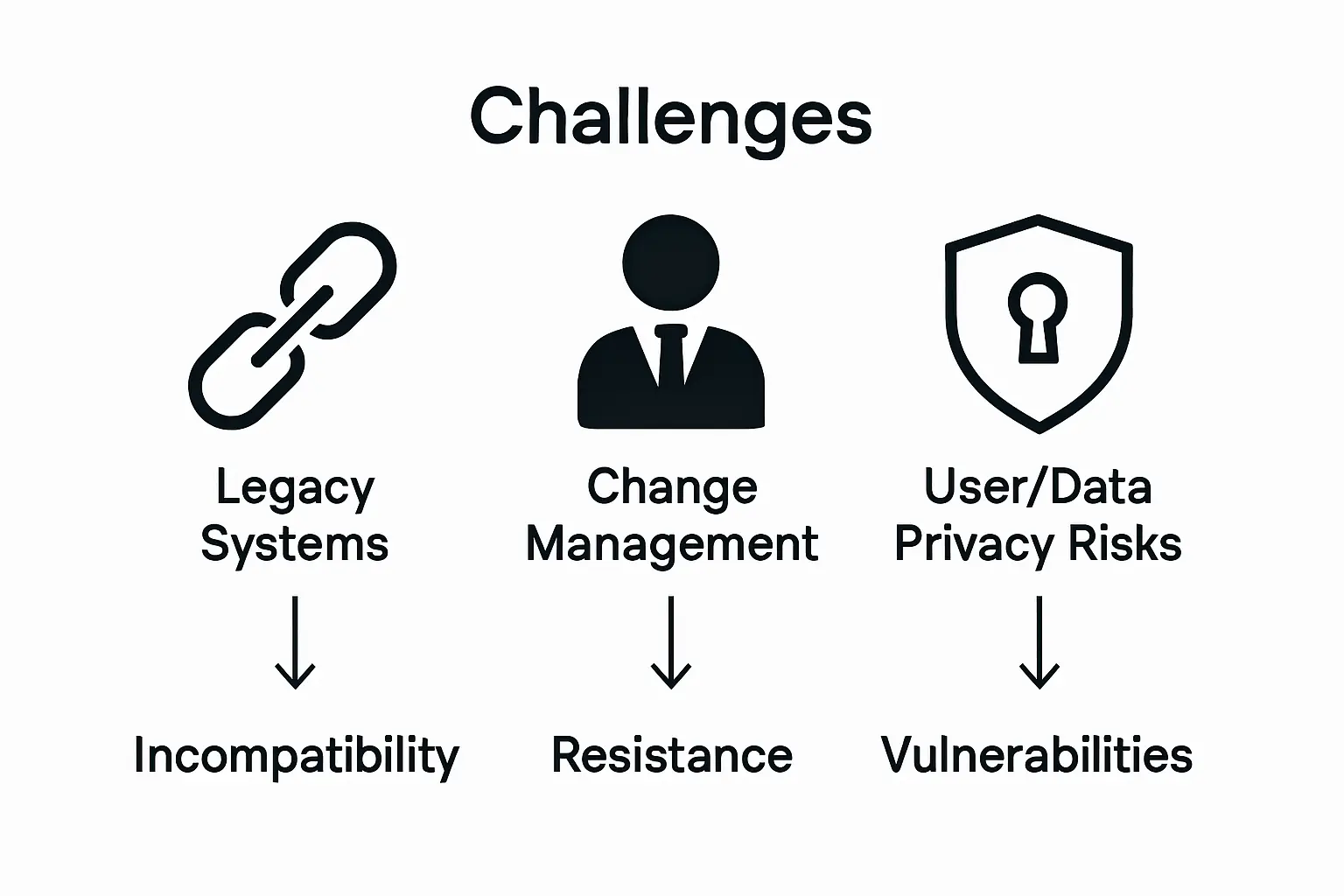
Human resource challenges represent another critical dimension of digital transformation obstacles. These include workforce resistance to change, skills gaps, inadequate digital literacy, and cultural inertia that can significantly impede technological adoption. Research consistently highlights organisational impact and change management as fundamental implementation challenges, suggesting that successful digital transformation requires more than technological investment - it demands comprehensive cultural recalibration.
Key digital transformation obstacles for membership organisations include:
- Limited technological infrastructure
- Insufficient digital skills within existing workforce
- Budget constraints for technological investment
- Complex legacy system dependencies
- Organisational cultural resistance
- Inadequate change management strategies
- Limited leadership understanding of digital potential
Ultimately, overcoming these obstacles requires a holistic, strategic approach that balances technological investment with robust change management, continuous learning, and adaptive organisational culture. Membership organisations must view digital transformation not as a one-time project, but as an ongoing journey of technological and cultural evolution.
Integration and Legacy System Barriers
Legacy systems represent a significant technological bottleneck for membership organisations undertaking digital transformation, creating complex challenges that extend far beyond simple technological upgrades. These entrenched technological infrastructures, often developed over decades, create intricate barriers that can impede organisational agility and digital innovation.

Technological barriers in institutional digital environments frequently stem from inadequate IT infrastructure and deeply embedded legacy systems, which challenge seamless digital integration efforts. These legacy systems typically suffer from multiple integration limitations, including incompatible data formats, restricted interoperability, and outdated architectural frameworks that resist modern technological interventions. Membership organisations find themselves trapped in technological ecosystems that were designed for previous operational paradigms, making comprehensive digital transformation exceptionally challenging.
Traditional organisational structures consistently struggle with adopting digital technologies due to complex hierarchical and systemic constraints, which create significant resistance to technological change. The integration barriers manifest through several critical dimensions:
- Proprietary software incompatibility
- Fragmented data management systems
- Complex interdepartmental technological dependencies
- High migration and transition costs
- Limited scalability of existing technological infrastructure
- Regulatory compliance complexities
- Security and data integrity challenges
Successful navigation of these integration barriers requires a strategic, phased approach that balances technological modernisation with organisational cultural adaptation. Membership organisations must develop comprehensive migration strategies that allow gradual technological transformation, ensuring minimal operational disruption while progressively building more flexible, interconnected digital ecosystems.
Leadership and Change Management Shortfalls
Leadership deficiencies represent a profound obstacle in digital transformation journeys for membership organisations, creating systemic barriers that can completely undermine technological adoption and organisational evolution. The capacity of senior leadership to understand, embrace, and effectively guide digital change determines the success or failure of transformation initiatives.
Research consistently identifies leadership deficiencies as critical barriers to successful digital transformation in institutional contexts, highlighting the complex interplay between strategic vision and operational implementation. Many organisational leaders struggle with comprehending the full scope of digital transformation, often viewing technological change as a technical challenge rather than a comprehensive strategic reimagining of organisational capabilities and culture.
Exploratory studies of IT managers reveal nuanced perceptions about digital disruption and organisational change management, uncovering several key leadership shortfalls:
- Insufficient digital literacy among senior leadership
- Resistance to fundamental organisational restructuring
- Limited understanding of technological potential
- Risk-averse decision-making approaches
- Inadequate strategic planning for digital integration
- Poor communication of transformation vision
- Lack of continuous learning and adaptation strategies
Successful digital transformation demands leadership that goes beyond traditional management paradigms, requiring executives who can simultaneously navigate technological complexity, manage cultural transformation, and maintain organisational stability. Leaders must develop adaptive capabilities, cultivate a learning-oriented culture, and create strategic frameworks that embrace technological innovation as a core organisational competency.
User Adoption and Data Privacy Risks
User adoption represents a critical challenge in digital transformation strategies for membership organisations, fundamentally determining the success or failure of technological implementations. The transition from traditional operational models to digital platforms requires not just technological investment, but a comprehensive understanding of human behavioural dynamics and organisational change management.
Research exploring status quo bias reveals significant barriers in information systems adoption, highlighting how deeply ingrained organisational inertia can derail digital transformation efforts. Members and staff often exhibit profound resistance to technological change, driven by comfort with existing processes, fear of complexity, and uncertainty about new digital workflows. This resistance manifests through reluctance to learn new systems, scepticism about technological benefits, and a default preference for familiar, albeit less efficient, traditional methods.
Membership organisations face multifaceted challenges in technology adoption and data management, with data privacy emerging as a paramount concern. Key risks and adoption barriers include:
- Complex user interface design
- Insufficient digital skills training
- Perceived security vulnerabilities
- Lack of personalised onboarding experiences
- Inadequate communication about technological benefits
- Regulatory compliance uncertainties
- Trust and transparency deficits
Successful digital transformation demands a human-centric approach that prioritises user experience, comprehensive training programmes, transparent communication, and gradual, supportive technological integration. Organisations must create adaptive strategies that acknowledge individual learning curves, address privacy concerns proactively, and demonstrate tangible value in digital platform adoption.
Overcome Digital Transformation Challenges with Colossus Systems
Many membership organisations face hurdles like legacy system integration, leadership shortfalls, and user adoption resistance as they navigate their digital transformation journey. If your organisation struggles with complex technological infrastructures, limited digital skills, or cultural resistance, it is time to embrace a solution that understands these unique challenges. Colossus Systems offers a comprehensive SaaS platform designed specifically to streamline member management, enhance engagement, and support organisational growth through intuitive digital tools.

Take control of your digital future today by leveraging a platform built to address the exact pain points discussed in the article Digital Transformation Challenges for Member Organisations. From customised CRM workflows to seamless payment gateway integrations, Colossus Systems empowers your team to reduce operational friction and create personalised member experiences. Learn how to transform obstacles into opportunities by starting the conversation with us now at Contact Us. Discover how member engagement solutions tailored for organisations like yours can unlock new revenue streams and enhance your digital ecosystem.
Frequently Asked Questions
What are the main challenges of digital transformation for membership organisations?
Digital transformation challenges for membership organisations typically include limited technological infrastructure, insufficient digital skills within the workforce, budget constraints, complex legacy system dependencies, organisational cultural resistance, inadequate change management strategies, and limited leadership understanding of digital potential.
How can legacy systems impact digital transformation?
Legacy systems can create significant barriers to digital transformation by limiting interoperability, complicating data integration, and increasing transition costs. These outdated infrastructures often resist modern updates, making comprehensive organisational change more difficult.
What role does leadership play in the success of digital transformation?
Leadership plays a critical role by guiding digital change with a clear vision, understanding technological potential, and effectively communicating transformation goals. Insufficient digital literacy and resistance to organisational restructuring among leaders can hinder successful implementation of transformation strategies.
Why is user adoption a critical challenge in digital transformation?
User adoption is crucial as it directly affects the success of technological implementations. Resistance from members and staff stems from comfort with existing processes and a lack of understanding of new systems. An effective human-centric approach is needed to ensure a smooth transition and enhance engagement with digital platforms.
Recommended
- What is Digital Engagement? Understanding Its Impact|CS
- What Is Member Portal? Complete Overview for 2024 | Colossus Systems
- Digital Communication Strategies for Member Organisations|CS
- Understanding What is a Member Portal and Its Importance|CS
- 7 Key Reasons to Outsource IT for Business Growth | NineArchs