Best event coordinator classes online for nonprofits 2026

Many aspiring event coordinators believe quality training requires attending in-person workshops, yet this misconception overlooks the wealth of specialised online courses designed specifically for nonprofit and membership organisation professionals. Online event coordinator classes now offer flexible, affordable pathways to develop essential skills in fundraising event management, volunteer coordination, and virtual event delivery. These programmes provide practical frameworks tailored to the unique challenges nonprofits face, from limited budgets to diverse stakeholder engagement. By completing recognised certifications, you can significantly boost your earning potential whilst gaining expertise that transforms how your organisation executes impactful events.
Table of Contents
- Why Online Event Coordinator Classes Suit Nonprofit Professionals
- Top Online Certificates And Masterclasses For Nonprofit Event Coordinators
- How Certification Boosts Your Career And Salary Prospects
- Leveraging Technology And Skills Learned From Online Classes To Succeed In Nonprofit Event Coordination
- Discover Software Solutions To Enhance Your Nonprofit Event Coordination
- Frequently Asked Questions
Key takeaways
| Point | Details |
|---|---|
| Specialised training | Online courses address nonprofit-specific challenges like fundraising, volunteer management, and virtual event delivery effectively. |
| Certification value | Earning credentials like CMP increases annual salary by over £8,000 on average, validating professional expertise. |
| Flexible learning | Programmes range from intensive two-day masterclasses to comprehensive multi-month certificates, fitting diverse schedules. |
| Technology integration | Courses teach practical software skills that automate compliance, enhance engagement, and save significant administrative time. |
| Career growth | Growing nonprofit sector demand creates abundant opportunities for trained event coordinators with verified credentials. |
Why online event coordinator classes suit nonprofit professionals
Nonprofit event coordination presents distinct challenges that differ markedly from corporate event planning. Your events often serve multiple purposes simultaneously: raising funds, recruiting volunteers, building community, and advancing your mission. Traditional event planning courses frequently overlook these layered objectives, focusing instead on profit-driven corporate gatherings or luxury celebrations.
Online classes tailored for nonprofits address these gaps directly. UNC Charlotte offers a specialised online certificate for nonprofits including fundraising and volunteer management, covering over 10 courses that explore risk management, virtual event technologies, and donor engagement strategies. This comprehensive approach ensures you develop skills applicable to real-world nonprofit scenarios rather than generic event principles.
Flexibility stands as another crucial advantage for nonprofit professionals. Many of you juggle multiple responsibilities within lean teams, making traditional classroom attendance impractical. Online formats allow you to complete coursework around existing commitments, whether you’re managing a volunteer programme, coordinating donor communications, or planning your next fundraising gala.
The curriculum depth in quality online programmes often surprises newcomers. You’ll explore budget optimisation techniques specific to grant-funded events, learn compliance requirements for charitable fundraising activities, and master volunteer coordination frameworks that maximise impact whilst minimising burnout. Many courses incorporate real-world volunteer experience components, connecting you with actual nonprofit events where you can apply emerging skills under mentorship.
Pro Tip: When evaluating online courses, prioritise programmes that include case studies from membership organisations and nonprofits rather than generic hospitality examples. This ensures the frameworks you learn translate directly to your professional context.
Consider exploring event management courses for nonprofits to compare global options beyond those detailed here. Geographic diversity in training providers means you can access perspectives from various regulatory environments and cultural contexts, enriching your strategic toolkit.
Online learning communities also provide unexpected networking value. Your classmates likely face similar resource constraints and stakeholder dynamics, creating opportunities for peer learning and collaboration that extend beyond course completion. These connections often evolve into professional networks that support your career growth for years.
Top online certificates and masterclasses for nonprofit event coordinators
Selecting the right training programme requires understanding how duration, cost, curriculum focus, and outcomes align with your career goals. Several reputable providers offer courses specifically designed for nonprofit event professionals, each with distinct advantages.
LSBA offers a 1-2 month Graduate Certificate focused on nonprofit management and fundraising strategies, making it an affordable entry point for professionals seeking rapid skill development. The programme emphasises practical fundraising event planning, donor stewardship, and volunteer management frameworks applicable immediately within your organisation. With fees typically under £1,000, this certificate provides exceptional value for nonprofits operating on constrained professional development budgets.
The Event School London provides a 2-day live charity event management masterclass covering budgeting and sponsorship, delivered virtually for maximum accessibility. This intensive format suits experienced coordinators who need focused skill enhancement rather than comprehensive foundational training. The masterclass explores charity-specific compliance requirements, sponsorship acquisition strategies, and budget optimisation techniques that address common nonprofit constraints.
UNC Charlotte’s Meeting and Event Planning Professional Certificate offers broader scope, preparing you for diverse event coordination roles across sectors whilst maintaining strong nonprofit relevance. The programme includes modules on virtual event technologies, risk management, and strategic planning that support both immediate job performance and long-term career mobility. This flexibility proves valuable if you’re considering transitions between nonprofit, association, and corporate event roles.

| Programme | Duration | Cost Range | Key Focus Areas | Best For |
|---|---|---|---|---|
| LSBA Graduate Certificate | 1-2 months | Under £1,000 | Fundraising, volunteer management, donor stewardship | Entry-level nonprofit coordinators |
| Event School London Masterclass | 2 days | £500-£800 | Budgeting, sponsorship, compliance | Experienced charity event professionals |
| UNC Charlotte Certificate | 6-12 months | £2,000-£3,500 | Comprehensive planning, virtual events, risk management | Career changers and advancement seekers |
When comparing programmes, consider how curriculum content addresses your specific skill gaps. If you struggle with sponsor acquisition, prioritise courses emphasising partnership development. If virtual event delivery challenges your team, seek programmes with substantial online event technology training.
Pro Tip: Many certificates serve as stepping stones towards Certified Meeting Professional (CMP) credentials. Verify whether your chosen programme’s curriculum aligns with CMP exam domains, potentially reducing future study requirements.
Explore best event planning websites for nonprofits to complement your training with practical digital tools that enhance event execution. Technology literacy increasingly differentiates successful coordinators from those struggling to meet modern expectations.
Beyond formal certificates, consider how programmes incorporate practical application opportunities. Courses requiring capstone projects, volunteer event participation, or portfolio development provide tangible evidence of your capabilities that strengthens job applications and internal promotion cases.
How certification boosts your career and salary prospects
Pursuing recognised credentials transforms your professional trajectory in measurable ways. The Certified Meeting Professional (CMP) designation represents the industry’s gold standard, validating expertise across strategic planning, risk management, stakeholder engagement, and operational execution.
CMP-certified professionals earn on average $10,756 more per year, translating to approximately £8,600 in additional annual income. This salary premium reflects employer recognition that certified planners bring verified competencies reducing event risks, enhancing attendee experiences, and delivering stronger return on investment. For nonprofit professionals often facing salary compression, certification provides concrete justification for compensation increases.
Beyond immediate earnings, certification opens doors to senior roles typically inaccessible without verified credentials. Many organisations require CMP or equivalent qualifications for director-level event positions, effectively making certification a prerequisite for advancement rather than merely advantageous. Your career ceiling expands significantly once you hold recognised credentials.
The certification process itself develops skills extending beyond event coordination. CMP preparation requires mastering strategic planning frameworks, financial management principles, and stakeholder communication strategies applicable across nonprofit operations. These transferable competencies position you for lateral moves into development, operations, or executive leadership roles.
Online certificate programmes often align curriculum with CMP exam domains, allowing you to progress towards certification whilst developing immediately applicable skills. Kennesaw State University, amongst other providers, offers specific CMP preparation courses available online or through live virtual sessions, accommodating diverse learning preferences and schedules.
Pro Tip: Track your event coordination hours meticulously from day one. CMP eligibility requires documented professional experience, and comprehensive records eliminate delays when you’re ready to apply.
Certification also enhances your professional credibility with stakeholders beyond your immediate organisation. Board members, major donors, and community partners often perceive certified coordinators as more reliable and competent, strengthening your influence within strategic conversations. This reputational benefit proves particularly valuable when advocating for event budgets or proposing innovative approaches.
Consider how certification fits within broader career development plans. If you aspire to consultant roles advising multiple nonprofits, credentials become essential trust signals that attract clients. If you’re building an internal career within a large membership organisation, certification demonstrates commitment justifying investment in your continued growth.
Learn more about event planning for associations to understand how certified skills apply across diverse organisational contexts. Membership organisations often present unique coordination challenges that benefit from formal training frameworks.
Leveraging technology and skills learned from online classes to succeed in nonprofit event coordination
Online courses increasingly emphasise practical technology applications that amplify your effectiveness beyond what manual processes achieve. Modern event coordination demands proficiency with registration platforms, communication automation tools, and engagement analytics systems that transform how nonprofits execute successful events.
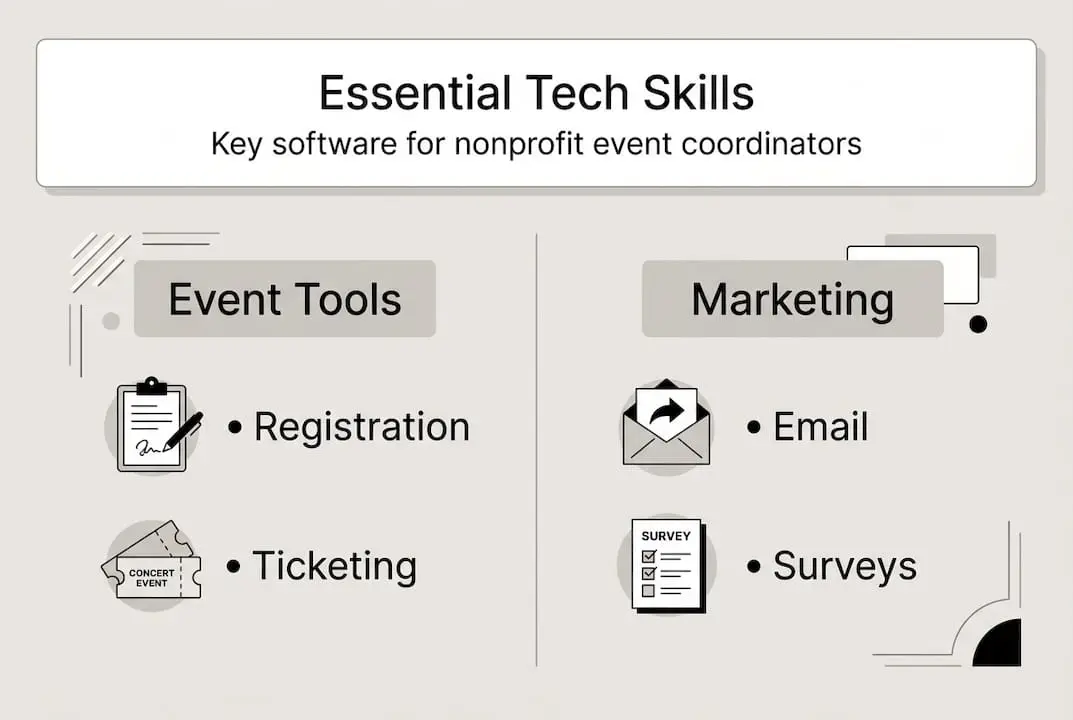
Your training should cover essential software categories: registration and ticketing systems, email marketing platforms, volunteer management tools, and integrated CRM solutions. Understanding how these technologies interconnect allows you to build seamless workflows reducing administrative burden whilst enhancing attendee experiences. Many courses now include hands-on modules where you configure actual platforms, ensuring you graduate with applicable technical skills rather than theoretical knowledge.
Platforms like Member365 automate compliance and have improved volunteer and member engagement, demonstrating measurable impact on organisational efficiency. Case studies reveal that nonprofits implementing comprehensive event management software reduce coordination time by 40% whilst increasing registration completion rates by 25%. These gains free you to focus on strategic elements like sponsor relationship building and programme quality enhancement.
Effective volunteer management relies heavily on clear communication and software integration. Your courses should teach you how to:
- Segment volunteer databases by skills, availability, and past participation to optimise role assignments.
- Automate reminder sequences ensuring volunteers receive timely information without manual follow-up.
- Track volunteer hours and contributions for recognition programmes and impact reporting.
- Create feedback loops capturing volunteer experiences to improve future events.
Member engagement tracking capabilities transform how you measure event success. Rather than relying solely on attendance numbers, modern platforms reveal which sessions generated highest engagement, which communication channels drove registrations, and which follow-up approaches converted attendees into ongoing supporters. This data informs continuous improvement cycles that compound your effectiveness over time.
| Metric | Before Technology Adoption | After Technology Adoption | Improvement |
|---|---|---|---|
| Email open rate | 18% | 34% | +89% |
| Registration completion | 62% | 87% | +40% |
| Volunteer coordination time | 12 hours/event | 5 hours/event | -58% |
| Post-event survey response | 23% | 51% | +122% |
Pro Tip: When learning new software during training, document your own process guides and troubleshooting notes. These resources prove invaluable when training colleagues or transitioning to similar platforms later.
Virtual and hybrid event delivery skills have become essential rather than optional. Your training should cover platform selection criteria, engagement strategy design, technical troubleshooting approaches, and accessibility compliance requirements. Nonprofits serving geographically dispersed communities particularly benefit from coordinators who confidently execute virtual programming.
Discover strategies for boost member engagement through technology integration that extends beyond individual events. Sustainable engagement requires systems thinking where events function as touchpoints within broader relationship journeys rather than isolated activities.
Finally, your online courses should address data privacy and security considerations increasingly important in nonprofit operations. Understanding GDPR compliance for UK-based organisations, data retention policies, and secure payment processing protects your organisation whilst building stakeholder trust. These competencies distinguish professional coordinators from well-meaning amateurs.
Discover software solutions to enhance your nonprofit event coordination
Having developed robust skills through online training, you need tools that translate knowledge into operational excellence. Colossus Systems provides specialised event management and membership software designed specifically for nonprofits and membership organisations facing the coordination challenges you now understand deeply.

Our platform automates compliance tracking, registration workflows, communication sequences, and engagement reporting, directly addressing pain points explored throughout your coursework. The integrated approach means your event data flows seamlessly into CRM records, email marketing campaigns, and financial reporting, eliminating the disconnected systems that create administrative burdens.
Membership management software features include customisable registration forms, automated renewal reminders, and engagement scoring that identifies your most active supporters. Event management software streamlines everything from initial promotion through post-event surveys, whilst CRM software maintains comprehensive stakeholder relationships supporting volunteer coordination and donor stewardship.
By combining your newly developed expertise with purpose-built technology, you position your organisation for sustainable growth and impact. The skills you’ve gained through online training deserve tools that amplify rather than constrain your capabilities.
Frequently asked questions
Which online event coordinator classes are best for nonprofit professionals?
Courses like UNC Charlotte’s Meeting and Event Planning Professional Certificate and LSBA’s Graduate Certificate stand out due to their explicit nonprofit focus and flexible online formats. These programmes address fundraising event strategy, volunteer management, and compliance requirements specific to charitable organisations. Short masterclasses from The Event School London offer concentrated skill development for experienced coordinators needing targeted enhancement. Explore best online event courses for nonprofits for comprehensive global comparisons beyond UK-based options.
How does CMP certification impact salary for event coordinators?
CMP-certified event planners earn $10,756 more annually on average, approximately £8,600 in additional income, validating that employers recognise and reward verified expertise. This credential signals mastery across strategic planning, risk management, and stakeholder engagement domains that reduce organisational risk whilst enhancing event outcomes. Beyond immediate salary increases, certification often becomes a prerequisite for senior coordination roles, effectively expanding your career ceiling and long-term earning potential within nonprofit and association sectors.
Can online event coordinator classes prepare me for managing virtual and fundraising events?
Absolutely. Courses like UNC Charlotte’s cover virtual events and fundraising event planning through dedicated modules exploring platform selection, engagement strategy design, and donor cultivation techniques. You’ll learn practical frameworks for hybrid event delivery, virtual sponsorship activation, and online fundraising campaign integration that directly address modern nonprofit needs. Many programmes include hands-on projects where you plan actual virtual or fundraising events, ensuring you develop applicable skills rather than theoretical knowledge. Discover online event promotion ideas to complement your training with practical marketing strategies.
What time commitment do online event coordinator certificates require?
Programme duration varies significantly based on depth and format. Intensive masterclasses like The Event School London’s charity event management course require just two days of focused participation, ideal for experienced professionals needing targeted skill enhancement. Mid-length certificates such as LSBA’s Graduate Certificate span one to two months with part-time study expectations around five to eight hours weekly. Comprehensive programmes like UNC Charlotte’s certificate extend six to twelve months, typically requiring eight to twelve hours weekly including coursework, readings, and practical projects. Select programmes matching your available time whilst ensuring sufficient depth to achieve your learning objectives.
Do online courses provide networking opportunities with other nonprofit event professionals?
Quality online programmes intentionally build community through discussion forums, group projects, live virtual sessions, and alumni networks that connect you with peers facing similar challenges. These relationships often prove as valuable as course content itself, providing ongoing support, collaboration opportunities, and career connections extending long after programme completion. Many providers facilitate regional meetups or annual conferences where online learners connect face-to-face, deepening professional relationships. When evaluating courses, investigate community-building components and alumni engagement levels to ensure you’ll gain networking benefits alongside skill development.