Why event management matters: boost member engagement

TL;DR:
- Organizations that adopt strategic event management see 36% higher conference attendance and 34% higher renewal rates.
- Effective events create meaningful member experiences that increase retention, engagement, and loyalty.
- Integrating technology and data-driven practices optimizes event outcomes and enhances member relationships.
Organisations that treat event management as a purely logistical exercise are leaving significant growth on the table. 39% higher attendance is the measurable reward for organisations that build formal engagement plans around their events. Yet most associations and membership bodies still approach event planning reactively, scrambling to fill seats rather than strategically designing experiences that deepen loyalty. This article breaks down exactly why effective event management matters, how it directly influences member engagement and renewal, and what practical steps your organisation can take to turn every event into a genuine growth driver.
Table of Contents
- The core benefits of effective event management
- Linking events to member engagement and retention
- Best practices: Planning for success and sustainability
- Leveraging technology for memorable, measurable events
- Why most organisations get event management wrong and what to do differently
- Unlock greater engagement with the right event tools
- Frequently asked questions
Key Takeaways
| Point | Details |
|---|---|
| Member engagement driver | Robust event management leads to higher attendance and stronger member involvement. |
| Measurable organisational growth | Strategic events boost conference turnouts and increase membership renewal rates. |
| Planning for sustainability | Effective planning and budget management create reliable, scalable event success. |
| Technology as a force-multiplier | Event technology enables personalisation, data-driven decisions, and better event outcomes. |
The core benefits of effective event management
Event management in a membership organisation covers far more than booking venues and sending invitations. It spans the full lifecycle: strategic planning, pre-event promotion, on-the-day delivery, and post-event follow-up. Each stage shapes how members perceive the value of their membership. Miss any one of them and you risk undermining the entire experience.
The strategic impact is measurable. Organisations that adopt structured member event planning strategies consistently outperform those that plan ad hoc. The data is clear: 36% higher annual conference attendance and 34% higher renewal rates are linked directly to effective event management practices. These are not marginal gains. They represent the difference between a thriving membership base and one that quietly erodes.
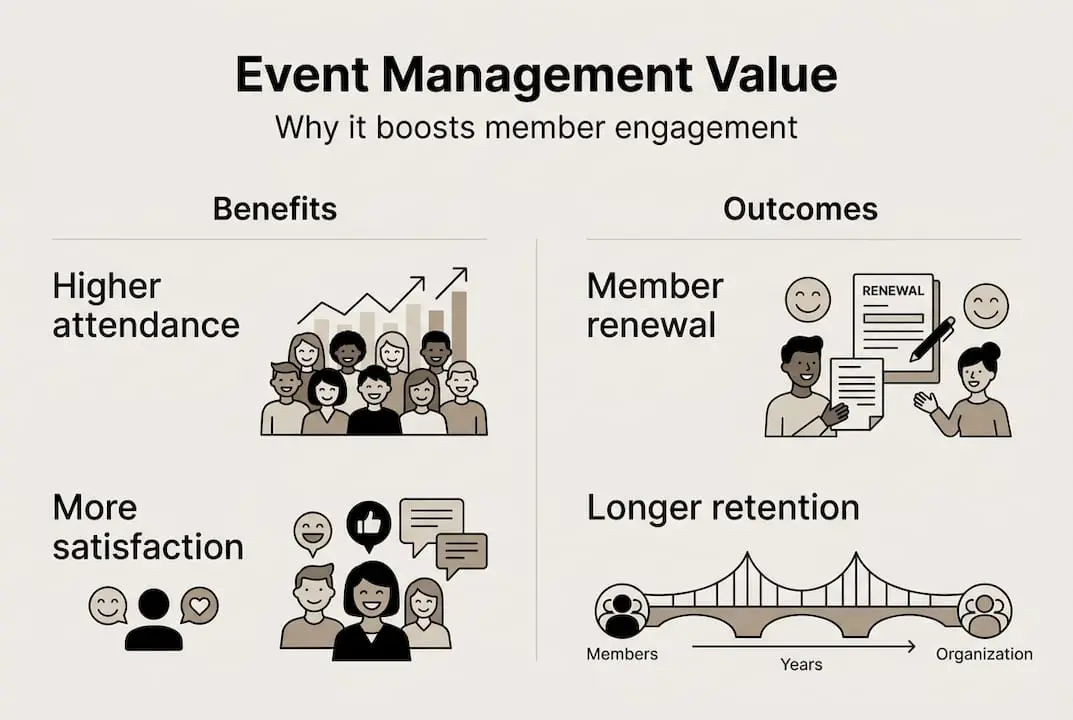
Consider the contrast between structured and unstructured approaches:
| Approach | Attendance trend | Renewal rate | Member satisfaction |
|---|---|---|---|
| Structured event management | Increases year on year | 34% higher | Consistently positive |
| Ad hoc planning | Flat or declining | Below average | Variable and unpredictable |
The gap is stark. Structured event management, guided by event management best practices, treats every event as a strategic touchpoint rather than a standalone task.
Key benefits your organisation gains from a structured approach include:
- Stronger member retention through consistent, high-quality experiences
- Increased non-dues revenue from well-attended, well-promoted events
- Improved brand perception as members associate your organisation with professionalism
- Actionable data from post-event feedback that informs future planning
- Greater volunteer and sponsor engagement when events run smoothly
Building strategic planning for engagement into your event calendar is not a luxury. It is the foundation of sustainable organisational growth.
Linking events to member engagement and retention
Events are not just programme items on a calendar. They are the moments when members decide whether their membership is worth renewing. That decision is rarely made at renewal time. It is made at every event they attend, or choose not to attend.
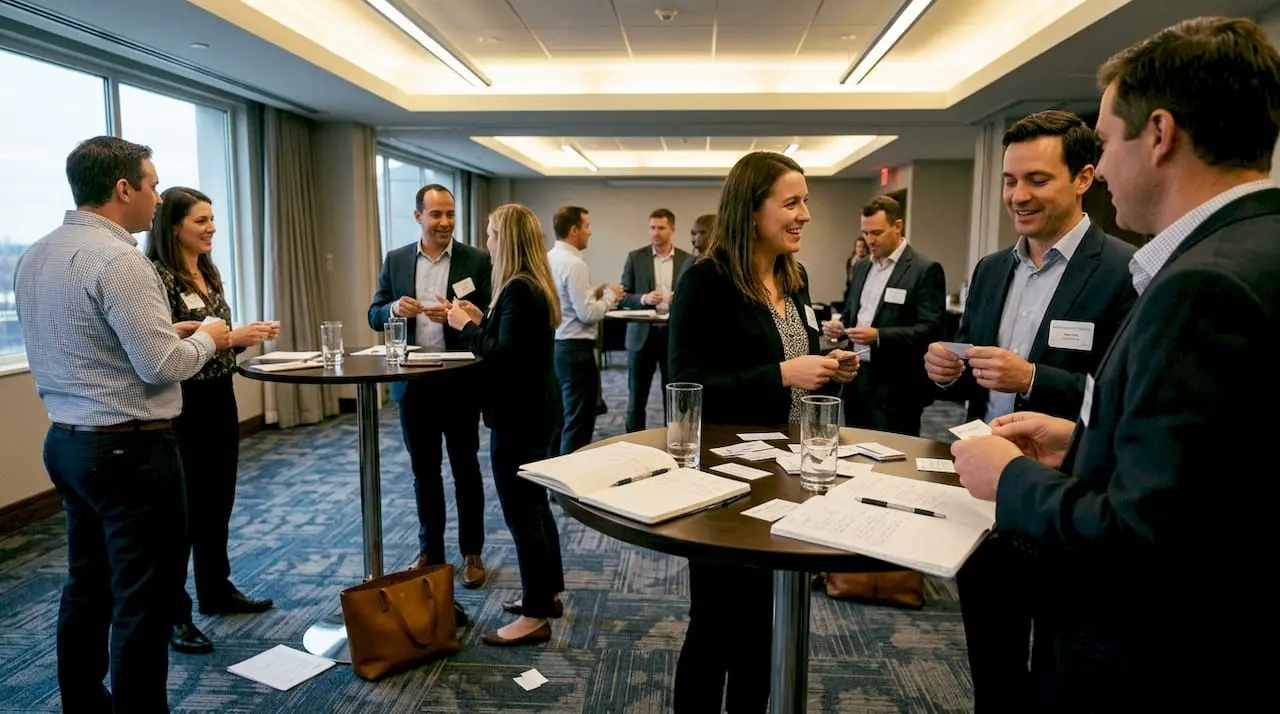
Event engagement is the top priority for 52% of planners, and it is easy to see why: events generate the highest ROI for 64% of organisations. The mechanism is straightforward. Events create shared experiences, facilitate networking, and deliver tangible value that members cannot get from a newsletter or a website portal alone.
Here is how events directly influence member loyalty:
| Event element | Engagement mechanism | Impact on retention |
|---|---|---|
| Networking sessions | Builds peer relationships | Members stay for the community |
| Educational content | Delivers professional value | Members see ROI on dues |
| Post-event follow-up | Reinforces connection | Increases repeat attendance |
| Personalised invitations | Makes members feel valued | Improves response and attendance rates |
To strengthen the link between events and retention, focus on these practical steps:
- Collect feedback after every event. Short surveys sent within 24 hours capture honest impressions and show members their opinions matter.
- Personalise your event communications. Segment your membership list and tailor invitations based on interest, location, or membership tier.
- Introduce gamification. Points, badges, or leaderboards for event participation encourage repeat attendance and friendly competition.
- Create post-event content. Share recordings, summaries, or key takeaways to extend the value for those who could not attend.
- Follow up with non-attendees. A targeted message acknowledging their absence and offering on-demand content keeps them connected.
Strategies for increasing event attendance work best when they are embedded in a broader retention strategy rather than treated as isolated tactics. Similarly, event marketing for associations should speak directly to member motivations, not just event logistics.
The organisations that get this right understand one thing: members do not renew because of a great venue. They renew because of how an event made them feel connected, valued, and professionally enriched.
Best practices: Planning for success and sustainability
To translate strategic insights into everyday action, implement best practices designed for consistent and sustainable results. The most effective event managers do not wing it. They build systems.
Structured planning, backward scheduling, and contingency budgets of 10 to 15% are the hallmarks of professional event management. Backward scheduling means starting with your event date and working backwards to assign every task a deadline. This eliminates the last-minute scramble that damages both event quality and team morale.
Key planning practices worth embedding in your organisation include:
- Set clear objectives before any logistical decision is made. What does success look like for this event?
- Build a contingency budget of 10 to 15% to absorb unexpected costs without derailing the event
- Assign clear ownership for every task. Ambiguity is the enemy of execution.
- Plan for hybrid delivery from the outset. Many members now expect flexible attendance options.
- Schedule a post-event debrief within one week while details are fresh
Poor follow-up is one of the most common and costly mistakes membership organisations make. An event without a structured follow-up sequence loses most of its engagement value within 48 hours.
“The event does not end when the last attendee leaves. The follow-up is where loyalty is built or lost.”
Technology plays a critical role here. Automating registration confirmations, reminder sequences, and post-event surveys through your event planning strategies removes manual effort and ensures consistency. Pair this with event registration strategies that reduce friction at sign-up, and you will see measurable improvements in attendance rates.
Pro Tip: Explore group purchasing for nonprofits as a way to reduce event costs without compromising quality. Pooling resources with peer organisations can make premium venues and speakers financially viable.
Sustainability in event planning also means building institutional knowledge. Document what worked and what did not after every event so that your team is not starting from scratch each cycle.
Leveraging technology for memorable, measurable events
Finally, how can organisations future-proof their event impact? By making the most of technology and data. The organisations seeing the greatest gains are those that treat their event technology stack as a strategic asset, not just an administrative convenience.
Tech integration supports personalisation, gamification, and deeper measurement including Net Promoter Score (NPS) tracking and repeat attendance analysis. These tools allow you to move beyond gut feel and make evidence-based decisions about your event programme.
Here is how to leverage technology effectively:
- Centralise your data. Use a platform that connects event registration, member profiles, and communication history so you have a complete picture of each attendee.
- Automate pre-event communications. Scheduled reminders, personalised agendas, and last-minute logistics updates keep attendees informed without manual effort.
- Use gamification tools. Digital check-ins, interactive polls, and session leaderboards increase real-time engagement during events.
- Measure NPS after every event. A simple score tells you how likely members are to recommend the event and flags issues early.
- Track repeat participation. Members who attend multiple events are your most engaged segment. Identify them and nurture that relationship deliberately.
For organisations running virtual or hybrid events, the right platform makes all the difference. Explore online event engagement ideas to keep remote attendees as invested as those in the room. If your team needs to build capability, event management courses can accelerate your learning curve significantly.
Pro Tip: Tech solutions for nonprofit events can reduce operational costs by up to 25%, freeing budget for higher-impact event experiences.
The shift from manual processes to integrated technology is not about replacing the human touch. It is about freeing your team to focus on the relationships and experiences that technology cannot replicate.
Why most organisations get event management wrong and what to do differently
Here is an uncomfortable truth: most organisations focus almost entirely on logistics and almost never on the member experience arc. They measure success by whether the AV worked and the catering arrived on time. Those things matter, but they are table stakes.
The real opportunity lies in treating every event as a moment of truth in the member journey. From the first invitation to the final follow-up, each interaction either strengthens or weakens a member’s sense of belonging. Most event managers do not think this way because they are too busy managing spreadsheets.
What we have observed consistently is that the organisations with the highest retention rates are not necessarily running the most elaborate events. They are running the most intentional ones. They measure what matters: connection, perceived value, and whether members leave feeling that their time was well spent.
The challenge is to reimagine event management as member relationship management. That shift in perspective, supported by nonprofit strategic planning principles, changes everything from how you design agendas to how you follow up. Prioritise connections over content. Measure belonging, not just attendance.
Unlock greater engagement with the right event tools
Putting these practices into action requires more than good intentions. It requires the right infrastructure. The best event strategies fall apart without tools that can scale them consistently and measure their impact reliably.
Colossus Systems brings together event management software with full membership management capabilities, so every stage of your event journey is connected. From registration and communications to post-event analytics and member follow-up, our platform removes the friction that holds organisations back. Explore our full range of membership software features to see how we support membership organisations in delivering events that genuinely move the needle on engagement and growth.
Frequently asked questions
How does event management impact member engagement?
Effective event management creates structured, valuable experiences that directly boost member engagement and repeat participation. Events with formal engagement plans see 39% higher attendance, demonstrating a clear link between planning rigour and member involvement.
What are the most important metrics for event success?
Engagement metrics like repeat attendance, Net Promoter Score (NPS), and membership renewal rates are the most reliable indicators of event impact. Organisations measure beyond revenue using NPS and repeat participation to understand the true value delivered.
Which event management practices lead to the highest ROI?
Structured planning, technology integration, and personalised engagement activities consistently deliver the strongest returns. Events deliver the highest ROI for 64% of organisations, particularly when planning is systematic rather than reactive.
How can technology enhance member events?
Technology streamlines planning, personalises attendee journeys, and helps measure outcomes far more effectively than manual processes. Tech integration supports personalisation and gamification, giving organisations the data they need to continuously improve their event programme.