One Sign Off and Data Turn Association Branding Into Renewals

For associations, strong branding directly increases credibility, member loyalty and advocacy impact. A recognisable, consistently presented identity gives policymakers, donors and prospective members a reason to trust you before they have read a single word of your mission statement. The sections below set out the core benefits, the elements to build, a practical rollout plan and how to measure what you get back.
TL;DR:
- Consistent visual and verbal branding elements reinforce recognition and trust, leading to higher member retention and more effective advocacy efforts.
- Appointing a single brand custodian, producing a comprehensive brand guide, and enforcing regular reviews are essential to maintaining brand standards on a budget.
- Tracking member retention, fundraising response, and Net Promoter Scores helps measure the impact of branding on stakeholder trust and engagement.
- Centralized digital platforms with templates and analytics ensure that branding remains uniform across all communication channels and touchpoints.
- Governance and measurement are foundational; without clear authority and metrics, branding efforts are unlikely to have sustained impact.
Table of Contents
- Why branding matters for associations: the core benefits
- Core brand elements for associations: visuals, voice, governance, experience
- Practical steps to create and enforce brand standards
- How to measure brand equity and report impact for associations
- How digital tools and platforms support brand consistency and member experience
- Why governance and measurement come first
- Option: platform-assisted brand consistency and analytics
- FAQ
- Sources
Why branding matters for associations: the core benefits
Strong branding gives associations institutional credibility. When your visual identity, tone and messaging stay consistent across policy briefings, press releases and partner communications, legislators and coalition partners read you as a stable, professional actor rather than a fragmented volunteer effort. That consistency is what earns you a seat at the table before a campaign even starts.
Trust compounds into loyalty. Research into nonprofit brand equity frames reputation as a driver of member and donor loyalty, and studies summarised by Simon-Kucher found that both formal signals, such as third-party certificates, and informal reputational cues significantly improve stakeholder trust and support intent. For associations, that trust shows up as renewed memberships and repeat giving.
Branding also differentiates you from adjacent organisations competing for the same members, sponsors and media attention, and it sharpens the messages your advocacy and public affairs teams repeat across channels.
- Consistent identity builds credibility with policymakers, funders and coalition partners.
- Reputation-driven trust raises member retention and donor response, a pattern our membership recruitment and retention strategies guide explores further.
- Clear differentiation strengthens recruitment messaging against similar organisations.
- Repeatable, recognisable branding makes advocacy campaigns easier to coordinate across coalitions.
Formal and informal reputational signals significantly improve stakeholder trust, according to practitioner research, which matters directly for how members and donors judge your association before engaging further.
Core brand elements for associations: visuals, voice, governance, experience
Four elements do most of the work, and each maps to a specific organisational outcome.
- Visual identity and templates: logo usage, colour palette and layout templates that stay identical across your website, event signage and printed materials, so every external touchpoint reinforces recognition.
- Verbal identity: a mission-aligned tone and a set of stakeholder-specific key messages, so a policy briefing, a renewal email and a conference welcome speech all sound like they come from the same organisation.
- Governance: a named brand custodian, a clear approval flow and explicit co-branding rules for coalition and sponsor materials, which prevents the partner misalignment that practical nonprofit guidance warns against.
- Member experience touchpoints: onboarding emails, portal design and event registration flows that carry the same visual and verbal identity through to the moments members actually interact with you.
Each element reinforces the next: governance keeps the visual and verbal identity intact, and the experience layer is where members actually notice the difference.
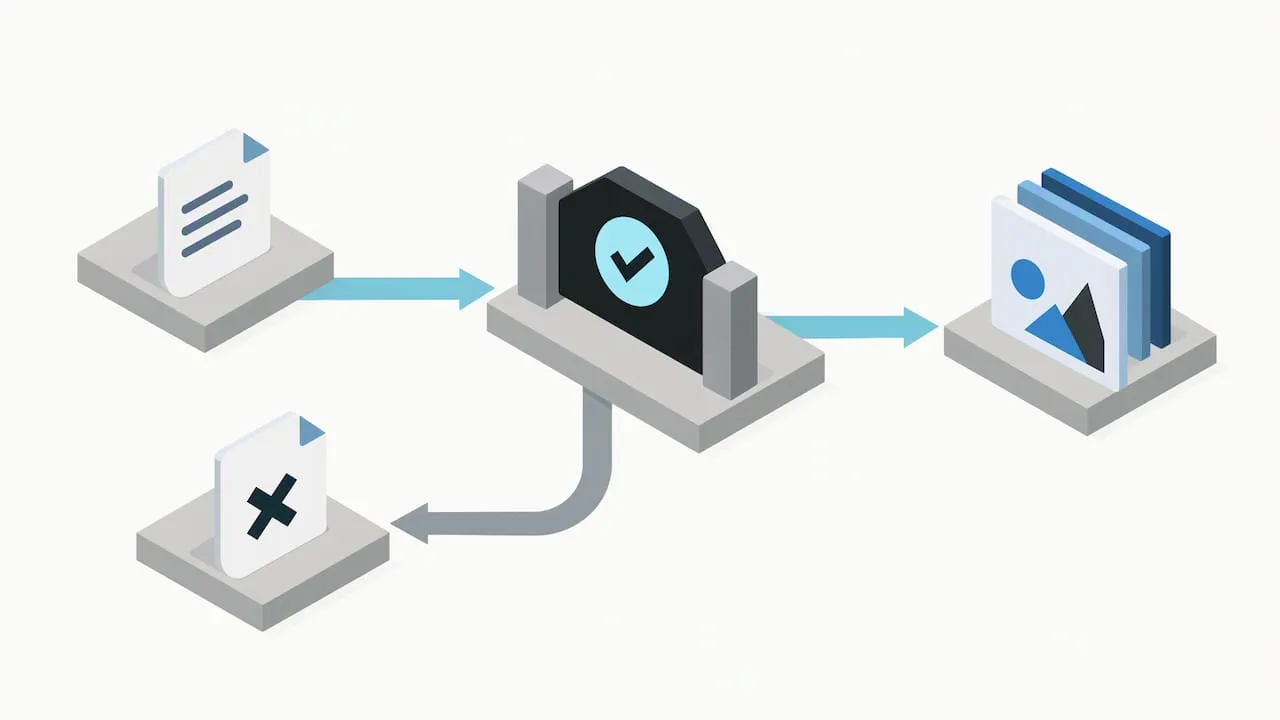
Pro Tip: Give one person formal sign-off authority on brand exceptions before your first coalition campaign, not after a partner has already published an off-brand flyer.
Practical steps to create and enforce brand standards
Building brand standards does not require a large budget or a dedicated communications department. It requires sequence and discipline.
- Appoint a brand custodian, usually a communications lead or executive director in smaller associations, with authority to approve or reject brand exceptions.
- Produce a living brand guide covering logo usage, colour, tone and templates, and make it downloadable for staff, volunteers and partners.
- Pilot the new standards on one channel, typically your email newsletter or event registration pages, before rolling out across the whole organisation.
- Train staff and coalition partners on the guide, and set a simple compliance check, such as a quarterly review of published materials against the guide.
- Schedule a formal review every one to two years, a cadence sector guidance recommends to keep standards current without constant rework.
Typical cost categories for small-to-medium associations include:
- Design time for templates and the brand guide itself, often the largest one-off cost.
- Staff training sessions, usually a half-day workshop plus follow-up reference materials.
- Ongoing custodian time for reviewing partner and coalition materials.
- Periodic refresh costs tied to the one-to-two-year review cycle.
A pilot phase of four to six weeks on a single channel gives you enough signal to fix template problems before a full rollout, and it keeps early mistakes contained rather than published across every coalition partner at once.
How to measure brand equity and report impact for associations
Academic research frames nonprofit brand equity as three components: awareness, trust and commitment, and supplies an index that associations can adapt rather than build from scratch.
In practice, track:
- Member retention rate, since trust and recognition are leading indicators of renewal.
- Fundraising response rates on branded versus unbranded appeals.
- Net Promoter Score among members and event attendees.
- Campaign reach and conversion on recruitment and advocacy messaging.
Researchers built a nonprofit brand equity index using a sample of 3,617 brand evaluations across 40 German nonprofit brands, demonstrated in the Wiley study, giving associations a tested structure for their own lightweight member surveys and reporting.
How digital tools and platforms support brand consistency and member experience
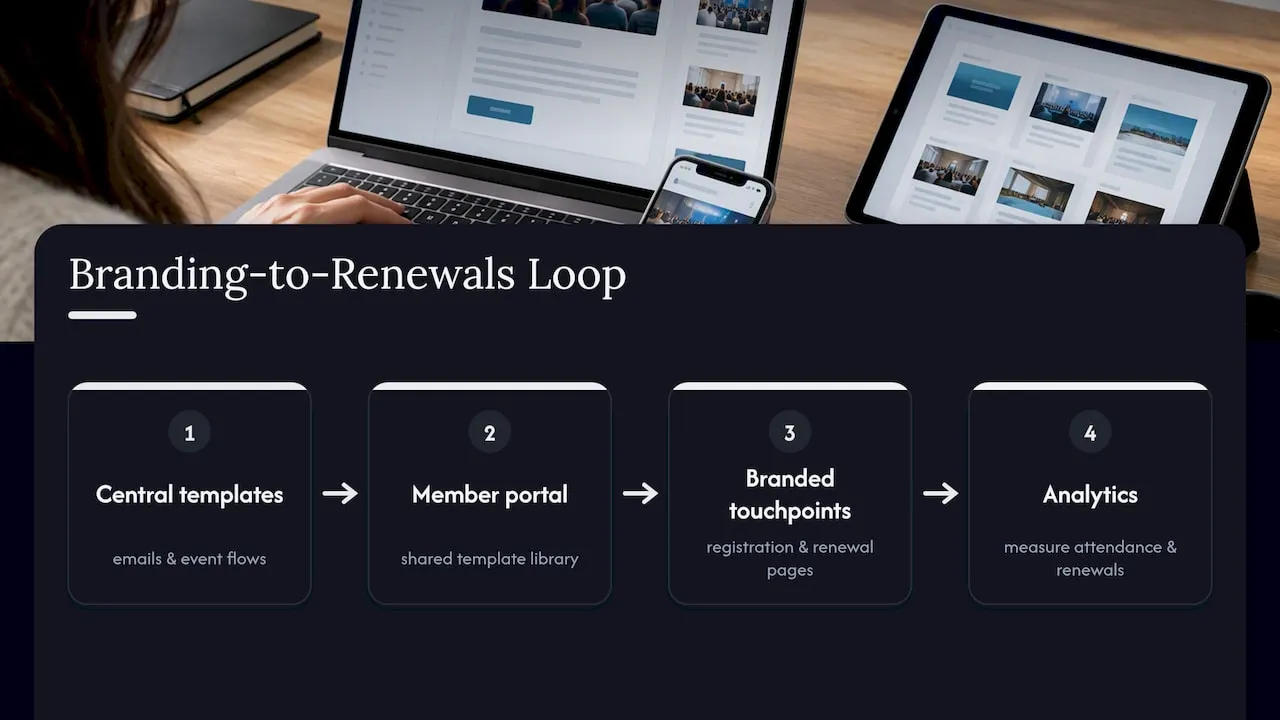
Centralising templates, email formats and event registration flows in one system is what keeps brand standards from drifting once more than one person is publishing on your behalf. A shared member portal and event template library, of the kind our membership management tools provide, means every registration page and renewal notice carries the same identity without someone rebuilding it from scratch each time. Analytics tied to those templates let you see which branded touchpoints actually move renewal and attendance numbers, closing the loop between the brand guide and the metrics in the section above.
Why governance and measurement come first
The associations that struggle with branding rarely lack creativity. They lack a named custodian and a metric. I have watched a coalition publish three different logo versions in one campaign simply because nobody had the authority to say no to the fourth design someone liked better. Fix governance and measurement before you commission a new logo.
— Rob
Option: platform-assisted brand consistency and analytics
Governance and a brand guide set the standard, and a platform is what makes that standard easy to hold onto once templates, emails and event pages multiply across your association. Our Core, Growth, Scale and Enterprise plans centralise branded templates, member portals and CRM data in one place, so your communications team is not reassembling the brand guide by hand for every new campaign.
- Branded email and event templates stay consistent without manual rebuilding each time.
- Member portals carry your visual and verbal identity through to every login and renewal.
- Built-in analytics connect branded touchpoints to engagement and revenue, supporting the measurement work covered above.
A platform does not replace brand strategy or governance, it operationalises the decisions you have already made. If you want to see how the features line up with your own brand guide, our pricing page lists plan details, or you can get in touch with questions specific to your organisation.
FAQ
Why is branding important to an organization?
Branding gives an organisation credibility, recognition and a consistent story that stakeholders can trust over time. For associations specifically, that trust translates into member retention, donor confidence and more effective advocacy, because audiences respond more readily to a familiar, coherent identity.
What are the 5 C’s of branding?
Definitions vary across sources, but common versions include clarity, consistency, constancy, competitive positioning and character. For associations, consistency and clarity matter most in practice, since they are what prevents coalition partners and members from receiving mixed messages.
What is the 3-7-27 rule of branding?
The 3-7-27 heuristic describes how repeated, coherent brand impressions move a prospect from basic recognition toward deeper trust, as outlined in Simon-Kucher’s analysis. Inconsistent touchpoints effectively reset that progression, which is why governance and template consistency matter as much as the creative work itself.
What are the 7 pillars of branding?
There is no single agreed list of seven pillars, and the term is used differently across marketing sources. Associations are better served focusing on the elements covered above: visual identity, verbal identity, governance and member experience, since these map directly to measurable outcomes.
How much does Colossus Systems cost?
Plans run from 349 GBP per month for Core up to 1299 GBP per month for Scale, with Enterprise available from 2500 GBP per month, all listed on our pricing page. A separate contributor licence is available from 29 GBP per month for organisations needing additional seats.
Sources
- Beyond logo: strategic blueprint for real brand growth — Simon‑Kucher
- Toward the importance of nonprofit brand equity — Wiley Online Library
- Branding matters & brand standards — NH Nonprofits