Student Recognition Programmes: Driving Retention and Growth

Most british nonprofit organizations find that student recognition programs shine when they celebrate more than just academic success. For coordinators and engagement managers, honoring a wide range of achievements drives deeper member involvement and strengthens loyalty. Studies show that public recognition can increase student motivation by over 60 percent, transforming institutional culture. Discover how strategic, inclusive recognition practices foster true participation and long-term retention in both british and international nonprofit environments.
Table of Contents
- What Student Recognition Programmes Entail
- Major Types And Award Categories Explained
- Key Steps For Programme Implementation
- Roles And Responsibilities For Organisers
- Common Pitfalls And Key Compliance Issues
Key Takeaways
| Point | Details |
|---|---|
| Comprehensive Recognition | Student recognition programmes should encompass diverse achievements beyond academics to promote holistic development. |
| Strategic Implementation | Effective programmes require clear goals, stakeholder engagement, and transparent criteria for meaningful student acknowledgement. |
| Organisational Roles | Clearly defined roles among leadership, programme managers, and student representatives are essential for successful programme management. |
| Compliance and Integrity | Institutions must ensure legal compliance and transparency to maintain the integrity of recognition programmes while protecting student rights. |
What Student Recognition Programmes Entail
Student recognition programmes are systematic, strategic approaches designed to formally acknowledge and celebrate academic achievements across diverse institutional environments. These comprehensive frameworks go far beyond simple reward mechanisms, serving as powerful tools for enhancing student motivation, engagement, and institutional culture. Academic recognition programs validate student efforts by creating structured pathways to highlight individual and collective accomplishments.
Typically, these programmes encompass multiple dimensions of recognition, including academic performance, extracurricular contributions, leadership development, research initiatives, and community service. They operate through various mechanisms such as:
- Honor rolls and merit lists
- Awards ceremonies and public acknowledgement events
- Digital recognition platforms
- Scholarship opportunities
- Special privileges or advanced programme access
- Personalised certificates and commendation letters
The primary objective of these programmes extends beyond mere celebration. By systematically recognising diverse student achievements, educational institutions create positive feedback loops that encourage continuous personal and academic growth. These initiatives demonstrate institutional commitment to nurturing individual potential, boosting student self-esteem, and cultivating an environment that values holistic development.
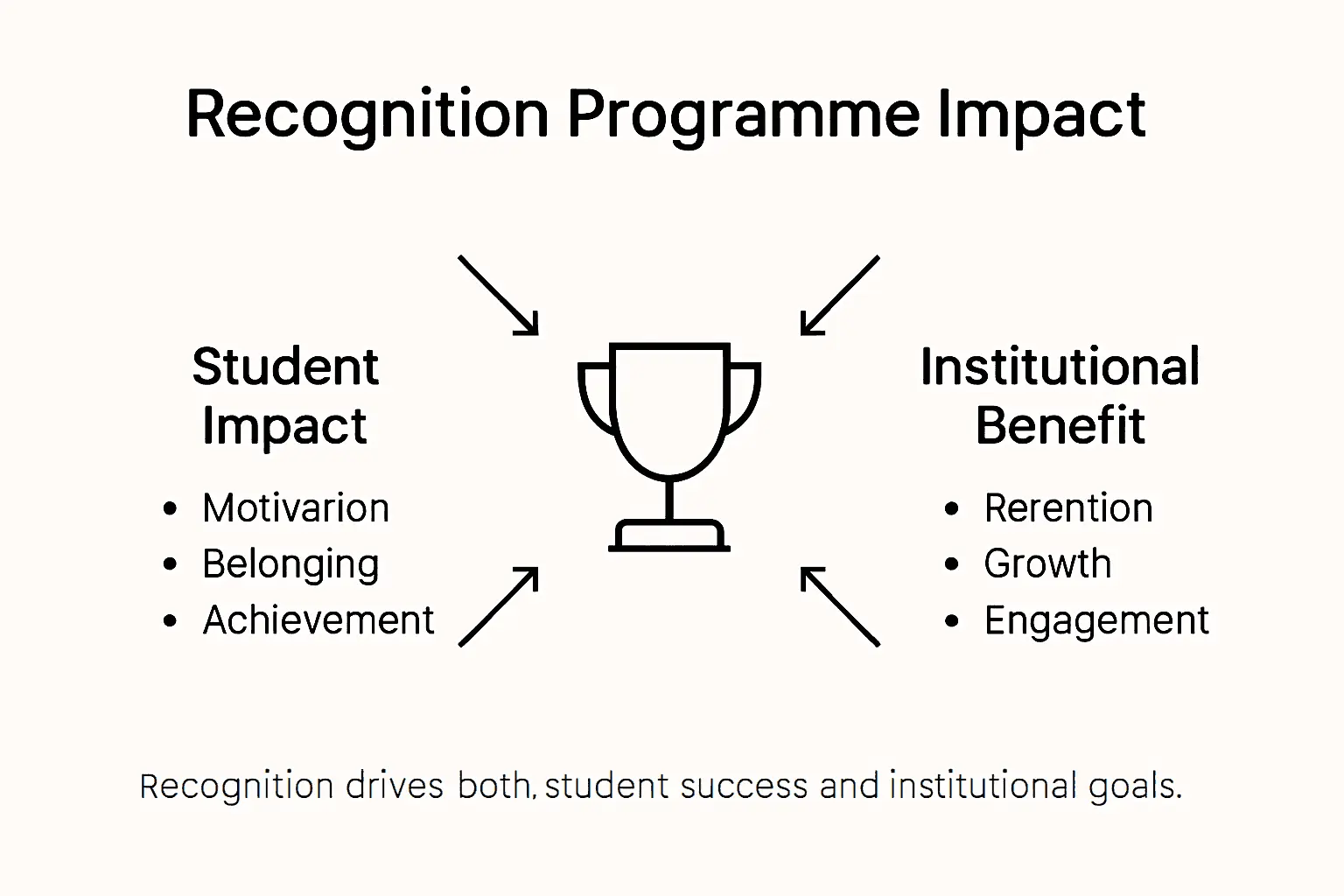
The table below summarises the business impact of common student recognition programme features.
| Feature | Student Motivation Impact | Institutional Benefit | Long-Term Outcome |
|---|---|---|---|
| Public acknowledgement | Raises self-esteem | Enhances institutional image | Builds student loyalty |
| Digital platforms | Increases engagement | Streamlines processes | Strengthens alumni networks |
| Scholarship access | Promotes academic ambition | Attracts high achievers | Improves graduate outcomes |
| Personalised awards | Validates individual progress | Supports diverse achievement | Fosters inclusive culture |
Pro tip: Design recognition programmes with transparent, inclusive criteria that celebrate multiple forms of achievement, ensuring every student has meaningful opportunities for acknowledgement.
Major Types and Award Categories Explained
Student recognition programmes encompass a diverse range of award categories designed to celebrate multifaceted achievements and contributions. Student awards recognition programs have evolved to acknowledge excellence across multiple domains, moving beyond traditional academic performance metrics to recognise holistic student development.
The primary categories of student recognition typically include:
- Academic Excellence Awards
- Subject-specific achievement prizes
- Honor rolls and high distinction lists
- Grade point average (GPA) recognitions
- Leadership and Contribution Awards
- Student government achievements
- Campus community leadership roles
- Peer mentorship recognitions
- Extracurricular and Talent Awards
- Athletic accomplishments
- Artistic and creative achievements
- Research and innovation prizes
- Community Service and Social Impact Awards
- Volunteer work recognitions
- Social entrepreneurship prizes
- Civic engagement certificates
These comprehensive award categories reflect the evolving landscape of student achievements, emphasising that modern recognition extends well beyond traditional academic performance. By celebrating diverse talents and contributions, institutions create inclusive environments that value individual growth, potential, and multidimensional success.

Here is a comparative overview of major student award categories and their typical recognition criteria.
| Award Category | Typical Recognition Criteria | Broader Student Benefit |
|---|---|---|
| Academic Excellence | Consistently high academic results | Motivates scholarly effort |
| Leadership and Contribution | Demonstrable influence and teamwork | Develops leadership skills |
| Extracurricular and Talent | Exceptional performance or creativity | Encourages rounded skillsets |
| Community Service and Social Impact | Sustained volunteering or advocacy | Instils civic responsibility |
Pro tip: Develop a transparent, points-based recognition system that allows students to track and understand how different achievements contribute to their overall recognition.
Key Steps for Programme Implementation
Implementing a robust student recognition programme requires a strategic and comprehensive approach that goes beyond simple award distribution. Successful implementation involves establishing clear program goals that align closely with institutional values and create meaningful pathways for student acknowledgement.
The key implementation steps include:
- Strategic Planning
- Define precise programme objectives
- Align recognition criteria with institutional mission
- Establish measurable performance indicators
- Stakeholder Engagement
- Consult faculty, students, and administrative staff
- Create cross-departmental implementation teams
- Develop inclusive nomination processes
- Criteria Development
- Design transparent recognition standards
- Create multi-dimensional assessment frameworks
- Ensure fair and comprehensive evaluation methods
- Technological Integration
- Implement digital tracking systems
- Develop online recognition platforms
- Enable seamless documentation and verification
- Continuous Evaluation
- Establish regular performance review mechanisms
- Collect stakeholder feedback
- Adapt programme based on data insights
Best practices for recognition programs emphasise the importance of creating sustainable frameworks that reinforce positive behaviours and align with broader institutional goals. Effective programmes go beyond mere recognition, serving as strategic tools for institutional development and student motivation.
Pro tip: Develop a flexible recognition framework that allows periodic recalibration of criteria, ensuring the programme remains responsive to evolving student achievements and institutional objectives.
Roles and Responsibilities for Organisers
Successful student recognition programmes require a sophisticated approach to organisational management, with clearly defined roles and strategic responsibilities across multiple levels. Recognition program leadership must understand their comprehensive responsibilities, spanning strategic planning, execution, and ongoing programme refinement.
The key organisational roles typically include:
- Leadership Sponsors
- Allocate programme resources
- Establish overarching strategic vision
- Model institutional recognition culture
- Programme Managers
- Develop detailed implementation strategies
- Coordinate cross-departmental efforts
- Monitor programme performance metrics
- Faculty and Staff Champions
- Identify potential recognition opportunities
- Support nomination processes
- Provide contextual insights and recommendations
- Student Representatives
- Offer peer perspectives
- Participate in programme design feedback
- Help communicate programme value
Directors of student activities play pivotal roles in managing recognition initiatives through strategic data-driven decision-making. Their responsibilities extend beyond administrative tasks to creating meaningful engagement platforms that motivate and celebrate student achievements across diverse institutional contexts.
Pro tip: Create a rotating committee with representatives from different institutional levels to ensure diverse perspectives and sustained programme relevance.
Common Pitfalls and Key Compliance Issues
Student recognition programmes require meticulous attention to legal and ethical standards to maintain their integrity and effectiveness. Common pitfalls often emerge from inadequate documentation and inconsistent application of award criteria, which can compromise the programme’s credibility and potentially expose institutions to significant compliance risks.
Key compliance challenges typically include:
- Documentation and Record-Keeping
- Incomplete student achievement records
- Inconsistent tracking of recognition criteria
- Insufficient audit trails for awards
- Legal and Ethical Considerations
- Privacy law compliance (FERPA)
- Equal access regulations (ADA)
- Non-discriminatory recognition practices
- Transparency and Fairness
- Clear communication of award criteria
- Unbiased selection processes
- Consistent application of recognition standards
- Data Management
- Secure storage of student information
- Controlled access to sensitive records
- Regular data integrity reviews
Compliance in educational programs demands a comprehensive approach that goes beyond mere administrative checklists. Institutions must cultivate a culture of transparency, fairness, and rigorous standards to ensure that student recognition programmes genuinely support academic excellence while protecting student rights and institutional integrity.
Pro tip: Develop a comprehensive compliance checklist that includes regular internal audits, stakeholder training, and periodic review of recognition programme policies and procedures.
Elevate Your Student Recognition Programmes with Seamless Engagement Solutions
Implementing effective student recognition programmes demands transparent, multi-dimensional criteria and engaging platforms to truly motivate and retain students. Challenges like managing diverse award categories, maintaining clear documentation, and fostering ongoing student growth require strategic, adaptable systems that streamline processes and empower organisers. Colossus Systems offers a unified SaaS platform designed specifically to tackle these pain points by simplifying member management, event coordination, and communication — all crucial for driving student recognition success and institutional growth.
Discover how our platform helps you:
- Automate recognition workflows with robust CRM and digital tracking features
- Enhance student participation through tailored event management and virtual training
- Ensure transparent, fair award criteria via customised communication channels
- Securely handle scholarships and reward distribution with integrated payment gateways

Take the first step to transform your student recognition programme from a challenge into an opportunity for sustained engagement, growth, and loyalty. Connect with us today to explore personalised solutions that align with your institutional goals. Reach out through our Contact Us page, and let Colossus Systems help you build a recognition programme that truly celebrates every achievement and drives retention.
Frequently Asked Questions
What are the primary objectives of student recognition programmes?
Student recognition programmes aim to formally acknowledge and celebrate diverse student achievements, enhancing motivation, engagement, and the overall institutional culture.
What types of achievements are recognised in student recognition programmes?
These programmes typically recognise academic performance, leadership contributions, extracurricular involvement, research initiatives, and community service efforts.
How can institutions ensure fair and transparent criteria for recognition?
Institutions should develop clear and inclusive recognition criteria, allowing for all forms of achievement to be acknowledged and ensuring a fair evaluation process for all students.
What are the key steps to implementing a successful student recognition programme?
Key steps include strategic planning, stakeholder engagement, criteria development, technological integration, and continuous evaluation to adapt the programme based on feedback and performance metrics.