Master Membership Recruitment and Retention Strategies

Most british organisations face rising pressure to keep members engaged and loyal. As competition intensifies, understanding why members stay or leave becomes even more valuable. In fact, more than half of professional associations report that member retention is their top challenge. By examining membership data, defining clear target audiences, and delivering experiences that genuinely matter, you can move beyond guesswork to create a community that thrives in the british landscape.
Table of Contents
- Step 1: Assess Current Membership Data And Trends
- Step 2: Define Target Audiences And Value Propositions
- Step 3: Develop Multichannel Recruitment Campaigns
- Step 4: Optimise Onboarding And Engagement Experiences
- Step 5: Implement Retention Initiatives And Personalisation
- Step 6: Measure Effectiveness And Refine Strategies
Quick Summary
| Essential Insight | Clear Explanation |
|---|---|
| 1. Analyse Membership Data Thoroughly | Collect and categorise detailed member information to identify trends, recruiting opportunities, and enhance retention strategies effectively. |
| 2. Define Target Audiences Precisely | Develop specific audience personas based on motivations and professional goals to tailor recruitment strategies and value propositions. |
| 3. Implement Multichannel Recruitment Campaigns | Create integrated campaigns across digital and traditional platforms, adjusting messaging for different audience segments to maximise engagement. |
| 4. Optimise Onboarding for New Members | Design a meaningful onboarding journey to turn new members into active participants, highlighting their membership benefits from the outset. |
| 5. Establish Regular Measurement and Refinement | Develop a robust measurement framework to assess recruitment and retention, allowing for strategic adjustments based on evolving member needs. |
Step 1: Assess current membership data and trends
Understanding your membership landscape requires a strategic approach to data analysis. Comprehensive membership data tracking helps organisations identify patterns, predict future challenges, and develop targeted recruitment strategies.
Begin by gathering detailed membership information including demographic profiles, renewal rates, engagement metrics, and historical participation data. Create a centralised database that categorises members by age, professional sector, membership duration, and interaction frequency. This granular approach allows you to identify key trends such as which age groups are most likely to join, which professional sectors are growing, and where potential recruitment opportunities exist.
When analysing your membership data, pay special attention to retention rates and understand why members choose to stay or leave. Look for correlation between membership benefits, event participation, and long term commitment. Track metrics like average membership lifecycle, renewal percentage, and member satisfaction scores. By transforming raw data into actionable insights, you can develop precise strategies that address specific membership needs and create more personalised engagement approaches.
Warning: Ensure your data collection methods comply with privacy regulations and obtain necessary consent from members when gathering and analysing their information.
Step 2: Define target audiences and value propositions
Crafting precise audience personas and compelling value propositions transforms membership recruitment from guesswork into strategic targeting. Understanding who your potential members are helps you design recruitment strategies that resonate directly with their professional needs and aspirations.
Start by developing detailed audience profiles that go beyond basic demographics. Consider professional motivations, career stages, organisational challenges, and personal development goals. Map out specific segments within your potential membership pool such as early career professionals, mid level managers, industry specialists, and senior leaders. Each segment will have unique expectations from a professional membership organisation and require tailored engagement approaches.

Your value proposition must articulate clear benefits that differentiate your organisation from alternatives. Highlight unique resources, networking opportunities, professional development programmes, and exclusive insights that members cannot easily obtain elsewhere. Translate organisational strengths into concrete member advantages such as career advancement support, skill enhancement workshops, industry connections, and professional recognition. Ensure your messaging speaks directly to the specific pain points and aspirations of each identified audience segment.
Warning: Avoid generic marketing language. Your value proposition should feel personal, specific, and genuinely valuable to your target audiences rather than using broad, meaningless statements.
Step 3: Develop multichannel recruitment campaigns
Strategic multichannel recruitment approaches help organisations reach potential members through diverse communication platforms. By creating integrated campaigns that span digital and traditional channels, you maximise your chances of attracting diverse professional audiences.
Design a comprehensive recruitment strategy that combines email marketing, social media outreach, targeted digital advertising, professional networking events, and personalised direct communication. Each channel should reinforce your core messaging while adapting to the specific communication preferences of different audience segments. For instance, younger professionals might respond better to dynamic social media content, while established industry leaders may appreciate personalised email communications or exclusive webinar invitations.
Tailor your messaging across channels to maintain consistency in brand voice while customising the content format. Use analytics and tracking tools to monitor engagement rates, click throughs, and conversion metrics for each channel. This data will help you continuously refine your recruitment approach, identifying which platforms and messaging styles generate the most interest among your target membership demographics.
Warning: Avoid overwhelming potential members with repetitive or excessive communications. Quality and relevance matter more than frequency when developing multichannel recruitment strategies.
Step 4: Optimise onboarding and engagement experiences
Creating a seamless onboarding experience transforms new member interactions from transactional to meaningful connections. An exceptional first impression sets the foundation for long term membership retention and active participation.
Design a comprehensive onboarding journey that guides new members through a structured progression of engagement opportunities. Begin with a personalised welcome package that includes clear membership benefits, access instructions for digital platforms, and curated resources tailored to their professional interests. Implement an automated onboarding workflow that delivers targeted communications at strategic intervals highlighting networking opportunities, professional development resources, and exclusive member privileges.
Continuously monitor and analyse member engagement metrics to identify potential drop off points and refine your onboarding experience. Create multiple touchpoints that encourage interaction such as welcome webinars, introductory virtual meetups, mentorship matching programmes, and personalised communication streams. The goal is to transform new members from passive recipients into active community participants who perceive genuine value in their membership.
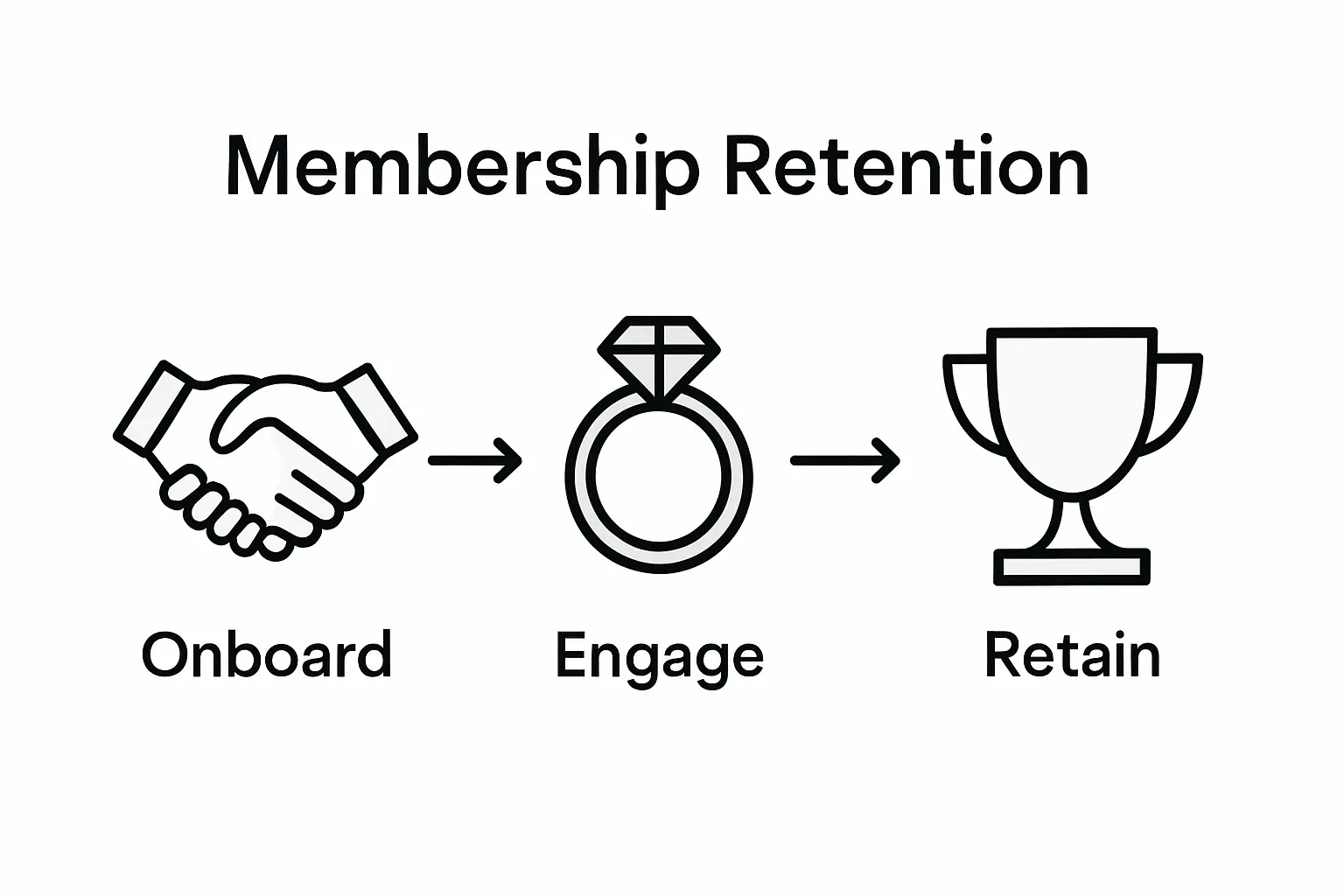
Warning: An ineffective onboarding process can lead to rapid member disengagement. Prioritise personalisation, clarity, and immediate value demonstration throughout the initial membership experience.
Step 5: Implement retention initiatives and personalisation
Developing targeted retention strategies transforms membership from a transactional relationship to a meaningful community connection. Successful retention requires understanding individual member motivations and creating tailored experiences that demonstrate ongoing value.
Design a comprehensive personalisation framework that segments members based on professional demographics, engagement levels, and individual interests. Utilise advanced analytics to track member interactions, preferences, and participation patterns. Create customised communication streams that deliver relevant content recommendations, professional development opportunities, and networking connections specific to each member’s career stage and organisational goals.
Implement a proactive retention programme that includes regular pulse surveys, personalised milestone recognitions, exclusive member benefits, and targeted re engagement campaigns for less active participants. Develop adaptive membership pathways that allow members to modify their engagement levels and access different tiers of resources and benefits. Prioritise continuous feedback mechanisms that enable members to shape their experience and feel genuinely valued by the organisation.
Warning: Generic retention approaches rarely succeed. Invest time in understanding individual member motivations and creating genuinely personalised engagement experiences that demonstrate authentic organisational commitment.
Step 6: Measure effectiveness and refine strategies
Developing comprehensive engagement metrics transforms membership strategy from intuitive guesswork to data driven precision. Systematic evaluation enables organisations to understand programme performance and make strategic adjustments that continuously improve member experiences.
Establish a robust measurement framework using key performance indicators that capture multiple dimensions of membership success. Track metrics such as recruitment rates, retention percentages, member satisfaction scores, engagement frequency, event participation levels, and revenue generation. Implement advanced analytics tools that provide real time insights into member behaviour patterns and organisational performance trends. Use dashboards and visualisation techniques to transform complex data into actionable intelligence that can inform strategic decision making.
Create a continuous improvement cycle that involves regular strategic reviews and iterative refinement of membership programmes. Schedule quarterly performance assessments where leadership teams analyse collected data, identify emerging trends, and develop targeted interventions to address potential challenges. Develop adaptive strategies that can quickly respond to changing member needs and organisational objectives. Encourage cross functional collaboration between membership, marketing, and operational teams to ensure a holistic approach to performance evaluation and strategic refinement.
Warning: Avoid becoming overly reliant on quantitative metrics. While data provides crucial insights, maintaining a nuanced understanding of qualitative member experiences remains equally important in developing meaningful membership strategies.
Elevate Your Membership Recruitment and Retention with Colossus Systems
Mastering membership growth requires more than just understanding data or crafting sharp value propositions. The real challenge lies in seamlessly connecting every phase from recruitment through onboarding to personalised retention initiatives. If your organisation struggles with managing complex multichannel campaigns or tailoring member experiences that truly resonate Colossus Systems offers a powerful solution. Our SaaS platform unifies engagement tools like CRM, email marketing, event management and advanced analytics enabling you to transform strategic insights into measurable growth.
Experience benefits such as:
- Streamlined member onboarding workflows that drive early engagement
- Customisable pipelines adapting to segmented audience needs
- Data-driven retention programmes targeting individual member motivations
- Secure integrated payment gateways to simplify transactions
Stay ahead in your membership journey by leveraging a platform designed to amplify every tactic discussed in “Master Membership Recruitment and Retention Strategies”. Explore Colossus Systems’ comprehensive engagement solutions and start transforming your membership experience today.
Ready to unlock the full potential of your membership strategy Contact us now at https://colossus.systems/contact-us to see how Colossus Systems can tailor a growth plan specifically for your organisation’s needs.
Frequently Asked Questions
How can I effectively assess current membership data and trends?
Start by gathering comprehensive membership information, including demographic profiles and engagement metrics. Create a centralised database to analyse these trends and identify areas for targeted recruitment within 30 days.
What steps should I take to define target audiences and value propositions for membership?
Develop detailed audience profiles that consider professional motivations and career stages. Articulate a clear value proposition that highlights unique benefits to attract these specific audience segments.
How do I create multichannel recruitment campaigns for attracting new members?
Implement a strategy that combines various communication platforms, such as email marketing and social media. Tailor messaging for each channel to ensure it resonates with different audience segments, aiming for consistent brand voice across all platforms.
What are effective onboarding practices to enhance new member engagement?
Design a structured onboarding journey with a personalised welcome package that outlines membership benefits. Include checkpoints like welcome webinars to encourage active participation right from the start.
How can I implement targeted retention initiatives to keep members engaged?
Utilise advanced analytics to segment members based on engagement levels and preferences. Create personalised communication streams that offer relevant content and professional development opportunities to enhance retention.
What metrics should I use to measure the effectiveness of my recruitment and retention strategies?
Track key performance indicators such as recruitment rates and member satisfaction scores. Establish a continuous improvement cycle by regularly evaluating these metrics to refine your strategies and respond quickly to member needs.
Recommended
- How to Grow Membership: Proven Strategies for Organisations|CS
- Essential Guide to Onboarding New Members Successfully|CS
- What Is Membership Engagement? Complete Overview | Colossus Systems
- Industry News
- ?????? IT ??????: ??? ????? ? ???????? ?????? ????????????
- Loyalty Stamps to Reward Customer Loyalty and Retention – Stamp Design 4U