Online wedding planner: your complete 2026 guide

TL;DR:
- An online wedding planner centralizes all wedding organization tasks into one digital platform, offering tools like checklists, budgets, and vendor management. These platforms save couples an average of £4,100 compared to hiring traditional planners by streamlining communication and automating tasks. AI and virtual coordinators enhance planning efficiency, but most couples find free tiers sufficient for managing their weddings effectively.
An online wedding planner is a digital platform that centralises every aspect of wedding organisation into one place, from budget tracking and vendor management to guest lists and day-of scheduling. Unlike hiring a full-service human coordinator, these platforms give couples direct control over their planning without the associated cost. The best digital wedding planners now incorporate AI assistance and virtual coordinator support, making professional-grade planning accessible to anyone. This guide covers the features that matter, the real cost savings on offer, and how to choose the right platform for your wedding.
What does an online wedding planner actually include?
A digital wedding planner is not simply a checklist app. The most capable platforms offer 20 to 370+ integrated tools, covering up to 90% of all administrative planning tasks. That range includes personalised timelines, budget calculators with real-time alerts, vendor marketplaces, and drag-and-drop seating chart editors. The breadth of functionality means couples rarely need to switch between separate tools.
The core features you should expect from any credible platform include:
- Personalised checklists: Timelines with 200 to 370+ tasks, automatically adjusted to your wedding date and guest count.
- Budget calculator: Real-time spend tracking with alerts when a category approaches its limit.
- Guest list and RSVP management: Tracks meal preferences, plus-ones, and dietary requirements in one view.
- Vendor marketplace: Search, compare, and store contracts with photographers, caterers, and florists.
- Seating chart editor: Drag-and-drop table layouts that update instantly when guest numbers change.
- Day-of schedule and SMS reminders: Automated alerts sent to vendors and wedding party members on the day.
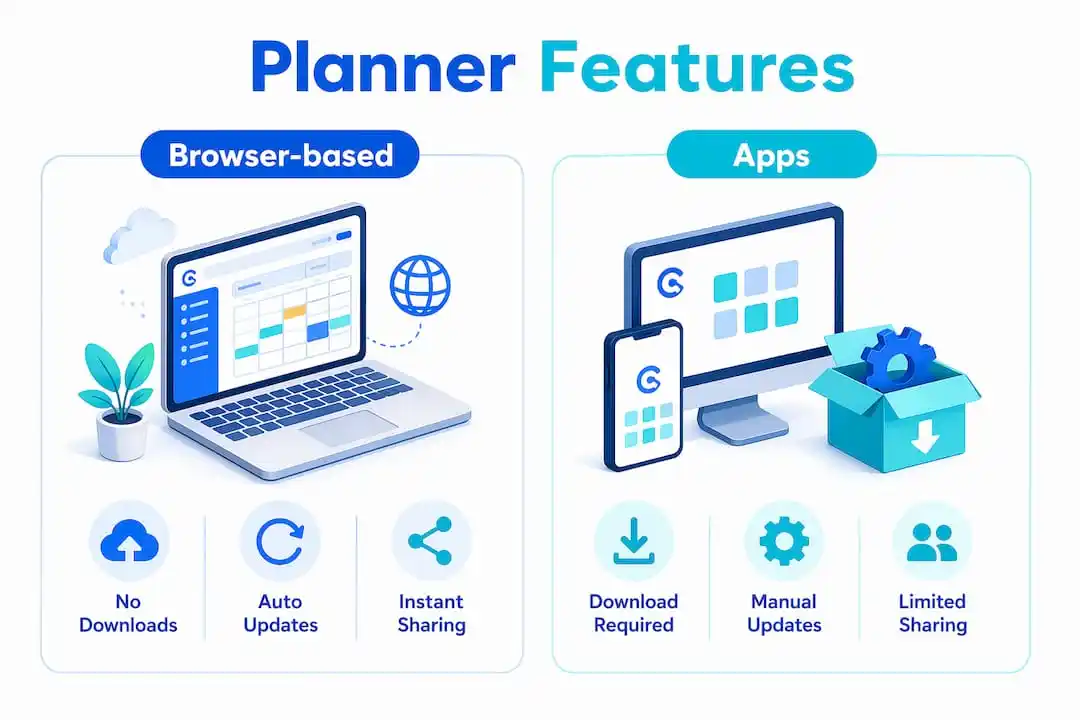
Browser-based planners are generally preferable to native apps. They require no downloads, consume no mobile storage, and update automatically. Sharing a planning link with your partner, a parent, or a vendor takes seconds, with no version conflicts.
Pro Tip: Set up your budget categories before you add a single vendor. Entering costs as you go, rather than retrospectively, is the only way real-time alerts can prevent overspending.

How do digital planners save money and reduce stress?
The financial case for using a digital wedding planner is clear. AI-powered platforms save couples an average of £4,100 compared to hiring a traditional human wedding planner, whose fees typically start at £1,200 and can exceed £4,000. That saving alone funds a honeymoon upgrade or a significantly better catering option.
“Disconnected tools like spreadsheets and scattered emails are the primary source of wedding planning stress. Modern digital planners unify the process with a single source of truth for couples, families, and vendors, removing the miscommunication that causes last-minute crises.”
The centralised planning approach matters because most wedding stress does not come from the decisions themselves. It comes from tracking those decisions across a dozen different documents, inboxes, and group chats. When every stakeholder sees the same real-time information, the number of “Did you confirm the florist?” conversations drops sharply.
Smart budget alerts are particularly valuable. A platform that flags when your catering spend is approaching its limit gives you time to renegotiate or reallocate funds. Without that alert, couples typically discover overspending only when reviewing final invoices. Digital planners that handle up to 90% of admin tasks free up your mental energy for the decisions that actually require human judgement.
What role do AI and virtual wedding planners play?
AI has changed what a wedding planning app can do. The critical distinction is between a general AI chatbot and a specialised AI wedding planner that retains your wedding date, budget, venue, and guest count across every conversation. The latter gives personalised, contextual advice rather than generic responses. That difference in quality is significant when you are making decisions worth thousands of pounds.
The practical benefits of AI-assisted planning include:
- 24/7 availability: Ask questions about vendor contracts, seating logistics, or timeline conflicts at any hour.
- Smart budget alerts: AI flags overspending before it happens, not after.
- Vendor communication: AI-driven outreach achieves response rates of up to 85%, compared to roughly 30% for manual couple-led enquiries. That difference means fewer unanswered emails and faster confirmations.
- Personalised recommendations: Suggestions for vendors, timelines, and décor based on your specific brief.
Virtual wedding coordinators sit alongside AI tools as a separate but complementary option. A virtual wedding planner provides remote, expert support through hourly consultations or focused planning sessions. They help couples prioritise decisions, troubleshoot vendor issues, and navigate difficult negotiations without the cost of a full-service physical planner. Many couples use them as an expert sounding board at key decision points, such as finalising the venue contract or building the day-of schedule.
Pro Tip: Use AI for routine tasks and information gathering. Book a virtual coordinator session specifically for contract reviews and vendor negotiations, where human expertise and negotiation experience make a measurable difference.
How to choose the right wedding planning platform
Choosing a platform requires matching its features to your specific wedding size and planning style. The decision is not simply about which platform has the most tools.
- Check the free tier guest limit. Many free tiers cap guest lists at around 80. If your wedding exceeds that, confirm upgrade costs before committing to a platform.
- Prioritise browser-based access. A web-based planner means your partner, parents, and vendors can all view and update information without installing anything.
- Verify budget alert functionality. Not all platforms offer real-time alerts. This feature alone justifies choosing one platform over another.
- Test vendor marketplace depth. A platform with a strong local vendor directory saves hours of independent research.
- Assess collaboration features. Can you assign tasks to your partner or a family member? Shared task ownership reduces duplication and missed follow-ups.
- Evaluate virtual planner integration. Some platforms connect directly with virtual coordinators. Others require you to book separately. Know which model you prefer before signing up.
The table below summarises the key criteria and what to look for when evaluating platforms:
| Criteria | What to check |
|---|---|
| Guest list capacity | Free tier limit; cost to upgrade beyond 80 guests |
| Budget tools | Real-time alerts, category breakdowns, overspend warnings |
| Vendor management | Marketplace access, contract storage, communication logs |
| Collaboration | Shared access for partner, family, and vendors via link |
| AI and virtual support | Context-aware AI, virtual coordinator booking options |
| Platform type | Browser-based preferred; no download required |
Avoid paying for premium features you will not use. Free tiers typically cover 90% of organisational needs, including checklists, budgets, and seating templates. Premium upgrades tend to add custom domains, advanced messaging, or unlimited guest counts. Upgrade only when a specific limitation is actively blocking your planning. For couples interested in how event planning tools handle large-scale coordination, the principles of centralised management apply equally well to weddings.
Key takeaways
A digital wedding planner saves couples thousands of pounds, covers up to 90% of admin tasks, and reduces stress by centralising every decision in one shared platform.
| Point | Details |
|---|---|
| Cost savings are significant | AI-powered platforms save an average of £4,100 compared to hiring a traditional coordinator. |
| Feature depth varies widely | Platforms range from 20 to 370+ tools; check checklist depth and budget alert quality first. |
| Browser-based beats app-based | Web planners need no downloads, update automatically, and share instantly with vendors. |
| AI adds real value | Specialised AI retains your wedding context and achieves vendor response rates up to 85%. |
| Free tiers cover most needs | Most free plans handle 90% of tasks; upgrade only when a specific limit blocks your planning. |
My honest view on planning a wedding with digital tools
I have watched couples approach wedding planning in two very different ways. The first group tries to manage everything across spreadsheets, email threads, and group chats. The second uses a single digital platform from day one. The difference in stress levels by the final month is not subtle.
The most underrated benefit of a good digital planner is not the checklist or the budget calculator. It is the fact that everyone involved, your partner, your parents, your vendors, sees the same information at the same time. That single change eliminates an entire category of miscommunication that causes genuine last-minute panic.
AI assistance impressed me more than I expected. The context-aware planners that remember your budget, venue, and guest count give genuinely useful advice. General chatbots do not. The contextual knowledge difference is the reason specialised tools outperform generic ones for this task.
The one pitfall I see repeatedly is couples upgrading to premium tiers too early. The free version of most platforms handles the vast majority of what you need. Upgrade when you hit a concrete limit, not because a feature sounds appealing. Virtual coordinator sessions are worth budgeting for separately, particularly for contract reviews and vendor negotiations. That is where human expertise earns its cost. For those curious about how AI tools support event planning more broadly, the underlying principles of centralised data and automated communication apply directly to wedding coordination.
— Rob
Colossus and advanced event coordination for your wedding
Couples who need more than a standard wedding planning app often find that dedicated event management software fills the gap. Colossus offers a web-based platform built for coordinating complex events, managing multiple stakeholders, and tracking communications in one place.
The same features that help organisations manage large-scale events, including guest registration, vendor coordination, and real-time communication tools, translate directly to wedding planning at scale. If your wedding involves a large guest list, multiple vendors, or a complex day-of schedule, Colossus provides the coordination depth that consumer wedding apps rarely match. Explore the full range of platform features to see how they align with your planning needs.
FAQ
What is an online wedding planner?
An online wedding planner is a digital platform that centralises wedding organisation tools, including checklists, budget tracking, vendor management, and guest lists, into one accessible place. The best platforms cover up to 90% of all administrative planning tasks.
How much can a digital wedding planner save me?
AI-powered digital planners save couples an average of £4,100 compared to hiring a traditional human wedding planner. Traditional coordinator fees typically start at £1,200 and can exceed £4,000.
Is a browser-based planner better than a wedding planning app?
Browser-based planners require no downloads, update automatically, and allow instant sharing with partners and vendors via a link. They eliminate version conflicts and mobile storage issues that native apps can create.
What does a virtual wedding coordinator do?
A virtual wedding coordinator provides remote expert support through video calls or focused planning sessions, helping couples prioritise decisions, review contracts, and handle vendor negotiations without the cost of a full-service physical planner.
Are free wedding planning platforms good enough?
Free tiers on most platforms cover 90% of organisational needs, including checklists, budgets, and seating templates. Upgrade only when a specific limit, such as a guest count cap or restricted messaging, actively blocks your planning.