Management tips for membership growth: the ROAR playbook

The highest-impact management tips for membership leaders in 2026 share one theme: stop treating membership as an annual paperwork exercise and start running it as a 12-month lifecycle. Six moves matter most. Map every member journey to Recruit, Onboard, Activate, Renew (ROAR). Build onboarding as a structured 30 to 90 day programme, not a single welcome email. Push members towards three or more high-value engagements. Automate renewals and payment recovery. Consolidate your CRM, billing, and engagement data into one platform. Track a small, honest dashboard instead of a dozen vanity metrics.
The evidence for prioritising engagement volume is stark: research from Sequence Consulting and ASAE found that members who complete three or more high-value engagements renew at close to 100%.
This week, assign these four actions:
- Nominate one owner for onboarding communications (due Friday).
- Pull your last 12 months of renewal data and tag members by engagement count.
- Audit your CRM and billing systems for manual reconciliation gaps (due next Wednesday).
- Draft a 90-day renewal outreach calendar for your next expiring cohort.
Key Takeaways
Membership renewal improves most reliably when leaders treat the member journey as one connected 12-month lifecycle rather than a set of disconnected annual tasks.
| Point | Details |
|---|---|
| Target three engagements | Design campaigns that push members past three high-value engagements, correlated with near-100% renewal. |
| Structure onboarding to 90 days | Replace single welcome emails with staged check-ins at day 30, 60, and 90. |
| Start renewal outreach early | Begin personalised renewal sequences 90 days before expiry, not 30. |
| Automate payment recovery | Build dunning retry logic to stop failed payments becoming involuntary churn. |
| Consolidate your platform | Colossus Systems unifies CRM, billing, events, and engagement data to run the ROAR lifecycle in one workflow. |
For further reading, see the ASAE lifecycle guide, MemberWise on CRM, and the Colossus Systems features page.
Table of Contents
- Management tips mapped to the ROAR member lifecycle
- How do you consolidate platforms without losing data?
- What should your membership dashboard actually track?
- The membership gaps that quietly cause churn
- Strategies to personalise engagement beyond your CRM
- How often should you contact different member segments?
- Building feedback loops that actually change your programme
- Get your ROAR playbook running faster with one platform
- Frequently asked questions
- Sources
Management tips mapped to the ROAR member lifecycle
ROAR gives you four checkpoints, not four separate departments. Treat Recruit, Onboard, Activate, and Renew as one continuous handoff, and the whole thing gets easier to manage. Break it apart and you get exactly the fragmentation that causes churn.
Recruit. The strongest recruitment messaging leads with outcomes, not features. Instead of “join our association,” test “members who join our mentorship track land promotions 18 months faster.” Run this in 30-day cycles: two outreach segments, one dedicated landing page per segment, and a limited-time join incentive to force a decision. Compare conversion rates weekly, rather than waiting for a quarterly review.
Onboard. Give new members a phased 30 to 90 day roadmap rather than a single welcome packet. Structured onboarding sequences with staged check-ins at day 30, 60, and 90 are associated with materially higher first-year renewal. Pair a welcome email series with a live orientation webinar in week one, then prompt one meaningful action, such as attending an event or joining a committee, before day 30.
Activate. Activation only works when benefits map to what individual members actually want: career services, events, learning credentials, committee seats, or volunteer leadership. MemberWise notes that automated, CRM-driven prompts toward these benefits raise early engagement meaningfully compared with manual outreach. Measure activation by counting members who complete at least one benefit-linked action within 90 days.
Renew. Start your renewal sequence 90 days before expiry, not 30. Send personalised value recaps (“You attended 4 events and earned 12 CPD hours this year”) rather than generic renewal notices, and offer auto-renew enrolment with clear pre-charge notices.
| Milestone | Expected member behaviour | Owner action |
|---|---|---|
| Day 30 | First meaningful action completed | Onboarding lead confirms activation trigger fired |
| Day 90 | At least one high-value engagement logged | Membership manager reviews activation dashboard |
| — | Three or more engagements, renewal decision made | Renewal team sends personalised value recap |
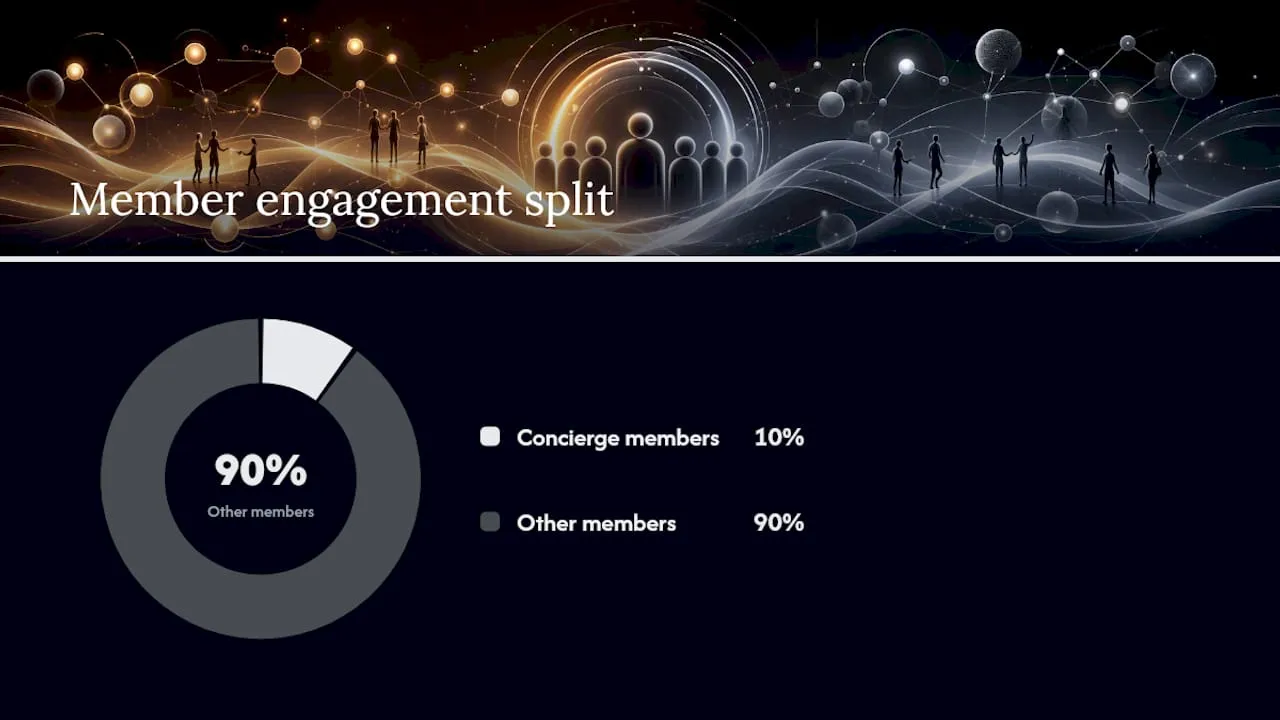
Pro Tip: Route your top 10% of members by engagement score into a separate “concierge” outreach flow with a named staff contact. It costs almost nothing to set up and typically protects your highest-value renewals first.
How do you consolidate platforms without losing data?
Fragmented systems are the quiet killer of membership retention. When your CRM, billing tool, and event platform don’t talk to each other, someone spends hours each week manually reconciling spreadsheets, and personalisation becomes guesswork. Industry CRM priorities for 2026 centre on lifecycle automation, native billing, and dunning precisely because these gaps cause real revenue loss through involuntary churn.
Run consolidation in this order:
- Audit and clean your top five data fields (email, membership tier, renewal date, engagement score, payment status) before migrating anything.
- Map billing and renewal workflows first, since payment failures are the fastest route to involuntary churn.
- Set role-based access so onboarding staff, finance, and event teams see only what they need.
- Migrate in phases: billing and workflows first, then communications, then reporting.
- Run a sandbox test on your renewal and dunning sequences before cutover.
A working example: a new member signs up, triggers an automated welcome sequence, gets flagged for an activation nudge after 30 days of inactivity, and enters a 90-day renewal sequence automatically when their expiry date approaches. No manual list-pulling required.
When you brief procurement or IT, demand these capabilities:
- Native billing with automated retry logic for failed payments
- Engagement scoring visible on a unified member timeline
- Pre-built integrations for events, e-commerce, and email marketing
Colossus Systems was built around exactly this consolidation model, combining CRM, billing, events, and analytics in one membership management platform.
What should your membership dashboard actually track?
Keep it to a handful of numbers you can defend on one slide. Renewal rate and first-year renewal rate come first: industry benchmarking puts median association renewal near the industry typical level, with first-year renewal rates notably lower, so anything trailing well below that deserves scrutiny. Add activation rate (members completing one benefit-linked action within 90 days), engagement events per member, involuntary churn from failed payments, and automation coverage across your renewal sequence.
The Sequence Consulting and ASAE finding is your single best operational target: build campaigns specifically designed to push members past that third high-value engagement before their renewal window opens. Review cohorts quarterly, but check your 90-day activation numbers monthly, as that shorter cycle catches onboarding failures while you can still fix them.
The membership gaps that quietly cause churn
Most retention problems trace back to five failures: fragmented onboarding, unclear value communication, renewal outreach that starts too late, messy data, and no automated recovery for failed payments.
Prioritise fixes by impact against effort:
- Automate dunning retries (high impact, low effort). Owner: finance/ops. Failed payments left unaddressed become involuntary churn within weeks.
- Launch a 7-email onboarding series (high impact, medium effort). Owner: membership manager. This alone lifts first-year renewal when done well.
- Clean your top 5 CRM fields (medium impact, low effort). Owner: data admin. Bad segmentation data undermines every campaign built on top of it.
- Move renewal outreach earlier to 90 days (high impact, low effort). Owner: renewal team.
- Build a value-recap template (medium impact, medium effort). Owner: comms lead.
Start with dunning and onboarding. Both are quick to implement and touch the two biggest leaks: payment failure and early disengagement.
Strategies to personalise engagement beyond your CRM
CRM data tells you what happened. It rarely tells you why, and that gap is where most personalisation efforts stall. Layer in behavioural signals your CRM doesn’t naturally capture: event attendance patterns, content engagement (which webinars they finish versus abandon), forum or community activity, and survey responses about career stage or goals.

Engagement scoring frameworks work well here. Assign weighted values to actions (event attendance might score higher than an email open), then sort members into tiers such as at-risk, passive, and engaged. Automate outreach the moment someone drops into the at-risk band, well before their renewal date arrives.
Segment by career stage rather than just membership tier. Early-career members respond to mentorship and learning opportunities; senior members often want leadership roles or speaking platforms. A generic newsletter serves neither well.
Use progressive profiling, too: ask one or two new questions each time a member interacts with you (a webinar registration, a renewal form, an event RSVP) rather than a lengthy annual survey nobody finishes. Over a year, you build a rich profile without ever feeling intrusive. Combine this with our member engagement strategies guide for programme ideas that translate these signals into real touchpoints, not just dashboard tiles nobody acts on.
How often should you contact different member segments?
There’s no single right cadence. New members in their first 90 days need frequent, lightweight touches: a welcome series, an orientation invite, a check-in at day 30. Established, highly engaged members need less frequency but more relevance, perhaps a monthly digest plus event-specific invitations. At-risk members need a different rhythm entirely: fewer generic newsletters, more direct, personal outreach from a named staff contact.
Channel choice matters as much as frequency. Email still carries the bulk of transactional communication (renewal notices, event confirmations), but younger professional segments respond better to SMS reminders for time-sensitive actions and community platform notifications for ongoing engagement. Older or more senior segments often still prefer email and, for high-value renewals, a phone call.
Test frequency in bands rather than guessing. Try weekly, biweekly, and monthly cadences with matched segments over a quarter, then measure both engagement and unsubscribe rates. A high open rate paired with rising unsubscribes tells you that you’ve found the ceiling on frequency, even if the content is good.
Pro Tip: Set different email frequency caps by segment inside your platform’s automation rules, so a member never receives more than a fixed number of messages per week regardless of how many campaigns are running simultaneously.
Building feedback loops that actually change your programme
Feedback only improves your membership management tips if you close the loop between hearing it and acting on it. Most organisations collect an annual satisfaction survey, file it, and repeat the same programme next year regardless of what members said.
Build shorter, more frequent feedback touches instead: a two-question pulse survey after every major event, a single rating prompt after onboarding completion, and an open feedback link in your renewal sequence itself, since the decision not to renew carries the most honest signal you’ll ever get.
Route feedback to the team member who owns that stage of the lifecycle, not to a general inbox. Onboarding feedback goes to whoever runs onboarding; event feedback goes to the events team. Review it monthly, not annually, and track one thing: did anything actually change because of last month’s feedback? If the answer is consistently no, the loop is broken regardless of how much data you’re collecting.
Why the lifecycle view beats ad hoc programmes
Most membership teams run recruitment, onboarding, and renewal as separate projects with separate owners. That’s why value gets lost at the handoffs. Treating ROAR as one connected system, backed by a platform that actually shares data across those stages, is what turns scattered tactics into a renewal number you can predict. A regional professional association that consolidated its onboarding and renewal workflows saw far fewer members “falling through the cracks” between activation and renewal simply because staff could finally see the whole journey in one place.
Get your ROAR playbook running faster with one platform
Every tip in this guide gets harder to execute across five disconnected tools and considerably easier inside one. That’s the practical case for consolidation: less time reconciling spreadsheets, fewer members falling through onboarding cracks, and renewal automation that actually fires when it’s supposed to.
Colossus Systems brings CRM, billing, events, virtual training, and email marketing into a single member-lifecycle platform, so the ROAR framework above isn’t five separate projects, it’s one connected workflow. That means:
- Automated onboarding and renewal sequences without manual list-pulling
- A unified member timeline showing engagement, billing status, and event history in one view
- Native dunning and payment retry logic to cut involuntary churn
If your team is evaluating platform consolidation this quarter, start by reviewing the full features overview and requesting a short discovery call to see how your current data would map across.
Frequently asked questions
What are the most effective management tips for improving member retention? Focus on getting members to three or more high-value engagements within their first year, structure onboarding across 30 to 90 days, and automate your renewal and dunning sequences so nothing depends on manual follow-up.
How long should a membership onboarding programme last? Most successful onboarding sequences run 90 days, with structured check-ins at day 30, 60, and 90, rather than ending after a single welcome email.
What is the ROAR membership lifecycle? ROAR stands for Recruit, Onboard, Activate, Renew. It frames membership management as one continuous 12-month process instead of separate seasonal projects.
When should renewal outreach begin? Start 90 days before a member’s expiry date with personalised value recaps, rather than waiting until 30 days out with a generic reminder.
Why does platform consolidation matter for membership management? Separate CRM, billing, and event tools create data gaps that cause manual reconciliation work and missed renewal triggers. A unified platform automates handoffs between onboarding, activation, and renewal.
Sources
- From onboarding to advocacy: how CRM supports the member journey (MemberWise)
- 6 association member retention strategies that actually work (Cascade Digital Marketing summarising MGI)
- How to improve association member retention: 8 data-backed strategies (Cavuno)