Event Management And Ticketing Website Impact

Managing large-scale virtual events for a Canadian charity or a European association often feels overwhelming when registration tools and ticketing systems are disconnected. The shift to digital platforms has made it easier for nonprofit teams to oversee every detail from attendee coordination to secure ticketing in one place. By adopting an online event management system that centralises planning and automates ticketing, you can provide a seamless experience for every member while gathering insights to drive stronger engagement and retention.
Table of Contents
- Defining Event Management And Ticketing Websites
- Key Features For Membership-Based Organisations
- Integration With Membership And Crm Systems
- Critical Risks And Security Considerations
- Choosing The Right Platform For Your Needs
Key Takeaways
| Point | Details |
|---|---|
| Integrated Platforms Enhance Efficiency | Modern event management systems consolidate various tasks into a single interface, improving operational efficiency for membership organisations. |
| Customisation and Member Engagement Are Crucial | Tailored features like personalised communication and event workflows are vital for enhancing member satisfaction and engagement. |
| Robust Security Measures Are Essential | Implementing comprehensive security protocols is crucial to safeguard sensitive member data and prevent cybersecurity threats. |
| Careful Platform Selection Is Key | Organisations should prioritise evaluating scalability, integration capabilities, and user experience when choosing an event management platform. |
Defining Event Management And Ticketing Websites
Event management and ticketing websites represent sophisticated digital platforms designed to streamline complex event organisation processes for membership-based organisations. Online event management systems are web applications that centralise and automate multiple aspects of event planning, coordination, and execution.
These comprehensive digital solutions offer a range of critical functionalities that transform traditional event management approaches. Key features typically include:
- Event registration systems
- Digital ticketing platforms
- Attendee coordination tools
- Real-time schedule management
- Interactive participant engagement mechanisms
- Comprehensive analytics and reporting
The evolution of event management websites represents a significant technological shift from disconnected manual processes to integrated, user-friendly digital platforms. Modern systems go beyond simple booking mechanisms, providing organisations with powerful tools to enhance member engagement, streamline communication, and generate valuable insights about participant interactions.
Event management applications fundamentally serve as centralised software ecosystems that support complex organisational requirements. Contemporary event management platforms unify previously fragmented tasks into scalable, intuitive interfaces that dramatically improve operational efficiency.
These platforms are particularly valuable for membership organisations seeking to create seamless, professional event experiences. By consolidating registration, promotion, networking, and analytics into a single interface, they enable more sophisticated and data-driven event strategies.
The following table highlights the business impact of core event management features for membership organisations:
| Core Feature | Operational Benefit | Member Value |
|---|---|---|
| Real-time schedule updates | Improves event coordination | Ensures up-to-date information |
| Attendee engagement tools | Boosts interactive participation | Fosters networking opportunities |
| Detailed analytics | Informs strategic decisions | Enables tailored event experiences |
| Integrated ticketing | Reduces manual workload | Simplifies access and entry |
Pro tip: When evaluating event management websites, prioritise platforms offering comprehensive integration capabilities and robust analytics to maximise your organisational effectiveness.
Key Features For Membership-Based Organisations
Membership-based organisations require sophisticated event management platforms with nuanced features that support their unique operational requirements. Advanced membership authentication systems provide critical infrastructure for managing complex organisational interactions and event access.
Key technological capabilities essential for membership event management include:
- Membership status verification mechanisms
- Tiered access control systems
- Customised event registration workflows
- Role-based ticketing options
- Personalised communication channels
- Integrated payment processing
- Automated membership discount applications
These digital platforms go beyond traditional event management by creating intelligent ecosystems that understand and respond to organisational membership structures. They enable granular control over event participation, ensuring that members receive experiences precisely tailored to their specific membership category and organisational role.
Comprehensive event management systems for membership organisations must integrate multiple complex functionalities. This includes sophisticated user authentication processes that validate membership credentials, generate personalised event recommendations, and provide differentiated access levels based on membership tiers.
Modern platforms recognise that membership organisations need more than simple booking tools. They require dynamic, responsive systems that can adapt to changing membership structures, support varied communication strategies, and provide actionable insights into member engagement patterns.
Pro tip: Select event management platforms that offer flexible, granular membership authentication and personalisation capabilities to maximise organisational efficiency and member satisfaction.
Integration With Membership And CRM Systems
Membership management requires sophisticated technological ecosystems that seamlessly connect event platforms with customer relationship management (CRM) infrastructure. Event management system integration represents a critical technological strategy for organisations seeking comprehensive operational efficiency.
Key integration capabilities include:
- Automated member registration processes
- Real-time data synchronisation
- Personalised communication workflows
- Comprehensive membership tracking
- Targeted marketing campaign generation
- Unified member engagement analytics
- Cross-platform data consistency
These integrated systems transform traditional disconnected approaches by creating intelligent communication pathways between event management platforms and membership databases. They enable organisations to develop nuanced understanding of member behaviours, preferences, and engagement patterns.

Comprehensive CRM integration goes beyond simple data transfer. Modern platforms create dynamic ecosystems that anticipate member needs, personalise interactions, and provide actionable insights into organisational performance. By connecting event management with membership databases, organisations can develop more strategic, responsive engagement models.
Successful technological integration requires careful planning, robust infrastructure, and a holistic approach to member relationship management. Organisations must prioritise platforms that offer seamless data exchange, advanced analytics capabilities, and flexible customisation options to meet their unique operational requirements.
Below is a summary comparing direct platform integration with manual data handling for membership event management:
| Approach | Efficiency | Accuracy | Member Experience |
|---|---|---|---|
| Platform Integration | Automated workflows | Real-time synchronisation | Consistent, seamless |
| Manual Handling | Labour-intensive tasks | Prone to input mistakes | Disjointed interactions |
Pro tip: Prioritise event management platforms with native CRM integration capabilities to minimise manual data transfer and maximise organisational intelligence.
Critical Risks And Security Considerations
Cybersecurity is paramount in modern event management platforms, where sensitive member data and financial transactions create complex digital risk landscapes. Event management system vulnerabilities demand comprehensive, multi-layered security strategies to protect organisational and member interests.
Critical security risks encompass multiple domains:
- Unauthorized member data access
- Payment transaction interception
- Ticket fraud mechanisms
- Identity theft potential
- System infrastructure vulnerabilities
- Compliance regulation breaches
- Distributed denial-of-service (DDoS) attacks
Organisations must implement robust security protocols that address technological and procedural vulnerabilities. This requires sophisticated authentication mechanisms, continuous monitoring systems, and proactive threat detection strategies that adapt to evolving digital risk environments.
Comprehensive security approaches involve more than technological solutions. They demand holistic strategies integrating technical safeguards, staff training, regular vulnerability assessments, and adherence to international data protection standards. Effective risk management requires understanding potential breach points and developing multilayered defence mechanisms.
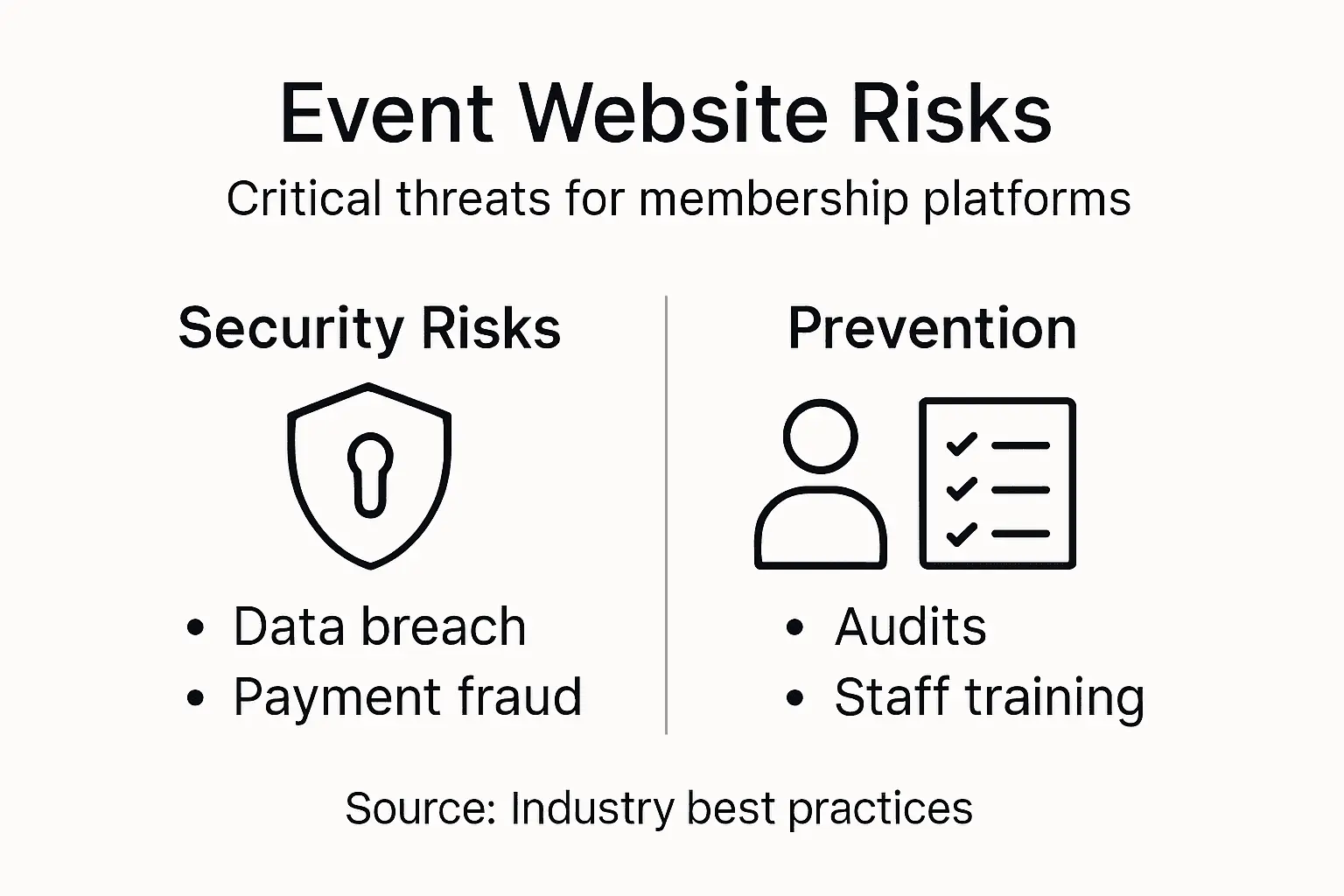
Successful security implementation demands ongoing commitment to technological adaptation, staff education, and rigorous compliance frameworks. Organisations must view cybersecurity as a dynamic, evolving discipline rather than a static set of technological interventions.
Pro tip: Conduct quarterly comprehensive security audits and maintain updated incident response protocols to minimise potential digital vulnerabilities.
Choosing The Right Platform For Your Needs
Selecting an appropriate event management platform requires comprehensive evaluation of organisational requirements and technological capabilities. Platform selection strategies demand meticulous analysis of multiple critical factors that influence operational effectiveness.
Key considerations when evaluating event management platforms include:
- Scalability and flexibility
- Membership workflow integration
- Advanced reporting capabilities
- Multi-channel promotion tools
- Real-time data synchronisation
- Pricing and cost-effectiveness
- Customer support quality
- Security infrastructure
- User experience design
- Customisation potential
Organisations must conduct thorough assessments that go beyond surface-level feature comparisons. This involves understanding specific operational needs, anticipated growth trajectories, and the unique communication requirements of their membership ecosystem.
Comprehensive platform evaluation requires a holistic approach that balances technological sophistication with practical usability. Decision-makers should prioritise solutions offering seamless integration, robust security protocols, and intuitive interfaces that minimise staff training requirements and maximise member engagement potential.
Successful platform selection is not a one-time decision but an ongoing strategic process. Organisations must remain adaptable, continuously reassessing their technological infrastructure to ensure alignment with evolving membership expectations and technological advancements.
Pro tip: Conduct pilot testing with shortlisted platforms and involve key stakeholders in the evaluation process to ensure comprehensive platform assessment.
Transform Your Membership Event Management with Colossus Systems
Managing complex membership events requires tools that go beyond basic ticketing and registration. This article highlights critical challenges such as membership authentication, tiered access control, real-time data synchronisation, and securing sensitive member information. If your organisation struggles with fragmented processes, manual data handling, or lacks integrated insights, you are not alone. These pain points can lead to inefficient operations and hinder member engagement.
Colossus Systems offers a unified SaaS platform designed specifically for membership-based organisations to tackle these exact issues. From streamlining member management and event planning to integrating CRM and secure payment gateways, our platform empowers you to deliver personalised experiences and seamless workflows. With customizable event registration, real-time analytics, and robust security measures, you can elevate your member engagement and operational efficiency all in one place.
Wondering how to simplify your membership event strategies and safeguard your organisation’s data?
Discover the difference a comprehensive, integrated platform can make for your organisation. Act now to empower your events with scalable, secure, and data-driven solutions. Start your journey with Colossus Systems and reach out through our Contact Us page for a personalised demo or consultation.
Frequently Asked Questions
What are the key features of event management and ticketing websites?
Event management and ticketing websites typically include features such as event registration systems, digital ticketing platforms, attendee coordination tools, real-time schedule management, interactive participant engagement mechanisms, and comprehensive analytics and reporting.
How do membership organisations benefit from using event management platforms?
Membership organisations benefit from event management platforms by gaining access to sophisticated tools that enhance member engagement, streamline communication, and enable data-driven event strategies. Features like customised event registration workflows and role-based ticketing options help create tailored experiences for members.
What security considerations should organisations keep in mind when using event management systems?
Organisations should consider critical security risks such as unauthorized data access, payment fraud, identity theft, and compliance breaches. Implementing robust security protocols, including sophisticated authentication mechanisms and continuous monitoring, is essential for protecting sensitive member data.
How can organisations choose the right event management platform?
When choosing an event management platform, organisations should assess factors like scalability, integration with membership workflows, advanced reporting capabilities, security infrastructure, and user experience design. Conducting pilot testing with shortlisted platforms can also help ensure a comprehensive evaluation.