What Is CRM In Marketing: Unlocking Member Growth

Keeping track of hundreds or thousands of member details often feels like an uphill battle, especially as organisations expand and member interactions multiply. For marketing managers committed to delivering standout experiences, finding smarter tools to manage data and communication makes all the difference. This overview highlights how a Customer Relationship Management (CRM) system can consolidate member data, automate communication, and unlock valuable insights, helping you build stronger relationships and fuel growth for your Canadian, British, or European membership organisation.
Table of Contents
- CRM In Marketing For Membership Organisations
- Types Of CRM Solutions And Their Differences
- Core CRM Features For Member Engagement
- Practical Use Cases For CRM Integration
- Common CRM Pitfalls And How To Avoid Them
Key Takeaways
| Point | Details |
|---|---|
| Importance of CRM for Membership Organisations | CRM systems are essential for enhancing member engagement and strategic growth through data-driven decision-making. |
| Types of CRM Solutions | Understanding the three primary CRM types—Operational, Analytical, and Collaborative—is crucial for selecting the right system to meet organisational needs. |
| Core CRM Features | Successful CRM systems offer personalised communication, advanced analytics, and integration capabilities that enhance member experience and retention. |
| Implementation Pitfalls | Common challenges include poor user adoption and inadequate training; proactive strategies are necessary to ensure effective CRM integration. |
CRM in marketing for membership organisations
CRM systems have become indispensable for membership organisations seeking strategic growth and enhanced member engagement. These sophisticated platforms go far beyond simple contact management, transforming how organisations interact with, understand, and retain their members.
At its core, a Customer Relationship Management (CRM) system for membership groups provides a comprehensive digital infrastructure to track complex membership interactions and streamline organisational processes. The technology enables precise data consolidation, offering unprecedented insights into member behaviour, preferences, and engagement patterns.
Key features of modern membership CRM systems include:
- Centralised member database management
- Automated communication workflows
- Detailed segmentation and personalisation capabilities
- Advanced reporting and analytical tools
- Integration with event management platforms
- Secure member communication channels
- Customisable membership tier tracking
By leveraging these advanced functionalities, membership organisations can transform their operational approach. CRM systems enable targeted marketing strategies, personalised member experiences, and data-driven decision-making that directly supports sustainable organisational growth.
The most effective CRM platforms provide holistic views of member interactions, allowing organisations to:
- Identify high-potential members
- Predict potential membership churn
- Design personalised engagement strategies
- Track member lifetime value
- Automate repetitive administrative tasks
Strategic data management becomes a powerful competitive advantage. By understanding member journeys and preferences, organisations can create more meaningful, targeted experiences that increase retention and attract new members.

Pro tip: Invest time in proper CRM data hygiene and regularly clean your membership database to maintain accurate, actionable insights.
Types of CRM solutions and their differences
Navigating the landscape of Customer Relationship Management (CRM) solutions requires understanding the distinct types of systems available. Three primary CRM categories exist, each designed to address specific organisational needs and strategic objectives.
The three fundamental CRM types offer unique capabilities for membership organisations:
- Operational CRM: Focuses on automating routine sales, marketing, and service tasks
- Analytical CRM: Specialises in data analysis and strategic insights
- Collaborative CRM: Emphasises cross-departmental communication and experience consistency
Each CRM type serves a different strategic purpose. Operational CRMs streamline administrative processes by automating member communication, tracking interactions, and managing routine tasks. These systems are particularly valuable for organisations seeking to reduce manual workload and improve operational efficiency.
For clearer selection, here is a comparison of the main CRM types and their strategic advantages for membership organisations:
| CRM Type | Core Strength | Ideal Use Case | Unique Member Benefit |
|---|---|---|---|
| Operational CRM | Process automation | Managing memberships and tasks | Efficient, consistent service |
| Analytical CRM | Data analysis and reporting | Strategic planning and insights | Personalised engagement |
| Collaborative CRM | Interdepartmental alignment | Unified member communications | Seamless multi-team experience |
Analytical CRMs provide deep insights into member behaviour, preferences, and engagement patterns. By leveraging advanced data analytics, these platforms help organisations:
- Identify trends in member retention
- Predict potential membership churn
- Design targeted marketing campaigns
- Understand member lifecycle dynamics
- Make data-driven strategic decisions
Collaborative CRMs prioritise seamless communication across different organisational departments. They ensure that member interactions remain consistent, regardless of which team or individual handles the communication. This approach prevents information silos and creates a more unified member experience.
Choosing the right CRM depends on your specific organisational goals, existing infrastructure, and member engagement strategies.
Selecting an appropriate CRM solution requires careful evaluation of your organisation’s unique requirements, technological capabilities, and long-term growth objectives.
Pro tip: Conduct a comprehensive needs assessment before selecting a CRM system to ensure alignment with your organisation’s strategic goals.
Core CRM features for member engagement
Modern membership organisations require sophisticated Customer Relationship Management (CRM) systems that go beyond basic contact tracking. Flexible data capture and automation are critical for creating meaningful member experiences and driving organisational growth.
The core features of an effective membership CRM encompass several key strategic capabilities:
- Personalised communication workflows
- Advanced member segmentation
- Automated follow-up processes
- Comprehensive interaction tracking
- Real-time reporting and analytics
- Integration with multiple communication channels
- Customisable member journey mapping
Personalisation technologies within CRM systems enable organisations to create targeted, contextually relevant interactions. By understanding individual member preferences, organisations can design communication strategies that feel individually tailored rather than generic mass communications.
Advanced CRM platforms provide robust analytical capabilities that transform raw data into actionable insights. These systems help organisations:
- Predict member behaviour patterns
- Identify potential membership risks
- Design targeted retention strategies
- Understand member lifecycle dynamics
- Optimise engagement strategies
Data-driven decision making becomes seamless with comprehensive CRM reporting tools. These platforms aggregate information from multiple touchpoints, creating a holistic view of member interactions and organisational performance.
Modern CRM systems are not just databases, but strategic intelligence platforms that drive member satisfaction and organisational growth.
Successful implementation requires selecting a CRM that aligns closely with your organisation’s specific engagement objectives and technological infrastructure.
Pro tip: Prioritise CRM solutions that offer flexible customisation and integrate smoothly with your existing technological ecosystem.
Practical use cases for CRM integration
Successful organisations leverage Customer Relationship Management (CRM) systems through strategic data synchronisation and process integration. These sophisticated technologies transform disconnected systems into cohesive, intelligent platforms that drive organisational efficiency and insight.
Practical CRM integration use cases can be categorised into three primary strategic domains:
- Data synchronisation across multiple platforms
- Process automation and workflow optimization
- Advanced reporting and business intelligence
- Cross-departmental communication enhancement
- Real-time information sharing
Data synchronisation represents a critical integration strategy. By creating seamless connections between CRM, enterprise resource planning (ERP), financial systems, and communication platforms, organisations eliminate data silos and ensure consistent, accurate information across all touchpoints.
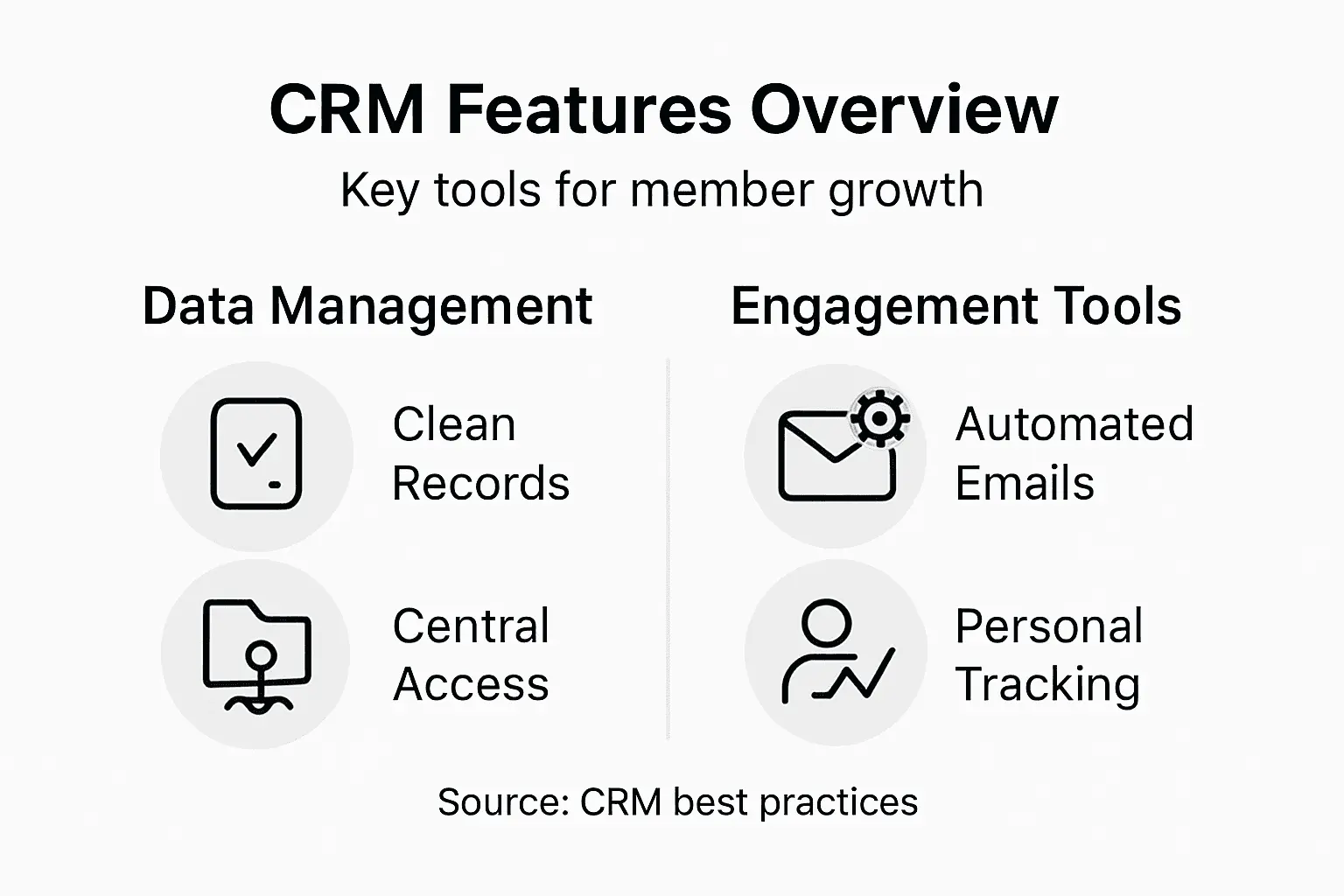
Below is a summary table outlining how CRM integration directly supports organisational growth and engagement:
| Integration Focus | Organisational Impact | Member Experience Benefit |
|---|---|---|
| Data synchronisation | Eliminates information silos | Accurate, timely communications |
| Process automation | Reduces administrative workload | Faster response times |
| Advanced reporting | Enables strategic decision-making | Targeted retention strategies |
Process automation capabilities enable organisations to streamline complex workflows and reduce manual administrative burdens. These integrations help membership groups:
- Automate membership renewal processes
- Generate instant communication triggers
- Create dynamic member segmentation
- Develop personalised engagement pathways
- Implement intelligent follow-up sequences
Reporting and analytics transform raw data into strategic insights. Integrated CRM systems consolidate information from multiple sources, providing leadership with comprehensive, real-time understanding of organisational performance and member dynamics.
Effective CRM integration is not about connecting systems, but about creating an intelligent, responsive organisational ecosystem.
Successful implementation requires a holistic approach that considers technological compatibility, strategic objectives, and long-term scalability.
Pro tip: Conduct a thorough audit of existing systems before integration to identify potential compatibility challenges and optimisation opportunities.
Common CRM pitfalls and how to avoid them
Successful CRM implementation requires strategic planning and awareness of potential challenges. Common implementation mistakes can significantly undermine an organisation’s digital transformation efforts and member engagement strategies.
Key CRM implementation pitfalls membership organisations must navigate include:
- Lack of clear strategic objectives
- Poor user adoption
- Inadequate training programmes
- Overcomplicated system configurations
- Neglecting data quality management
- Insufficient security protocols
- Improper system customisation
User adoption represents a critical challenge in CRM implementation. Many organisations invest substantial resources in sophisticated systems that ultimately remain underutilised due to insufficient change management and user engagement strategies.
The most prevalent CRM implementation risks demand proactive mitigation strategies:
- Define measurable implementation goals
- Involve end-users in system selection
- Provide comprehensive training
- Start with core functionalities
- Implement robust data governance
- Establish clear communication protocols
- Regularly review system performance
Data management becomes paramount in preventing CRM failures. Organisations must develop rigorous processes for maintaining data integrity, eliminating duplicates, and ensuring consistent information across all platforms.
Successful CRM implementation is not about technology, but about creating a culture of collaborative, data-driven decision-making.
Careful planning, continuous learning, and adaptive strategies are essential for transforming potential pitfalls into opportunities for organisational growth.
Pro tip: Conduct periodic user feedback sessions and system audits to identify and address potential CRM implementation challenges proactively.
Unlock Member Growth by Transforming Your CRM Strategy
Membership organisations often face the challenge of turning complex member data into personalised, meaningful engagement. The article highlights key pain points such as inefficient manual processes, inconsistent communication, and missed opportunities for targeted marketing. These challenges can hinder sustainable growth and weaken member retention. With terms like “operational CRM,” “analytical CRM,” and “collaborative CRM” emphasised, it is clear that a unified, data-driven approach is essential for success.
Colossus Systems offers a comprehensive SaaS platform designed specifically to address these issues. Our solution streamlines member management, automates communication workflows, and integrates event planning and virtual training within a single, customisable interface. This allows your organisation to unlock deep insights, personalise member experiences, and execute targeted campaigns with confidence. Say goodbye to data silos and hello to seamless operational efficiency.
Ready to elevate your membership organisation’s growth with a tailored CRM solution that truly understands your needs? Discover how Colossus Systems can help you build stronger relationships and increase engagement by visiting our contact page today. Connect with us to explore how our platform aligns with your strategic goals and start transforming your member growth journey now.
Frequently Asked Questions
What is a CRM system for membership organisations?
A CRM system for membership organisations is a digital platform that tracks member interactions, consolidates data, and streamlines processes to enhance member engagement and support strategic growth.
What are the main types of CRM solutions available?
The three main types of CRM solutions are Operational CRM, which focuses on task automation; Analytical CRM, which specializes in data analysis; and Collaborative CRM, which emphasizes cross-departmental communication.
How can a CRM improve member engagement?
A CRM can improve member engagement by enabling personalized communication, automating workflows, providing advanced analytics, and creating targeted retention strategies based on member behaviour and preferences.
What are some common pitfalls in CRM implementation?
Common pitfalls in CRM implementation include lack of clear strategic objectives, poor user adoption, inadequate training, and neglecting data quality management. Addressing these issues can enhance the success of your CRM system.
Recommended
- Customer Service Relationship Management: Enhancing Member Engagement|CS
- Integrating Your Website into a Membership CRM to Enhance Engagement |CS
- Membership CRM | Colossus Systems
- What Is a CRM System? Guide for Membership Groups 2025|CS
- How Many Clients You Will Have After This Health Crisis Goes Away? - team I