Build personal branding for students to advance careers

Entering the job market as a student means facing fierce competition for limited opportunities. With employers receiving hundreds of applications for single roles, standing out requires more than good grades and a polished CV. Personal branding offers a strategic approach to showcase your unique strengths, values, and potential to prospective employers. This guide provides actionable steps to build an authentic professional brand that opens doors to networking opportunities, internships, and career advancement.
Table of Contents
- Understanding Personal Branding For Students
- Preparing Your Personal Brand: Essentials And Tools
- Executing Your Personal Brand Strategy Effectively
- Maintaining And Evolving Your Personal Brand
- How Colossus Systems Supports Your Personal Branding Journey
- FAQ
Key takeaways
| Point | Details |
|---|---|
| Differentiation matters | Personal branding helps students stand out in competitive job markets by highlighting unique strengths |
| Strategic preparation | Defining clear goals and identifying your unique skills forms the foundation of effective branding |
| Digital presence amplifies reach | Using platforms like LinkedIn strategically expands your professional visibility and connections |
| Consistency builds credibility | Regular networking and showcasing skills through content establishes trust with employers |
| Continuous refinement | Monitoring and adapting your brand ensures ongoing relevance as your career evolves |
Understanding personal branding for students
Personal branding represents the deliberate management of your professional image and reputation. For students, this concept takes on particular importance because you likely lack extensive work experience. Your brand becomes the vehicle for demonstrating potential, character, and unique capabilities that transcend what a CV alone can convey. Unlike traditional job applications that list qualifications, personal branding enables students to communicate their unique skills and personality to prospective employers through storytelling and authentic self-presentation.
Many students mistakenly view personal branding as shameless self-promotion or creating a false persona. The reality differs significantly. Effective personal branding involves honest reflection on your strengths, values, and aspirations, then communicating these authentically across various channels. When done well, it fosters meaningful connections with professionals who share your interests and can support your career journey. These connections often lead to mentorship opportunities, informational interviews, and job referrals that never appear on public job boards.
The benefits extend beyond immediate job prospects. Building your brand early establishes professional habits that serve you throughout your career. You learn to articulate your value proposition clearly, maintain consistent communication, and adapt your messaging to different audiences. These skills prove invaluable whether you’re networking at conferences, interviewing for positions, or eventually leading teams. Students who invest in personal branding typically report increased confidence in professional settings and greater clarity about their career direction.
Key elements of student personal branding include:
- Identifying transferable skills from academic projects, volunteer work, and extracurricular activities
- Crafting a compelling narrative that connects your past experiences to future goals
- Choosing appropriate platforms and channels to reach your target audience
- Maintaining authenticity whilst presenting yourself professionally
- Engaging consistently with your professional community through thoughtful contributions
Preparing your personal brand: essentials and tools
Successful personal branding begins with thorough preparation. Start by setting clear career goals that guide your branding decisions. Ask yourself where you want to be in three to five years, which industries interest you, and what roles align with your skills and values. These answers shape everything from the content you share to the professionals you connect with. Without clear goals, your branding efforts risk appearing scattered or unfocused, confusing potential employers about your career direction.
Next, conduct an honest assessment of your strengths, skills, and unique attributes. Consider academic achievements, technical competencies, soft skills, volunteer experiences, and personal interests that differentiate you from peers. Write down specific examples that demonstrate these qualities. This inventory becomes the foundation for your brand messaging and helps you identify gaps where skill development might strengthen your positioning. Remember that authenticity matters more than perfection. Employers value genuine passion and growth potential over fabricated expertise.
Selecting the right digital tools amplifies your branding efforts significantly. Digital platforms like LinkedIn are critical tools for students to establish their brand online, providing access to vast professional networks and opportunities. The following table outlines essential platforms and their primary uses:
| Platform | Primary use | Best for |
|---|---|---|
| Professional networking and job searching | Building connections and showcasing experience | |
| Personal website | Portfolio hosting and detailed biography | Creative fields and comprehensive work samples |
| Industry news and thought leadership | Engaging with trends and professionals | |
| GitHub | Code repositories and technical projects | Software development and technical roles |
| Medium | Long-form content and articles | Demonstrating expertise through writing |
Pro Tip: Maintain consistency in your profile photo, bio description, and visual style across all platforms. This coherence reinforces your brand identity and makes you more memorable to connections who encounter you on multiple channels.
Invest time in creating high-quality profile content. Your LinkedIn headline should communicate your value proposition in ten words or fewer. Write a summary that tells your professional story whilst incorporating relevant keywords for searchability. Request recommendations from professors, supervisors, or colleagues who can speak to your capabilities. These third-party endorsements add credibility that self-description alone cannot achieve.
Executing your personal brand strategy effectively
With preparation complete, focus on tactical execution of your branding strategy. Begin by optimising your LinkedIn profile thoroughly. Use a professional headshot, craft a compelling headline that goes beyond “Student at University Name”, and write a summary that highlights your unique value proposition. Fill out all relevant sections including education, projects, volunteer work, and skills. Customise your LinkedIn URL to include your name for easier sharing and improved search visibility.
Content creation forms the second pillar of brand execution. Share insights, articles, and commentary relevant to your target industry. This demonstrates knowledge, curiosity, and engagement with your field. Start small with resharing industry news accompanied by your perspective, then progress to original posts about projects, learning experiences, or professional observations. Aim for consistency rather than volume. Two thoughtful posts monthly outperform daily generic updates. Regular engagement with professional communities and sharing original content boosts personal brand visibility whilst establishing you as an active participant in your field.

Networking accelerates brand growth exponentially. Attend industry events, join professional associations, and participate in online communities related to your interests. When connecting with professionals on LinkedIn, personalise your invitation messages by mentioning shared interests or explaining why you’d value the connection. Follow up with informational interviews where appropriate, asking thoughtful questions about their career paths and seeking advice rather than jobs. These conversations build genuine relationships that often lead to opportunities down the line.
Monitor your online presence regularly through Google searches of your name. Review what appears and address any content that contradicts your professional image. Set up Google Alerts for your name to track new mentions. Respond professionally to comments on your posts and engage thoughtfully with others’ content. This active participation signals that you’re approachable and genuinely interested in your professional community rather than simply broadcasting self-promotion.
Follow this execution sequence:
- Optimise all digital profiles with consistent information and professional imagery
- Create a content calendar outlining topics and posting frequency for the next three months
- Identify five to ten professionals or organisations to connect with each week
- Schedule regular time for engaging with others’ content through comments and shares
- Track your progress through connection growth and engagement metrics
Pro Tip: Balance professionalism with personality in your content. Share learning experiences, including challenges you’ve overcome, to appear authentic and relatable. Employers value self-awareness and growth mindset as much as polished expertise.
Maintaining and evolving your personal brand
Building a personal brand represents just the beginning. Sustained success requires ongoing maintenance and strategic evolution as your skills and goals develop. Many students make critical mistakes that undermine their branding efforts. Common pitfalls include creating profiles then abandoning them, posting inconsistent messages across platforms, ignoring comments or messages, and failing to update accomplishments. These mistakes signal disengagement and can damage your professional reputation more than having no online presence at all.
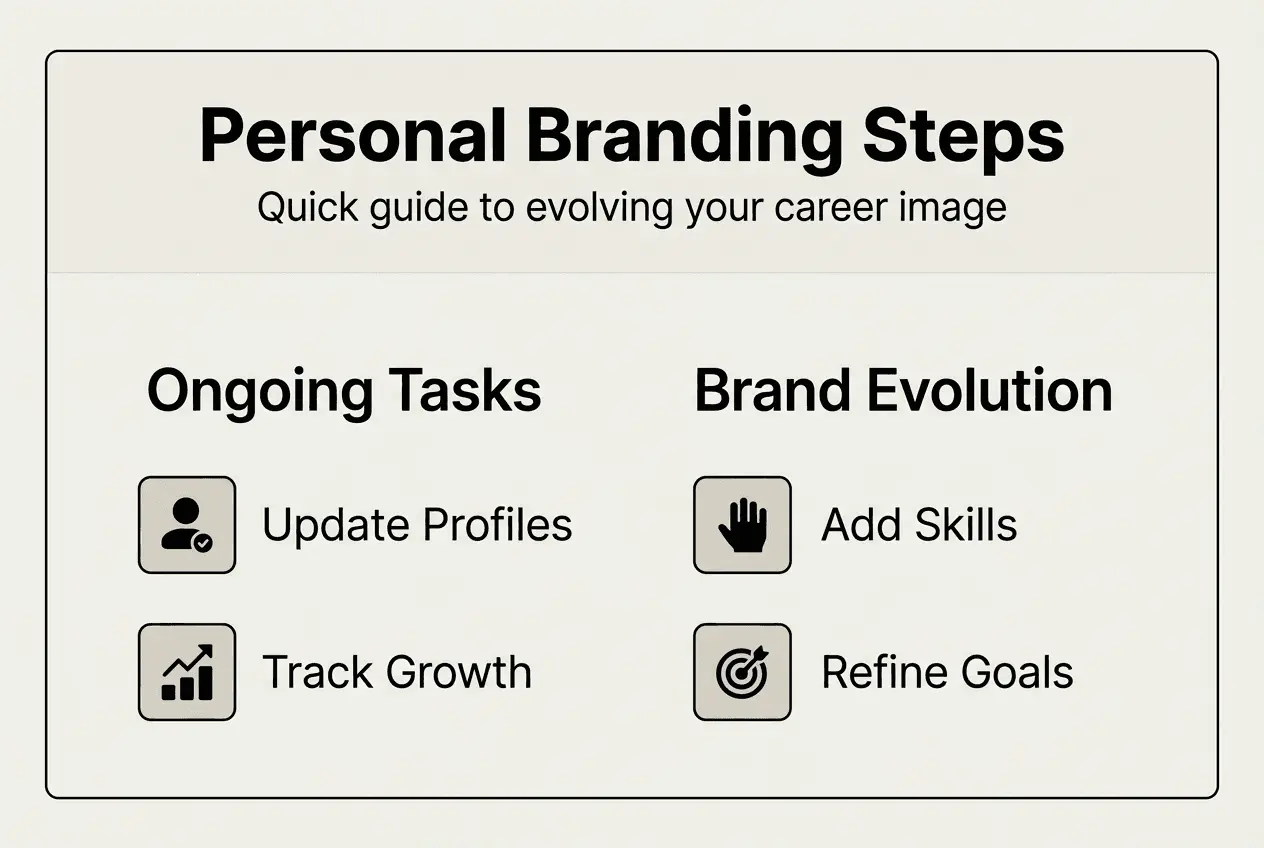
The difference between occasional and continuous brand maintenance significantly impacts results. The following comparison illustrates key distinctions:
| Occasional maintenance | Continuous maintenance |
|---|---|
| Updates profile after major events only | Reviews and refreshes content quarterly |
| Responds to messages sporadically | Replies to all professional communications within 48 hours |
| Posts content irregularly | Maintains consistent sharing schedule |
| Networks only when job searching | Builds relationships proactively year-round |
| Ignores industry trends | Stays current with field developments |
Establish key performance indicators to measure brand effectiveness. Track connection growth on LinkedIn, noting both quantity and quality of new relationships. Monitor engagement rates on your content through likes, comments, and shares. Count informational interviews, networking conversations, and job interviews secured through your network. These metrics provide tangible evidence of brand impact and highlight areas needing adjustment. Consistently updating your brand and learning new skills is vital for long-term career success, ensuring you remain competitive as industries and requirements evolve.
Schedule regular brand audits every three to four months. Review your profiles for outdated information, assess whether your messaging still aligns with current goals, and evaluate the effectiveness of your content strategy. Seek feedback from mentors, career advisors, or trusted peers about how your brand comes across. Sometimes others spot inconsistencies or opportunities that you’ve missed. Use their insights to refine your approach and messaging.
Ongoing activities that strengthen your brand include:
- Pursuing certifications or courses that fill skill gaps and demonstrate commitment to development
- Volunteering for projects that provide portfolio-worthy work and expand your network
- Attending workshops and conferences to stay current with industry trends
- Seeking mentorship from professionals further along your desired career path
- Participating in speaking opportunities to build visibility and credibility
- Contributing to industry publications or blogs to establish thought leadership
Your brand should evolve naturally as you gain experience and clarity about your career direction. What works for a first-year student differs from what serves someone approaching graduation. Regularly reassess your goals and adjust your branding accordingly. This flexibility ensures your professional image remains authentic and relevant rather than becoming a static representation of who you once were.
How Colossus Systems supports your personal branding journey
Building a strong personal brand requires more than individual effort. It demands robust systems for managing relationships, organising events, and tracking professional interactions. Colossus Systems provides comprehensive membership management software features designed to help students and professionals maintain meaningful connections whilst advancing their careers. Whether you’re coordinating networking events, managing contact databases, or tracking communications with mentors and industry contacts, our platform streamlines these essential activities.
Our event management software simplifies the process of organising professional gatherings, workshops, and networking sessions that strengthen your brand presence. Meanwhile, our CRM software enables you to maintain detailed records of professional relationships, ensuring you never miss important follow-ups or opportunities to engage with your network. Explore how Colossus Systems can support your personal branding efforts and career advancement.
FAQ
How can students start building their personal brand?
Begin by identifying your core strengths, values, and career aspirations through honest self-reflection. Create a professional LinkedIn profile that showcases your unique value proposition and start sharing relevant content consistently. Connect with professionals in your target industry and engage thoughtfully with their posts to build visibility.
What are common mistakes to avoid in personal branding?
Avoid inconsistency in messaging across platforms, which confuses your audience about your professional identity. Never neglect your online profiles after creating them, as abandoned accounts signal disengagement. Resist the temptation to appear overly promotional or inauthentic, as genuine interactions build stronger professional relationships than constant self-promotion.
How can personal branding improve networking opportunities?
A well-defined personal brand attracts like-minded professionals who share your interests and values, making initial outreach more natural. It builds credibility and trust before you even meet someone, as they can review your content and background. This foundation opens doors to mentorship relationships, informational interviews, and job referrals that rarely appear through traditional application processes.
How often should students update their personal brand?
Review your brand every three to four months or immediately after significant achievements like completing major projects, earning certifications, or changing career focus. Keep all profile information current and aligned with your evolving goals. Regular updates signal active engagement with your professional development and ensure your brand accurately reflects your current capabilities and aspirations.