Complete Guide to Youth Leadership Development

Over 60 percent of british organisations report a shortage of young leaders ready to take on complex challenges. Preparing the next generation is about more than teaching public speaking or teamwork. Young people thrive when training goes beyond traditional classrooms, focusing instead on real-world experience, deep community involvement, and skills that actually drive change. This article explores how effective youth leadership development approaches help build those skills, encouraging true growth and resilience among british youth.
Table of Contents
- Defining Youth Leadership Development Approaches
- Types of Youth Leadership Programmes Worldwide
- Core Skills and Competencies Nurtured
- Benefits for Organisations and Young People
- Challenges, Risks, and Ethical Considerations
Key Takeaways
| Point | Details |
|---|---|
| Holistic Development | Youth leadership programmes should focus on comprehensive skill development, moving beyond traditional training to enhance personal growth and social engagement. |
| Youth-Led Initiatives | Empower young people to lead initiatives such as the Youth-led Participatory Action Research model, fostering active involvement in change-making processes. |
| International Opportunities | Programmes like the Fulbright Programme provide valuable global exposure, enhancing participants’ cross-cultural communication and strategic insights. |
| Ethical Engagement | Address ethical considerations in youth programmes by ensuring digital safety and robust risk assessment to maintain a safe and supportive environment for young leaders. |
Defining Youth Leadership Development Approaches
Youth leadership development represents a strategic process of empowering young individuals to cultivate essential skills, mindsets, and capabilities that enable them to drive meaningful change within their communities. Understanding leadership development strategies reveals that effective approaches go far beyond traditional training models, focusing instead on holistic personal growth and social engagement.
At its core, this developmental journey integrates multiple transformative approaches. The Youth-led Participatory Action Research (YPAR) model exemplifies an innovative framework where young people are active agents rather than passive recipients of knowledge. YPAR centres youth inquiry by directly involving participants in defining research questions, collecting data, analysing results, and implementing community-driven changes.
Another powerful model is the Circle of Courage, which provides a comprehensive youth development framework rooted in indigenous wisdom and modern psychological research. This approach emphasises four fundamental principles: belonging, mastery, independence, and generosity. By integrating these interconnected domains, the model creates a robust structure for nurturing leadership potential. Young leaders are encouraged to develop strong interpersonal connections, acquire competence through skill-building, exercise autonomy, and cultivate a sense of social responsibility.
Successful youth leadership development requires recognising that leadership is not a fixed trait but a dynamic skill set that can be systematically developed. Understanding leadership development programs highlights the importance of creating supportive environments that offer structured opportunities for young people to experiment, reflect, and grow. These programmes typically incorporate experiential learning, mentorship, collaborative projects, and personal development workshops to help emerging leaders build confidence, communication skills, and strategic thinking capabilities.
Types of Youth Leadership Programmes Worldwide
Youth leadership programmes worldwide offer diverse pathways for emerging leaders to develop critical skills and global perspectives. These initiatives range from international exchange programmes to localised community-based training, each designed to cultivate leadership potential in unique contexts. Seven effective youth engagement strategies highlight the importance of creating meaningful opportunities for young people to learn, grow, and contribute meaningfully to society.
International exchange programmes represent a powerful model of youth leadership development. The Fulbright Programme, for instance, provides transformative opportunities for young professionals by offering research, study, and teaching experiences across more than 140 countries. These programmes enable participants to develop cross-cultural communication skills, build global networks, and gain nuanced understanding of international dynamics through direct engagement.
Regional leadership academies also play a crucial role in nurturing youth leadership. The Gorée Institute Youth Leadership Academy in Senegal exemplifies this approach, focusing specifically on peacebuilding and political participation within the Sahel region. Such programmes are strategically designed to address local challenges, empowering young leaders with contextually relevant skills and knowledge that can drive meaningful social transformation.
Contemporary youth leadership programmes typically incorporate several key components to ensure comprehensive development. These often include experiential learning modules, mentorship opportunities, collaborative project design, skill-building workshops, and community engagement initiatives. The most effective programmes recognise that leadership is not a monolithic concept but a complex set of capabilities that must be nurtured through diverse, interactive, and supportive learning environments.
Core Skills and Competencies Nurtured
Youth leadership development focuses on cultivating a comprehensive set of skills that extend far beyond traditional academic learning. Seven essential leadership skills for students demonstrate the multifaceted nature of leadership competencies, emphasising the need for holistic personal and professional growth.

Communication and interpersonal skills form the cornerstone of effective youth leadership. Young leaders must develop the ability to articulate ideas clearly, listen actively, and engage diverse groups with empathy and understanding. The JU:MP leads programme in Bradford exemplifies how structured interventions can enhance social capital and leadership capabilities, particularly in challenging community contexts. These programmes help participants develop nuanced communication strategies that bridge cultural and social divides.
Emotional intelligence emerges as a critical competency in modern leadership development. Essential ways to apply emotional intelligence in leadership highlight the importance of self-awareness, empathy, and emotional regulation. Young leaders learn to manage complex interpersonal dynamics, navigate conflicts constructively, and inspire others through authentic emotional engagement.
Strategic thinking and problem-solving skills are equally crucial competencies nurtured in youth leadership programmes. Participants are challenged to analyse complex situations, develop innovative solutions, and implement strategic approaches to community challenges. These skills are developed through experiential learning, collaborative projects, and mentorship opportunities that encourage critical thinking and creative problem-solving. The goal is to transform young individuals from passive observers into proactive change-makers who can effectively address societal challenges with creativity, resilience, and strategic insight.
Benefits for Organisations and Young People
Youth leadership development creates profound advantages for both organisations and emerging leaders, establishing a symbiotic relationship that drives innovation and societal progress. Career development activities for growth demonstrate how strategic leadership programmes can simultaneously benefit individual participants and their host organisations.
Organisational benefits emerge through the infusion of fresh perspectives and dynamic energy. Shared leadership research reveals that integrating youth participation enhances team performance and innovation by leveraging diverse perspectives. Young leaders bring technological fluency, creative problem-solving approaches, and unbridled enthusiasm that can transform organisational cultures and operational strategies.
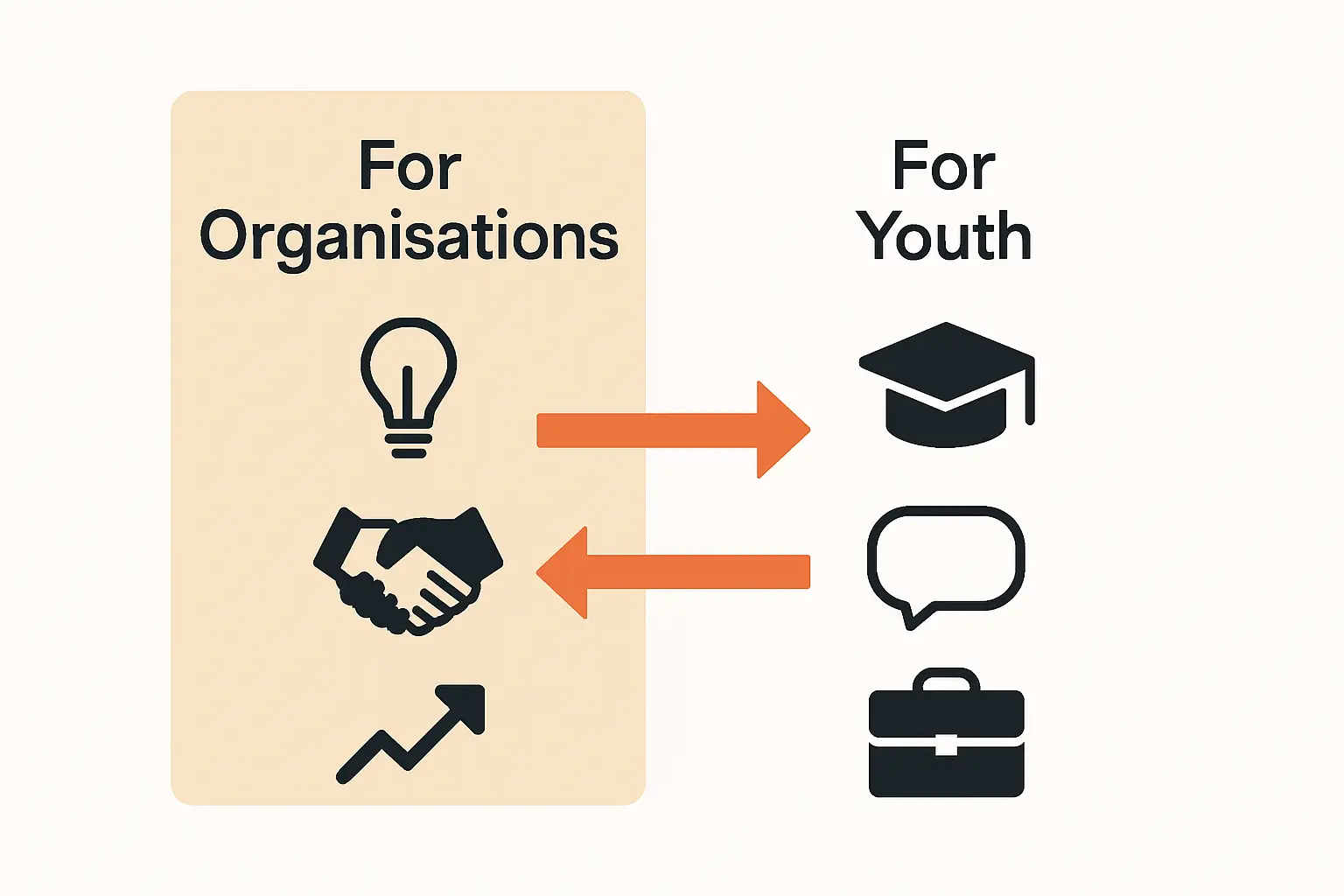
For young people, leadership programmes offer transformative personal and professional development opportunities. Volunteer engagement strategies highlight how these initiatives provide critical skill-building platforms that extend far beyond traditional learning environments. Participants gain practical experience in project management, team collaboration, strategic thinking, and interpersonal communication, creating powerful developmental pathways that accelerate their career trajectories.
The mutual benefits of youth leadership development extend into long-term societal impact. Organisations gain adaptable, motivated talent pipelines, while young leaders acquire comprehensive skills that prepare them for complex professional challenges. This reciprocal relationship ensures continuous knowledge transfer, innovation, and sustainable growth across generational boundaries, ultimately contributing to more resilient, dynamic organisational ecosystems.
Challenges, Risks, and Ethical Considerations
Youth leadership development programmes must navigate complex ethical landscapes that balance transformative potential with robust safeguarding mechanisms. Eight essential nonprofit leadership skills emphasise the critical importance of understanding ethical frameworks and implementing responsible governance strategies.
Online safety and digital engagement present significant ethical challenges in contemporary youth leadership initiatives. Promoting youth online safety requires multi-stakeholder collaboration to develop comprehensive governance structures that protect young participants while enabling meaningful digital interactions. These considerations become increasingly complex as technological platforms evolve, demanding nuanced approaches to risk management and participant protection.
Engaging youth in system design raises profound ethical questions about representation, consent, and understanding of complex technological ecosystems. Young leaders must be empowered with critical digital literacy skills that enable them to recognise potential biases, understand systemic implications, and make informed decisions about their participation in technological and social frameworks.
Risk mitigation strategies must balance protective interventions with opportunities for meaningful leadership development. This requires creating transparent communication channels, implementing robust consent mechanisms, providing comprehensive support structures, and developing age-appropriate risk assessment protocols. The ultimate goal is cultivating an environment where young leaders can explore, learn, and grow while maintaining their safety, dignity, and agency.
Empower Youth Leadership Development with Colossus Systems
Youth leadership development demands more than just traditional training. It calls for strategic empowerment through holistic engagement, mentorship, and tailored opportunities to sharpen core skills like communication, emotional intelligence, and strategic thinking. Organisations face challenges in creating supportive environments that nurture these dynamic skills while managing complex programmes effectively. Colossus Systems helps address these pain points by providing an all-in-one platform designed specifically for membership-based organisations aiming to streamline member management, event planning, and targeted engagement.

Unlock the full potential of your youth leadership programmes with tools that enable easy event registration, customised communication channels, and secure payment integrations. Whether fostering cross-cultural exchanges or community-based initiatives, Colossus Systems supports your mission to create impactful, interactive experiences that drive growth and social change. Discover how our platform can transform your leadership development strategies today by reaching out through Contact Us. Act now to build resilient, confident young leaders equipped for tomorrow’s challenges.
Frequently Asked Questions
What is youth leadership development?
Youth leadership development is a strategic process aimed at empowering young individuals to cultivate essential skills and capabilities for driving change within their communities, focusing on holistic personal growth and social engagement.
What are effective approaches to youth leadership development?
Effective approaches include models like Youth-led Participatory Action Research (YPAR) and the Circle of Courage, which emphasise youth engagement, personal growth, and nurturing skills like belonging, mastery, independence, and generosity.
What skills are nurtured in youth leadership programmes?
Youth leadership programmes focus on developing communication and interpersonal skills, emotional intelligence, strategic thinking, and problem-solving abilities, enabling young leaders to navigate complex situations and engage diverse groups effectively.
What benefits do youth leadership development programmes offer?
These programmes provide personal and professional development opportunities for young people while benefitting organisations through fresh perspectives, enhanced team performance, and a motivated talent pipeline, contributing to long-term societal impact.