What Is CRM Software? Examples for Member Groups

Over 90 percent of successful membership organisations use CRM software to manage relationships more effectively. For british groups aiming to keep members engaged and satisfied, understanding these tools is vital. CRM platforms do more than just store contact information, they transform how organisations connect, communicate, and make decisions. This guide explains the core concepts of CRM software, outlines the main system types, and highlights features that help british membership organisations thrive.
Table of Contents
- CRM Software Meaning And Core Concepts
- Major Types Of CRM Systems Explained
- Essential Features For Membership Groups
- Notable CRM Software Examples Worldwide
- Choosing The Right CRM Solution
Key Takeaways
| Point | Details |
|---|---|
| CRM Software Centralisation | CRM software centralises member information and engagement data, enabling organisations to craft targeted communication strategies. |
| Types of CRM Systems | CRM systems are categorised into Operational, Analytical, and Collaborative types, each catering to different organisational needs. |
| Essential CRM Features | Membership organisations should prioritise advanced features such as member profiling, automated communication, and event management for effective engagement. |
| Strategic CRM Selection | Choosing the right CRM requires assessing scalability, customisation potential, and integration capabilities to align with organisational objectives. |
CRM Software Meaning and Core Concepts
Customer Relationship Management (CRM) software represents a sophisticated technological solution designed to help organisations streamline their interactions with current and potential members. At its core, CRM represents a strategic approach to managing and analysing customer engagement data, enabling membership groups to build more meaningful, personalised relationships.
The fundamental purpose of CRM software is to centralise member information, tracking interactions, preferences, and historical engagement across multiple touchpoints. By consolidating data from various sources, organisations can gain comprehensive insights into member behaviours, communication preferences, and potential needs. This data-driven approach allows membership groups to create targeted communication strategies, anticipate member requirements, and develop more responsive engagement models.
Key components of CRM software typically include:
- Contact Management: Storing and organising detailed member profiles
- Interaction Tracking: Recording communication history and engagement levels
- Reporting and Analytics: Generating insights about member trends and organisational performance
- Communication Tools: Facilitating personalised outreach and segmented messaging
Modern CRM solutions go beyond simple data storage, transforming raw information into actionable intelligence. By understanding membership relationship dynamics, organisations can develop more strategic approaches to member retention, recruitment, and satisfaction. The most effective CRM platforms integrate seamlessly with existing systems, providing a holistic view of an organisation’s member ecosystem.
Major Types of CRM Systems Explained
CRM systems are traditionally categorised into distinct types, each serving unique organisational needs and providing specialised functionality for managing member relationships. Membership organisations require nuanced approaches to relationship management that align with their specific engagement strategies.

According to industry research, CRM systems predominantly fall into three primary categories: Operational CRM, Analytical CRM, and Collaborative CRM. Operational CRMs focus on automating core business processes, streamlining sales, marketing, and service interactions. Analytical CRMs transform raw data into actionable insights, enabling organisations to forecast trends and understand member behaviours. Collaborative CRMs facilitate seamless communication across different teams, ensuring comprehensive visibility of member interactions.
Beyond these core types, specialised CRM variations emerge to address specific organisational requirements:
- Campaign Management CRMs: Designed to orchestrate targeted marketing campaigns
- Strategic CRMs: Emphasising long-term relationship development and strategic planning
- Industry-Specific CRMs: Tailored solutions for unique sector requirements
The most effective CRM systems integrate multiple approaches, providing membership organisations with flexible, comprehensive tools for managing complex relationship dynamics. By understanding these different CRM typologies, groups can select platforms that precisely match their engagement and growth objectives.
Essential Features for Membership Groups
Membership organisations require sophisticated CRM features that go beyond basic contact management. Membership management software must provide comprehensive tools designed to streamline administrative processes and enhance member engagement.
Modern CRM systems offer advanced capabilities that transform how organisations interact with their members. Cloud-integrated platforms now enable sophisticated features like AI-powered insights, automated business processes, and intelligent data analysis that help membership groups make strategic decisions. These technological advancements allow organisations to personalise member experiences, predict engagement trends, and develop more targeted communication strategies.
Critical features that membership groups should seek in their CRM solution include:
- Member Profiling: Comprehensive individual member history and interaction tracking
- Segmentation Tools: Advanced filtering and categorisation capabilities
- Automated Communication: Personalised email and messaging workflows
- Event Management: Integrated registration, tracking, and reporting systems
- Financial Management: Seamless membership payment and renewal processing
- Reporting Dashboards: Real-time analytics and performance measurement
By implementing a robust CRM system with these essential features, membership organisations can transform their operational efficiency, creating more meaningful connections with members while reducing administrative overhead. The most effective platforms will offer flexible, intuitive tools that adapt to the unique requirements of different membership structures and organisational goals.
Notable CRM Software Examples Worldwide
The global CRM software landscape offers diverse solutions tailored to different organisational needs, with platforms emerging to address specific industry requirements and engagement strategies. Website integration capabilities have become a critical consideration for membership groups seeking comprehensive relationship management tools.
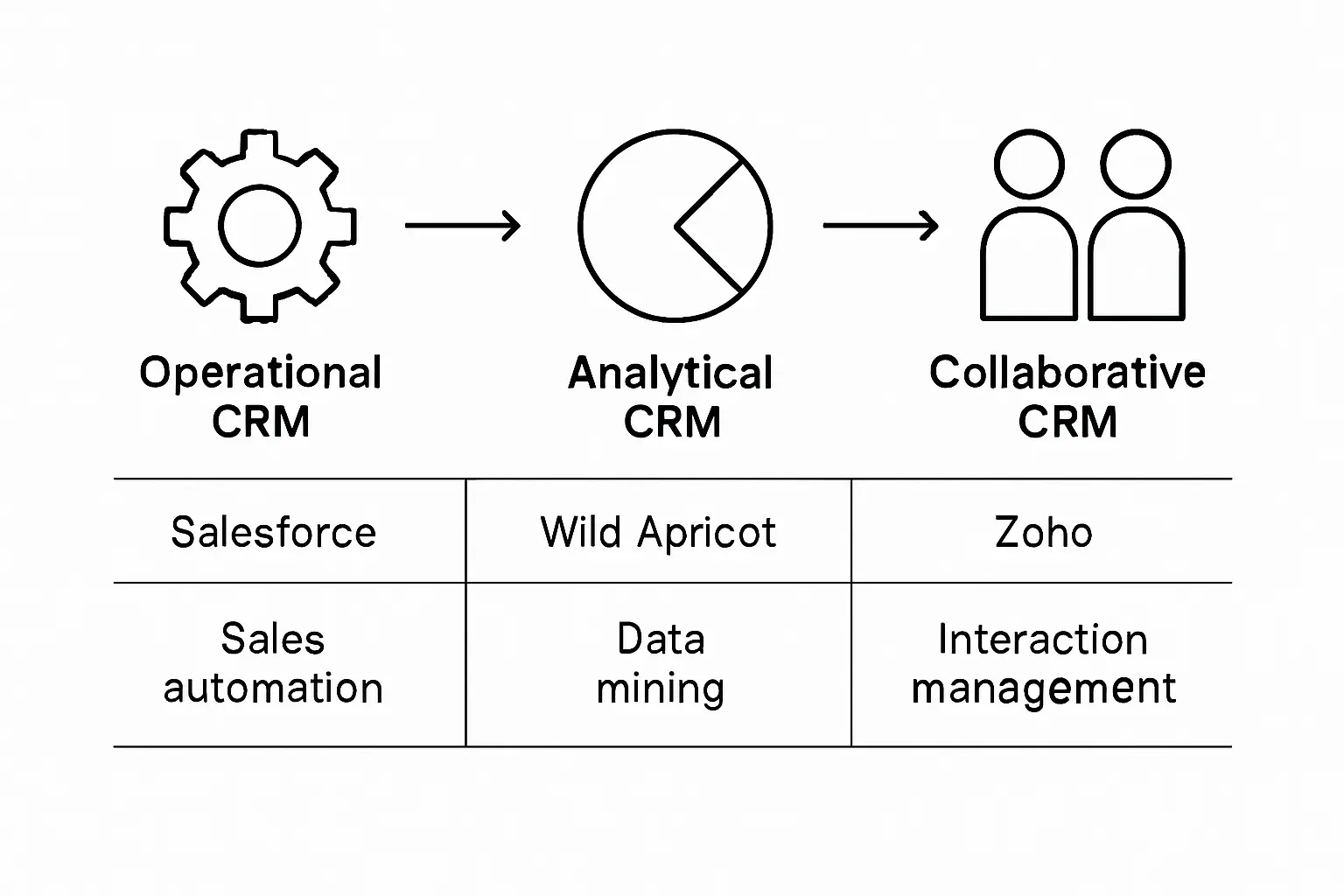
Enterprise-level CRM solutions represent sophisticated technological ecosystems designed to transform customer relationship management. Microsoft Dynamics 365 stands out as a comprehensive platform that seamlessly integrates sales, marketing, and service functions, providing organisations with powerful tools for managing complex relationship networks. These advanced systems go beyond traditional contact management, offering intelligent insights, automation capabilities, and predictive analytics that enable more strategic decision-making.
Key characteristics that distinguish top-tier CRM platforms include:
- Cloud-Based Architecture: Enabling remote access and real-time collaboration
- Advanced Analytics: Generating actionable insights from member data
- Customisation Options: Allowing tailored workflows for specific organisational needs
- Multi-Channel Integration: Supporting communication across diverse platforms
- Scalable Infrastructure: Accommodating organisational growth and complexity
While numerous CRM solutions exist globally, successful implementation depends on carefully matching technological capabilities with specific organisational requirements. Membership groups must evaluate platforms based on their unique engagement strategies, technological infrastructure, and long-term growth objectives.
Choosing the Right CRM Solution
Selecting an appropriate CRM solution requires a strategic approach that goes beyond surface-level feature comparisons. Membership management strategies demand comprehensive evaluation of technological capabilities that align with organisational objectives.
When evaluating potential CRM platforms, organisations must conduct thorough assessments of critical technological capabilities. Advanced CRM selection criteria encompass multiple dimensions, including AI-driven insights, workflow automation, integration ecosystems, and predictive analytics. These technological components determine a platform’s ability to transform raw member data into strategic intelligence, enabling more nuanced engagement approaches.
Key considerations for selecting the right CRM solution include:
- Scalability: Capacity to grow alongside organisational needs
- Customisation Potential: Flexibility to adapt workflows
- Integration Capabilities: Seamless connectivity with existing systems
- User Experience: Intuitive interface for team adoption
- Data Security: Robust protection of sensitive member information
- Reporting Depth: Comprehensive analytical tools
Successful CRM implementation transcends technological selection. It requires a holistic approach that considers organisational culture, existing technological infrastructure, and long-term strategic objectives. Membership groups must view CRM not as a standalone tool, but as a strategic platform for relationship management and organisational growth.
Unlock the Full Potential of Your Membership Management with Colossus Systems
Managing complex member relationships and staying ahead of evolving engagement needs can be overwhelming. This article highlights the critical importance of choosing the right CRM software that offers scalability, advanced analytics, and automated communication tailored specifically for membership organisations. At Colossus Systems we understand these challenges and provide a unified SaaS platform designed to streamline membership management, event planning, and targeted outreach all within one highly customisable system.
Our solutions empower your organisation to build more meaningful member experiences using features such as detailed member profiling, segmentation tools, and seamless integration with payment gateways. By combining strategic CRM functions with virtual training and marketing capabilities, your group can achieve operational efficiency and accelerate growth effortlessly.
Reach out to discover how Colossus Systems can transform your member engagement strategies today.
Take the next step towards evolving your membership organisation with expert tools that fit your unique needs. Contact us now to learn more at https://colossus.systems/contact-us and explore how our platform complements your membership CRM approach. Let’s unlock growth and build lasting relationships together.
Frequently Asked Questions
What is the primary purpose of CRM software?
The primary purpose of CRM software is to centralise member information, tracking interactions, preferences, and engagement histories to facilitate more meaningful and personalised member relationships.
What are the main types of CRM systems?
The main types of CRM systems include Operational CRM, which focuses on automating business processes; Analytical CRM, which transforms data into actionable insights; and Collaborative CRM, which supports communication across teams.
What key features should membership organisations look for in CRM software?
Membership organisations should seek features such as member profiling, segmentation tools, automated communication, event management, financial management, and reporting dashboards to enhance member engagement and streamline processes.
How can CRM systems benefit membership organisations?
CRM systems can benefit membership organisations by improving operational efficiency, enabling targeted communication strategies, enhancing member retention, and providing insights that support strategic decision-making.