Mentorship in Higher Education: How It Enhances Student Outcomes

More than half of british university students say a mentor changed their academic path. Mentorship in universities is more than a buzzword. It shapes confidence, guides career choices, and bridges the gap between classroom learning and real-world success. Understanding how mentorship works and why it matters can help every british student get the most from their higher education journey.
Table of Contents
- Defining Mentorship In Universities
- Types Of Higher Education Mentorship
- How Mentorship Delivers Impact
- Obligations And Challenges Of Mentorship
- Ensuring Equitable And Ethical Mentorship
Key Takeaways
| Point | Details |
|---|---|
| Mentorship Defined | University mentorship fosters student growth through personalised support, extending beyond academic advice to encompass emotional and career guidance. |
| Types of Mentorship | Different mentorship models, including peer, faculty, and professional mentorship, cater to unique student developmental needs, enhancing skills and networks. |
| Impact of Mentorship | Effective mentorship significantly boosts academic success, professional preparedness, and personal confidence through tailored guidance and emotional support. |
| Equitable Practices | Ensuring ethical mentorship requires addressing systemic barriers and embracing inclusive approaches that accommodate diverse student backgrounds and needs. |
Defining Mentorship In Universities
Mentorship in higher education represents a dynamic and transformative relationship designed to support student growth beyond traditional academic instruction. At its core, mentorship is an intentional process involving the informal transmission of knowledge, social capital, and psychosocial support perceived as relevant to professional development.
University mentorship programmes typically involve an experienced professional or academic guiding a less experienced student through personalised support. This relationship extends beyond mere academic advice, encompassing career guidance, emotional support, and skill development. Mentors serve as trusted advisors who help students navigate complex academic and professional landscapes, offering insights drawn from their own experiences and expertise.
The fundamental characteristics of effective university mentorship include sustained communication, mutual respect, and a commitment to the mentee’s holistic development. Unlike formal instructional relationships, mentorship thrives on trust, open dialogue, and a genuine desire to support individual growth. Research indicates that such relationships can significantly enhance students’ academic success, professional preparedness, and personal confidence.
Pro Tip for Effective Mentorship: Establish clear expectations and communication boundaries early in the mentorship relationship, ensuring both mentor and mentee understand their roles and objectives for a productive partnership.
Types Of Higher Education Mentorship
Higher education mentorship encompasses diverse models designed to support student development across multiple academic and professional dimensions. Systematic research reveals multiple approaches to mentorship that can be categorised into several distinct types, each serving unique developmental objectives for students.
The primary types of university mentorship include peer mentorship, where students at similar academic levels support one another; faculty mentorship, involving direct guidance from academic staff; and professional mentorship, connecting students with industry experts. Academic writing mentorship programmes represent a specialised form focused on supporting research and scholarly skill development, helping students navigate complex academic writing processes and research methodologies.
Additionally, universities increasingly employ structured mentorship models that blend multiple approaches. These might incorporate group mentoring sessions, one-on-one coaching, digital mentorship platforms, and cross-disciplinary mentoring networks. The goal is to create flexible, responsive support systems that address individual student needs while fostering holistic professional and personal growth.
Here is a comparison of common mentorship types in universities and their primary benefits:
| Mentorship Type | Typical Participants | Main Focus | Principal Benefit |
|---|---|---|---|
| Peer Mentorship | Students at similar levels | Social integration, support | Boosts belonging and confidence |
| Faculty Mentorship | Academic staff and students | Academic and research advice | Strengthens academic development |
| Professional Mentorship | Industry experts, students | Career preparation | Improves employability and networks |
| Academic Writing | Experienced writers, students | Research, writing skills | Enhances scholarly output |
Pro Tip for Mentor Selection: Research potential mentorship programmes comprehensively, evaluating their specific approach, mentor qualifications, and alignment with your personal and professional development goals to maximise the potential benefits of mentorship.
How Mentorship Delivers Impact
Analysis of extensive research data demonstrates that mentorship delivers profound and multifaceted impacts across academic, professional, and personal development trajectories. These impacts extend far beyond traditional learning models, creating transformative experiences that shape students’ entire career landscapes.

The primary mechanisms of mentorship impact include knowledge transfer, skill development, and professional networking. Career progression receives significant enhancement through mentors’ strategic guidance, with students gaining insider perspectives, industry insights, and critical professional competencies. Particularly in specialised disciplines, mentorship becomes a crucial pathway for understanding complex professional environments and navigating intricate career pathways.
Moreover, mentorship delivers psychological and emotional support that traditional educational frameworks often overlook. Research exploring women’s experiences in physics highlights how mentorship contributes to developing professional identity, sense of belonging, and increased retention rates in challenging academic environments. This emotional scaffolding helps students overcome systemic barriers, build confidence, and develop resilient professional personas.
Pro Tip for Maximising Mentorship: Approach mentorship relationships proactively by setting clear goals, maintaining regular communication, and being open to constructive feedback to extract maximum value from your mentoring experience.
Obligations And Challenges Of Mentorship
Contemporary research highlights the complex landscape of mentorship obligations, revealing a multifaceted set of responsibilities that extend far beyond traditional academic guidance. Mentors must navigate intricate interpersonal dynamics while maintaining professional boundaries and delivering meaningful support to diverse student populations.
The primary obligations of academic mentors include providing comprehensive academic support, emotional guidance, professional advocacy, and cultural affirmation. Developmental relationships require mentors to adapt their approach to individual student needs, recognising that each mentee brings unique challenges, backgrounds, and aspirations. This demands exceptional emotional intelligence, active listening skills, and the ability to create safe, supportive learning environments that encourage personal and professional growth.
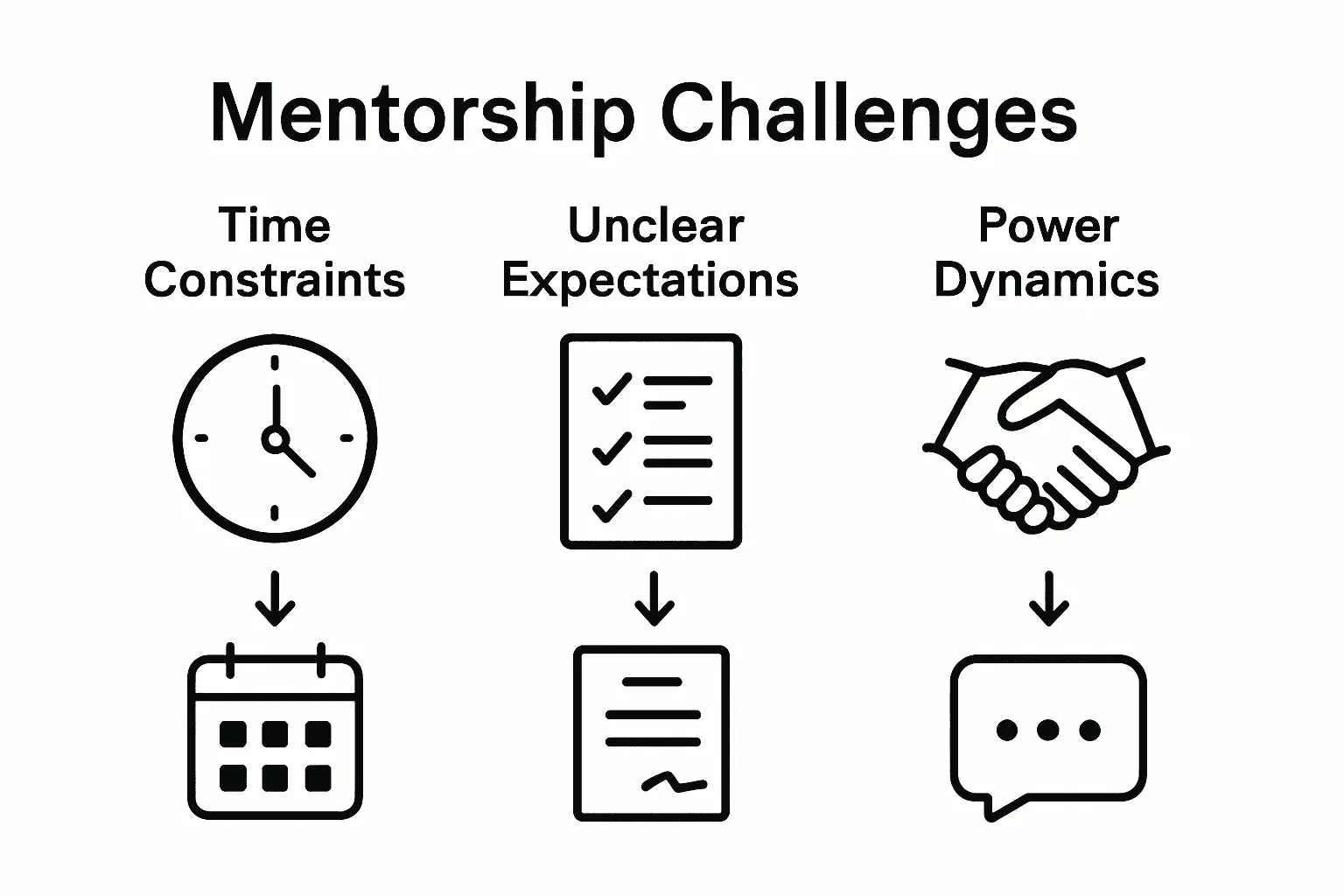
Research examining mentorship challenges underscores significant obstacles such as time constraints, potential power imbalances, managing expectations, and addressing diverse student requirements. Effective mentors must continuously develop their own skills, remain aware of potential unconscious biases, and commit to ongoing professional development to maintain the quality and integrity of mentoring relationships.
The following table summarises key challenges and solutions in effective university mentorship:
| Key Challenge | Description | Suggested Solution |
|---|---|---|
| Time Constraints | Limited availability of mentors | Scheduled sessions, realistic goals |
| Power Imbalance | Mentor dominance can inhibit openness | Foster mutual respect, transparency |
| Diverse Student Needs | Mentees have unique backgrounds | Personalised guidance, active listening |
| Managing Expectations | Confusion over roles and outcomes | Set clear objectives at the start |
Pro Tip for Mentorship Success: Establish clear communication protocols and mutual expectations from the outset, creating a structured yet flexible framework that allows for genuine, responsive mentoring interactions while maintaining professional boundaries.
Ensuring Equitable And Ethical Mentorship
Effective mentorship practices demand a comprehensive approach to diversity, transparency, and inclusivity, recognising that ethical guidance extends far beyond traditional academic interactions. Universities must critically examine and deconstruct systemic barriers that historically limited mentorship opportunities for marginalised and underrepresented student populations.
Key principles of equitable mentorship include intentional representation, active listening, and creating accessible support mechanisms. Inclusive mentoring frameworks require mentors to acknowledge their own potential biases, develop cultural competence, and design flexible engagement strategies that accommodate diverse student backgrounds, learning styles, and personal circumstances. This approach necessitates moving beyond standardised mentoring models towards personalised, responsive relationships.
Digital mentoring platforms have emerged as powerful tools for democratising mentorship access, enabling connections that transcend geographical, temporal, and institutional constraints. These technological solutions provide unprecedented opportunities for students from varied socioeconomic backgrounds to access high-quality mentoring support, thereby addressing traditional equity limitations in academic guidance.
Pro Tip for Ethical Mentorship: Conduct regular self-reflection and seek feedback from mentees to continuously evaluate and improve your mentoring approach, ensuring your practices remain responsive, respectful, and genuinely supportive of individual student needs.
Empower Your Mentorship Programmes with Colossus Systems
Mentorship in higher education thrives on sustained communication, personalised support, and effective management of complex student-mentor relationships. Organisations striving to enhance their mentorship impact face pressing challenges such as managing diverse participant needs, maintaining clear communication, and creating flexible engagement strategies. Colossus Systems understands these pain points and provides an all-in-one platform designed to streamline member management and support tailored interactions that nurture holistic student growth and professional development.

Unlock the full potential of your mentorship programmes with Colossus Systems’ customizable tools for event planning, virtual training, and CRM integration. Maximise engagement and build stronger professional networks while efficiently managing administrative tasks. Take the first step towards transforming your mentorship experience by reaching out through our Contact Us page. Discover how our platform can support your organisation in delivering equitable and impactful mentorship that drives student success today.
Frequently Asked Questions
What is mentorship in higher education?
Mentorship in higher education is a dynamic relationship between an experienced individual, typically a faculty member or professional, and a less experienced student. This relationship aims to provide personalised support beyond academic advice, including career guidance, emotional support, and skill development.
What are the different types of mentorship in universities?
The main types of mentorship in universities include peer mentorship, faculty mentorship, professional mentorship, and academic writing mentorship. Each type serves unique developmental objectives, helping students enhance their skills, confidence, and networks.
How does mentorship impact student outcomes?
Mentorship significantly enhances student outcomes by facilitating knowledge transfer, skill development, and professional networking. It contributes to students’ academic success, career readiness, and personal confidence, especially in navigating complex professional environments.
What are the main challenges faced in mentorship relationships?
Key challenges in mentorship relationships include time constraints, power imbalances, diverse student needs, and managing expectations. Effective mentors must address these challenges by setting clear communication and expectations, providing personalised guidance, and developing their own skills continuously.
Recommended
- 7 Proven Mentoring Programme Best Practices for Organisations|CS
- Understanding Student Service Learning Projects | Colossus Systems
- Understanding Leadership Development Programs in Detail|CS
- 7 Essential Career Development Activities for Growth|CS
- Top Career Coaching Benefits for Every Stage in 2025 - Rezound Career Coaching