Importance of Peer Support for Membership Organisations

Most membership organizations in North America underestimate the true power of peer support. British case studies highlight that structured peer initiatives can increase member engagement rates by over 40 percent compared to unstructured groups. For leaders and event managers looking to deepen connections, peer support is more than informal camaraderie. Understanding its potential and clearing up misconceptions unlocks a strategic path to member growth, professional development, and lasting organizational commitment.
Table of Contents
- Peer Support Defined and Common Misconceptions
- Types of Peer Support in Organisations
- How Digital Peer Support Systems Operate
- Key Benefits for Member Engagement and Growth
- Challenges and Pitfalls in Peer Support Initiatives
- Best Practices for Sustainable Peer Support
Key Takeaways
| Point | Details |
|---|---|
| Understanding Peer Support | Peer support is a structured intervention that facilitates knowledge exchange and professional growth, rather than an informal interaction. |
| Types of Peer Support | Key types include peer-led groups, peer mentoring, and peer learning, each offering unique benefits for professional development. |
| Digital Peer Support Systems | Advanced digital platforms enhance peer support by enabling personalised interactions and protecting anonymity, crucial for user trust. |
| Best Practices for Sustainability | Implementing comprehensive training and clear guidelines fosters a culture of collaboration and enhances the effectiveness of peer support programmes. |
Peer Support Defined and Common Misconceptions
Peer support represents a collaborative approach where individuals with shared experiences provide mutual assistance and guidance within organisational contexts. Research reveals that this approach extends far beyond simple emotional support, encompassing academic assistance, social integration, and professional network development.
Understanding peer support requires dispelling common misconceptions. Many organisations mistakenly view peer support as an informal, unstructured interaction. However, systematic reviews demonstrate it is a structured intervention with specific methodologies and measurable outcomes. Key characteristics include:
- Mutual exchange of knowledge
- Shared experiential understanding
- Goal-oriented collaborative learning
- Structured support frameworks
Effective peer support programmes recognise the nuanced nature of interpersonal interactions. While emotional support remains crucial, successful models integrate academic guidance, skill development, and professional networking opportunities. This holistic approach transforms peer support from a passive activity into a strategic organisational development tool.

Pro tip: When designing peer support initiatives, prioritise structured matching processes that align participants based on professional goals and shared experiences rather than purely demographic similarities.
Types of Peer Support in Organisations
Peer support encompasses diverse approaches tailored to specific organisational needs and objectives. Research indicates three primary types of peer support: peer-led support groups, peer mentoring, and peer learning, each with unique characteristics and potential benefits for professional development.
Peer-led support groups represent a collaborative model where individuals with shared experiences come together to discuss challenges, exchange insights, and provide mutual emotional reinforcement. These groups typically focus on addressing specific workplace concerns such as professional stress, career transitions, or departmental challenges. The key distinguishing feature is the participant-driven nature, where members collectively guide discussions and support mechanisms.
Peer mentoring involves a more structured approach, pairing experienced professionals with less experienced colleagues to facilitate knowledge transfer and personal growth. Key characteristics include:
- One-to-one guidance
- Skills and career development focus
- Structured meeting schedules
- Goal-oriented interactions
- Confidential knowledge sharing
Peer learning represents another critical model, emphasising collaborative knowledge acquisition through group interactions, workshops, and shared learning experiences. Unlike traditional training, this approach leverages collective expertise, enabling professionals to learn from one another’s practical experiences and insights. Systematic reviews demonstrate this approach can significantly reduce professional isolation and enhance organisational learning cultures.
Pro tip: Develop clear guidelines and expectations for each peer support type to ensure participants understand their roles, boundaries, and potential impact on professional development.
The table below summarises and contrasts key types of peer support structures found in organisations.
| Type of Peer Support | Structure Level | Typical Participants | Primary Outcome |
|---|---|---|---|
| Peer-led groups | Participant-driven | Colleagues with shared concerns | Emotional resilience |
| Peer mentoring | Highly structured | Senior to junior professionals | Skills advancement |
| Peer learning | Moderately structured | Mixed professional groups | Knowledge sharing |
How Digital Peer Support Systems Operate
Advanced digital platforms are transforming peer support by leveraging technology to create sophisticated, adaptive engagement environments. These systems integrate artificial intelligence and network analysis to enable seamless, personalised interactions that transcend traditional support limitations, connecting individuals through sophisticated digital infrastructure.
The core architecture of digital peer support systems revolves around creating safe, accessible online spaces that facilitate meaningful interactions. Research demonstrates these platforms operate through several critical mechanisms:
- Anonymity protection
- User-driven content generation
- Intelligent matching algorithms
- Secure communication channels
- Adaptive support frameworks
Technological components play a pivotal role in system functionality. Network analysis algorithms identify key participants, track interaction patterns, and dynamically adjust support structures. Artificial intelligence enables personalised interventions by monitoring user engagement, detecting potential support needs, and recommending appropriate resources or connections.
Engagement remains the most significant challenge for digital peer support systems. Successful platforms must balance technological sophistication with genuine human connection, ensuring users feel supported, understood, and valued. This requires continuous refinement of interaction protocols, user experience design, and psychological safety mechanisms.
Pro tip: Implement multi-layered authentication and privacy controls to maintain user trust while creating opportunities for meaningful digital peer interactions.
Key Benefits for Member Engagement and Growth
Comprehensive research into peer support programmes reveals multiple strategic advantages for membership organisations seeking sustainable growth and enhanced member experiences. These benefits extend far beyond simple social interactions, providing transformative opportunities for organisational development and individual member progression.
The primary benefits of structured peer support include:
- Improved organisational retention rates
- Enhanced member confidence and skill development
- Reduced feelings of professional isolation
- Accelerated knowledge transfer
- Stronger internal communication networks
Emotional and Professional Development represent critical outcomes of effective peer support initiatives. Research demonstrates that members experiencing structured peer interactions develop greater emotional resilience, increased professional adaptability, and more robust collaborative capabilities. These programmes create environments where individuals can share experiences, receive guidance, and build meaningful professional relationships that transcend traditional networking approaches.
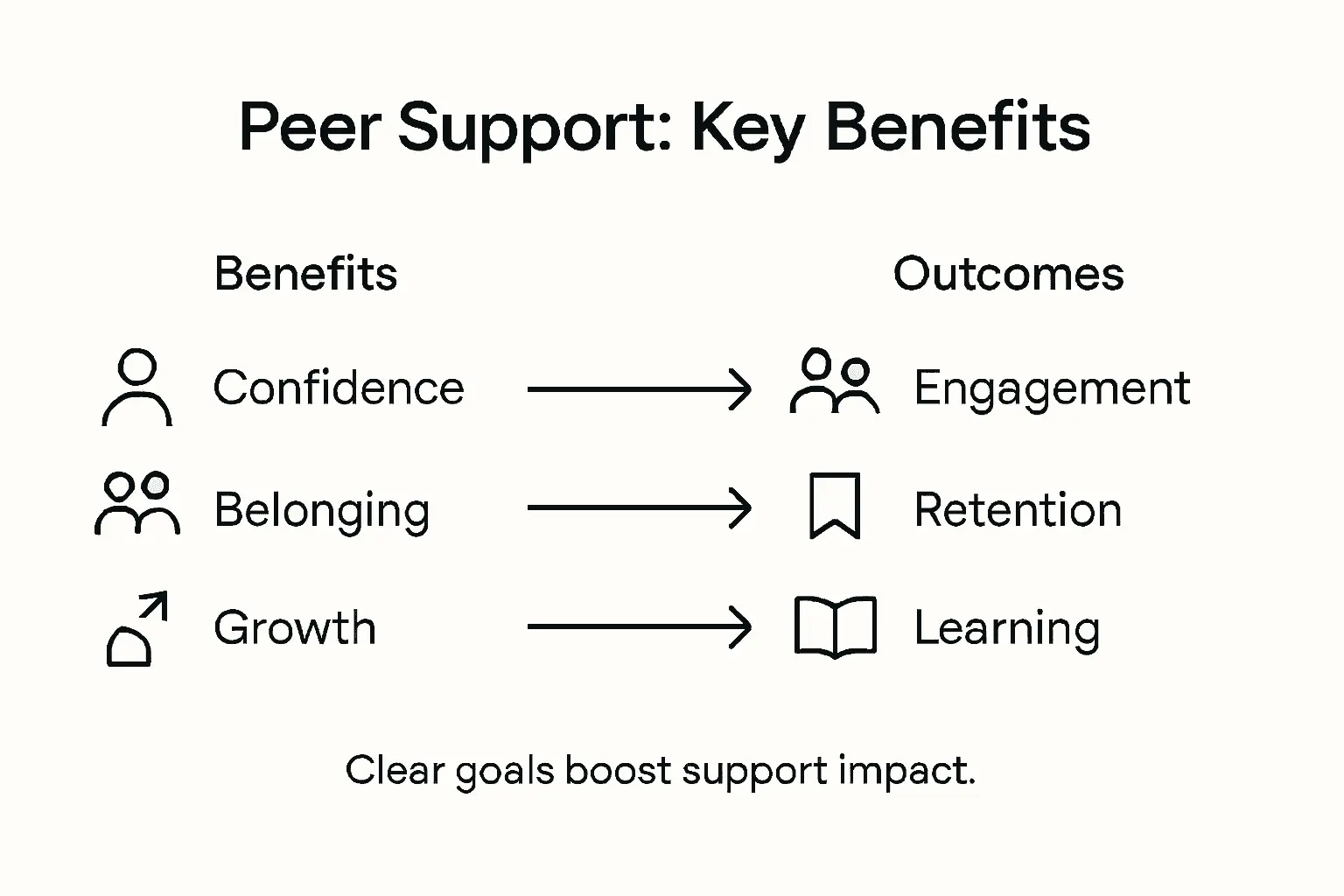
Organisational growth stems directly from these interpersonal dynamics. By fostering environments of mutual support and collective learning, membership organisations can create self-sustaining ecosystems where members feel genuinely valued, connected, and motivated to contribute. The psychological safety generated through peer support mechanisms enables members to take professional risks, share innovative ideas, and develop long-term commitments to their organisational communities.
Pro tip: Design peer support programmes with clear objectives, structured matching processes, and regular feedback mechanisms to ensure continuous improvement and member engagement.
Challenges and Pitfalls in Peer Support Initiatives
Systematic research into organisational challenges reveals complex obstacles that can undermine the effectiveness of peer support programmes. Understanding these pitfalls is crucial for developing robust, sustainable support strategies that genuinely enhance member experiences and organisational resilience.
Key challenges in peer support initiatives include:
- Unclear role boundaries
- Insufficient training and resources
- Limited organisational recognition
- Potential confidentiality risks
- Inconsistent implementation strategies
Role Ambiguity represents a significant impediment to successful peer support. Comprehensive studies highlight the critical need for precise role definitions and comprehensive training programmes. Peer support volunteers often struggle with understanding their exact responsibilities, leading to potential miscommunication, burnout, and reduced programme effectiveness.
Organisational culture plays a pivotal role in addressing these challenges. Successful implementation requires strong leadership commitment, dedicated resources for ongoing training, and a supportive environment that recognises the intrinsic value of peer support. This involves creating clear guidelines, establishing supervision mechanisms, and developing robust support structures that protect both peer volunteers and programme participants.
Pro tip: Develop comprehensive role descriptions and establish regular supervision and debriefing sessions to maintain clear boundaries and support peer support volunteers.
Best Practices for Sustainable Peer Support
National practice guidelines emphasise a holistic approach to developing robust and effective peer support programmes. Sustainable peer support requires strategic planning, continuous evaluation, and a commitment to core values that prioritise human connection and mutual growth.
Key best practices for implementing sustainable peer support include:
- Establishing clear organisational guidelines
- Providing comprehensive training
- Creating structured supervision mechanisms
- Ensuring ongoing professional development
- Maintaining transparent communication channels
Institutional Integration represents a critical component of successful peer support strategies. Comprehensive research suggests embedding peer support activities within broader organisational frameworks significantly enhances programme effectiveness. This approach requires leadership commitment, resource allocation, and a culture that genuinely values collaborative learning and mutual support.
Effective peer support programmes demand continuous adaptation and investment. Organisations must develop flexible frameworks that allow peer supporters to evolve their roles, receive meaningful feedback, and contribute to programme design. This includes creating opportunities for peer supporters to participate in policy development, share their experiences, and help shape the future of support initiatives.
Pro tip: Develop a comprehensive peer supporter onboarding programme that includes initial training, ongoing mentorship, and regular reflective practice sessions to maintain programme quality and volunteer engagement.
To highlight practical implementation, here is a summary of best practices for sustainable peer support programmes and their direct organisational benefit.
| Best Practice Approach | Key Action | Organisational Benefit |
|---|---|---|
| Clear guidelines | Formalise processes | Greater role clarity |
| Comprehensive training | Ongoing skills development | Improved support quality |
| Structured supervision | Regular feedback sessions | Enhanced volunteer retention |
| Institutional integration | Align with organisational goals | Long-term culture of collaboration |
Empower Your Membership Organisation with Structured Peer Support Solutions
The article highlights how successful peer support requires clear structure, effective communication, and ongoing engagement to overcome common challenges such as role ambiguity and member isolation. Membership organisations face the critical task of implementing these frameworks while ensuring their members feel connected, valued, and professionally supported. Colossus Systems offers a fully customisable platform designed to streamline these essential peer support initiatives through advanced membership management, targeted communication channels, and integrated event planning.
Key benefits include:
- Seamless management of peer mentoring and peer-led groups
- Facilitated knowledge sharing with virtual training and collaborative tools
- Enhanced member engagement via tailored communication and marketing automation

Discover how to transform your peer support programmes into strategic growth drivers. Visit Contact Us now to explore custom solutions that address your organisation’s unique needs. Connect with our experts and start building a thriving community with Colossus Systems today. Learn more about our membership engagement tools and how they can help your organisation reduce professional isolation and boost collaboration.
Frequently Asked Questions
What is peer support in membership organisations?
Peer support in membership organisations is a collaborative approach where individuals with shared experiences provide mutual assistance, guidance, and support, enhancing both emotional resilience and professional development.
What are the main types of peer support?
The main types of peer support include peer-led support groups, peer mentoring, and peer learning, each offering structured interactions focused on emotional support, knowledge transfer, and collaborative learning.
How can peer support benefit organisational growth?
Peer support can lead to improved retention rates, enhanced member confidence, reduced feelings of professional isolation, and stronger internal communication networks, ultimately contributing to organisational development and member engagement.
What challenges do peer support programmes face?
Challenges in peer support programmes often include unclear role boundaries, insufficient training, potential confidentiality risks, and inconsistent implementation strategies, all of which can undermine the effectiveness of the initiatives.