Ethical Leadership Principles – Shaping Organisational Culture

Over 65 percent of organisations in the British business sector now rate ethical leadership as critical to long-term success. With rapidly shifting expectations and public scrutiny, understanding what drives genuine ethical conduct is more important than ever. This article unpacks the real principles and values behind ethical leadership, revealing how strong moral foundations and transparent practices elevate both organisational culture and reputation.
Table of Contents
- Defining Ethical Leadership Principles And Values
- Major Styles Of Ethical Leadership Explained
- Implementing Ethics In Membership Organisations
- Benefits Of Ethical Leadership For Associations
- Common Mistakes And How To Prevent Them
Key Takeaways
| Point | Details |
|---|---|
| Commitment to Ethical Principles | Ethical leadership requires a deep commitment to integrity, transparency, and respect, fundamentally shaping organisational culture. |
| Active Engagement and Accountability | Leaders should foster environments that empower employees to address unethical practices while prioritising long-term welfare over short-term gains. |
| Diverse Leadership Styles | Various ethical leadership styles, such as Servant and Transformational Leadership, emphasise team development and transparent communication. |
| Continuous Ethical Improvement | Ongoing evaluation and adaptive strategies are essential for maintaining ethical standards in membership organisations and preventing ethical lapses. |
Defining Ethical Leadership Principles and Values
Ethical leadership represents a profound commitment to guiding organisations with integrity, fairness, and fundamental human respect. At its core, this leadership approach transcends traditional management practices by embedding moral principles deeply into organisational culture and decision-making processes. Ethical leadership involves systematically creating environments where principled behaviour becomes the fundamental expectation.
The foundational principles of ethical leadership centre on several key values that shape organisational behaviour. These include transparency, accountability, respect for individuals, and a consistent commitment to moral standards. Leaders who embody these principles do not merely dictate rules; they demonstrate ethical conduct through their own actions, creating a powerful model of integrity that influences every level of the organisation. Practicing leadership that respects fundamental ethical principles requires a holistic approach to organisational governance.
Practical implementation of ethical leadership demands more than passive acknowledgement of moral guidelines. It requires active engagement, continuous learning, and a willingness to make difficult decisions that prioritise long-term organisational health over short-term gains. Ethical leaders must cultivate an environment where employees feel empowered to speak up, challenge unethical practices, and contribute to a culture of mutual respect and accountability.
Key characteristics of ethical leadership include:
- Demonstrating consistent moral behaviour
- Promoting transparency in communication
- Encouraging open dialogue about ethical challenges
- Holding oneself and others accountable for actions
- Creating safe spaces for ethical discussions
- Balancing organisational objectives with human dignity
Major Styles of Ethical Leadership Explained
Ethical leadership is not a monolithic approach but encompasses several nuanced leadership styles that prioritise moral conduct and organisational integrity. Comparative studies highlight distinct approaches that integrate ethical considerations into leadership behaviour, revealing a rich landscape of leadership methodologies that go beyond traditional management paradigms.

Servant Leadership emerges as a profound style where leaders prioritise the needs of their team members above personal ambitions. This approach fundamentally transforms organisational dynamics by creating environments of mutual respect, empowerment, and genuine care. Leaders practising this style actively seek to develop their team’s potential, remove obstacles, and create supportive conditions for individual and collective growth.
The Transformational Leadership model represents another critical ethical leadership approach, characterised by inspiring and motivating team members to transcend their individual limitations. Leadership models demonstrate how transformational approaches integrate ethical principles across organisational structures, focusing on developing intrinsic motivation, promoting personal development, and establishing a shared vision that aligns individual aspirations with broader organisational goals.
Key characteristics of these ethical leadership styles include:
- Prioritising team member development
- Maintaining transparent communication
- Demonstrating consistent moral behaviour
- Encouraging individual and collective growth
- Creating inclusive and supportive work environments
- Balancing organisational objectives with individual potential
Additionally, ethical leadership styles distinguish themselves through their commitment to:
- Authentic interpersonal relationships
- Continuous personal and professional learning
- Accountability at all organisational levels
- Respect for diverse perspectives
- Promoting a culture of integrity and trust
Implementing Ethics in Membership Organisations
Ethical implementation in membership organisations requires a comprehensive and strategic approach that goes beyond surface-level compliance. Comprehensive ethical guidelines provide crucial frameworks for organisational behaviour and member interactions, establishing clear expectations and standards that guide institutional culture and individual conduct.
The foundation of ethical implementation lies in developing a robust set of core values that resonate throughout the organisation. These values encompass critical principles such as fairness, trustworthiness, respect, responsibility, caring, and good citizenship, creating a holistic framework that extends beyond mere procedural requirements. Leadership plays a pivotal role in this process, demonstrating these values through consistent actions and creating environments where ethical behaviour is not just encouraged but expected.
Practical implementation strategies for membership organisations include:
- Developing a clear, accessible ethical code of conduct
- Providing regular ethics training and workshops
- Establishing transparent reporting mechanisms
- Creating accountability structures
- Encouraging open dialogue about ethical challenges
- Recognising and rewarding ethical behaviour
Moreover, ethical implementation requires ongoing commitment and continuous improvement. Organisations must:
- Regularly review and update ethical guidelines
- Conduct periodic ethical climate assessments
- Foster a culture of psychological safety
- Integrate ethical considerations into decision-making processes
- Promote diversity and inclusive practices
- Ensure consistent application of ethical standards across all levels of the organisation
Benefits of Ethical Leadership for Associations
Ethical leadership fundamentally transforms organisational culture by fostering an environment of trust, integrity, and sustainable success. Associations that prioritise ethical leadership create robust frameworks that extend far beyond traditional management approaches, generating profound positive impacts across their entire ecosystem.
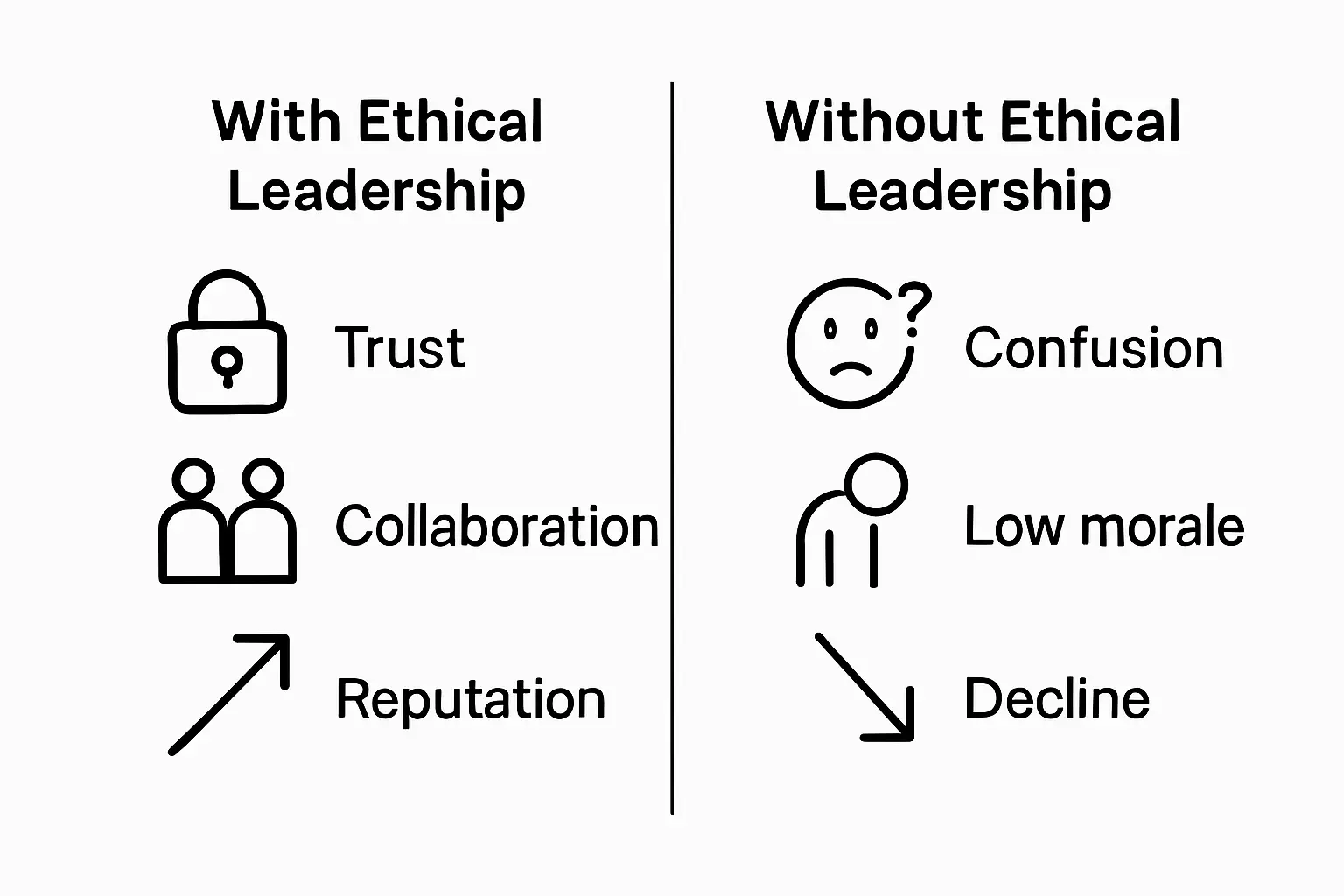
The transformative power of ethical leadership manifests through multiple strategic advantages. Ethical leadership principles promote fairness, respect, and integrity, creating supportive environments that nurture individual and collective potential. By establishing clear moral guidelines and demonstrating consistent principled behaviour, associations can develop stronger internal cohesion, enhance member engagement, and build long-term organisational credibility.
Key benefits of ethical leadership for associations include:
- Enhanced member trust and loyalty
- Improved organisational reputation
- Stronger internal communication channels
- Increased member retention rates
- More effective conflict resolution mechanisms
- Greater resilience during challenging periods
Moreover, ethical leadership delivers substantial long-term advantages:
- Attracting high-quality members and talent
- Creating a positive, inclusive organisational culture
- Developing robust governance structures
- Mitigating potential legal and reputational risks
- Promoting transparency and accountability
- Establishing a sustainable foundation for organisational growth
Common Mistakes and How to Prevent Them
Ethical leadership requires understanding and proactively addressing common pitfalls that can undermine organisational integrity. Leaders must develop keen awareness of potential ethical challenges and create robust mechanisms to prevent compromising situations before they emerge.
Emotional Intelligence plays a critical role in navigating ethical leadership challenges. Research indicates that deficiencies in emotional competencies can significantly increase the risk of ethical lapses, highlighting the importance of developing sophisticated interpersonal skills and self-awareness. Leaders must continuously cultivate their ability to understand, manage, and respond to complex emotional dynamics within their organisations.
Common ethical leadership mistakes include:
- Inconsistent behaviour between stated values and actions
- Avoiding difficult conversations about ethical challenges
- Neglecting transparent communication
- Failing to establish clear accountability mechanisms
- Tolerating unethical behaviour from high-performing team members
- Prioritising short-term gains over long-term ethical standards
Strategies for prevention and mitigation:
- Develop comprehensive ethical training programmes
- Create safe channels for reporting potential ethical breaches
- Regularly review and update ethical guidelines
- Implement consistent consequences for ethical violations
- Foster a culture of psychological safety and open dialogue
- Promote continuous learning and self-reflection among leaders
Elevate Ethical Leadership with Streamlined Member Engagement Solutions
Navigating the complex demands of ethical leadership requires tools that support transparency, accountability, and meaningful member interactions. Organisations striving to foster trust, uphold integrity, and promote open dialogue will find these goals significantly enhanced by adopting a comprehensive platform tailored to membership management. Colossus Systems offers the essential technology to embed ethical principles directly into your organisational culture by simplifying tasks such as event planning, communication, and member relationship management.

Transform your leadership approach by empowering every level of your association with efficient, transparent processes. With Colossus Systems, you can create safe spaces for ethical discussions, maintain clear accountability, and deliver consistent communication that reflects your organisation’s core values. Do not wait to build a resilient culture where ethics drive success. Explore how our platform helps you implement ethical leadership principles effectively by visiting our contact page. Start shaping the future of your organisation today through smart digital engagement and management solutions provided by Colossus Systems.
Frequently Asked Questions
What is ethical leadership?
Ethical leadership is a leadership style that emphasises guiding organisations with integrity, fairness, and respect for individuals. It involves embedding moral principles into organisational culture and decision-making processes.
What are the key principles of ethical leadership?
The key principles of ethical leadership include transparency, accountability, respect for individuals, and a consistent commitment to moral standards, which shape the behaviour and culture of organisations.
How can organisations implement ethical leadership?
Organisations can implement ethical leadership by developing clear ethical codes, providing training, establishing transparent reporting mechanisms, and fostering open dialogue around ethical challenges to create a culture of accountability and respect.
What are the benefits of ethical leadership for organisations?
The benefits of ethical leadership include enhanced member trust, improved organisational reputation, increased member retention, effective conflict resolution, and long-term advantages such as attracting high-quality talent and establishing a culture of transparency and accountability.
Recommended
- Developing Organizational Culture: Complete Guide | Colossus Systems
- Understanding Leadership Development Strategies | Colossus Systems
- Change Management Principles: Complete Guide for Organizations|CS
- Understanding Leadership Development Programs in Detail|CS
- The High Cost Of Incivility In Business - Mastering Conflict
- Emotional Awareness in Business: Complete Guide - Wisdom