Digital Transformation for Nonprofits: Boosting Impact and Engagement

Over 60 percent of british nonprofits are rethinking how technology shapes their missions and day-to-day work. In a rapidly digitalising world, even small organisations face pressure to modernise just to stay relevant and competitive. Whether you lead a local charity or a national foundation, understanding how digital transformation can boost efficiency and impact is crucial. This guide clears up the confusion and shows where british nonprofits can make the smartest digital investments.
Table of Contents
- Defining Digital Transformation for Nonprofits
- Key Technologies Driving Organisational Change
- How Digital Tools Enhance Member Engagement
- Practical Applications in Events and Fundraising
- Risks, Challenges and Common Pitfalls to Avoid
Key Takeaways
| Point | Details |
|---|---|
| Digital Transformation is Essential | Nonprofits must adopt a strategic approach to technology integration to enhance efficiency and social impact. |
| Focus on Key Technologies | Embrace cloud computing, artificial intelligence, and digital platforms to improve operations and stakeholder engagement. |
| Regular Assessments are Crucial | Conduct annual audits of technological capabilities to ensure alignment with strategic objectives and enhance operational efficiency. |
| Address Human Capacity Gaps | Invest in training and change management to equip staff with the necessary skills for successful digital transformation. |
Defining Digital Transformation for Nonprofits
Digital transformation represents a comprehensive reimagining of how nonprofit organisations leverage technology to achieve their mission, enhance operational efficiency, and create greater social impact. More than merely adopting new digital tools, it involves a strategic cultural shift that fundamentally restructures how an organisation approaches its core objectives and engages with stakeholders.
At its essence, digital transformation encompasses three critical dimensions for nonprofits: technological infrastructure, organisational processes, and human capability. Nonprofits must assess their current digital maturity to understand their readiness for technological evolution. This assessment helps organisations identify gaps in their current systems and develop targeted strategies for digital integration.
The transformation journey involves multiple strategic components. Nonprofits typically focus on digitalising core operations such as fundraising, member communication, programme management, and impact measurement. By implementing robust digital platforms, organisations can streamline administrative tasks, reduce operational costs, and redirect resources towards their primary social objectives. Emerging technologies like cloud computing, data analytics, and artificial intelligence are becoming increasingly accessible, enabling even smaller nonprofits to compete more effectively in a digital landscape.
Additionally, digital transformation enables nonprofits to create more personalised, engaging experiences for donors, volunteers, and beneficiaries. Through advanced digital tools, organisations can develop more nuanced communication strategies, track programme outcomes more precisely, and demonstrate their impact with greater transparency.
Pro Insight: Strategic Digital Preparation: Before launching any digital transformation initiative, conduct a comprehensive internal audit of your current technological capabilities, skills, and cultural readiness to ensure a smooth and effective transition.
Key Technologies Driving Organisational Change
The digital transformation landscape for nonprofits is rapidly evolving, with cutting-edge technologies offering unprecedented opportunities to enhance operational effectiveness and mission delivery. Cloud computing and customer relationship management systems are emerging as pivotal technologies that enable organisations to streamline their processes, improve collaboration, and manage donor relationships more strategically.

Artificial intelligence and machine learning represent another transformative technological frontier for nonprofit organisations. These advanced technologies enable sophisticated data analysis, predictive modelling, and task automation that can dramatically improve decision-making capabilities. Intelligent systems can now analyse donor behaviour patterns, predict fundraising trends, and automate routine administrative tasks, allowing nonprofit teams to focus more energy on their core social missions.
Digital platforms and integrated software solutions are also revolutionising how nonprofits operate. Modern technological ecosystems enable seamless communication, real-time collaboration, and comprehensive data management across diverse geographical locations. By implementing robust digital infrastructures, organisations can create more transparent, efficient, and responsive operational models that adapt quickly to changing societal needs.
Moreover, emerging technologies like blockchain, Internet of Things (IoT), and advanced analytics are creating new pathways for nonprofits to demonstrate impact, enhance donor trust, and develop more innovative programme delivery mechanisms. These technologies provide unprecedented capabilities for tracking resource allocation, verifying programme outcomes, and creating more personalised engagement strategies.
The following table summarises key technologies that are transforming nonprofit operations and their primary organisational benefits:
| Technology | Organisational Benefit | Example Application |
|---|---|---|
| Cloud Computing | Flexible access to data and tools | Collaborative document storage |
| Artificial Intelligence | Improved decision-making accuracy | Donor behaviour prediction |
| Digital Platforms | Enhanced real-time communication | Virtual event hosting |
| Blockchain | Increased donation transparency | Verifiable donation tracking |
| Internet of Things | Streamlined resource management | Remote monitoring of assets |
| Advanced Analytics | In-depth impact measurement | Programme outcome evaluation |
Pro Insight: Technology Integration Strategy: Conduct a comprehensive technology audit annually to identify potential digital tools that align with your organisation’s strategic objectives and can enhance operational efficiency.
How Digital Tools Enhance Member Engagement
Social media platforms have revolutionised nonprofit member engagement strategies, offering unprecedented opportunities for direct communication, community building, and mobilising collective action. These digital tools enable organisations to create more personalised, interactive experiences that transcend traditional communication barriers, allowing members to connect, participate, and contribute in increasingly sophisticated ways.
Digital engagement platforms provide nonprofits with multifaceted communication channels that support real-time interactions, collaborative initiatives, and transparent information sharing. Advanced communication technologies enable organisations to segment their member base, deliver targeted content, and create personalised engagement pathways that resonate with individual interests and preferences. By leveraging data analytics and intelligent communication tools, nonprofits can develop more nuanced, responsive engagement strategies that foster deeper member commitment and participation.
Interactive digital tools such as virtual event platforms, online collaboration spaces, and integrated communication systems are transforming how nonprofits build and maintain community connections. These technologies facilitate seamless knowledge sharing, enable remote participation, and create inclusive environments that accommodate diverse member needs and preferences. From webinars and online workshops to interactive discussion forums and crowdsourcing platforms, digital tools are breaking down geographical and logistical barriers that traditionally limited member engagement.
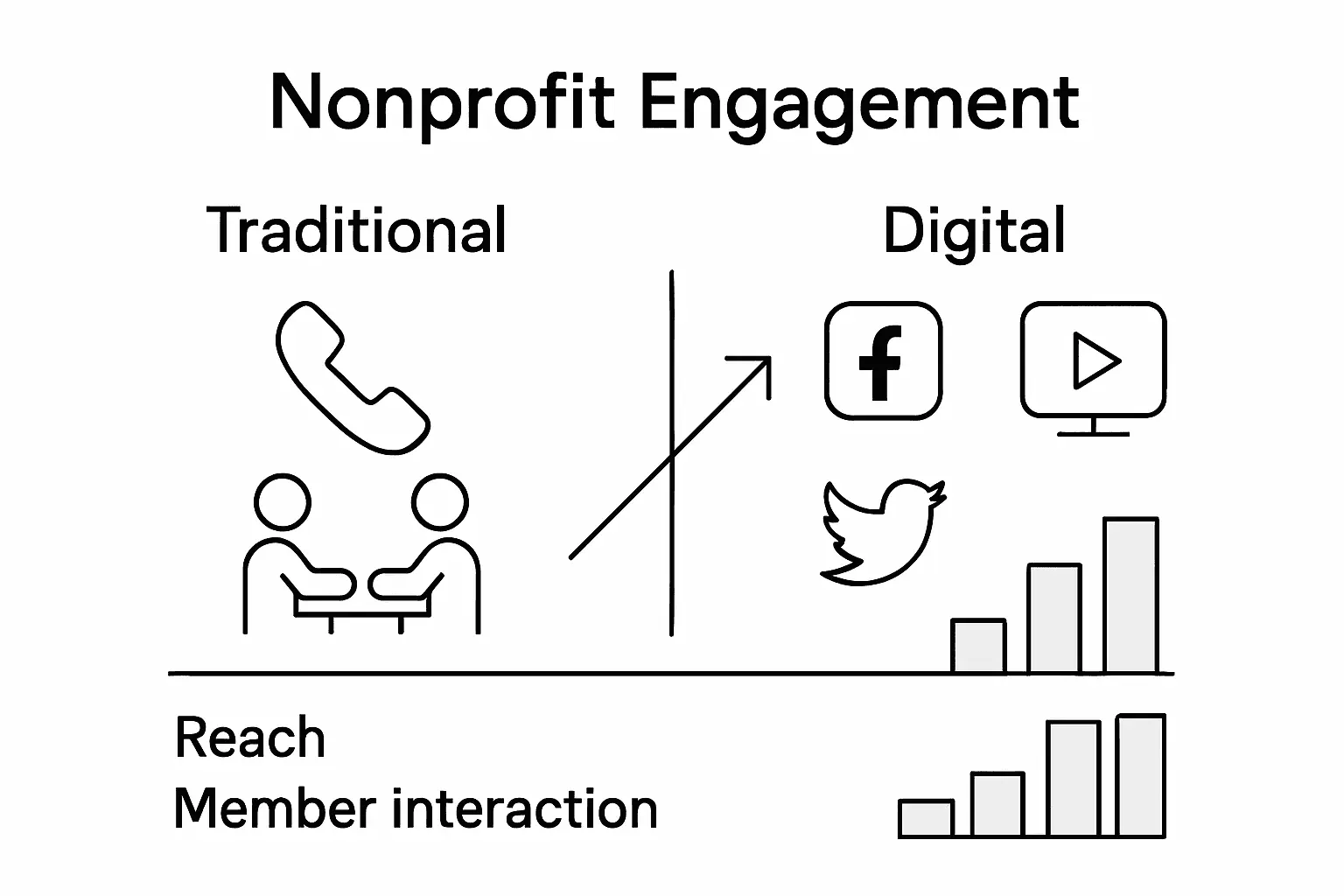
Moreover, digital engagement strategies extend beyond communication to include sophisticated member management systems that track interactions, analyse engagement patterns, and provide actionable insights. By understanding member behaviours, preferences, and participation levels, nonprofits can continuously refine their engagement approaches, develop more targeted programmes, and create more meaningful membership experiences.
Here is a comparison of traditional versus digital approaches in nonprofit member engagement:
| Aspect | Traditional Approach | Digital Approach |
|---|---|---|
| Communication | In-person meetings, mailings | Social media, online forums, real-time chat |
| Event Participation | On-site only, limited reach | Virtual/hybrid events, global accessibility |
| Feedback Collection | Paper surveys, delayed response | Online polls, instant feedback channels |
| Engagement Tracking | Manual attendance records | Automated analytics and engagement dashboards |
Pro Insight: Digital Engagement Audit: Regularly assess your digital communication channels and tools, seeking member feedback to identify gaps and opportunities for enhancing your online engagement strategies.
Practical Applications in Events and Fundraising
Digital technologies are fundamentally transforming nonprofit event management and fundraising strategies, enabling organisations to create more dynamic, interactive, and efficient approaches to engaging donors and supporters. Modern digital platforms provide unprecedented capabilities for planning, executing, and tracking events and fundraising campaigns with remarkable precision and effectiveness.
Virtual and hybrid event technologies have emerged as game-changing solutions for nonprofits, allowing organisations to transcend geographical limitations and create immersive, accessible experiences. Digital event platforms enable seamless registration processes, interactive networking opportunities, real-time engagement features, and comprehensive analytics that help organisations understand participant behaviour and preferences. From webinars and virtual conferences to online auctions and crowdfunding campaigns, these technologies provide flexible, scalable solutions that can dramatically expand an organisation’s reach and impact.
Fundraising has similarly been revolutionised by digital innovations, with sophisticated tools enabling more personalised, data-driven donor engagement strategies. Advanced customer relationship management (CRM) systems and integrated donation platforms allow nonprofits to track donor interactions, segment audiences, and develop targeted fundraising campaigns that resonate with specific donor profiles. Artificial intelligence and machine learning technologies are now being deployed to predict donor behaviour, optimise fundraising strategies, and create more compelling, individualised giving experiences.
Moreover, digital technologies are enhancing transparency and accountability in nonprofit fundraising efforts. Blockchain-enabled donation tracking, real-time financial reporting, and sophisticated analytics provide donors with unprecedented visibility into how their contributions are being used. These technological advancements not only improve operational efficiency but also build greater trust and credibility with donors and stakeholders.
Pro Insight: Fundraising Technology Integration: Conduct a comprehensive audit of your current fundraising technologies, identifying opportunities to implement more sophisticated, data-driven digital tools that can enhance donor engagement and campaign effectiveness.
Risks, Challenges and Common Pitfalls to Avoid
Nonprofit organisations frequently encounter significant challenges when implementing digital transformation strategies, stemming from complex technological, financial, and organisational barriers. Understanding these potential obstacles is crucial for developing a resilient and effective digital evolution roadmap that mitigates risks and maximises technological investments.
One of the most prevalent challenges is technological infrastructure resistance, where legacy systems and outdated technological frameworks create substantial impediments to seamless digital integration. Many nonprofits struggle with limited budgetary resources, which constrains their ability to invest in sophisticated digital tools and platforms. This financial limitation often results in piecemeal technological adoption, creating inefficient, disconnected digital ecosystems that fail to deliver comprehensive organisational transformation.
Human capacity and skill gaps represent another critical challenge in digital transformation journeys. Nonprofits frequently lack specialised technological expertise, and existing staff may demonstrate reluctance or insufficient capabilities to adapt to new digital workflows. This skills deficit can lead to incomplete implementation, reduced technological effectiveness, and potential organisational frustration. Moreover, inadequate change management strategies can exacerbate these challenges, resulting in poor technological adoption and limited digital transformation success.
Cybersecurity and data privacy concerns further complicate digital transformation efforts for nonprofits. With increasing regulatory requirements and growing cybersecurity threats, organisations must invest significant resources in protecting sensitive donor information, maintaining robust digital infrastructure, and ensuring comprehensive data management protocols. Failing to address these critical security dimensions can potentially compromise organisational credibility and donor trust.
Pro Insight: Digital Transformation Readiness: Conduct a comprehensive organisational assessment that evaluates technological capabilities, staff skills, financial resources, and change management capacity before initiating any significant digital transformation initiative.
Empower Your Nonprofit’s Digital Transformation with Colossus Systems
Navigating challenges like fragmented digital tools, limited staff capacity, and inefficient member engagement can make digital transformation feel overwhelming. This article highlights critical pain points such as the need for streamlined member management, advanced CRM capabilities, and dynamic event planning to boost fundraising and donor transparency. At Colossus Systems, we understand these hurdles and provide a fully integrated SaaS platform tailored for membership-based organisations and nonprofits aiming to enhance operational efficiency, deepen supporter engagement, and scale their impact.
Discover how to:
- Centralise member management and communication
- Host engaging virtual or hybrid events with ease
- Utilise powerful CRM and email marketing tools designed for personalised outreach
- Track fundraising campaigns with advanced analytics for informed decision-making
Ready to overcome the common digital transformation pitfalls and accelerate your organisational growth Today Visit our Contact Us page and connect with experts who can help you customise a platform that meets your unique needs. Take the first step towards scaling your nonprofit’s impact with confidence using Colossus Systems’ comprehensive engagement and management solutions.
Frequently Asked Questions
What is digital transformation for nonprofits?
Digital transformation for nonprofits refers to a thorough reimagining of how organisations use technology to achieve their mission, enhance operational efficiency, and create greater social impact. It involves a strategic cultural shift and focuses on technological infrastructure, organisational processes, and human capability.
How can nonprofits assess their current digital maturity?
Nonprofits can assess their current digital maturity by conducting an internal audit that evaluates their technological capabilities, staff skills, and cultural readiness. This assessment helps identify gaps in current systems and informs the development of targeted strategies for digital integration.
What technologies are crucial for nonprofit digital transformation?
Key technologies driving nonprofit digital transformation include cloud computing, customer relationship management systems, artificial intelligence, digital platforms, and advanced analytics. These technologies enhance organisational efficiency by streamlining operations, improving decision-making, and enabling better engagement with donors and beneficiaries.
What are common challenges nonprofits face during digital transformation?
Common challenges include resistance to adopting new technological infrastructures, limited financial resources, gaps in human capacity and skills, and cybersecurity concerns. Nonprofits must address these issues to ensure successful implementation of digital transformation strategies.
Recommended
- 10 Best Books for Nonprofit Leaders to Thrive | Colossus Systems
- Understanding the Best Email Marketing for Nonprofits|CS
- Understanding Email Marketing for Nonprofits | Colossus Systems
- Donor Management Explained: Maximizing Engagement Success|CS
- Comprendere i trend del digital marketing 2025 • Gio Talente