Digital Advocacy: Driving Member Engagement Online

Most British membership organizations now report that more than 60 percent of member engagement takes place online. With American and Canadian associations facing similar trends, digital advocacy has become a vital strategy for directors and managers seeking to remain relevant and powerful in their communities. This guide reveals smart ways to energize members, enhance advocacy outcomes, and unlock the full potential of digital communication tools for lasting impact.
Table of Contents
- Defining Digital Advocacy And Core Concepts
- Main Types Of Digital Advocacy Campaigns
- How Digital Advocacy Functions For Organisations
- Key Tools And Platforms For Member Engagement
- Legal And Ethical Considerations In Digital Advocacy
- Risks, Costs And Common Pitfalls To Avoid
Key Takeaways
| Point | Details |
|---|---|
| Effective Digital Advocacy | Prioritise member autonomy and create a strategy that supports engagement through authentic, clear guidelines. |
| Campaign Types | Implement multi-channel strategies integrating social media, email, and petitions for enhanced member interaction. |
| Legal and Ethical Framework | Develop an ethical framework encompassing legal compliance, member consent, and transparent communication to foster trust. |
| Risk Management | Conduct regular digital risk audits to identify vulnerabilities and maintain proactive advocacy practices. |
Defining Digital Advocacy and Core Concepts
Digital advocacy represents a strategic approach for membership organisations to mobilise support, influence perceptions, and drive meaningful engagement through online platforms and digital communication channels. At its core, digital advocacy encompasses using technological tools and digital platforms to galvanise people towards collective goals, transforming how organisations connect with their members and stakeholders.
The landscape of digital advocacy involves multifaceted online activities including social media engagement, content creation, targeted messaging, and strategic communication designed to generate awareness and prompt action. These activities range from sharing organisational content and participating in online discussions to creating compelling narratives that resonate with target audiences. Professional membership bodies can leverage digital advocacy to expand their reach, reduce communication costs, and create more personalised interactions with members across diverse digital platforms.
Critical components of effective digital advocacy include understanding technological platforms, crafting engaging content, maintaining authentic communication, and strategically navigating the intersection between personal and organisational digital identities. Successful digital advocacy requires a nuanced approach that balances encouraging member participation while respecting individual digital boundaries. Organisations must develop strategies that empower members to become digital ambassadors without feeling surveilled or constrained.
Professional insight: Develop a digital advocacy strategy that prioritises member autonomy and provides clear, supportive guidelines for online engagement rather than restrictive policies.
Main Types of Digital Advocacy Campaigns
Membership organisations can leverage multiple digital advocacy campaign strategies to effectively engage and mobilise their members. Digital advocacy tools encompass a diverse range of communication platforms and techniques designed to amplify organisational messages and drive meaningful action. These campaigns typically fall into several key categories that enable targeted, strategic engagement.
The primary types of digital advocacy campaigns include social media mobilisation, email outreach, online petition drives, and targeted digital communication initiatives. Social media campaigns excel at creating viral engagement, allowing organisations to rapidly share compelling narratives and mobilise member support through platforms like LinkedIn, Twitter, and Facebook. Email campaigns offer more personalised communication, enabling direct member outreach with segmented messaging tailored to specific interest groups or membership demographics.
Online petition platforms and advocacy websites represent another critical digital advocacy approach, providing members with structured opportunities to demonstrate collective support for organisational objectives. These platforms allow members to sign petitions, share campaign messages, and contribute to broader advocacy efforts with minimal friction. Professional membership bodies can design these campaigns to address policy changes, raise awareness about critical issues, or generate momentum for specific organisational initiatives.
Expert recommendation: Design digital advocacy campaigns with multi-channel strategies that integrate social media, email, and petition platforms to maximise member engagement and campaign effectiveness.
The following table outlines the comparative advantages and limitations of major digital advocacy campaign types for membership organisations:
| Campaign Type | Main Advantage | Limitation | Ideal Use Case |
|---|---|---|---|
| Social Media | Rapid, viral outreach | Short attention span | Quick mobilisation, awareness |
| Email Outreach | Personal, targeted | Risk of spam filters | Segmented member updates |
| Online Petitions | Demonstrates support | Engagement can be brief | Policy advocacy, collective action |
| Digital Communication | Real-time interaction | Resource intensive | Member feedback, discussions |
How Digital Advocacy Functions for Organisations
Digital advocacy operates as a sophisticated mechanism for organisations to extend their influence, reputation, and communication strategies through strategic online engagement. Organizations utilise digital advocacy by intertwining personal and institutional digital identities, creating powerful channels of communication that transcend traditional organisational boundaries. This approach transforms members and employees into digital ambassadors who can authentically represent the organisation’s mission and values.
The functional dynamics of digital advocacy involve multiple strategic layers. Organisations leverage member networks to disseminate information, build credibility, and generate organic reach through personal social media channels. By empowering individuals to share organisational content, messaging becomes more personalised and potentially more persuasive. These digital advocacy mechanisms allow for rapid information distribution, enabling organisations to respond quickly to emerging issues, share critical updates, and mobilise support across diverse digital platforms.

Moreover, digital advocacy functions as a nuanced communication ecosystem that balances organisational objectives with individual autonomy. Successful implementations require careful management to ensure that advocacy efforts feel genuine and voluntary, rather than perceived as forced or surveillance-like. This involves creating compelling content, providing clear communication guidelines, and offering members meaningful opportunities to engage with and represent the organisation’s core mission and values.
Strategic recommendation: Develop a digital advocacy framework that provides members with clear, authentic pathways for engagement while maintaining a delicate balance between organisational messaging and individual creative expression.
Key Tools and Platforms for Member Engagement
Membership organisations require a comprehensive suite of digital tools to effectively engage and communicate with their members across diverse platforms. Leveraging social media for membership growth and engagement represents a critical strategy for modern organisational communication. These platforms enable targeted interactions, real-time feedback, and dynamic content sharing that can transform member relationships.
The primary digital engagement tools encompass several key categories. Social media platforms like LinkedIn, Twitter, and Facebook provide robust channels for sharing organisational updates, hosting discussions, and creating community spaces. Professional communication platforms such as Slack and Microsoft Teams offer more structured interaction environments, allowing for focused group discussions, knowledge sharing, and collaborative projects. Email marketing platforms enable segmented, personalised communication strategies, allowing organisations to deliver tailored content directly to specific member demographics.
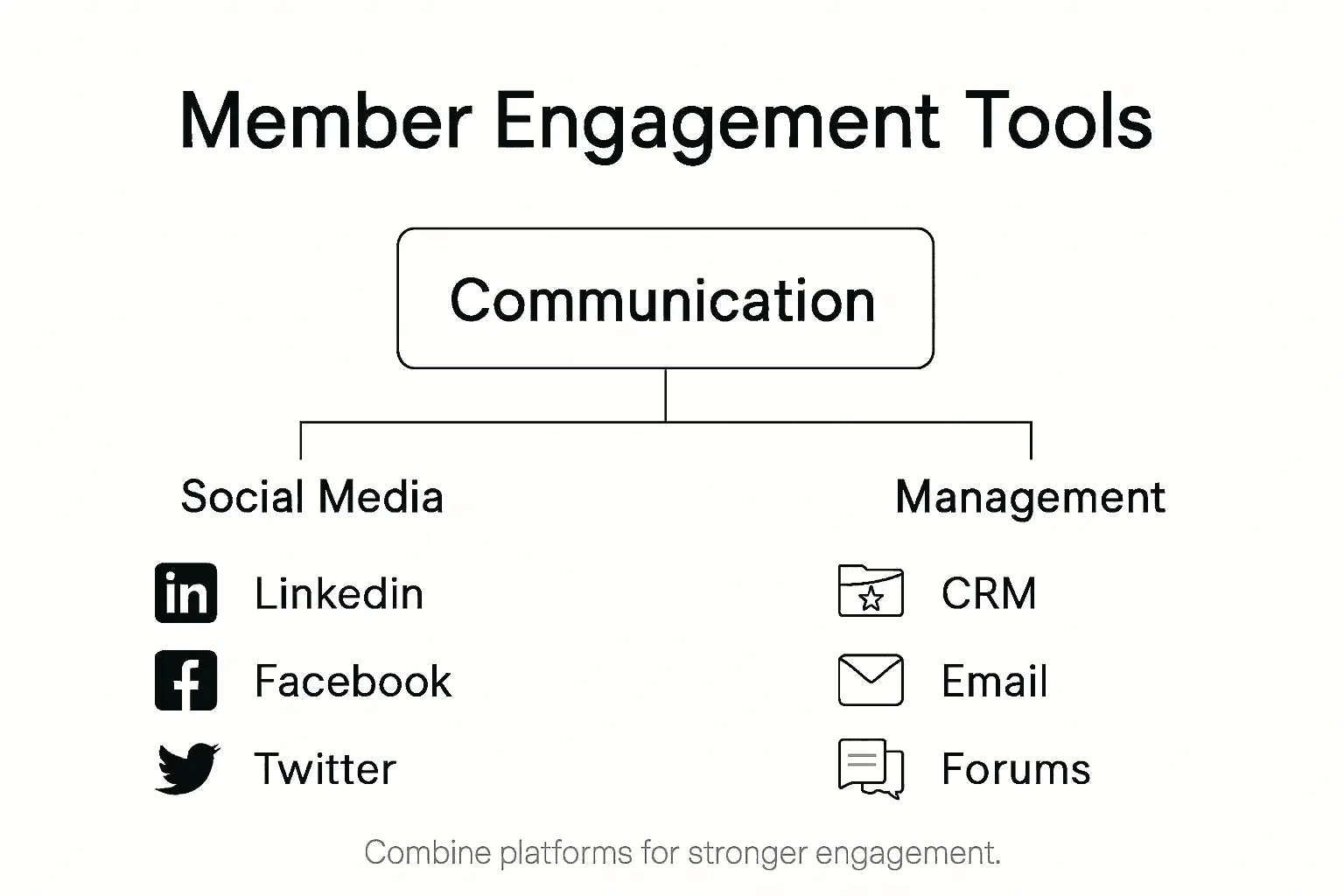
Additionally, specialized membership management platforms and customer relationship management (CRM) systems play a crucial role in digital engagement. These tools facilitate member tracking, event registration, communication logging, and advanced analytics that help organisations understand member behaviour, preferences, and engagement levels. Webinar platforms, online learning management systems, and virtual event technologies further expand the potential for interactive, meaningful member experiences that transcend traditional geographical limitations.
Strategic insight: Integrate multiple digital platforms strategically, ensuring seamless communication and creating a cohesive member engagement ecosystem that feels intuitive and responsive.
Below is a summary table of essential digital tools and platforms, highlighting their function and value for member engagement:
| Tool/Platform | Primary Function | Value for Engagement | Example Use |
|---|---|---|---|
| Social Media | Public networking | Expands visibility | Community building |
| Communication Apps | Group collaboration | Enables focused discussions | Project management |
| Email Marketing | Direct messaging | Delivers personalised content | Event invitations |
| Membership Management | Data analytics, tracking | Improves member experience | Registration, reporting |
Legal and Ethical Considerations in Digital Advocacy
Digital advocacy requires a nuanced approach to legal and ethical frameworks that protect both organisational interests and individual member rights. Ethical digital advocacy demands comprehensive reflection on moral responsibilities, extending beyond simple compliance to consider broader socio-political implications of online engagement strategies. Organisations must develop robust governance mechanisms that balance technological capabilities with principled conduct.
Critical ethical considerations encompass multiple dimensions of digital interaction. These include maintaining absolute transparency about campaign origins, protecting supporter data privacy, verifying information accuracy, and avoiding manipulative targeting techniques. Member consent becomes paramount, requiring organisations to implement clear communication protocols that explain how personal data will be collected, used, and protected. Organisations must also establish comprehensive guidelines that prevent potential misuse of digital platforms and ensure inclusive, respectful communication practices.
Moreover, legal compliance demands meticulous attention to data protection regulations, intellectual property rights, and digital communication standards. This involves understanding complex legislative frameworks like General Data Protection Regulation (GDPR), developing transparent opt-in and opt-out mechanisms for digital communications, and creating comprehensive digital engagement policies that prioritise member autonomy. Ethical digital advocacy ultimately requires a proactive, principled approach that views technology as a tool for genuine community engagement rather than mere information dissemination.
Professional recommendation: Develop a comprehensive digital ethics framework that combines legal compliance, member consent, and transparent communication protocols to build trust and maintain organisational integrity.
Risks, Costs and Common Pitfalls to Avoid
Digital advocacy initiatives expose organisations to multifaceted risks that demand strategic anticipation and proactive management. Understanding potential risks requires comprehensive planning and robust mitigation strategies, encompassing technological, reputational, financial, and legal dimensions. These potential challenges necessitate a holistic approach to digital engagement that balances innovation with prudent risk management.
Common pitfalls in digital advocacy include technological over-reliance, inadequate risk assessment, and insufficient adaptation to local contexts. Organisations frequently underestimate the complexity of digital platforms, mistakenly viewing technology as a solution rather than a strategic tool. This can lead to misallocation of resources, reduced member engagement, and potential reputational damage. Critical risks involve data privacy breaches, ineffective communication strategies, legal non-compliance, and the potential for digital campaigns to generate unintended negative consequences.
Mitigating these risks requires developing comprehensive digital advocacy frameworks that prioritise member protection, transparent communication, and flexible strategic planning. This involves conducting thorough due diligence on technological platforms, implementing robust data protection protocols, diversifying advocacy strategies, and maintaining clear communication channels. Organisations must also invest in continuous staff training, develop contingency plans, and create mechanisms for ongoing risk assessment and adaptation.
Strategic safeguard: Conduct regular digital risk audits that evaluate technological vulnerabilities, communication strategies, and potential legal implications to maintain proactive and responsible digital advocacy practices.
Unlock the Power of Digital Advocacy with Colossus Systems
Navigating the complexities of digital advocacy requires more than just enthusiasm. Organisations face challenges such as balancing authentic member engagement, managing diverse platforms, and maintaining clear communication that respects individual autonomy. The article highlights key pains like coordinating multi-channel campaigns, safeguarding data privacy, and fostering genuine connections that turn members into passionate digital ambassadors. This is where Colossus Systems can transform your digital advocacy efforts.
Discover how our all-in-one SaaS platform empowers membership organisations to streamline event planning, personalise email marketing, and unify CRM operations—creating seamless online advocacy experiences. With tailored tools for managing communication pipelines and enhancing member interaction across social media and virtual events, you can build trust while driving measurable growth. Take control of your digital engagement strategy today by reaching out through our Contact Page. Start crafting authentic, impactful campaigns now that resonate deeply with your members and uphold ethical standards.
Explore the future of member engagement and advocacy with Colossus Systems and turn challenges into lasting opportunities.
Frequently Asked Questions
What is digital advocacy?
Digital advocacy is a strategic approach for organisations to mobilise support and engage with members online through various digital communication channels and platforms.
How can membership organisations effectively execute digital advocacy campaigns?
Membership organisations can execute effective digital advocacy campaigns by utilising social media, email outreach, online petitions, and targeted communication initiatives that resonate with their members.
What are the key tools and platforms for engaging members in digital advocacy?
Key tools for engaging members include social media platforms, communication apps like Slack, email marketing services, and membership management systems that facilitate interaction and data analytics.
What legal and ethical considerations should organisations keep in mind for digital advocacy?
Organisations should focus on data privacy, transparency of campaign origins, and member consent while ensuring compliance with data protection regulations to maintain trust and integrity in their digital advocacy efforts.
Recommended
- What is Digital Engagement? Understanding Its Impact|CS
- Digital Communication Strategies for Member Organisations|CS
- Engagement Metrics Explained: Complete Guide for Organizations|CS
- What Is Membership Engagement? Complete Overview | Colossus Systems
- Understanding the Importance of Customer Communication – My WordPress
- Rôle de la communauté TCG : Dynamique des échanges et entraide - JM Cards