Adapting to Remote Work: Complete Guide for Organisations

Nearly half of British employees now work outside traditional offices at least once per week, highlighting a dramatic shift in how companies approach productivity and collaboration. As this trend reshapes expectations across the United Kingdom and beyond, understanding the key ideas and essential tools behind remote work has never mattered more. This guide breaks down the core concepts, proven strategies, and practical challenges so you can navigate the world of remote work with confidence.
Table of Contents
- Defining Remote Work And Core Concepts
- Types Of Remote Work Arrangements Explained
- Essential Technologies And Digital Tools Needed
- Engagement And Communication Strategies Online
- Challenges, Risks, And Best Practices For Success
Key Takeaways
| Point | Details |
|---|---|
| Remote Work Definition | Remote work allows professionals to perform jobs from various locations using digital technologies, enhancing flexibility and accessibility to global talent. |
| Types of Arrangements | Common remote work models include full-time remote work, hybrid models, and job sharing, each designed to meet diverse needs. |
| Technological Requirements | Successful remote work relies on robust technology, including high-speed internet, cloud platforms, and comprehensive communication tools. |
| Engagement Strategies | Effective online communication is key; organisations should implement clear protocols and regular check-ins to maintain team cohesion and connection. |
Defining Remote Work and Core Concepts
Remote work transforms traditional employment paradigms by enabling professionals to execute job responsibilities from locations outside conventional office environments. Understanding managing remote teams requires comprehending its fundamental characteristics and technological foundations.
At its core, remote work involves employees performing professional duties from diverse geographical locations, utilising digital communication technologies to maintain productivity and collaboration. This work model transcends physical workplace boundaries, allowing organisations to access talent globally while providing workers unprecedented flexibility. Professionals might work from home offices, co-working spaces, or even international destinations, maintaining seamless connectivity through robust digital infrastructure.
Key characteristics of effective remote work include:
- Strong digital communication platforms
- Clear performance expectations
- Robust technological infrastructure
- Regular virtual team interactions
- Flexible work scheduling
The technological evolution has been instrumental in remote work’s emergence. Advanced collaboration tools, secure cloud platforms, and high-speed internet connectivity have transformed geographical constraints into opportunities for organisational growth. Remote work productivity strategies demonstrate how progressive organisations are leveraging these technological advancements to create dynamic, adaptable work environments that prioritise outcomes over physical presence.
Types of Remote Work Arrangements Explained
Flexible work arrangements have transformed traditional employment models, offering diverse approaches that cater to organisational and individual needs. Remote team building strategies become crucial when implementing these innovative work models effectively.
The landscape of remote work encompasses several distinct arrangements. Telecommuting allows employees to perform job responsibilities from home or alternative locations, eliminating daily commute requirements. Compressed workweeks enable staff to work longer hours over fewer days, providing extended personal time. Job sharing represents another sophisticated model where two professionals split responsibilities of a single full-time position, offering enhanced flexibility and work-life balance.
Key remote work arrangements include:
- Full-time remote work
- Hybrid work models
- Flexible location arrangements
- Part-time remote options
- Distributed team structures
A virtual workplace fundamentally reimagines professional collaboration by integrating digital platforms that connect employees across geographical boundaries. Advanced communication technologies enable seamless interactions, ensuring productivity remains consistent regardless of physical location. This approach not only provides organisational agility but also empowers professionals to design work environments that maximise personal effectiveness and organisational performance.

Essential Technologies and Digital Tools Needed
Remote work technologies have revolutionised professional collaboration, creating seamless digital environments that transcend traditional workplace limitations. Online learning engagement strategies play a critical role in supporting technological integration for distributed teams.
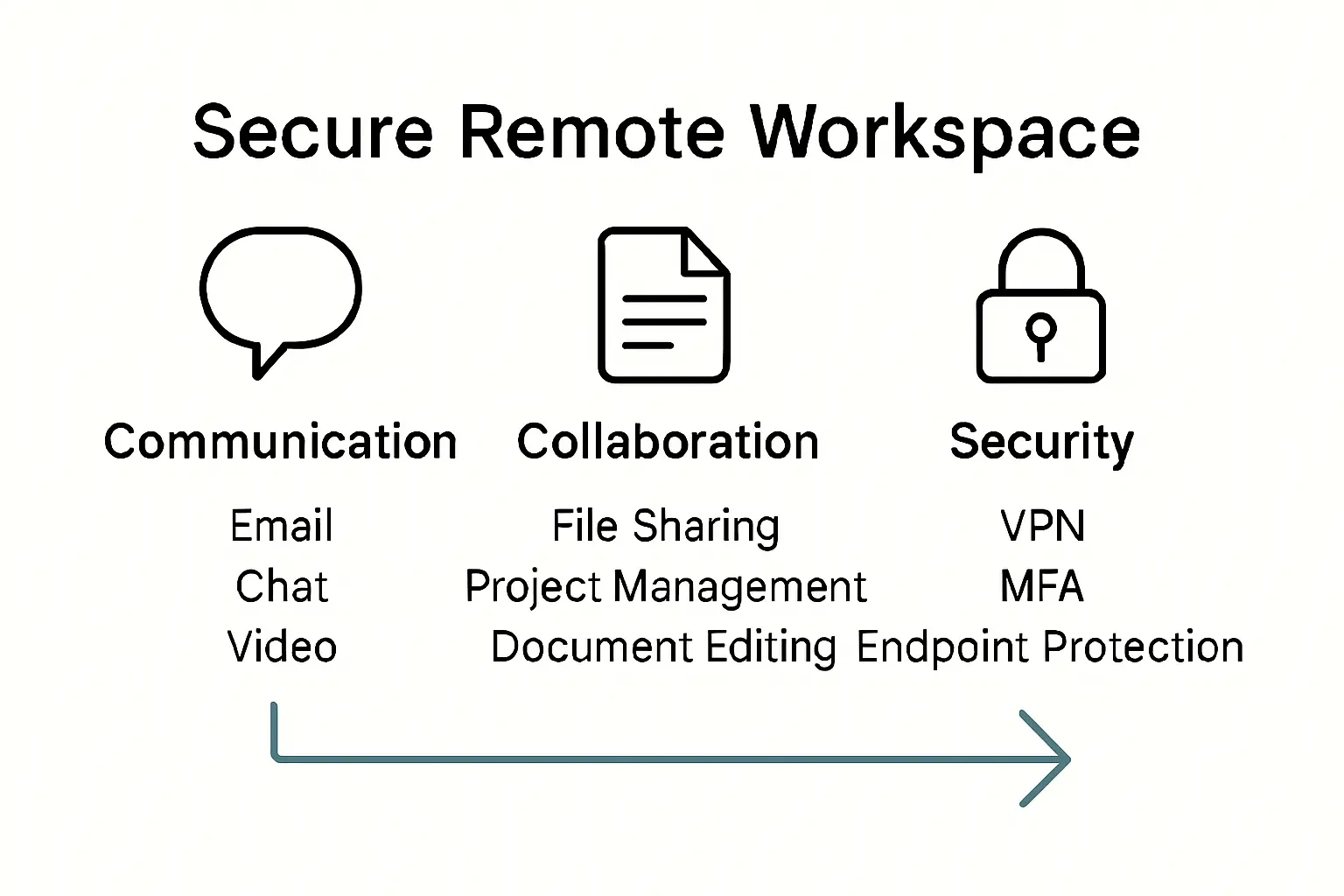
The foundation of effective remote work relies on cloud computing platforms that enable real-time communication and collaborative workflows. Organisations require robust technological ecosystems encompassing video conferencing tools, project management software, secure communication channels, and cloud-based document sharing platforms. These digital infrastructures facilitate instant messaging, video meetings, task tracking, and collaborative document editing, ensuring teams remain connected and productive regardless of geographical boundaries.
Key technological requirements for successful remote work include:
- High-speed internet connectivity
- Secure virtual private network (VPN) access
- Cloud storage solutions
- Collaborative project management platforms
- Comprehensive communication software
- Cybersecurity protection tools
A virtual workplace integrates sophisticated digital communication tools that transform geographical constraints into opportunities for organisational growth. Advanced technological platforms enable professionals to design flexible work environments that maximise individual productivity while maintaining robust team connectivity. The seamless integration of digital technologies empowers organisations to create dynamic, adaptive workspaces that transcend traditional operational boundaries.
Engagement and Communication Strategies Online
Digital communication strategies have become fundamental to maintaining organisational cohesion in remote work environments. Digital engagement approaches are critical for creating meaningful connections among distributed team members.
Successful online engagement requires a multifaceted approach that balances synchronous and asynchronous communication channels. Organisations must develop comprehensive communication protocols that encompass video conferencing, instant messaging, collaborative document platforms, and regular virtual team meetings. These strategies ensure that team members feel connected, informed, and integrated despite physical separation, fostering a sense of community and shared purpose.
Key strategies for effective online communication include:
- Establishing clear communication expectations
- Implementing regular video check-ins
- Creating dedicated informal interaction spaces
- Utilising multiple communication platforms
- Developing transparent reporting mechanisms
- Encouraging proactive communication
A virtual workplace thrives on intentional communication practices that transcend traditional office interactions. Advanced digital platforms enable organisations to create dynamic, interactive environments where team members can collaborate, share insights, and maintain robust professional relationships. The key lies in designing communication strategies that are flexible, inclusive, and responsive to the unique challenges of remote work.
Challenges, Risks, and Best Practices for Success
Remote work transformation presents complex challenges that organisations must strategically address to ensure sustainable productivity. Change management principles become crucial when navigating the intricate landscape of distributed workforce environments.
The primary risks in remote work environments centre on reduced interpersonal interactions and potential psychological disconnection. Organisations face significant challenges including communication barriers, diminished team cohesion, and the potential emergence of an infinite workday syndrome where professional boundaries become increasingly blurred. Proactive strategies must be implemented to mitigate these risks, focusing on structured communication protocols, deliberate team-building initiatives, and clear performance expectations.
Key challenges and mitigation strategies include:
- Establishing transparent performance measurement systems
- Creating deliberate social interaction opportunities
- Implementing robust digital communication frameworks
- Developing comprehensive mental health support programmes
- Setting clear work-hour boundaries
- Promoting individual and collective accountability
Successful remote work requires a holistic approach that balances technological infrastructure with human-centric management practices. By recognising the unique psychological and professional dynamics of distributed teams, organisations can transform potential challenges into opportunities for innovation, flexibility, and enhanced employee engagement.
Empower Your Organisation to Thrive in the Remote Work Era
Adapting to remote work presents real challenges such as maintaining engagement, ensuring seamless communication, and managing dispersed teams effectively. This comprehensive guide highlights key pain points like overcoming communication barriers, preventing burnout from blurred work boundaries, and fostering collaboration within a virtual workplace. Colossus Systems offers tailored solutions designed specifically for membership-based organisations to conquer these challenges. Our platform centralises member management, virtual event hosting, CRM, and communication tools in one intuitive system so your team can focus on growth and community building.
Discover how embracing digital engagement strategies and technology integration can transform your organisation’s remote work approach into a competitive advantage. Connect with us today to explore customisable tools that streamline operations, enhance member interaction, and support your teams wherever they are. Don’t let the complexities of remote work slow your progress. Take action now and contact us at Colossus Systems to unlock your organisation’s true potential.
Learn more about understanding managing remote teams and our engagement solutions to stay ahead in the evolving workplace.
Frequently Asked Questions
What are the key characteristics of effective remote work?
Effective remote work includes strong digital communication platforms, clear performance expectations, robust technological infrastructure, regular virtual team interactions, and flexible work scheduling.
What types of remote work arrangements are available?
Remote work arrangements include full-time remote work, hybrid models, flexible location options, part-time remote opportunities, and distributed team structures.
What essential technologies are needed for successful remote work?
Successful remote work requires high-speed internet connectivity, secure VPN access, cloud storage solutions, collaborative project management platforms, comprehensive communication software, and cybersecurity protection tools.
How can organisations ensure effective communication in a remote workplace?
To ensure effective communication, organisations should establish clear communication expectations, conduct regular video check-ins, create informal interaction spaces, utilise multiple communication platforms, develop transparent reporting mechanisms, and encourage proactive communication.